When Tolerance Masks Bigotry: Chesterton’s Warning for Today
COMMENTARY: G.K. Chesterton saw that the man who claims to be ‘tolerant’ without having convictions is often the least able to truly respect and engage with others.
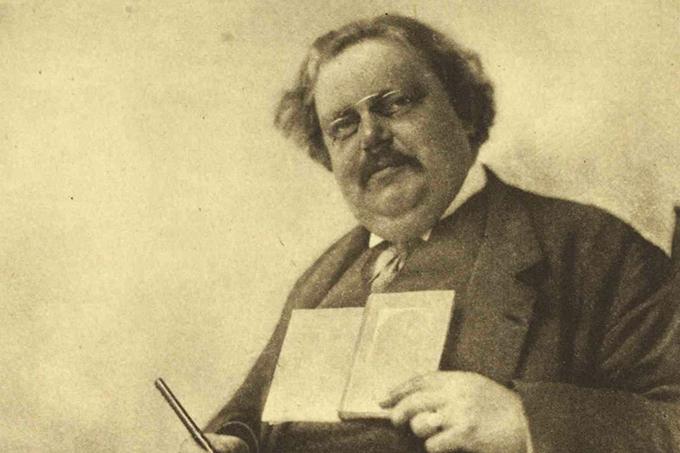
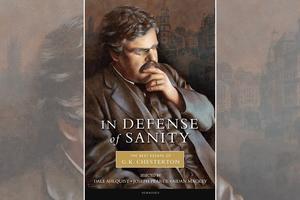
From time to time someone drops the line, in argument or as a meme, “Tolerance is the virtue of a man without convictions,” falsely attributing it to G.K. Chesterton, because too many people put his name on their own ideas, as an attack on tolerance in general, rather than a comment on those who misuse the idea. A better way of putting the insight would be: “A man without convictions can make a virtue of tolerance.”
That kind of person can feel good about himself, and be critical of others, by trivializing important matters that he doesn’t understand. That is the attitude of many “tolerant” people with whom people of settled and articulated belief — like Catholics — have to deal.
A man who doesn’t care about a particular idea may feel tolerant when people disagree about it, and can parade his “tolerance” in a way that will annoy those arguing about it. But he’s not tolerant. He’s indifferent. He doesn’t have a stake in the game (or doesn’t know he has one) and can easily claim the game not worth anyone playing, and tell you that if you must play it, don’t play like it matters.
This is, for example, my wife’s attitude toward my feelings about the Giants and the Cowboys. “Why do you care?” she’ll ask, because she feels completely indifferent to the contest between light and darkness being enacted on the field. And yet she feels proud of herself for being so tolerant in the matter, and is a little patronizing about my caring about it. She’s equally tolerant of, which is to say unconcerned with, the cosmic conflict of the Red Sox and the Yankees.
In the same way, the Catholic can look benignly on the life-or-death theological battles among Protestant traditions. The warring Protestants may say, “It’s a matter of the Gospel,” and he will see that they both begin with a fundamental error about a real matter of the Gospel. The Protestant can smile at Catholic debates, because we’re so wrong, how wrong we are doesn’t matter. The arguments about Pope Francis or Leo and papal authority are what we get for having a pope.
Ideally, both will think kindly of the other and recognize the integrity with which the other speaks, even if they believe the other is talking nonsense. They will be indifferent to the debates but not indifferent to the people. Because, and this is important, their beliefs include a belief in human dignity.
The Man Without Convictions
The misquoted Chesterton had two insights that help illuminate the supposed tolerance of the indifferent.
First, the man apparently without convictions is blind to what he really believes. He really does have convictions, but lives by assumed beliefs he doesn’t recognize. He thinks he sees things as they are. Others have beliefs, meaning a set of ideas they impose on reality. He thinks their beliefs are just personal choices or tastes when they don’t matter in public life and calls them bigotry or prejudice or partisanship when they do.
“The average agnostic of recent times … took his own ethics as self-evident and enforced them,” Chesterton wrote in St. Francis of Assisi (the first book he wrote as a Catholic, published in 1923). “Then he was horribly shocked if he heard of anybody else, Moslem or Christian, taking his ethics as self-evident and enforcing them.”
His own mind could be a mess, with contradictory beliefs and convictions held together by some unrecognized dogma or desire. But even that he saw as a virtue, Chesterton wrote. “He wound up by taking all this lop-sided illogical deadlock, of the unconscious meeting the unfamiliar, and called it the liberality of his own mind.”
Again he illustrated his claim from the politics of his day: “Medieval men thought that if a social system was founded on a certain idea it must fight for that idea.” The people he was writing about “really think the same thing, as is clear when communists attack their ideas of property. Only they do not think it so clearly, because they have not really thought out their idea of property.”
The Prejudiced Man
Second, the tolerant man was the man who, apparently without convictions, is not without prejudices. At the end of his early book Heretics he writes against the common idea that those with strong convictions must be bigots, as shown by history (the Inquisition, wars of religion, etc.). Many were, of course, but many weren’t.
“In real life the people who are most bigoted are those who have no convictions at all,” he says. (By “no convictions,” he means those who don’t know they have convictions, because everyone has convictions.) “Bigotry,” he says, “may be roughly defined as the anger of men who have no opinions. It is the resistance offered to definite ideas by that vague bulk of people whose ideas are indefinite to excess.”
For example, “the man who understands the Calvinist philosophy enough to agree with it must understand the Catholic philosophy in order to disagree with it. It is the vague modern who is not at all certain what is right who is most certain that Dante was wrong.”
He illustrates his claim using the politics of his day, the first decade of the 20th century. The “individualists” (we would call them libertarians) argued with the socialists because they knew what they and the socialists believed and knew the socialists had a case that needed to be answered: “It is the young man in Bond Street [their equivalent of Wall Street] who does not know what socialism means much less whether he agrees with it, who is quite certain that these socialist fellows are making a fuss about nothing.”
Dangerous but Necessary
People can only act charitably if they know fairly clearly what they believe, especially about the most basic things. People who disagree can only reliably get along well — show tolerance — if they know why they disagree and on what. Belief can justify and demand real tolerance, not just an indifference that’s not really tolerance.
It must begin in knowing that beliefs matter and why, and therefore what beliefs we can tolerate and why. At some point, people will find themselves in a conflict of beliefs to which they can’t be indifferent. Life in the world requires collective choices and choices mean arguments, arguments that should be settled on more than assumed belief and prejudice. The latter will eventually lead to chaos.
Chesterton explains this in one of my favorite passages of his, which ends the introductory chapter of Heretics. A crowd argues about a lamppost some people want to tear down. We can think of them as people who think of themselves as tolerant, but only in the sense Chesterton describes.
They ask a monk for his opinion and he starts talking like a medieval philosopher. “Let us first of all consider, my brethren, the value of Light. If Light be in itself good,” he says, and gets knocked down for it. Then the mob takes down the lamppost and congratulates each other on “their unmediaeval practicality.” But things, as you might have guessed, do not go well.
“Some people,” the passage continues, “have pulled the lamp-post down because they wanted the electric light; some because they wanted old iron; some because they wanted darkness, because their deeds were evil. Some thought it not enough of a lamp-post, some too much; some acted because they wanted to smash municipal machinery; some because they wanted to smash something. And there is war in the night, no man knowing whom he strikes.”
Eventually, “there comes back the conviction that the monk was right after all, and that all depends on what is the philosophy of Light. Only what we might have discussed under the gas-lamp, we now must discuss in the dark.”
People arguing in the dark tend not to be so tolerant of differences. They punch first and talk later. Tolerance depends on the light of clear belief.
- Keywords:
- g.k. chesterton
- tolerance
- bigotry