What Just Happened at Notre Dame? Inside the Reversal of Susan Ostermann’s Appointment
While the university insisted the appointment was final, tensions behind the scenes told a different story.
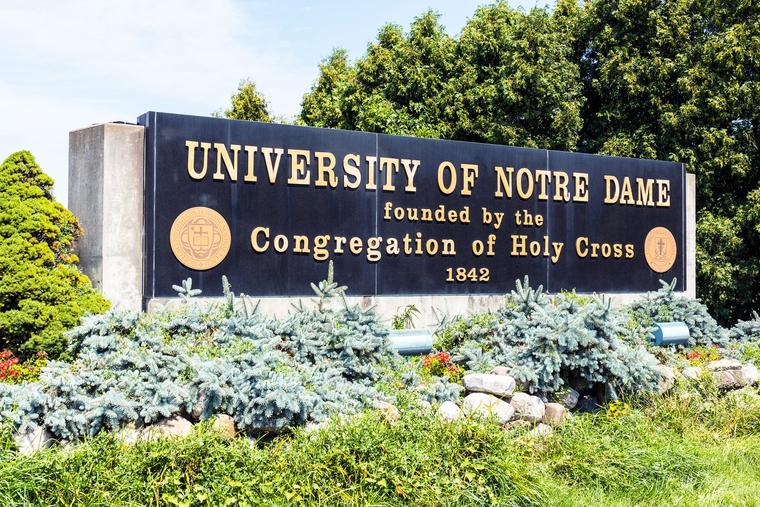
SOUTH BEND, Ind.—For weeks, University of Notre Dame leaders publicly insisted that the appointment of a pro-abortion-rights professor to head the Asian studies institute was final.
But beneath the university’s famed Golden Dome, things were far more unsettled, campus sources told the Register — especially in the office of Holy Cross Father Robert Dowd, Notre Dame’s president.
The revelation follows news that Susan Ostermann will not be moving forward as director of the Liu Institute for Asia and Asian Studies, which a university official announced in an internal email Thursday morning. The Jan. 8 appointment of Ostermann, who has previously written that abortion access is part of “integral human development” and that the pro-life movement has “racist” origins, created major backlash, with Catholic voices on and off campus calling for it to be rescinded before taking effect July 1.
But while the reversal has been framed in official communications as the result of Ostermann’s decision — one she says she made to prevent controversy from “overshadowing” the Liu Institute’s work — university sources say other factors may have played a role behind the scenes.
Most notably, sources told the Register that Father Dowd was not happy with the appointment and was in ongoing conversations about alternative outcomes.
Working Toward a Solution
As university sources told the Register over a month ago, the Holy Cross priest was “blindsided” by the appointment of the outspoken abortion advocate to the leadership position, which had been signed off on by Notre Dame’s provost John McGreevy and Mary Gallagher, head of the Keough School of Global Affairs, which houses the Liu Institute.
In several public statements amid mounting criticism, communications officials repeatedly said the university was sticking with the appointment, citing Ostermann’s academic qualifications, pledge to not promote her personal political views as Liu director, and stated respect for Notre Dame’s institutional pro-life commitments. But campus sources say Father Dowd’s own words had been indicating something else.
One example came when Father Dowd spoke to 32 U.S. bishops present at Notre Dame for a Feb. 23-25 conference co-sponsored by Notre Dame’s McGrath Institute for Church Life and the U.S. Conference of Catholic Bishops’ doctrine committee.
According to three separate sources who were present, Father Dowd told the bishops and other attendees at a Feb. 23 opening dinner that the university was still working toward a solution to the Ostermann controversy.
“It was kind of an indication that the university’s ‘final position’ wasn’t final,” one of the sources told the Register.
Father Dowd, who has been president since fall 2024, also reiterated to the U.S. bishops that Notre Dame’s commitment to the sanctity of life was as “unwavering and as firm as ever.” Similar language had been used in the university’s official communications defending the Ostermann appointment. But to those present, the Holy Cross priest’s delivery landed differently.
“It sounded so sincere,” said the same source. “There wasn’t any way that that man was saying that as boilerplate. He meant it.”
Sources said Father Dowd also expressed his gratitude to Bishop Kevin Rhoades of Fort Wayne-South Bend, Notre Dame’s local bishop, who was in attendance, for his pastoral advice and engagement.
Dialogue With Bishop Rhoades
Father Dowd’s words of thanks to Bishop Rhoades in front of a room full of bishops, visiting scholars, and Notre Dame faculty and staff were especially notable, given that the local bishop had openly criticized the Ostermann appointment just two weeks before.
When the university continued to defend its decision even after a Feb. 4-5 meeting of the school’s board of trustees, Bishop Rhoades issued a Feb. 11 letter describing Ostermann’s abortion advocacy as “disqualifying” for leadership of the Liu Institute and urging Notre Dame’s administration “to rectify this situation.”
But while the bishop had made his criticism public, he continued to speak with Father Dowd behind the scenes.
According to two sources familiar with the matter, Bishop Rhoades had declined to participate in a student rally planned for Friday to oppose the Ostermann appointment because Father Dowd had asked him not to as a sign of “good faith” amid private conversations between the two leaders.
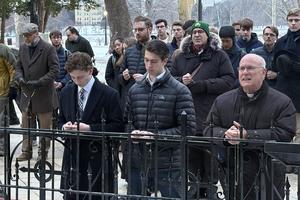
And when Bishop Rhoades led an on-campus prayer service on Feb. 24 for Notre Dame’s fidelity to its Catholic mission, he notably did not speak specifically of the Ostermann appointment or directly criticize Notre Dame leadership.
Bishop Rhoades’ dialogue with Father Dowd continued while nearly 20 fellow bishops issued their public support for the Notre Dame bishop. Meanwhile, the Register confirmed that several senior faculty members continued to urge Father Dowd privately to reconsider the appointment up until today’s reversal.
For his part, Bishop Rhoades issued a statement following the news of Ostermann’s decision, expressing his gratitude both for the development and for those who had voiced opposition to the appointment.
“Clearly Notre Dame is reaffirming its fidelity to a core truth of Catholic social teaching that is central to the Church’s commitment to integral human development,” the bishop said in his letter.
Timing Questioned
But while most Catholics concerned with Notre Dame’s Catholic identity are celebrating the announcement of Ostermann’s decision, some believe the timing of events may also have been aimed at suppressing further scrutiny.
The announcement came just one day before the student-organized “March on the Dome,” which is aimed at not only protesting the Ostermann appointment but also at drawing attention to the university’s alleged drift from its Catholic mission more broadly.
Student organizers had been expecting as many as 1,000 participants at the demonstration, which is still set to take place Friday with student speeches on South Quad and a candlelit procession to the Grotto of Our Lady of Lourdes.
“They were trying to kill the numbers,” said Luke Woodyard, a sophomore and event co-organizer, referring to the timing of the Ostermann announcement.
Additionally, while the university is allowing approved media to cover the event, photography and video are prohibited “in order to protect the privacy of those in attendance,” according to an email from Notre Dame’s communications office.
Another factor that might have influenced the Ostermann outcome? Job-security concerns.
The Ostermann controversy has played out amid McGreevy’s bid to be reappointed as Notre Dame’s provost, effectively the university’s chief academic officer. While campus sources indicate that the reappointment of McGreevy, a historian and longtime Notre Dame administrator who has held the senior academic administrative role since 2021, was likely to be pro forma, the Ostermann controversy was beginning to emerge as a relevant factor.
Multiple faculty members told the Register that they had or were planning to cite the appointment of the pro-abortion professor as a reason they did not favor McGreevy’s reappointment.
One campus source informed of senior administrative discussions said the provost was “getting sick” of the controversy.
Wider Significance?
Another source, however, said that even with Ostermann’s appointment now null, the fact that the abortion advocate was approved in the first place still demands accountability from senior academic administrators.
“What happened in this case, either unknowingly or knowingly, somebody put a moral scandal on the soul of an innocent man,” said the source, referring to how the initial approval of the Ostermann appointment thrust Father Dowd into a morally fraught position. “That calls for disciplinary action of some kind.”
Whether the Ostermann dispute will have any further impact on campus remains to be seen. Advocates continue to emphasize that the fact that Ostermann was appointed in the first place raises deeper concerns about the university’s commitment to its Catholic mission and academic culture.
“This sad episode reveals that there is much work to do to uphold the Catholic mission and identity of Notre Dame,” Holy Cross Father Bill Miscamble, a retired Notre Dame history professor, told the Register.
But for now, concerned faculty, students and alumni are grateful for Ostermann’s decision to decline the appointment — whether it was entirely her own or encouraged by Notre Dame leadership.