Bishop Richard Moth to Succeed Cardinal Nichols as Archbishop of Westminster
On hearing of his appointment, archbishop-elect Moth said he was 'moved greatly by the trust that Pope Leo has placed in me.'
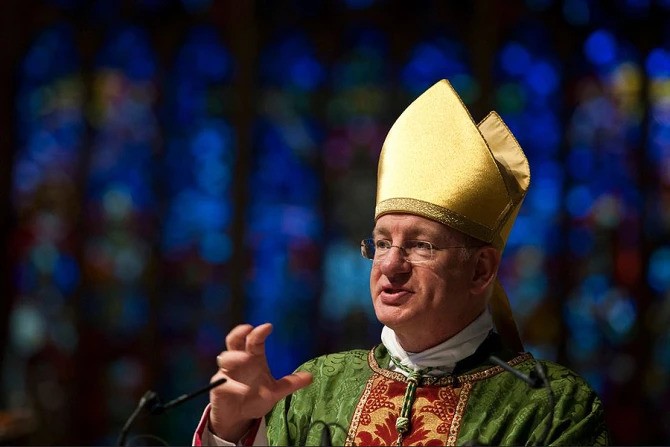
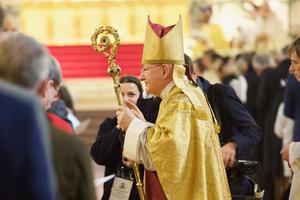
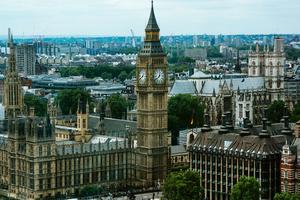
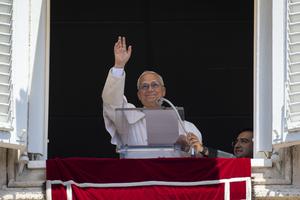
LONDON — Pope Leo XIV has appointed Bishop Richard Moth, a former bishop of Britain’s military ordinariate, as the 12th Archbishop of Westminster, succeeding Cardinal Vincent Nichols who is retiring at the age of 80.
A canon lawyer, Bishop Moth, 67, has served as Bishop of Arundel and Brighton in southern England for the past decade. He is best known for his work on prisons, criminal justice, and life issues, and is regarded by those who know him as sound on doctrine.
As Archbishop of Westminster, the leading Catholic see of England and Wales, he is expected to be elected president of the bishops’ conference and be elevated to cardinal along with all his predecessors since the see was established in 1850.
Until his installation at Westminster Cathedral on Feb. 14, Cardinal Nichols will serve as apostolic administrator of the metropolitan diocese, a Dec. 19 diocesan statement said.
On hearing of his appointment, archbishop-elect Moth said he was “moved greatly by the trust that Pope Leo has placed in me.”
He expressed his gratitude to Cardinal Nichols for his support and service to the diocese, and said the cardinal “will be missed greatly.” He also thanked the Diocese of Arundel and Brighton which had given him the “wonderful opportunity” to share the Church's mission with lay faithful and clergy.
Archbishop-elect Moth said his first task would be “to get to know the priests and people of Westminster and I look forward, now, to serving them.”
He added: “With them, and building on the firm foundations that have been laid by so many down the years, I look forward to continuing the great adventure that is the life of the Church and witness to the Gospel.”
Cardinal Nichols said he was “delighted at this news,” adding that the archbishop-elect “will bring to our Diocese many gifts and considerable episcopal experience” to the position.
Born in 1958 in Chingola, Zambia, and raised as an only child in Edenbridge, southeast England, Richard Moth felt called to the priesthood at age 11 or 12 and entered St. John’s Seminary, Wonersh, when he turned 18. Moth was ordained for the Archdiocese of Southwark in 1982.
As a priest he served at St. Bede’s parish in Clapham Park, London, before pursuing studies in canon law at St. Paul’s University, Ottawa. He returned to London in 1987 to serve as assistant priest at St. Saviour’s in Lewisham, during which time he was also a Territorial Army Chaplain.
After serving nine years as judicial vicar in the archdiocese of Southwark, and as private secretary to the then-archbishop Michael Bowen, in 2001 he was appointed vicar general and chancellor of the diocese. In 2009, Benedict XVI appointed him Bishop of the Armed Forces before Pope Francis nominated him Bishop of Arundel and Brighton in 2015.
Within the bishops’ conference, he has served as lead bishop for prisons, overseeing and promoting chaplaincy and pastoral care in the criminal justice system. In that role he has consistently stressed that prisons must be places of reform and growth rather than simply punishment, and has stressed the importance of prisoners having access to worship.
He has also been involved in pro-life work, contributing to episcopal statements on assisted suicide, abortion, and the protection of the vulnerable. In 2023 he was one of three bishops to speak at the annual March for Life in London.
Bishop Moth chairs The Plater Trust, an organization dedicated to the support of projects across England and Wales that put into practice the principles of Catholic Social Teaching.
Friends and associates describe archbishop-elect Moth as a “good fellow,” genial, friendly, a hard worker and a “safe pair of hands.” He is not regarded as an academic but a loyal and faithful priest, and faithful to the Holy See. Those who knew him from seminary days regarded him as a “model student,” and a popular young priest who liked the outdoors, making him a good fit to be bishop of the Armed Forces. He is a keen horse-rider and likes hiking.
Bishop Moth has been a frequent retreatant over the years to the Carthusian monastery at Parkminster in Sussex and for several decades has been a Benedictine oblate of Pluscarden Abbey — considered to be a traditional abbey without being “traditionalist.”
The archbishop-elect is not regarded as a proponent of the traditional Roman rite, but he allowed Masses in the vetus ordo to continue in the Diocese of Arundel and Brighton in the years since Pope Francis’ 2021 motu proprio Traditionis Custodes that restricted the Traditional Latin Mass. He also allowed and took part in a traditional requiem Mass celebrated earlier this year for Father Raymond Blake, a popular priest in his diocese.
“He is sound on doctrine and has been sympathetic to those who want to have the traditional Mass, and not an enemy of it at all,” a parishioner of the diocese told the Register.
In his statement, Cardinal Nichols said he was “very much looking forward” to Bishop Moth’s installation, noting it will take place on St. Valentine’s Day, as well as the Feast of Saints Cyril and Methodius, co-Patrons of Europe.
He recalled being present — also in Westminster Cathedral — at Bishop Moth’s episcopal ordination as bishop of the Armed Forces in 2009: “So today I can say: ‘Welcome back, dear Bishop Richard,” Cardinal Nichols said. “You are most welcome indeed.’”
See full video of the announcement with Archbishop-elect Moth and Cardinal Nichols.
- Keywords:
- westminster
- cardinal vincent nichols

Edward Pentin Edward Pentin is the Register’s Senior Contributor and EWTN News Vatican Analyst. He began reporting on the Pope and the Vatican with Vatican Radio before moving on to become the Rome correspondent for EWTN's National Catholic Register. He has also reported on the Holy See and the Catholic Church for a number of other publications including Newsweek, Newsmax, Zenit, The Catholic Herald, and The Holy Land Review, a Franciscan publication specializing in the Church and the Middle East. Edward is the author of The Next Pope: The Leading Cardinal Candidates (Sophia Institute Press, 2020) and The Rigging of a Vatican Synod? An Investigation into Alleged Manipulation at the Extraordinary Synod on the Family (Ignatius Press, 2015). Follow him on Twitter at @edwardpentin.