Catholic Filmmaker Anthony D’Ambrosio Champions St. Maximilian Kolbe’s ‘Triumph of the Heart’
‘It’s one of the most cathartic and healing stories — particularly for those who struggle with hope and doubt.’
Anthony D’Ambrosio knows what it is to hit a wall. For years, he endured an unexplainable insomnia that often granted him only 20 minutes to just two hours of sleep.
The resulting exhaustion and mental fog cost the entrepreneur his ability to work, strained his relationships, and left him questioning both his faith and the value of staying alive.
Then he encountered St. Maximilian Kolbe.
While reading about the Franciscan who offered his life in Auschwitz so another prisoner could live, D’Ambrosio paused over a detail he’d never noticed or at least never meditated upon before: Kolbe endured 14 long days in the camp’s starvation bunker, encouraging three fellow prisoners who died alongside him.
“I didn’t know if God existed anymore, but I knew something happened in that bunker that gave those men a reason to live.” D’Ambrosio said.
That image of solidarity in suffering reframed the significance of D’Ambrosio’s own sleepless nights.
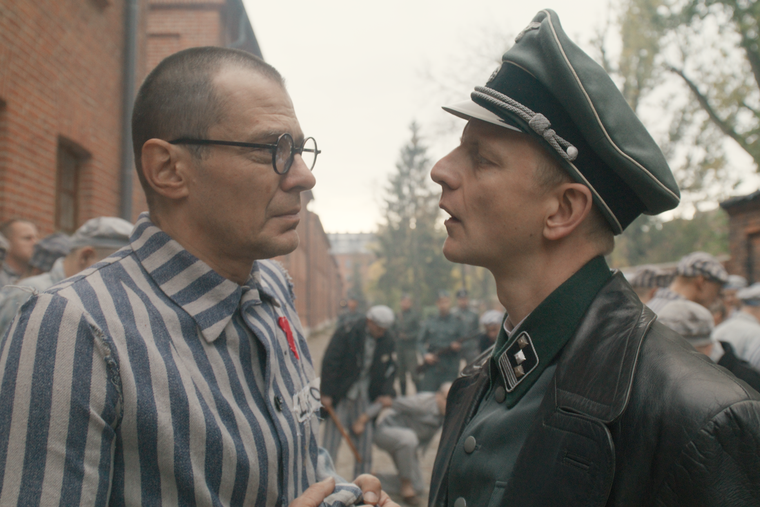
Out of those reflections, and D’Ambrosio’s writing — something he could still manage to do — grew Triumph of the Heart, a feature film about Kolbe that D’Ambrosio wrote and directed, grappling with themes of suffering, doubt, seeming life failure, and the rising trend of assisted suicide.
Set to premiere during the Church’s Jubilee of Hope this September, the movie demonstrates that Catholic storytellers can deliver real and meaningful stories in a first-rate manner, without a Hollywood studio production team.
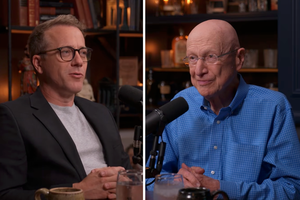
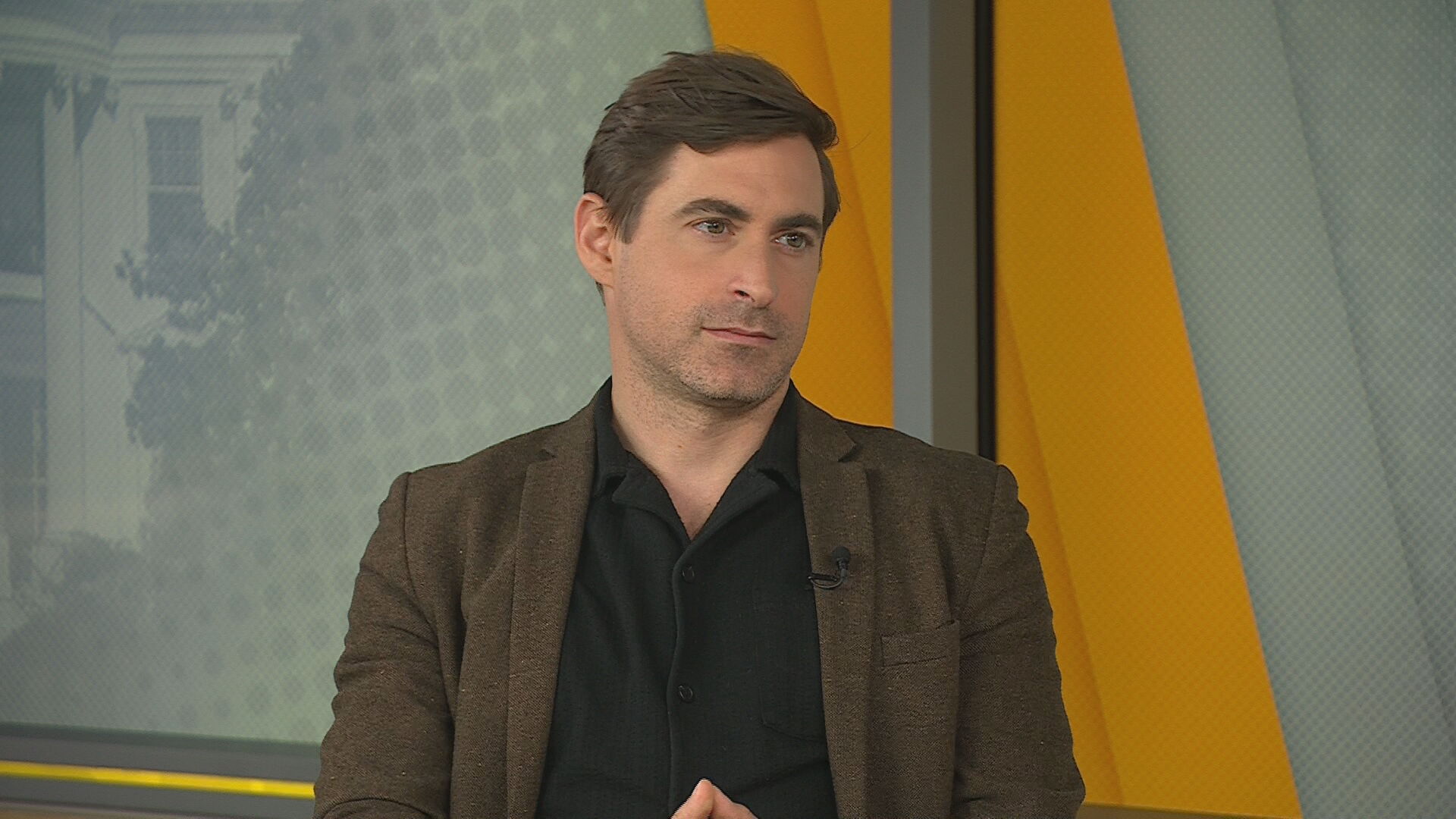
D’Ambrosio sat down with EWTN Pro-Life Weekly host Abigail Galván July 31, to talk about the illness that nearly broke him, the saint who pulled him back from the brink of despair, and the hope he wants audiences to carry out of the theater. He also discusses the personal challenges he faced producing a high-caliber film in a climate often skeptical of the ability of Christian filmmakers. What follows is an edited transcript of that conversation.
You were diagnosed with a medical condition without a cure. You said that it destroyed your life; you lost your faith and no longer wanted to live. Then, through meditating on the life of St. Maximilian Kolbe and his trials, you were able to overcome your suffering. How did that experience lead to you making this film?
When I first became ill, part of the suffering was not having a medical explanation for it. One symptom was chronic, life-altering insomnia: I could get only 20 minutes to two hours of sleep a night, indefinitely. It was debilitating. My life fell apart, and I didn’t know if the suffering would ever end.
Year after year, I faced the question: If this is permanent and I can’t do anything, what is the meaning of living? I had no answer. I couldn’t be fruitful — the most I could do was write. But I spent endless hours in bed. I could barely function. And in my anger and grief, I lost my faith.
This condition was bringing me to a point of crisis. When I discovered the story of St. Maximilian Kolbe, I was moved by a detail, and that detail was that Kolbe didn’t die alone. He actually reached a nothing-short-of-miraculous 14 days without food or water in that starvation bunker with three other men who were executed alongside him.
To get to that point with him, he had to bring them all the way into his sanctity — into his hope. As I started to be haunted, in a way, by this story, I felt like Kolbe was entering into the cell of my own suffering — in these long night hours after waking up after just 20 minutes of sleep — knowing it was going to be another one of those nights and one of those days, and there’s nobody to talk to.
I began to have these lectio divina-type meditations, talking to St. Maximilian Kolbe. Those conversations sort of turned into the script and dialogues that are happening in this movie. It kind of happened that the writing of the script and the development of the vision for the movie came from my own need to have accompaniment in my own suffering.
It felt like Kolbe, out of all of the saints that I had read about, really understood what I was going through. In a way, he was able to model for me Christ’s willingness to love me by entering into my suffering with me — to take that on with me and help shoulder my cross.
You mentioned a couple of things. One is the uncertainty, and that being a painful thing — not knowing when or if the suffering will end. The other is the need for accompaniment. What would be your message to people who find themselves in a position similar to yours?
You’re making me cry asking that question. I would say that Kolbe’s message to me was, ultimately, that it’s worth it. There’s another detail in his story that I learned when I went to Poland and got to interview the friars and people close to his generation who carry the oral tradition of who he was. I learned that he had a dream about heaven while he was in Japan. Kolbe had struggled with a chronic illness. He had tuberculosis and only had access to one lung for most of his life. He was also a person who was incredibly entrepreneurial and had a big vision for what he was going to build. Often though, he was bedridden, struck down for months, unable to actualize his vision. And one of those times, while in Japan, at death’s door, he had this dream about heaven that shifted the way that he approached his relationships afterwards.
He had a sort of gruff, masculine and militaristic tone before this; that can be seen in his letters. After this dream took place, you can start to see him become very vulnerable. You start to see him using these pet nicknames for family members and even for his enemies. He even wrote a letter to the mother of a German Nazi officer, at one point. He developed this incredible tenderness that came from this moment, in a way, witnessing heaven.
We offer something of an icon of that in the movie. The thing that I was so deeply moved by in discovering this was a sense that heaven was witnessing my decision to live, to hope and to seek God in the midst of everything. I felt that Kolbe and the saints in heaven were cheering me on.
For everyone suffering, there’s this privilege that they have because the veil between heaven and earth is so thin. They can either be looking at and face-to-face with hell, or they can be looking at and face-to-face with heaven. Ultimately, I would ask them to knock on that door and to seek a vision of heaven cheering them on in the midst of their suffering.
On a contemporary note, assisted suicide is on the rise all over the world, as many people seek to bypass suffering, even going as far as taking their own lives. What can people who no longer want to experience suffering learn from this movie?
If you look at the end of Kolbe’s life, according to the calculations of the world, it was a complete failure. His life project was to build a Catholic media empire bringing souls to Christ and simultaneously prop up the national Catholic identity of Poland. All of that was completely destroyed. And to see the dehumanization and suffering that was being exacted by these perpetrators against not just his life, or his brothers’ lives, but all the intelligentsia of his nation — I think the suffering that he had to go through and his willingness to shoulder it shows us that ultimately there is an unbelievable victory achievable if one willingly chooses to accept one’s cross.
His vulnerability and willingness to shoulder his cross unleashed a spiritual shockwave throughout the entire nation that is remembered and is now part of the DNA of the Polish people. In some way today, Auschwitz has become a place of celebration of Kolbe’s life, instead of a celebration of Nazi power. We can’t always see the effects of our choice to live when we’re in that grief, or in that suffering. It feels meaningless, but it becomes clear throughout the course of history.
In my own life, there was a moment where I was in crisis and had to make that choice to live and shoulder my cross. I’m very grateful that God healed me, but even if I had to continue living like that, I think that I would have, because through Kolbe, I was able to see how that could be a really meaningful and beautiful life — and a witness of hope to others.
What do you hope people who come and watch Triumph of the Heart walk away with?
I just want to tell them “hope.” The main thing I hear from people is that after watching it, they desire heaven so strongly. They say that everything in life — all their crosses — now seem bearable. I think that watching the suffering brings them face-to-face with the cross that they carry and then also shows them the victory of the cross.
It’s one of the most cathartic and healing stories — particularly for those who struggle with hope and doubt. Many have unresolved questions with the Lord and spaces in their lives that haven’t yet been fully touched by his healing hand, so it’s amazing to sit in the theaters and watch that healing coming through the screen, through the story, and moving people’s hearts.
What do you hope the impact of your movie will be on the Catholic Church?
I think it will set a new bar for Catholic filmmakers. From the perspective of investors, donors, other filmmakers, other craftsmen, they’ll all say this can be done and done really well at a high level. We don’t have to wait for Hollywood to tell this story for us. We can take on that Goliath ourselves.
And then the other one, I believe, will be a new sense of the credibility of the priesthood and of the pro-life movement. A new sense of pride will be instilled in people’s hearts as they see this film and share it. Because no matter whether you’re Catholic or secular, you can’t help but to see in this story a courage, heroism and virtue that is beautiful, beyond the everyday. You will see a heroism that we’re all so thirsty for.
I think we are going to be really proud of our Church and our faith after getting to see this movie.
Register summer intern Andrew Likoudis compiled and edited this EWTN Pro-Life Weekly transcript. Catch the entire interview on EWTN on Aug. 13.
- Keywords:
- anthony d'ambrosio
- st maximilian kolbe