Bishop Conley the Beekeeper Enjoys Time in the ‘Really Real’
The sweet — literally — story behind his care of creation and ‘the peace of wild things.’
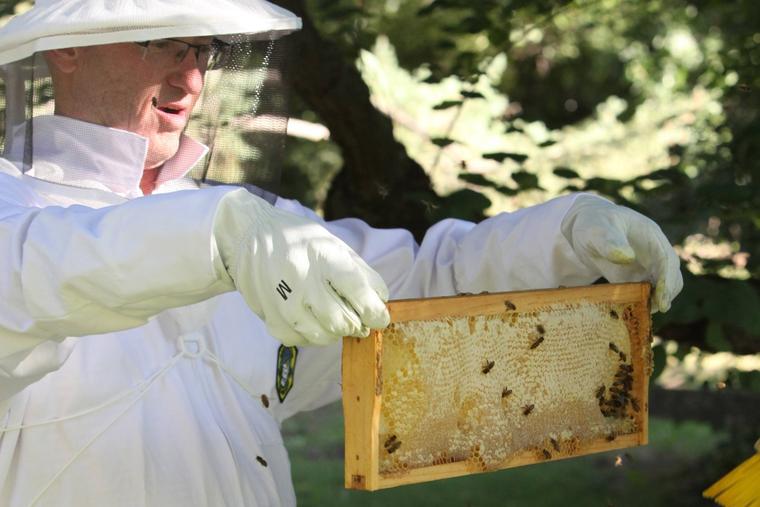
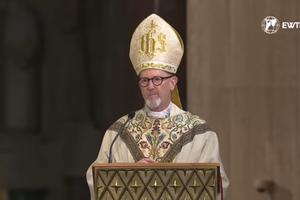
For Bishop James Conley, of the Diocese of Lincoln, Nebraska, there is peace in wild things.
In addition to his pastoral duties, Bishop Conley is the caretaker of more than 10,000 bees in two hives — a pastime that he now uses to help educate, and demonstrate, a care and concern for the environment that could have a massive impact on the next generation’s relationship with God’s creation.
And that’s an education that is desperately needed, according to both the late Pope Francis and Pope Leo XIV, if we are to hope that our children can experience the wonder of God’s world even as technology becomes an increasingly ubiquitous force in their lives.
Beauty and Mystery
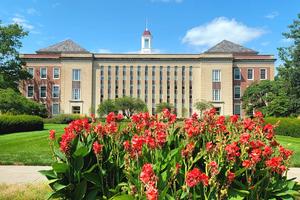
For Bishop Conley, his love affair with the natural began early. A fan of the famed naturalist writer Wendell Berry, the bishop sought connection to the natural world across his education and early life experience but didn’t encounter bees until his last year at the University of Kansas, when Conley, then an English major, needed one last science class to graduate. He selected “The Hive and the Honeybee,” taught by world-renowned apiarist Orley Taylor.
“I took the class and just fell in love with the beauty and the mystery of the honeybee,” Bishop Conley told the Register. “How they make the honey, the economy of the beehive — the whole fascinating way that bees navigate their world, collect nectar, and delegate the duties of the beehive.”
He says he remains most fascinated by how the hive lives or dies by the queen, even if he believes he may have been originally inclined for such a hobby because he simply liked honey (and now he makes his own, labeled “Ordinary Honey” because he is, after all, the diocese’s ordinary).
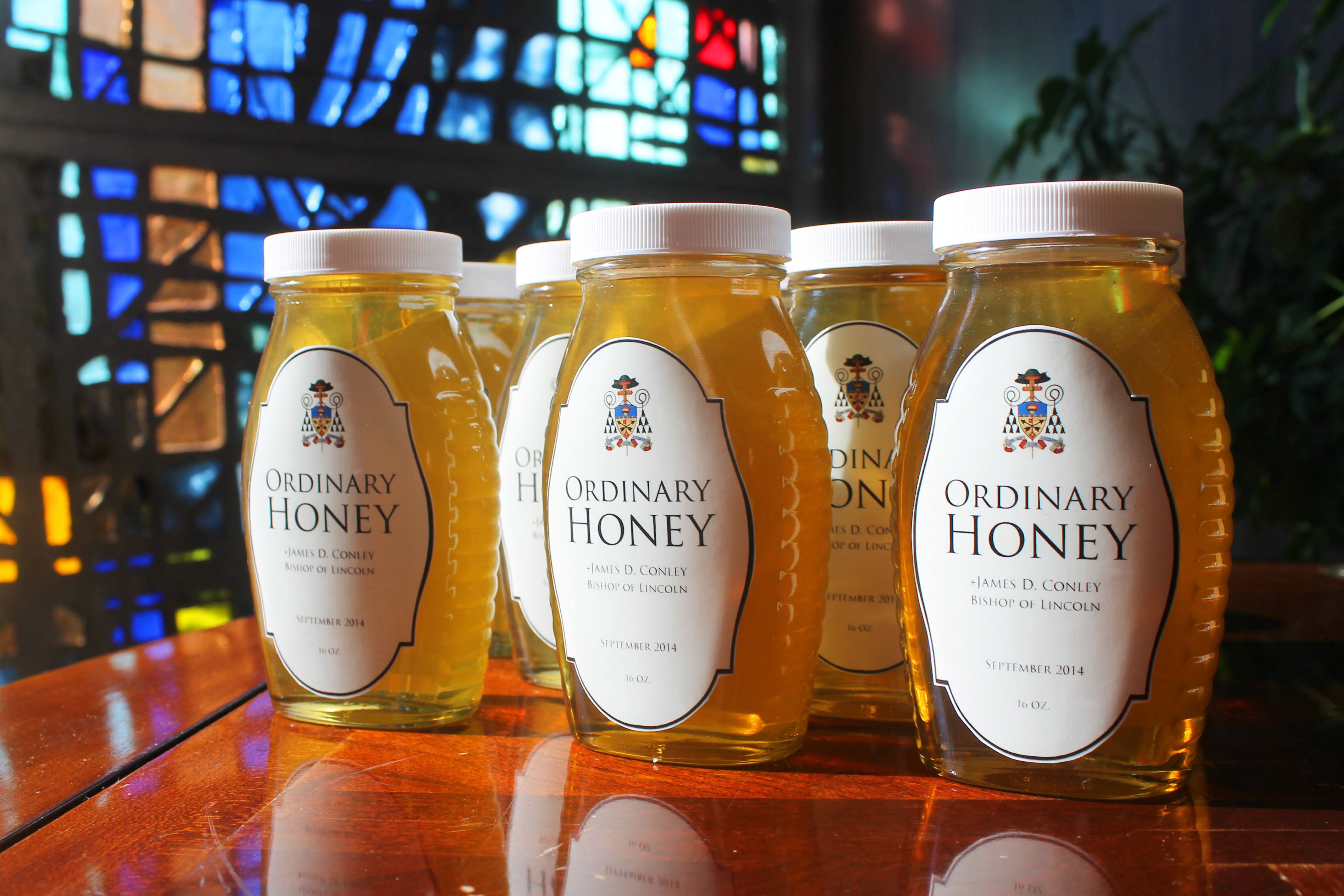
After leaving that class, though, it would be years before Bishop Conley was able to return to beekeeping. After college, he followed Berry’s call, from the writer’s seminal book, The Unsettling of America, to preserve the richness of the land God had given. Conley lived in an agricultural community, raising his own food for a year and a half, before being called by God to the priesthood.
Twenty-five years later, he’s now a bishop, with a house that sits on an acre of land — more than enough to return to beekeeping. A friend gave him his first hive — and 10 years in, he told the Register, he’s been raising bees, caring for the land, and bottling his “Ordinary” honey. He’s added hives and plans to continue. The honey is sent to friends and acquaintances and donated to local auctions to help fund good endeavors like Catholic schools.
Beyond his operation, though, Bishop Conley is cognizant that bees feed more than just hungry human stomachs; they feed a human need to connect with God’s creation — a need that’s become almost a human imperative as jobs and technology threaten to bring humanity further inside and away from the beauty and wonder of nature and what the poet Berry called “the peace of wild things.”
“I think when you come to understand the complexity and the incredible wonder of bees — it’s the only creature that produces this honey for us. They don’t even use it themselves,” Bishop Conley said. “It causes you to wonder about God and his goodness and just the amazing nature of the bee. Only a good God would create something as beautiful as a bee, for our own pleasure and our own delight.”
I spoke to Bishop Conley right before I began a one-week garden camp for students at the Catholic school my children attend. After spending years tending my own garden, which I wrote about last year, I got my first chance to evangelize about the wonders of God’s creation to students in February, when I went into my kids’ kindergarten classroom to help them hatch chickens. Appropriately, our eggs hatched on Holy Saturday — an almost-too-perfect reminder of God’s faithfulness across time.
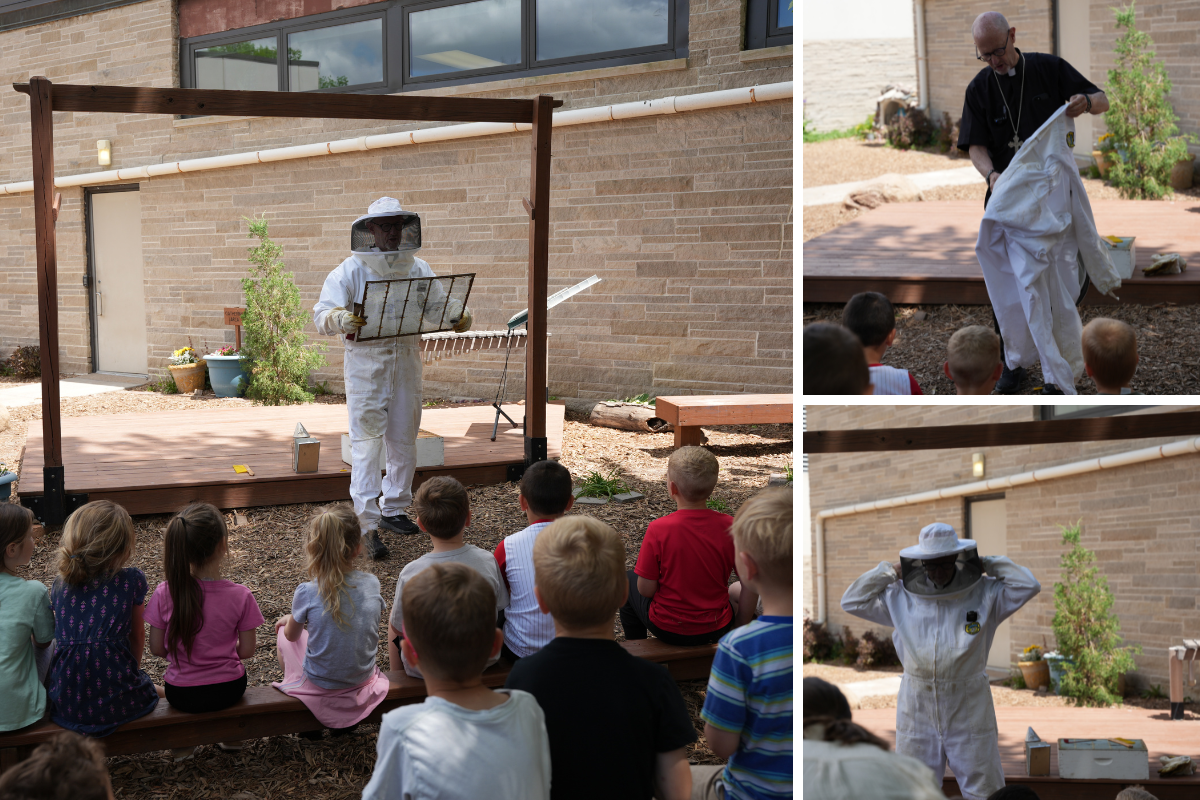
For Bishop Conley, too, taking the wonder of bees into local classrooms — especially his local Catholic preschools — has become part of his own pastoral work. Like Pope Francis in his encyclical on the care of Creation, Laudato Si, Bishop Conley sees the connection between an influx in technology and a loss of connection to God’s work in nature. The garden is a sacred place — and not just because of what it provides.
“In more recent times, I’ve read a lot of books about the rise in mental-health issues among children, and part of it is linked to screen time and that children spend a lot of time in front of screens, and I think it can cause anxiety or even depression,” he said.
“I’m an advocate for outdoor classrooms in schools. I am encouraging our teachers to take children outside. Extend recess time. And to get kids away from screens out into God’s beautiful creation. The more we can bring students into the contact with the ‘really real.’” The bishop himself has been forthright about his own mental-health journey.
It’s not so dissimilar from Pope Francis’ message. “Nature,” the late Pope wrote in Laudato Si, “is a magnificent book in which God speaks to us and grants us a glimpse of his infinite beauty and goodness. Rather than a problem to be solved, the world is a joyful mystery to be contemplated, with gladness and praise.”
‘Only God Could Create Something Like This’
It all goes back to God, to the Creator. When you’re more connected to bees, to nature, to where your food comes from, you’re more attuned to God’s mystery.
“When you look at anything that is beautiful and mysterious, it engenders a respect for the wisdom of God — only God could create something like this,” Bishop Conley said. “An intelligent Creator must have come up with this wonderful creature. It’s so fascinating, it does lead you to think about God and his wonder.”