St. Damien’s Birthplace Reopens: A Beacon of Faith and Service
The restored birthplace of St. Damien De Veuster in Tremelo, Belgium, opens its doors with a new permanent exhibition celebrating the life of the ‘Apostle to the Lepers.’

In the quiet Belgian town of Tremelo, Flanders, a modest house carries the extraordinary legacy of a man who became a universal symbol of compassion and sacrifice. On May 24, the birthplace of St. Damien De Veuster — known to the world as Father Damien — reopened its doors following extensive restoration, offering visitors a renewed glimpse into the early life of one of Catholicism’s most beloved missionary saints.
Born Jozef De Veuster in 1840, the future saint grew up in this very house before embarking on a journey that would take him from the farmlands of Belgium to the remote Hawaiian island of Molokai. There, he would dedicate his life to caring for those afflicted with leprosy (Hansen’s disease), ultimately contracting the disease himself and dying in 1889 at the age of 49.
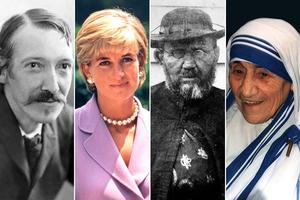
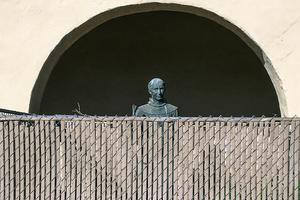
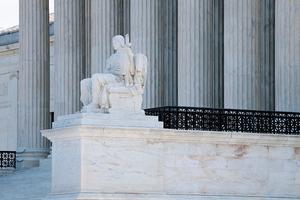
Father Damien’s story resonates particularly strongly in the United States, where he is remembered not only as a Catholic saint but as a heroic figure in Hawaiian history. His path to sainthood was marked by significant milestones: he was beatified by Pope John Paul II in 1995 and canonized by Pope Benedict XVI in 2009. The same year he was beatified, he was honored with a statue in the U.S. Capitol’s National Statuary Hall, representing the state of Hawaii. His feast day is celebrated on May 10, and he serves as the patron saint of those afflicted with leprosy and, unofficially since the 1980s, those suffering from AIDS.
A Living Symbol of Faith in Action
“This house is more than a historical building,” reflected Father Juan Carlos Tinjaca of the Congregation of the Sacred Hearts of Jesus and Mary during the reopening ceremony.
“It is a living symbol, a place of memory and inspiration. It is where the path of faith and life began for a man who would later become, beyond the borders of Belgium, the Church, and even religion itself, a universal sign of human compassion.”
Father Damien belonged to the Congregation of the Sacred Hearts of Jesus and Mary, also known as the Picpus Fathers, whose spirituality centers on the Eucharist and the incarnate love of God in Jesus Christ. For St. Damien, the Eucharist was his source of strength. Even on Molokai, in the most harrowing circumstances, he found daily time for adoration. Before the tabernacle, he discovered the courage, compassion and faith to give himself completely to those whom no one else dared approach.
A Carefully Restored Treasure
The restoration of St. Damien’s birthplace, protected as a heritage site since 1952, was undertaken with meticulous care in consultation with Belgium’s Heritage Agency and the Flemish government. The comprehensive renovation included roof renewal, facade restoration, interior and exterior woodwork renovation, and special attention to the stained-glass windows and the upstairs room where Damien was born.

The project cost €653,803.65 ($707,769) excluding Value Added Tax, with €236,253.64 ($255,731) subsidized by the Flemish government.
The new permanent exhibition on the restored ground floor takes visitors on an interactive journey through Damien’s footsteps. In the “best room,” period furniture and interior elements linked to the De Veuster family — including a table and coffee grinder — bring Damien’s youth in Tremelo back to life.

The adjacent chapel space, featuring restored stained-glass windows, displays sacred Damien artifacts, including a mission cross and chasuble that tell the story of his life and work as a priest-missionary in the Hawaiian Islands. A centerpiece authentic Hawaiian religious statue references his encounter with Hawaiian culture, provocatively asking visitors whether such an artifact belongs in this Belgian setting and reflecting Damien’s own journey of cultural bridge-building.

Perhaps most moving is Damien’s original coffin, displayed in a custom-made glass case, inviting quiet reflection on life, death and sacrifice. An interactive touchscreen map highlights key places and events from Damien’s life through testimonies, historical photographs and documents.

The exhibition design and implementation by Bureau Wondering of Ghent cost €62,550 ($67,689) and was financed by the Association of the Fathers of the Sacred Hearts.
A Message for Today’s World
“This museum links our community of Tremelo with the whole world and even brought me to visit Molokai,” explained Bert De Wit, mayor of Tremelo and a member of the Christian Democratic Party CD&V, highlighting the global reach of Father Damien’s legacy.
Father Tinjaca emphasized that the reopening serves a purpose beyond historical preservation: “We want his witness to continue to resonate — for this place to become a house of encounter, of reflection, of vocation; a place where young and old can feel: Here lived someone who believed that love is stronger than fear, stronger than sickness, stronger than death."
The museum’s success is also attributed to the dedicated work of Head of Museum Ruben Boon, a historian whose deep engagement with Father Damien’s legacy led him to write In Connectedness (original title in Dutch: In Verbondenheid), a polyphonic view and comprehensive work that has become a standard reference for Damien research.
This message carries particular relevance for American Catholics, as Father Damien’s story embodies the immigrant Catholic experience in America of leaving one’s homeland to serve in a new land, embracing those on society's margins, and finding strength through faith to overcome seemingly impossible challenges.
A Living Legacy Around the World
Father Damien’s influence extends far beyond his Belgian birthplace and Hawaiian mission. Numerous Damien centers and Damien ministries worldwide continue his work of caring for the marginalized, particularly those affected by HIV and AIDS. The Episcopal Church of St. Thomas the Apostle in Hollywood houses the only chapel consecrated to Father Damien specifically for remembering those who died of AIDS, highlighting his unofficial role as patron of AIDS victims.
The Damien Foundation, established in 1964, carries on his mission in a concrete way. This Belgian organization fights leprosy and tuberculosis in 16 countries across Africa, Asia and Latin America, while also financing scientific research into these diseases. More than half of its funding comes from donations by the Belgian population, raised through an annual fundraising campaign held on the last weekend of January.
His story has also captured the imagination of filmmakers. In 1938, the American short film The Great Heart, which recounted Father Damien’s work, won the Academy Award for “Best Short Film” in 1939. The 1959 Spanish film Molokai: La Isla Maldita (directed by Luis Lucia) starring Javier Escrivá won multiple awards, as did the 1999 film Molokai: The Story of Father Damien, directed by Paul Cox and starring David Wenham.
Father Damien’s impact on his homeland was officially recognized in 2005 when he was voted the greatest Belgian of all time. Numerous monuments in both Hawaii and Belgium commemorate his extraordinary life and ministry.
Continuing the Mission
The Damien Museum now welcomes individual visitors Wednesday through Sunday, 10 a.m. to 5 p.m., without appointment, while groups and schools continue to be welcomed by arrangement. This accessibility ensures that Damien’s legacy of service and compassion remains available to inspire new generations.
For Catholics worldwide, and particularly for those in the United States where Damien’s memory is cherished as part of both religious and national heritage, the reopened birthplace in Tremelo stands as a testament to the enduring power of faith transformed into action and love made manifest in service to the most vulnerable among us.
As Father Tinjaca concluded his remarks at the reopening, “Let this day be a new beginning. May the house where Damien started become, for many, the beginning of their own path — inspired by faith, by service and by love.”
LEARN MORE
The Damien Museum is located in Tremelo, Belgium. Father Juan Carlos Tinjaca, ss.cc., born in Bogotá, Colombia, in 1968, joined the Congregation of the Sacred Hearts of Jesus and Mary in 1991 and has been deeply involved in Damien-related projects since 2006, including the “Damien Today” initiative.
Thomas Philipp Reiter is a Belgian-German journalist based in Brussels, specializing in reporting from Belgium, the Netherlands and Luxembourg. He studied journalism, economics and political science in Hamburg, Germany.
- Keywords:
- st. damien of molokai
- belgium