‘A Cathedral in Print’: The Rise of the Catholic Premium Bible
As demand rises for heirloom-quality editions, Catholic publishers are investing in beautifully crafted Bibles that aim to unite Scripture, art and devotion.
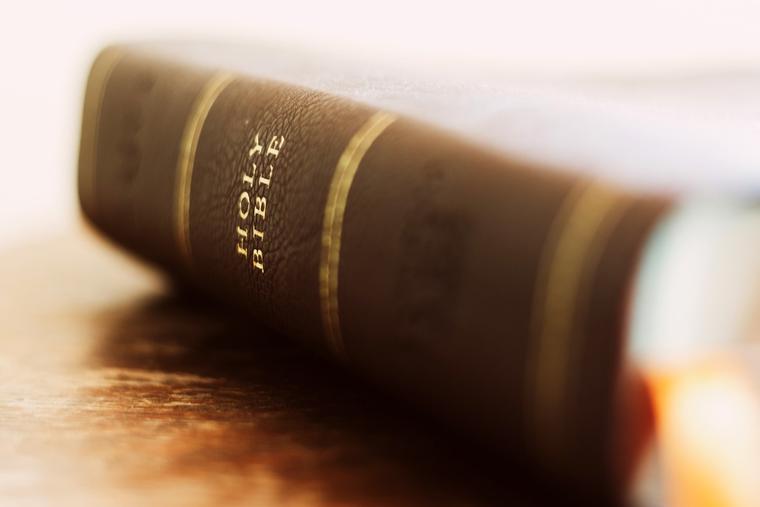
Premium Bibles are all the rage on YouTube, with many channels reviewing them: from the quality of the paper used to the “bleed through,” from the page layout to the craftsmanship of the final product. However, most of the Bibles reviewed are Protestant as are most of the reviewers, but increasingly on these channels there are reviews of Catholic Bibles.
This raises the question: Is the premium Bible solely a Protestant phenomenon?
In the United States alone, Bible sales hit around 19 million units in 2025, marking the highest total in over two decades — about a 12% increase over sales in 2024. This came on the back of 2024 sales that saw Bible sales outpace overall U.S. print book market growth by 22%. In contrast, total print sales grew less than 1%.
Tim Wildsmith is a Nashville, Tennessee, YouTube Bible reviewer whose channel has almost 300,000 subscribers, accruing over 21 million views. Speaking to the Register, he explained how important premium Bibles are to Evangelical/Protestant believers, saying, “While premium Bibles aren’t ‘central’ to evangelical life, they occupy an important space where theology, devotion and craftsmanship meet.”
Within this world, he says, premium Bibles have become “a meaningful niche,” but he emphasizes the word niche.
“My sense is that most people aren’t buying heirloom editions and don’t even know that companies like Schuyler or Humble Lamb exist. But there is certainly a growing community of people who value craftsmanship, durability and the idea of having a single Bible that will last a lifetime. I find that for many of these folks, it isn’t about luxury. It’s about forming a long-term relationship with a copy of God’s Word that they’re going to read, carry and study for years,” he adds.
Wildsmith reviews Catholic Bibles. So, what is his take on the current state of Catholic premium Bibles? Is it less of a priority for us?
“Historically, yes,” he says, “but for understandable reasons. Catholic publishers have prioritized missals, liturgical books and devotional editions rather than premium, long-lasting personal Bibles. And the Catholic market has been more fragmented in terms of translations, which makes large-scale investment in premium editions more complicated.”
However, that said, he does think that things are changing, and that in the last few years, Catholic Bible publishers “have clearly recognized the value of producing durable, beautiful, reader-friendly Bibles.” Not surprisingly, as a result, he says, “demand is growing, and so are the options.”
One of the Catholic publishing houses that has met that challenge is Word on Fire. In 2020, it launched its Word on Fire Bible series. Was this Bible series created as a response to a need, or an attempt to create a whole new genre — namely, premium Bibles for a Catholic audience?
Speaking to the Register, Brandon Vogt, Executive Publishing Director of Word on Fire Publishing, gives the threefold rationale behind the series.
“First, there’s the commentary content. … The Word on Fire Bible brings in a whole chorus of voices — saints, mystics, artists, scholars — from across the 2,000-year tradition of the Church. It presents Scripture from the heart of the Church, as Dei Verbum commends.”
Second, Vogt says the aim was to create “the most beautiful Bible of our time. From the dazzling artwork and custom typography, to the elevated quality of the cover, paper and material. … The artwork is probably the first thing people notice. Crucially, for Vogt, the art entries introduce “an aesthetic dimension to the Scriptures, just as the great cathedrals, statues and musical works illuminate the Gospel.”
Finally, lamenting that most modern Bibles are “bland and unattractive,” Vogt wanted to change the experience of reading Sacred Scripture.
“After reading the typical Bible for 20 minutes, your eyes become tired from all the small, black-and-white text and your attention begins to drift. We knew we wanted something different — a Bible that was as visually attractive as it was intellectually stimulating, one that would grip you and hold your focus over long reading sessions. That desire shaped the entire design of the Bible, from the artwork to the single-column layout of the biblical text, to the varied styling of the commentary entries.”
Perhaps a new Catholic Bible series was not the first thing under consideration at Word on Fire when the idea was proposed, yet that premium Bible series does seem to have found its “niche” audience, selling to date over 600,000 copies.
One of the criticisms of a premium Bible is that it is a mere vanity, or worse a form of “idolatry” — mistaking the Word for mere words. Wildsmith is not convinced by this argument.
“We don’t accuse people of idolatry for buying a well-made musical instrument, a sturdy pair of boots, or a durable tool for their vocation. The existence of good craftsmanship isn’t the issue — it’s the heart behind it,” he says.
That said, he accepts that the Bible’s message is infinitely more important than the materials it is printed on, conceding that an inexpensive paperback Bible contains the same Gospel as a premium edition.
“So, if someone uses a premium Bible to signal status or superiority, that’s a spiritual problem. … A premium Bible is simply a well-made tool for the most important thing we do: hearing and responding to God’s Word.”
There is an understated recognition that human beings are both body and spirit when Wildsmith points out, “If a well-constructed Bible lasts longer, lays flatter, reads more comfortably, and makes it easier to stay engaged while helping the reader to love Scripture and return to it, then that’s not vanity, that’s wisdom.”
Needless to say, Wildsmith is a fan of the Word on Fire Bible series. Doubtless the team there would agree with all that the online Bible reviewer says as one of their key principles in producing their Bible series was: “to lead with beauty.” In fact, Vogt counters the arguments against premium Bibles by saying, “If the goal is mere information transfer, then sure, any cheap, black-and-white Bible will do. But just as the Church lavishes the Gospel through the beauty of its art and architecture, so the Word of God deserves to be conveyed in a most beautiful form.” To that end, he says they set out to create “a cathedral in print.”
Thus, for Vogt each Word on Fire Bible is “illuminating the divine text through vivid artwork, commentaries, and the highest-quality materials, including full-grain leather cover, sewn binding, matte-coated paper which resists wear over time, gold foil on the exterior of the pages. It’s not idolatry — it’s excellence,” he says.
Before concluding: “We wanted the form of this Bible to match the quality of its content. The Sacred Scriptures deserve as much.”
- Keywords:
- bibles