New Catholic Hubs: Greenville, South Carolina, Traditional Faith Haven in the Bible Belt
Energized by a strong regional economy and a trio of parishes that place a premium on beautiful liturgies, this charming Southern city is a huge hit with Catholic families.
GREENVILLE, South Carolina — When Heather Vreeman’s husband called her from Greenville, South Carolina, where he was interviewing for a job, she was eager to hear what he thought of the area.
“I think you are going to love it, and I think I found our church,” he told her.
That church, St. Mary’s in downtown Greenville, wasn’t the reason they moved from San Diego, but it was to become central to their lives there. The couple found themselves drawn into a deeper experience of faith, shaped by the parish’s traditional liturgy and sacred music.
“Where we are now at St. Mary’s, it brings you to a very special place. You feel very connected in a way that I may not have in California,” Vreeman explained. Her old parish didn’t take the faith any less seriously, she said, “it’s just a different serious here.”
In the almost 20 years that they have lived here, she says, she has seen an increasing number of Catholics move to Greenville because of its parishes.
“It’s become a haven for a lot of people who are looking for more,” she said.
At St. Mary’s, it all began with the relocation of a tabernacle.
When Father Jay Scott Newman arrived at the parish in 2001, he had a bit of a Jesus-cleansing-the-temple moment that helps explain how the city would become home to a vibrant Catholic community attracting people from all over the country.
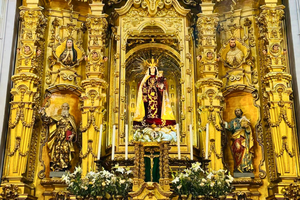
There were, of course, no merchants or money changers to kick out of the church, but the tabernacle — the place where the Eucharist is reserved and Christ is truly present — had in 1984 been relegated to the side of the sanctuary. The first thing the new pastor did was to move it back to the center, on the central axis of the church.
He then moved the chairs that the priest and deacon sit in off to the side, so the people in the pews could focus on the proclamation of the word of God.
“That simple move of furnishings was a sign of what will be front and center in the sacred liturgy, which is Christ the Lord,” Father Newman told the Register. Word spread, he said, and shortly afterward, he said, the church began filling up regularly.
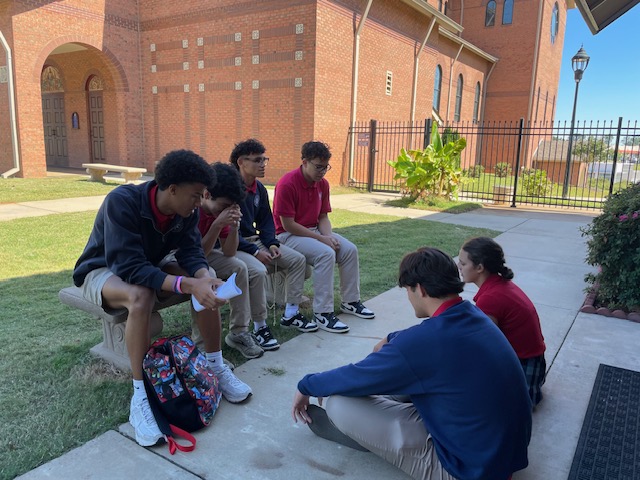
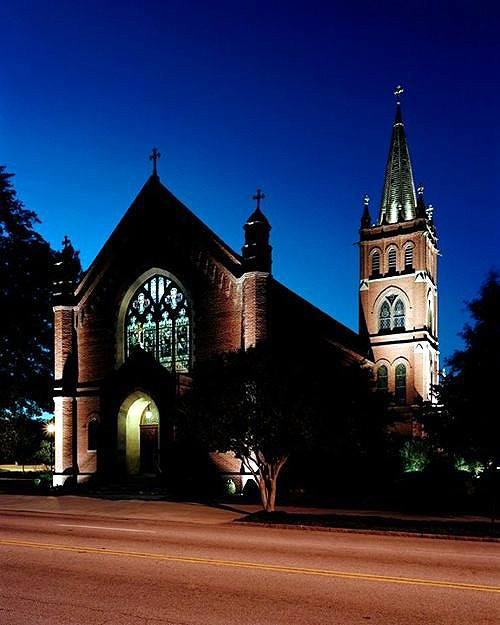
Father Newman went on to embark on a yearslong project to reverse the effects of a 1970s renovation and restore the original beauty of the Gothic red-brick church.
The liturgy, too, had a makeover. Folky “church music” was replaced by traditional hymns and Latin chant and silence. The priest and deacon now face ad orientem, “toward the east.”
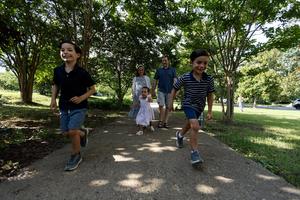
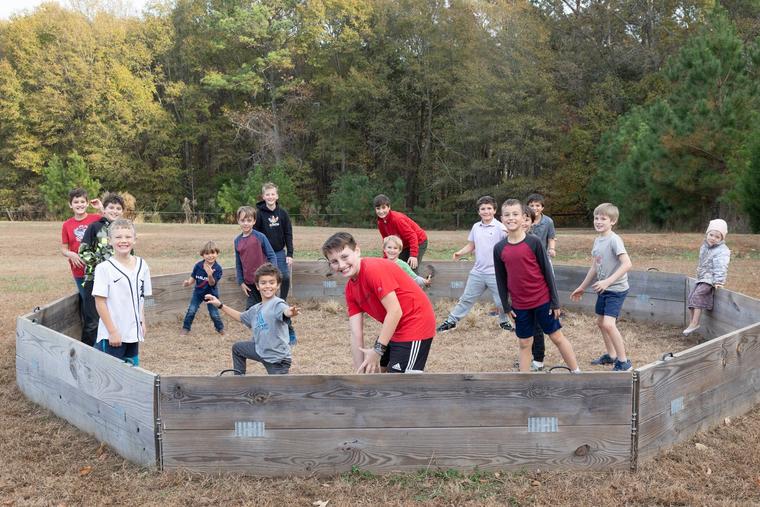
Today, the 9 a.m. Mass on Sunday (if you aren’t there by 8:30 forget about finding a seat) is crowded with young parents and crying babies, and the scene outside the church afterwards is joyful chaos with as many as 150 kids playing as their parents chat.
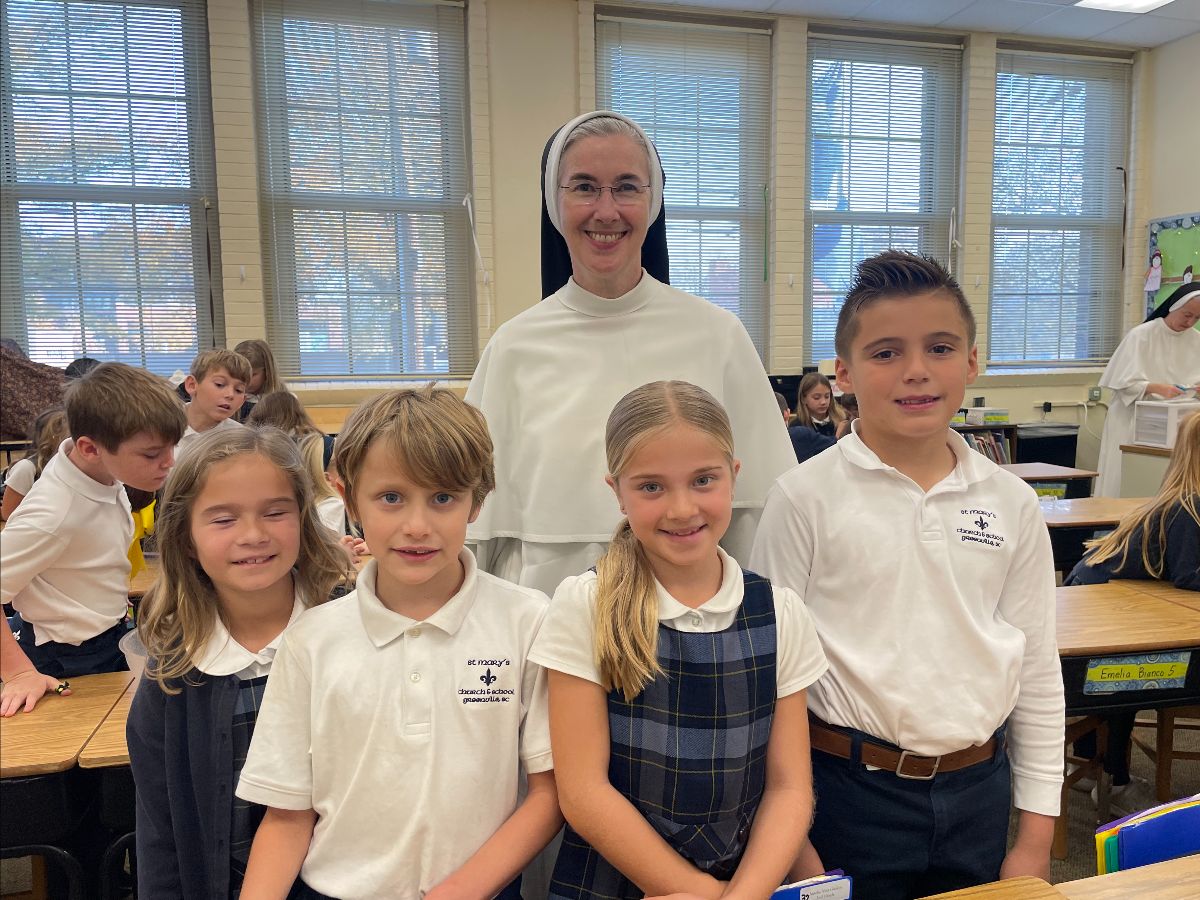
Two of the area’s largest parishes have undergone similar transformations. Like St. Mary’s, they placed a renewed emphasis on the beauty and the reverence of the traditional liturgy within the Novus Ordo Mass. These churches, along with several other thriving parishes in the area, have helped make Greenville a growing Catholic “hub” — a place where the faithful can live their faith more deeply and in communion with like-minded Catholics.
That flourishing can be measured by the new parishes that have already been created, as well as new apostolates, including a Catholic bookstore and community center, Catholic schools, and an engaged home-schooling community that have arisen to meet the needs of Catholics there.
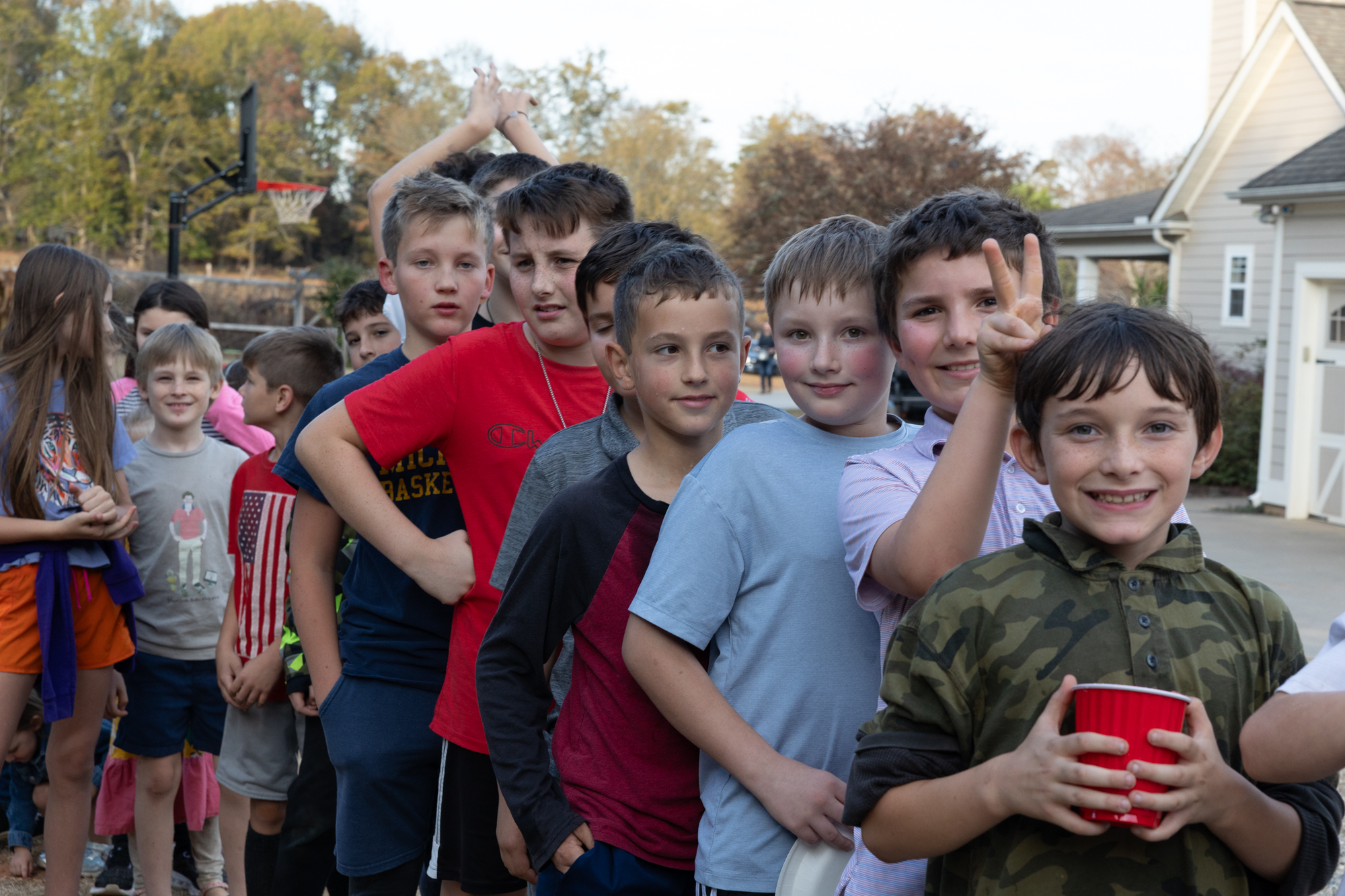
The growth of Greenville’s Catholic community must also be understood in the context of a broader, decades-long migration that has drawn people from traditionally Catholic bastions of the Northeast and Midwest to the South and Greenville in particular.
For some Catholics who have relocated to Greenville, however, a “love at first sight” moment, sparked by a visit to one of the area’s Catholic churches, inspired them to make the move.
Gabe Salamida, and his wife Sarah, both graduates of Franciscan University in Steubenville, Ohio, decided to move to Greenville after attending a friend’s wedding there three years ago.
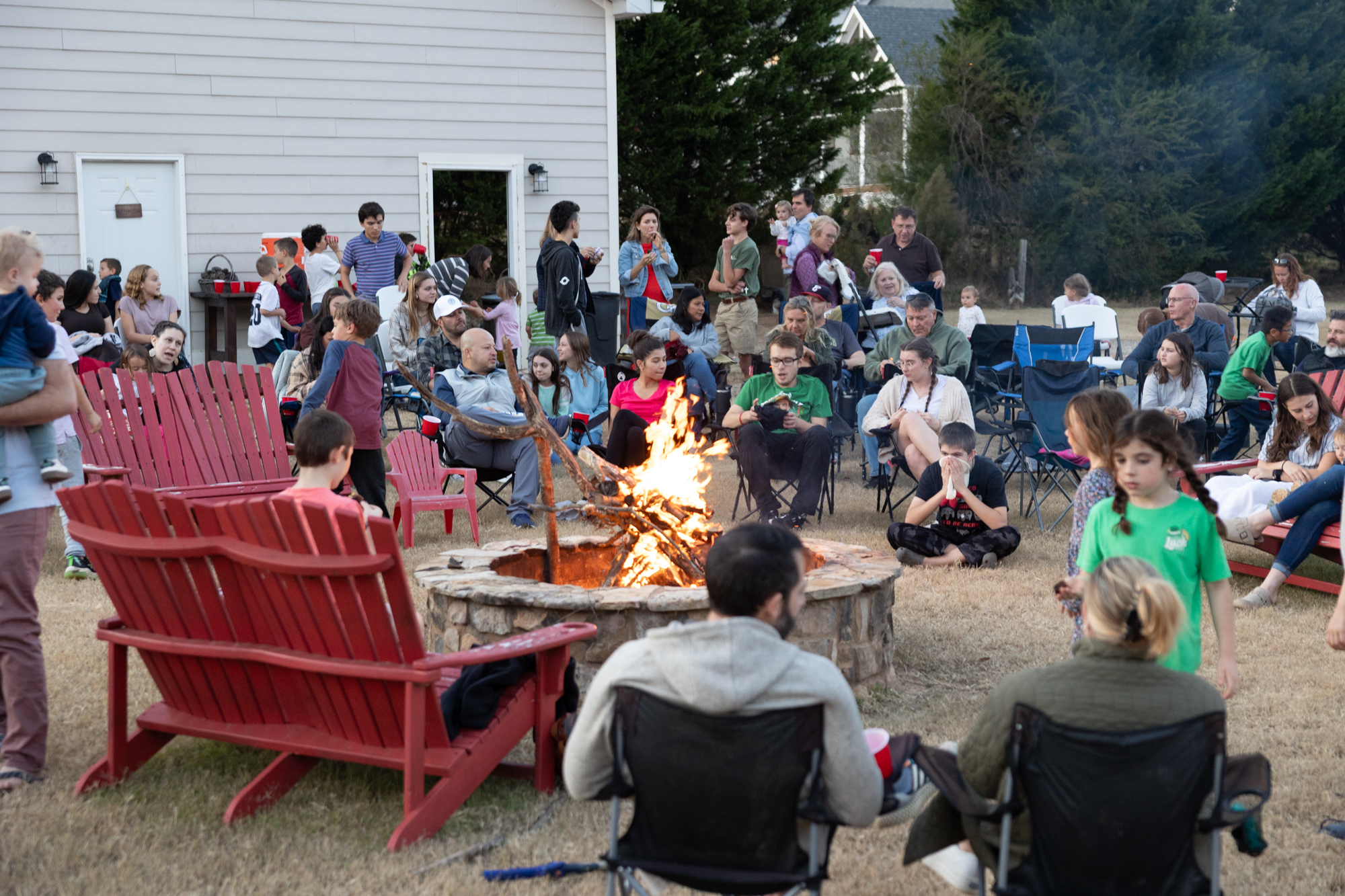
“Everywhere we went we saw kids playing, we saw families, and then we had the firsthand experience of the amazing faith communities here: really great Catholic churches, young people and big families,” he said.
That’s also what happened to TJ Nielsen, who moved to the city 18 years ago after visiting it as a graduate student at nearby Clemson University.
“We went to Mass one time at St. Mary’s, and I’m like, ‘That is where I want to raise my children,’ that didn’t exist yet at that time,” said Nielsen, now a father of six.
Greenville’s Rebirth
It’s easy to see why Greenville, located in the “Upstate” region of South Carolina, halfway between Atlanta and Charlotte, attracts so many new residents. With its mild winters, relative affordability, and proximity to both the Blue Ridge Mountains and the coast, the area offers much for outdoor enthusiasts and families alike.
Greenville’s status as a sought-after destination also owes much to the foresight of Max Heller, the city’s mayor during the 1970s. Heller attracted major corporations such as Michelin, BMW and General Electric, transforming Greenville into the economic engine it is today. Revitalization efforts in the 1980s transformed Main Street from a four-lane strip best avoided after dark, to a charming, tree-lined avenue of boutiques and restaurants.
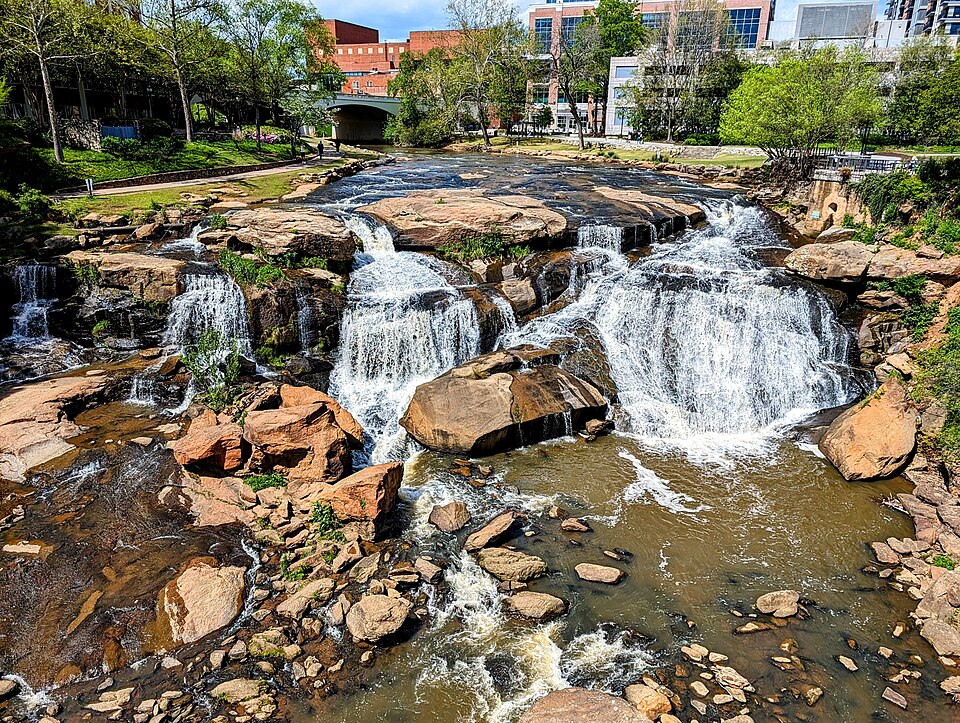
Today, the city has 400 acres of public parks (including a 28-mile bike and walking path along the Reedy River). The top tourist attraction is a magnificent waterfall, located right in the heart of the city. Many residents had reportedly been unaware of the existence of the falls until 2004, when a highway overpass that had long obscured it was replaced with a pedestrian bridge.
When people talk about Greenville’s incredible growth, they are referring to Greenville County’s growth. Since 1960, the county’s population has more than doubled to more than 570,000 today. The city proper has a population of about 74,000, not much higher than 1960’s population of 66,000.
Unlike smaller intentional Catholic communities in places like Cheverly, Maryland, or Wichita, Kansas, that have a village-like feel, Greenville’s Catholic hub is spread out. Families often settle on the peripheries of Greenville, in the area’s more affordable small towns and suburbs. Many drive 30 to 40 minutes to go to Mass and meet up with friends, home-schooling groups or schools.
A Catholic Minority
Newcomers to Greenville, accustomed to living amid a secular culture in which faith rarely comes up in conversation, quickly learn that things are different here.
It’s common for new residents to receive a warm welcome from their neighbors, along with an invitation to join them at their church on Sunday. The predominantly-evangelical-Christian culture doesn’t hide their faith under a bushel. Even at the local Starbucks, it’s reportedly not unusual to see more than one person with an open Bible.
In 1987, when Pope John Paul II visited South Carolina, the state had only 70,000 Catholics, making up 2.1% of the population — the smallest percentage of Catholics in any state. Today, Catholics are still a distinct minority in this deeply evangelical Protestant state, but their number has increased to 219,000 or 4%.
With that growth has come a gradual shift in attitudes. Back in 1987, Bob Jones University, a Baptist stronghold located five minutes from downtown, took out newspaper ads protesting the Pope’s planned address before 60,000 people at the University of South Carolina's football stadium. Today, in what is seen as a sign of warming relations, the university has, after a yearslong legal battle, agreed to allow Catholics to serve as foster parents through Miracle Hill, a charity it operates.
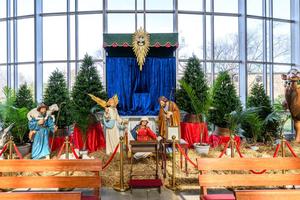
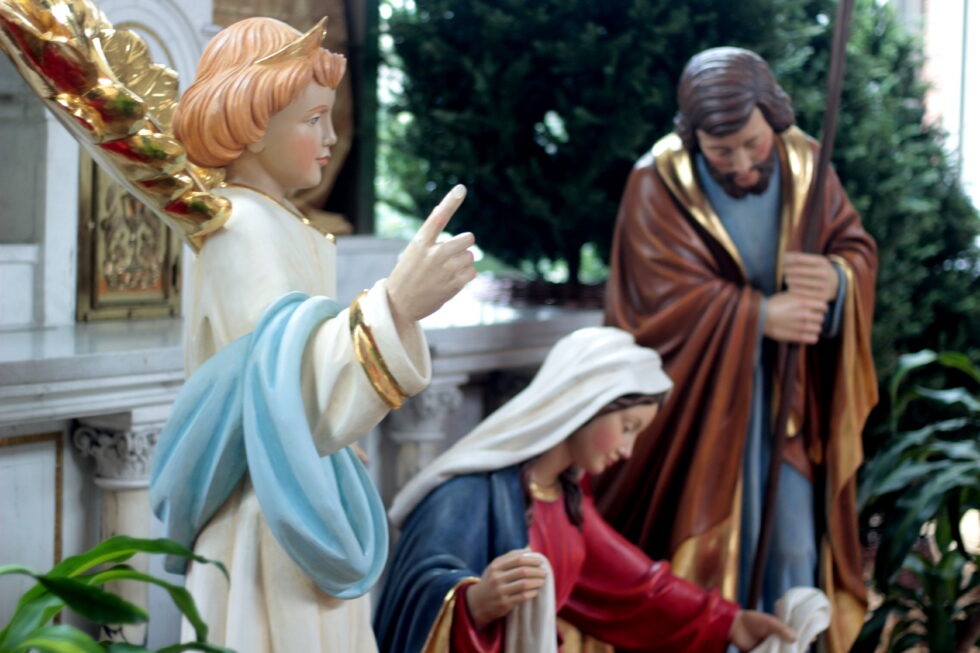
In another sign of growing ecumenism in the area, each year thousands of Protestants stop by Prince of Peace Catholic Church during Advent and Christmas to see the life-sized Nativity that fills the church’s narthex.
The Catholic community’s minority status has likely contributed to the cohesiveness, as new transplants have formed tight-knit communities, both within their parishes and across parishes, particularly among young families, many of whom home school their children.
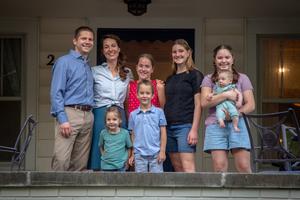
Kristina Hernandez moved to Greenville with her family in 2023 from Richmond, Virginia, after her husband accepted a job at Bon Secours St. Francis Hospital. She told the Register that while they came “for a job,” they were happily surprised to discover that so many young Catholic families had moved to Greenville for its parishes. They developed a network of friends through their parish and other home-schooling parents.
“I think they really want to seek out others who love their Catholic faith and want to live it out in everyday life,” Hernandez said.
Kathleen Billings, who with her husband Troy moved to Greenville from the Chicago area in 2020, is seen as an anchor of the home-schooling community.
Shortly after settling down, the couple began inviting families, many of whom had newly arrived, to their home for monthly Rosaries, Billings told the Register.
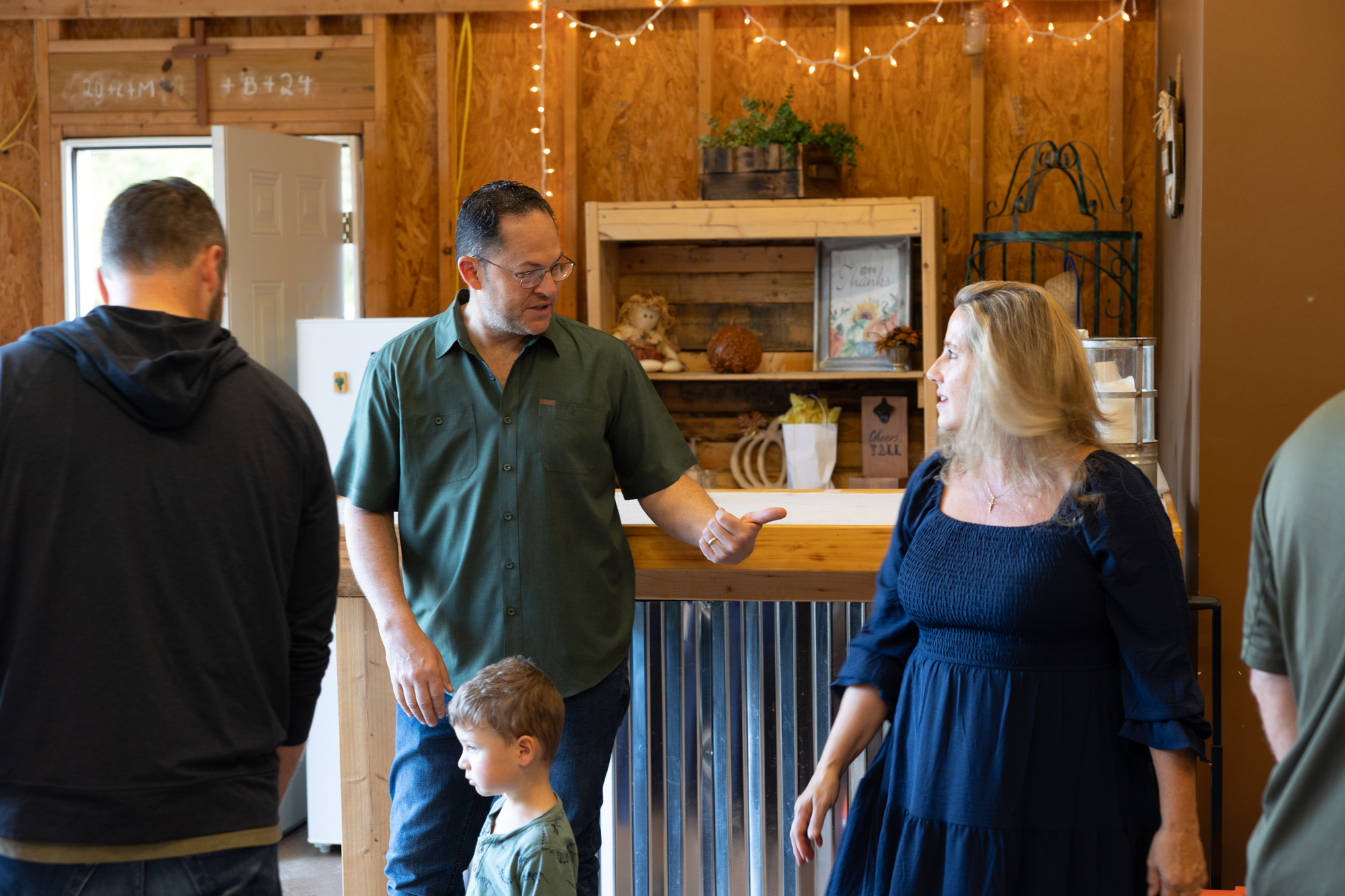
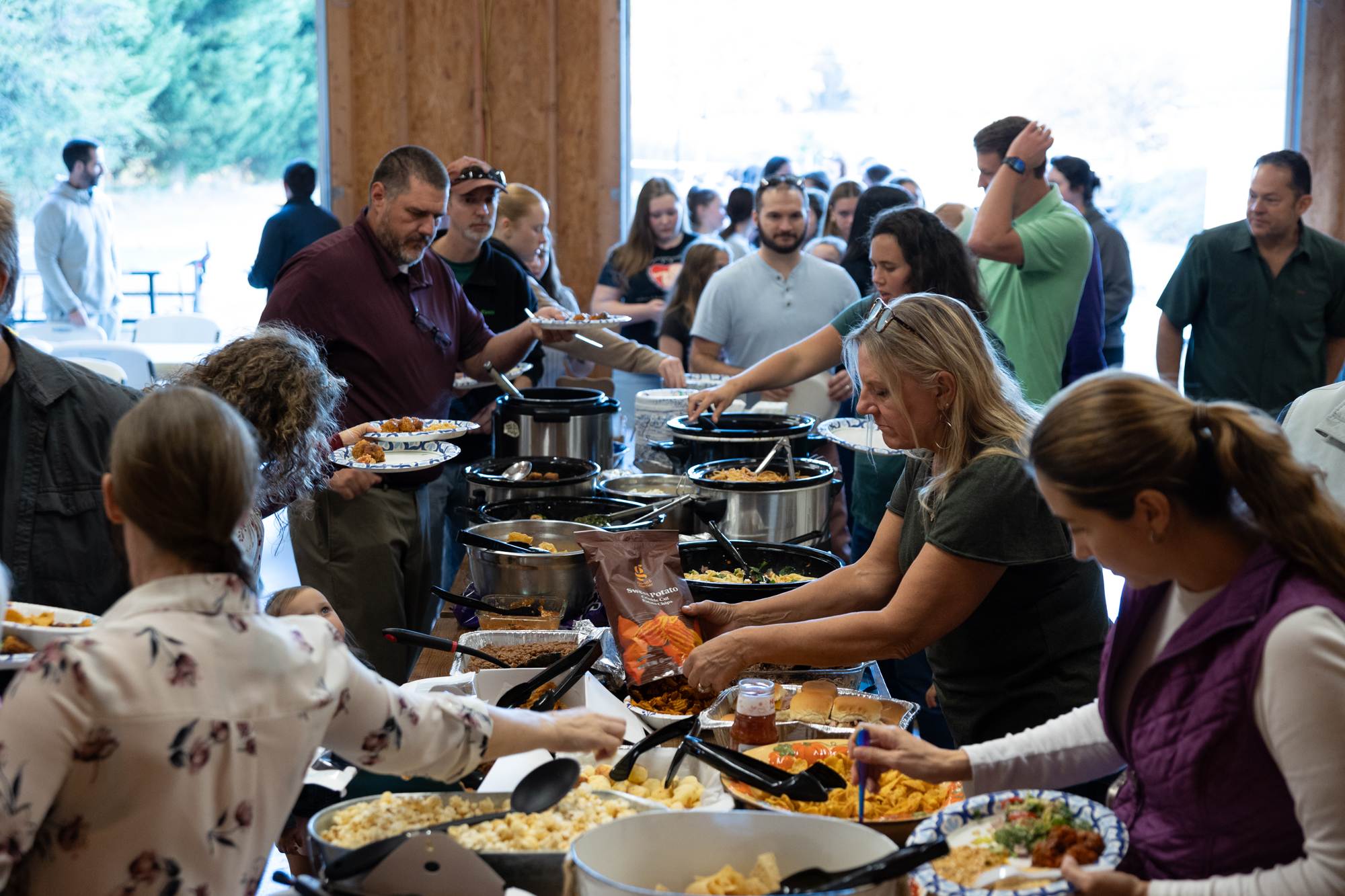
Today, as many as 300 people come to their farmhouse to pray the Rosary and enjoy a potluck meal each month. They’ve recently introduced regular barn dances and celebrations on Catholic feast days.
“We’ve tried to combine just good, wholesome fun for the family and opportunities for fellowship for people, along with praying the Rosary,” Billings said.
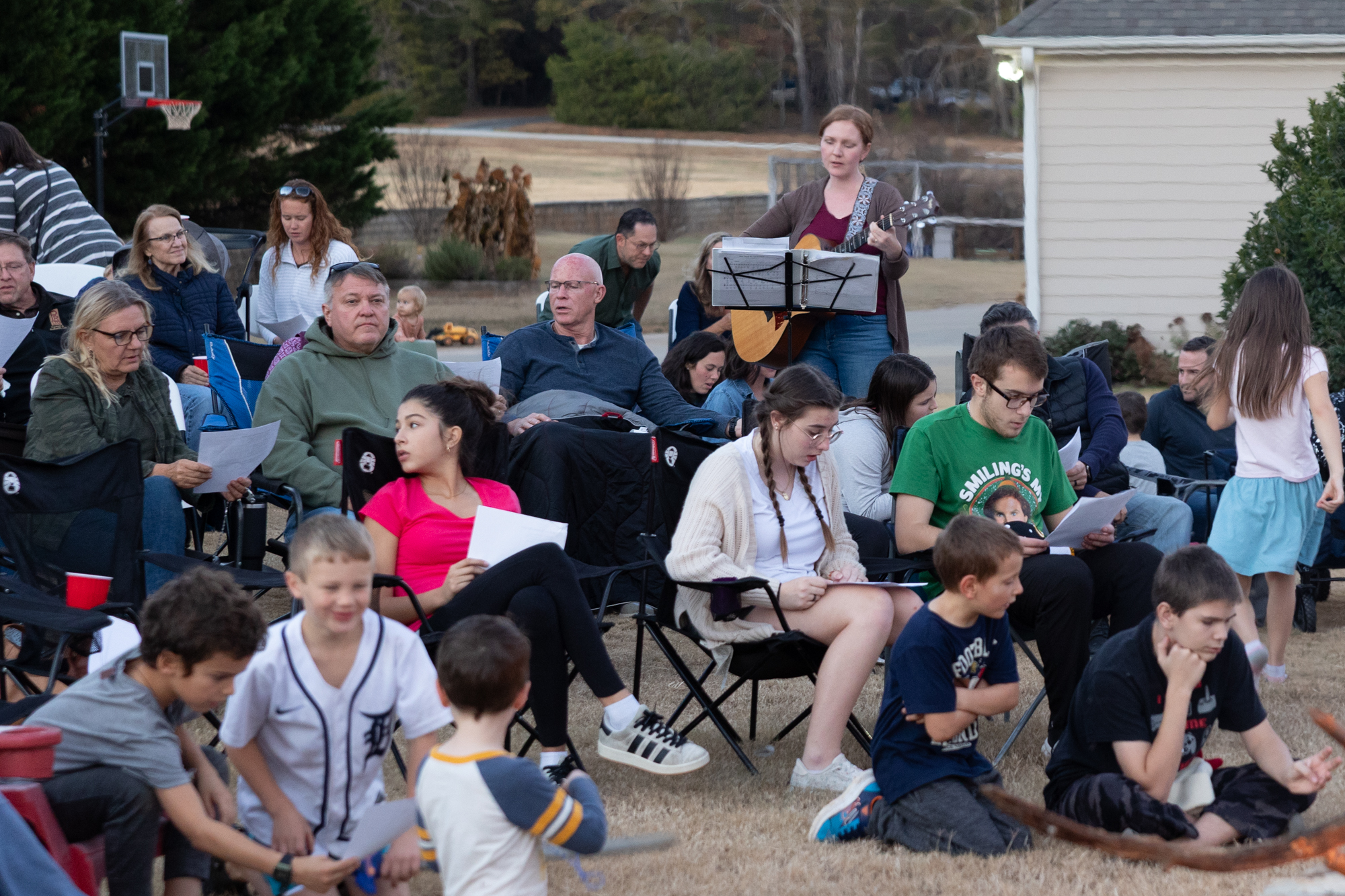
A new feature of Greenville’s Catholic life is “Christ on Main,” a Catholic bookstore that opened on Main Street in 2024. Modeled after the Catholic Information Center in Washington, D.C., it’s a place for the Catholic community to come together as well as a way to evangelize.
Young professionals meet monthly for Theology on Tap, nationally recognized speakers appear regularly, and the store is staffed with volunteers ready to point curious people wandering in off the street to Catholic resources.
Charlie Bathon, general manager of Christ on Main, told the Register that the volunteers are trained to operate the cash register and give recommendations on Catholic books, but also on how to be missionaries.
“The most important thing we do, when someone walks through the door to start a conversation, is to meet them where they are, not bludgeon them, just basically get to know them and find out what they are looking for,” he said.
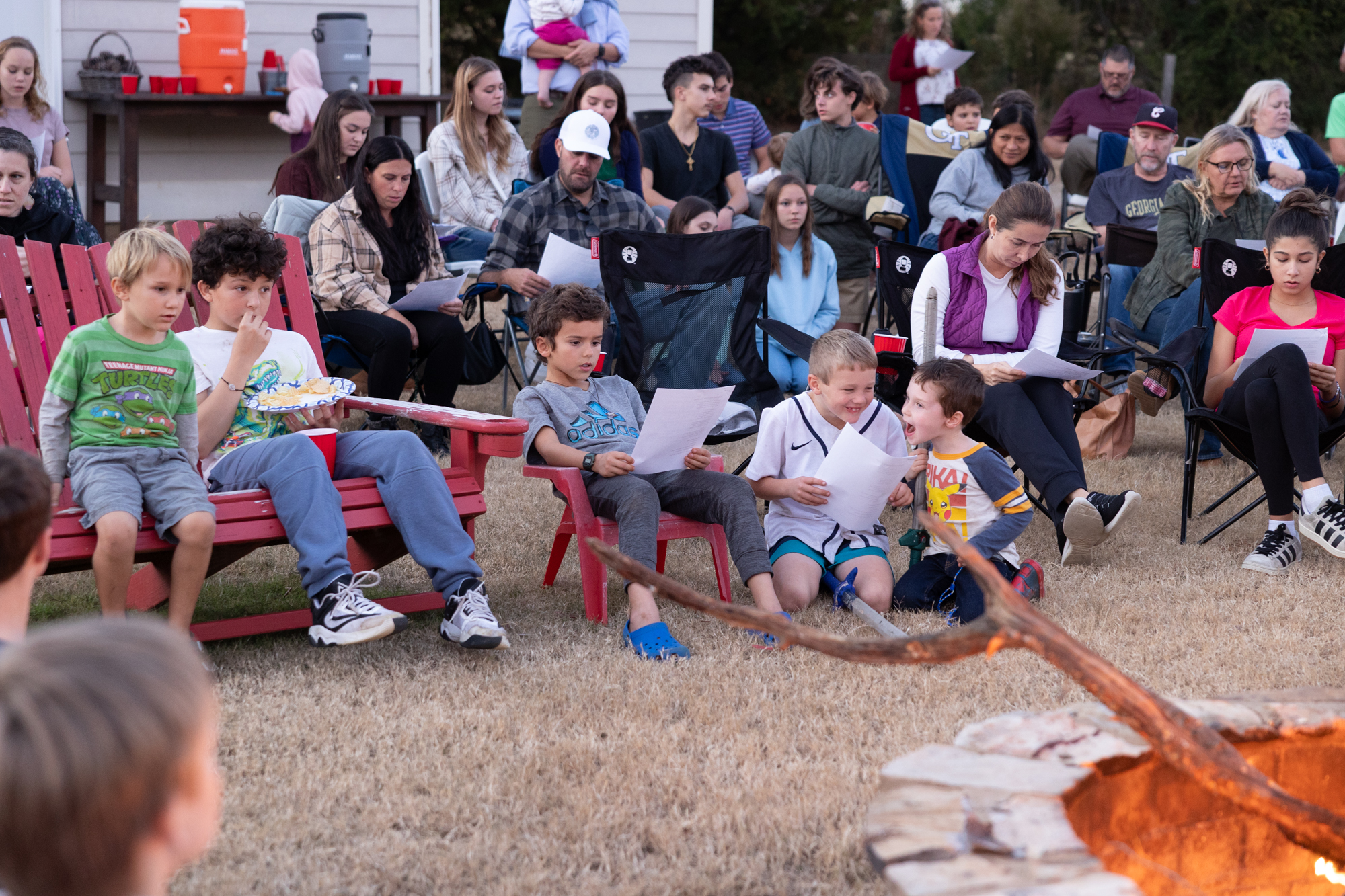
And Protestants are more than welcome. Since they opened their doors, two of their talks have been on the Apocalypse, not coincidentally a popular topic among evangelical Christians.
Even though Greenville is 500 miles south of the Mason-Dixon line, a visitor can go all day without hearing a Southern accent because so many people have relocated here from elsewhere. At a meeting with half a dozen of the founders and supporters of Christ on Main, nobody raised a hand when asked if anyone was originally from South Carolina.
A Wealth of Reverent Churches
Our Lady of the Rosary (OLR) and Prince of Peace are two other Greenville parishes that also celebrate a traditional liturgy and sacred music and worship ad orientem. Like St. Mary’s, these parishes are led by pastors who are all converts to the faith.
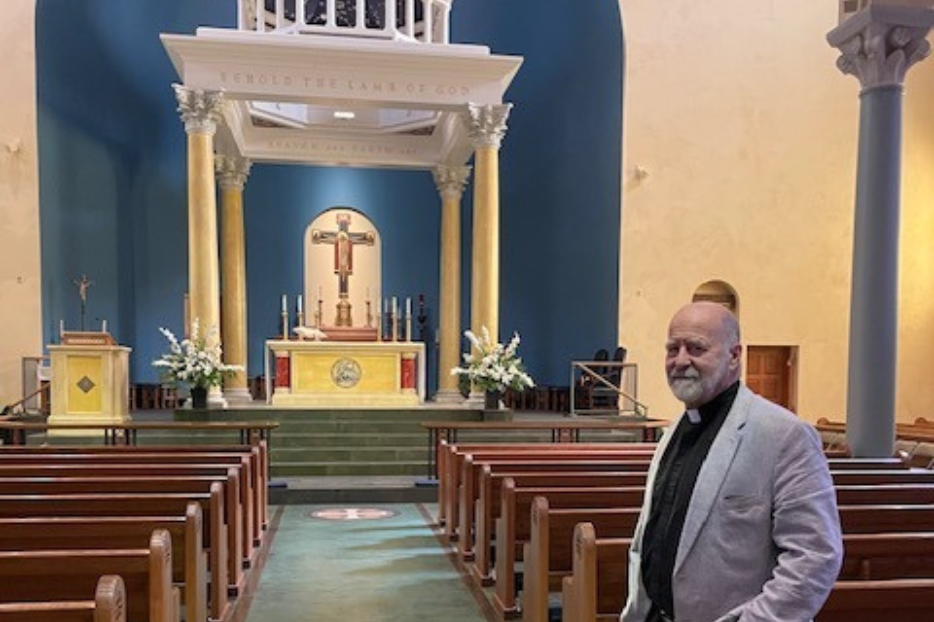
Our Lady of the Rosary Catholic Church, located on the edge of the city limits, has for the past 15 years been led by Father Dwight Longenecker, a well-known author and Register contributor who is a former Anglican priest. His first posting as a Catholic clergyman was at St. Mary’s, with Father Newman.
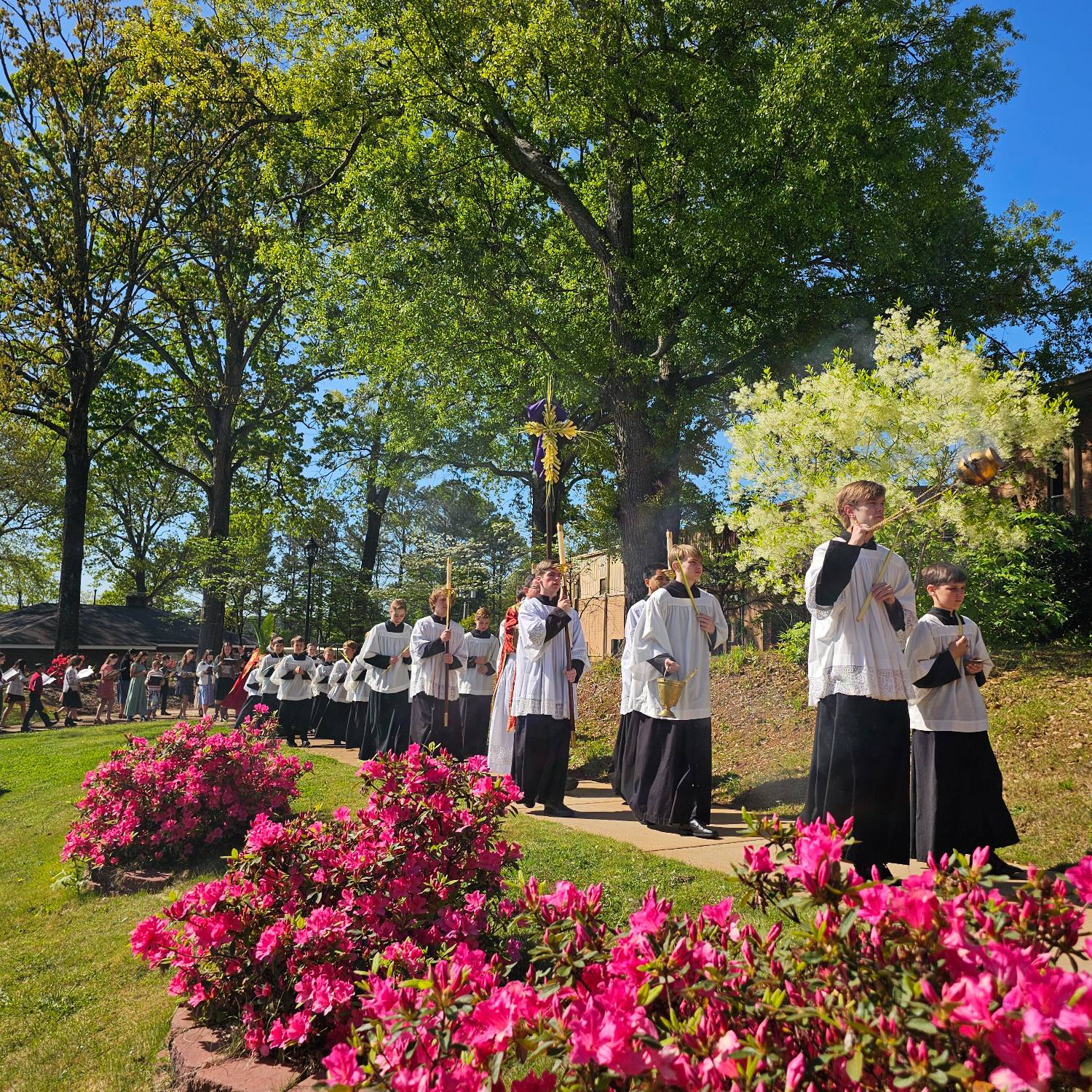
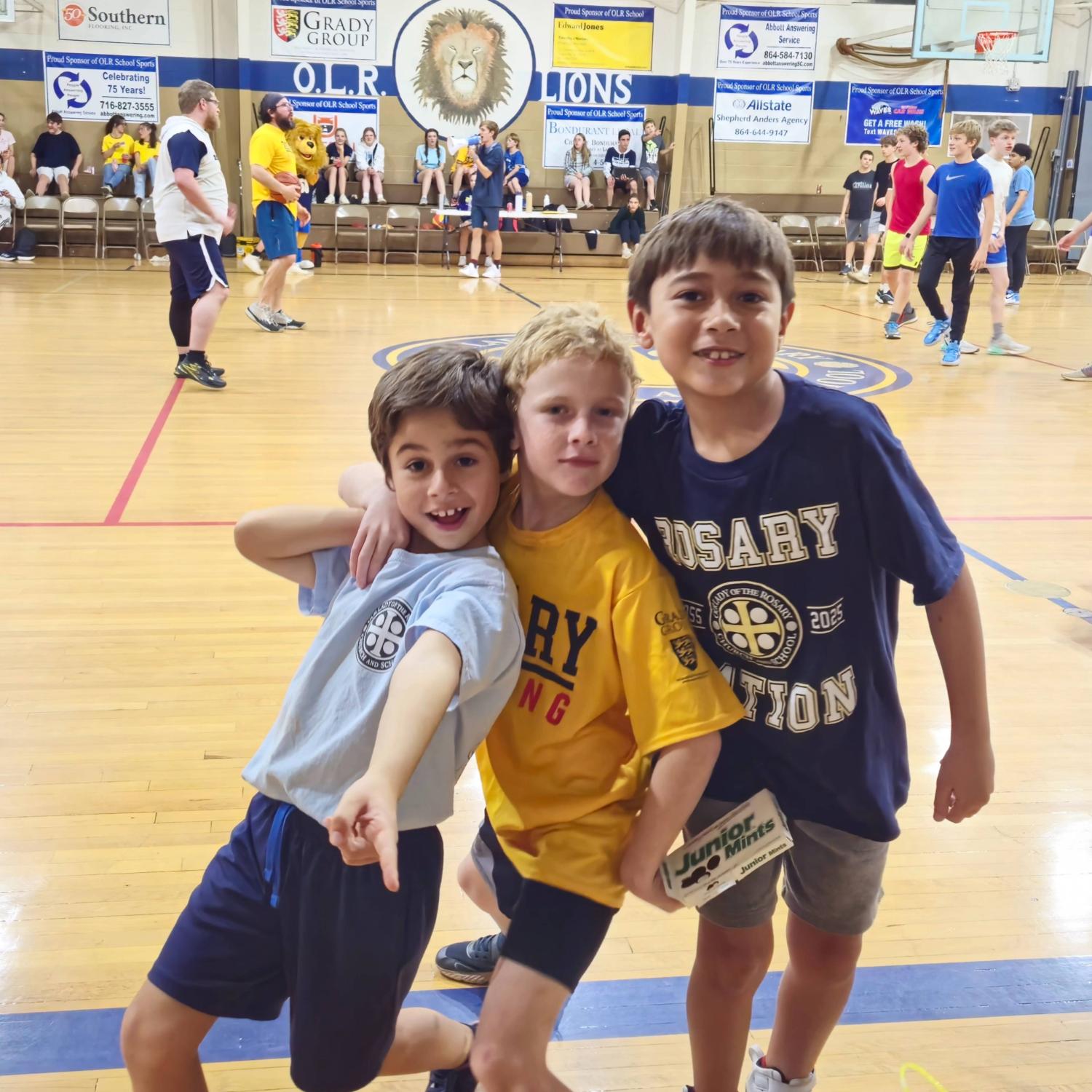
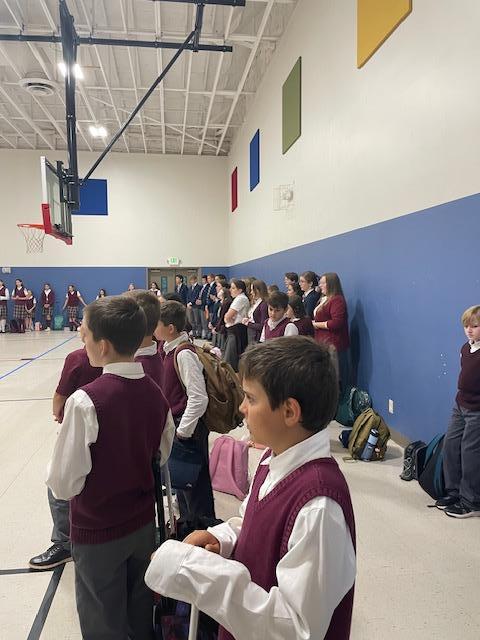
Father Longenecker, too, has led a remarkable transformation of what began as a mission parish. He oversaw the construction of a soaring new Romanesque-style church, better suited to the traditional liturgy than the 1950s structure it replaced. He expanded the parish’s K-8 school through grade 12 and introduced a classical curriculum and a vibrant Catholic culture. The many large families that send their children to the school do so thanks to a generous scholarship program that lets parents pay tuition only for their two oldest children — any younger siblings attend for free.
At lunchtime this fall, a group of upper-school students were spotted praying the Rosary together in the school’s courtyard. Another group sitting at a picnic table recited the Angelus before taking their lunches out of their backpacks. When asked, they said they were praying simply because they wanted to.
Tommy Curtin, the headmaster at the school, explained that this was typical behavior for students at OLR. The school’s strong Catholic culture, he said, is sustained by the families it serves.
The school accepts applications from students who are considered “mission territory,” which, Curtin explained, might mean they are not Catholic, are struggling with the practice of their faith, or perhaps have behavioral issues. However, only a small percentage of these students are accepted. The school community is “curated,” Curtin explained, so that the vast majority of students can actively promote, or at least not impede, the school’s mission.
“What so many Catholic schools do is, because they have a big heart and great intentions, they just bring in everyone. They bring in all the mission territory families, many of whom aren’t Catholic,” he said.
“Those families end up defining the hidden curriculum of the school. At that point it doesn’t really matter what you do in terms of sacraments and in terms of curriculum. There’s always going to be a student culture which can’t be penetrated and which is immune to your efforts,” Curtin said.
Thanks in part to Father Longenecker’s high profile, the number of parishioners has doubled in the last 10 years. He told the Register that many people have written to him to tell him that they decided to move to Greenville because they were unhappy with their parishes at home.
“While we have a positive environment here for young Catholic families, elsewhere in the country, they were reporting to me that it was just the opposite,” he said.
“They were saying, ‘Our parishes are dead and dying. The schools are not actually teaching the Catholic faith in a dynamic way. So, we need to move. We’re tired of trying to prop it up,’” he said.
Word spread around the country during the COVID-19 pandemic about Prince of Peace, where the traditional Latin Mass is celebrated in addition to the Novus Ordo Mass. At a time when churches were closed all over the country, Father Christopher Smith livestreamed Mass from his church’s adoration chapel, followed by a Facebook Live chat.
“We’ve had people move from California, Washington state, New York and Florida because they found the parish as an online presence,” Father Smith told the Register.
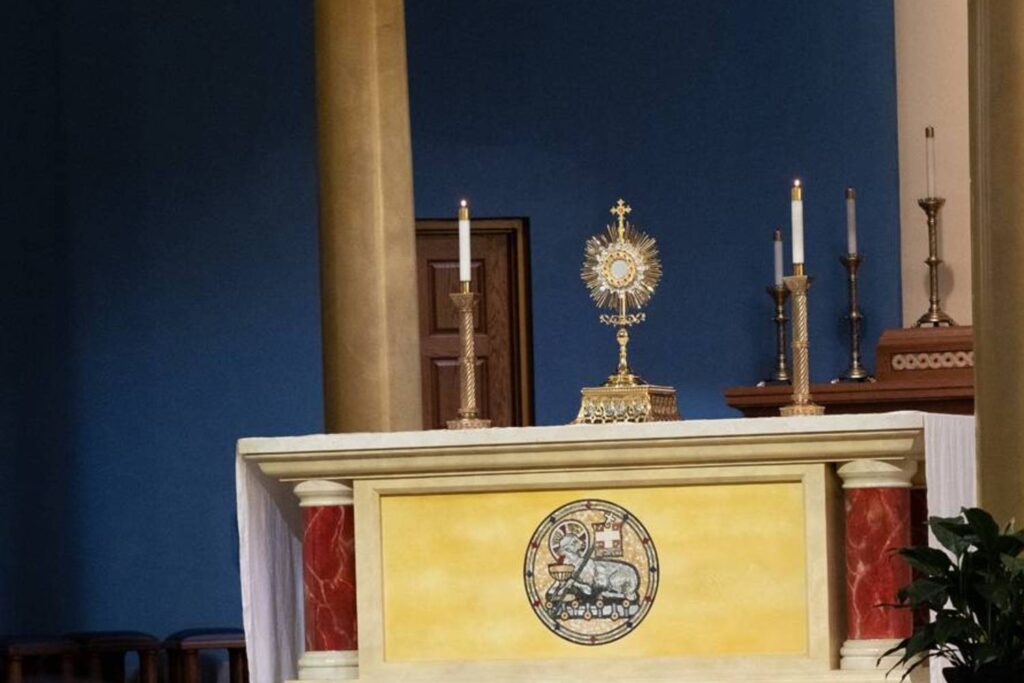
“It communicated to people that the church cares about you and wants to reach out and hear how you’re doing and have a moment of communion together and parish life, even if we can’t be physically present.”
Father Smith prides himself on what they have done to build the parish’s Catholic culture. At Prince of Peace, he said, there’s no “children’s church” where a separate Mass is held in a school gym.
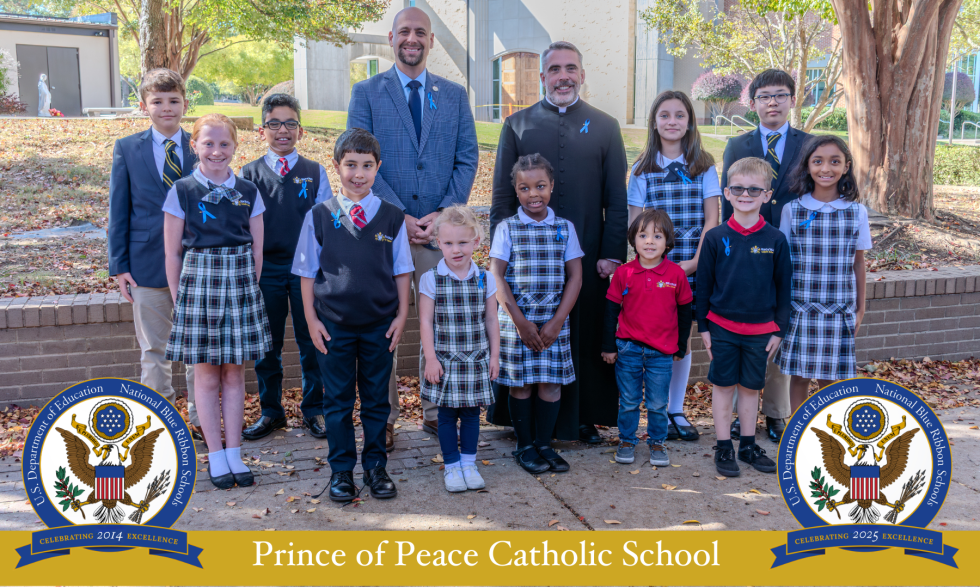
Beginning in the earliest grades, children are involved in the liturgy and volunteer with the St. Vincent de Paul Society and pro-life outreach, he said. They learn to sing all the parts of the Mass in Latin, along with hymns in English and multipart choral music called motets, Father Smith said.
Parents at Prince of Peace, he told the Register, are challenged to take an active role in the parish. If parents do not show up for Mass at least 75% of the time, their children will not be allowed to attend the school.
Father Smith, like Father Longenecker, has a strong connection to St. Mary’s. He served as parochial vicar at St. Mary’s after he was ordained in 2005. The Greenville native was raised as a Baptist and converted to Catholicism after going to Mass at the church.
“I walked into St. Mary’s downtown which was the first Catholic church I’d ever been in and knew I was home,” he told the Register.
While these traditionally oriented parishes are attracting parishioners from around the country, they are by no means the only Catholic churches that are thriving in Greenville. In fact, St. Mary Magdalene in Simpsonville, the largest parish in the Greenville deanery with about 4,400 families, is known for its abundance of ministries and formation programs and doesn’t put an emphasis on traditional liturgy in the same way the other big parishes do.
Challenges and Opportunities Ahead
While Greenville’s Catholic community is thriving, there may be challenges on the horizon. Greenville’s home prices remain more affordable than many parts of the country, but they have risen since the pandemic, potentially putting a cap on the number of Catholic families who might be motivated to move there.
The area’s robust home-schooling community points to another challenge: the dearth of Catholic high schools in the area. Our Lady of the Rosary and St. Joseph’s are the only two in the Greenville area. Catholic parents, eager for another option, have flocked to Sacred Heart Hybrid Academy (SHHA), a two-day a week K-12 school with a classical curriculum. In its second year, enrollment increased from 33 to 83 students, and the school, which holds its classes in a Methodist church building, is now “packed like sardines,” according to its founder and head of school, Jessica Sadowski.
There are also grumblings that Greenville’s growth came too fast and has gone too far. Complaints about traffic are common. Those who moved to the outskirts of Greenville decades ago complain that their once-rural home is now part of a suburb.
With Greenville’s Catholic community outgrowing the capacity of its parishes, Bishop Jacques Fabre-Jeune of the Diocese of Charleston has launched a study to identify property for future expansion, his office told the Register.
Meanwhile, Greenville Catholics are now hoping to share the secrets of their success with other parishes around the country. Father Newman and St. Mary’s parishioner TJ Nielsen founded the Center for Evangelizing Catholics to offer practical advice, such as how to improve music and homilies and how to introduce to parishioners the idea of having priests face the altar.
Whether what’s been built in Greenville by putting Christ in the center of worship and community can be replicated elsewhere remains to be seen.
But Father Newman believes there is an innate hunger for it that he sees among visitors at St. Mary’s. When people attend Mass for the first time at a parish that embraces this vision, he said, it can be “enormously empowering.”
“Their dignity as participants in the sacred liturgy is reaffirmed. And that’s one of the reasons why I think first-time visitors come away with such a powerful experience of the sacred — and say, ‘That was glorious.’”
- Keywords:
- catholic hubs
- south carolina