New Catholic Hubs: Walking with Christ in College Hill, Wichita
College Hill presents a compelling blueprint for other neighborhoods that want to replicate its success: prioritizing access to Christ through the sacraments and building a safe environment where kids have the freedom to make the faith their own.
Editor's Note: This is an ongoing series about communities where Catholic life is flourishing. Make sure to check out other areas here.
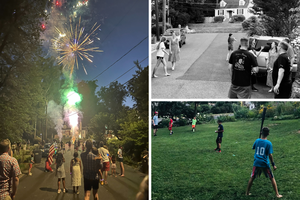
WICHITA, Kan. — Many Catholics can only dream — or perhaps reminisce — about having neighbors that they see not only every day on the street, but also in the pews on Sunday; about Masses overflowing with young families and filled with the cries of babies; about a tight-knit Catholic community that has your back when times are tough; about kids who’d rather romp around outdoors until the streetlights come on than stare at screens.
But places like that still exist, if you know where to look for them.
One of those places is College Hill, a one-square-mile neighborhood of roughly 5,000 residents about a 10-minute drive east of downtown Wichita in the south-central part of the Sunflower State. Its compact, walkable streets naturally foster the kind of “back-in-my-day” community life that has all but disappeared in many parts of the U.S.
Here, eclectic Midwestern homes line gridded cobblestone streets under the leafy cover of mature trees.
While the earliest homes here date to the 1880s, most of the houses were built in the first few decades of the 20th century by Wichita’s wealthier residents, at a time when the eponymous hill provided some refuge from flooding.
No two houses are quite alike in College Hill: There are historic mansions, charming three-story homes of varying colors with expansive front porches, and modest bungalows. Several homes are listed on the National Register of Historic Places; there’s even a mansion by Frank Lloyd Wright. College Hill doesn’t have its own government, but it does have an active neighborhood association that occasionally makes news when its members speak out in defense of the neighborhood’s historic character in the face of creeping new development, like glitzy apartment complexes.
The houses here — at a median price of $294,833, according to a recent neighborhood plan — are on the more expensive side for Wichita, though Wichita overall has significantly lower house prices than the national average. Douglas Avenue, lined with restaurants, bookstores, coffee shops, ice cream spots and a large park, cuts through the neighborhood horizontally.
In the heart of the neighborhood — quite literally at the center — is the Church of the Blessed Sacrament, a parish founded in 1927 that today serves 1,230 registered families and has a pre-K-to-8 school with just over 400 children enrolled. Of those families, 500 live in the immediate two zip codes surrounding the parish.
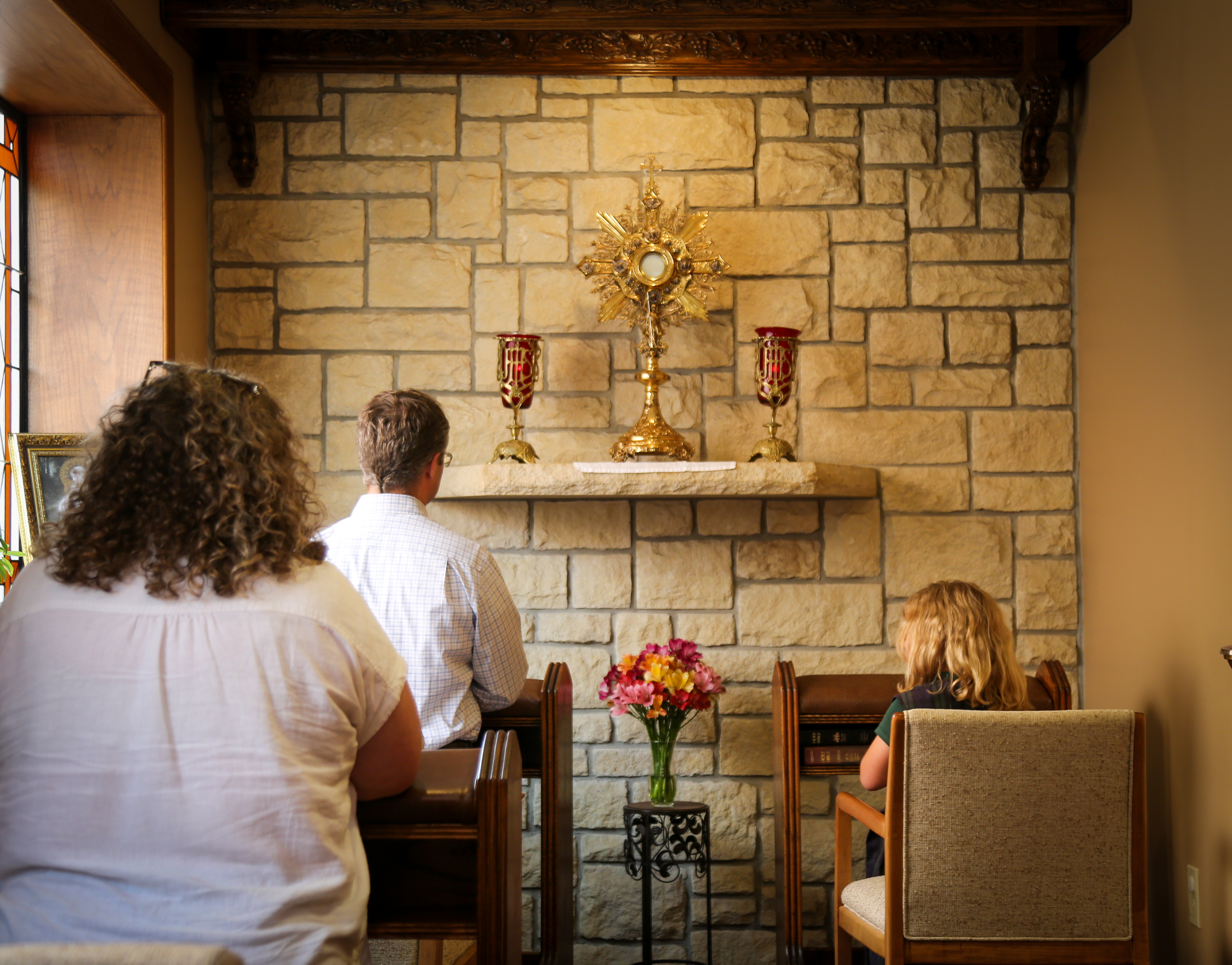
In a diocese where Eucharistic adoration is strongly promoted, Blessed Sacrament has the distinction of being the first parish in the diocese to begin offering and promoting perpetual adoration, a continuous, round-the-clock worship that parishioners have kept up for the past 42 years.
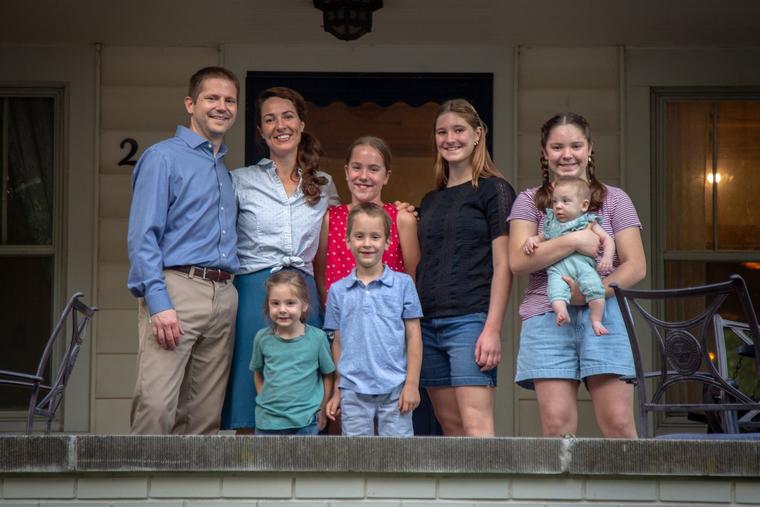
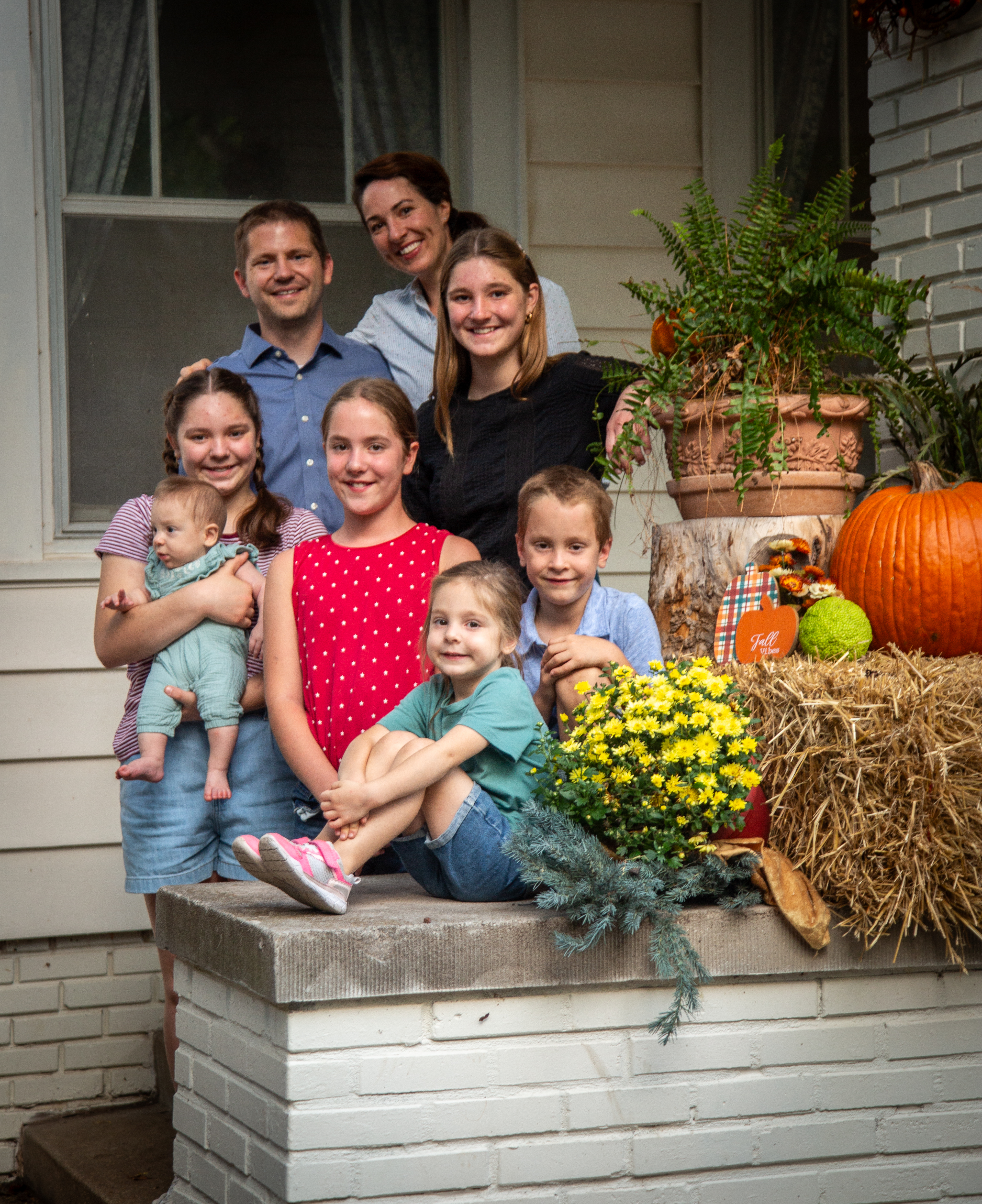
For Isaac and Margaret Mary Traffas, who moved to a house an eight-minute walk from Blessed Sacrament in 2020, their wish to put themselves as close to their friends and their church as possible reflects a properly ordered life — putting proximity to the sacraments, especially the Eucharist, first, and enjoying all the benefits that have organically flowed from that.
“Our three oldest girls — all of their confirmation sponsors are ...” Margaret Mary points in three directions, indicating the houses nearby.
“Any of the 25 people that live in this vicinity,” she continued earnestly, “I would be more than happy if any of my kids turned out just like them.”
Walkability is often more readily associated with the downtown cores of major urban areas, not a sprawling Great Plains “cowtown” like Wichita. But here in College Hill, it’s part of the culture. The parish recently held a “Walk and Bike to School Day” and had nearly 300 students walk, bike or skate to school.
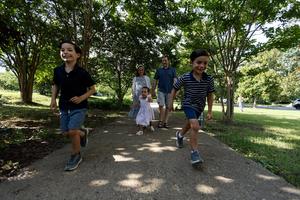
Like most of their neighbors, the Traffases walk to Sunday Mass as a family. Their children can — and do — walk to the parish by themselves when they want to. It’s not unusual to see a gaggle of neighborhood children walking together down the street, picking up peers at houses along the way, and heading of their own volition to Mass, adoration or confession.
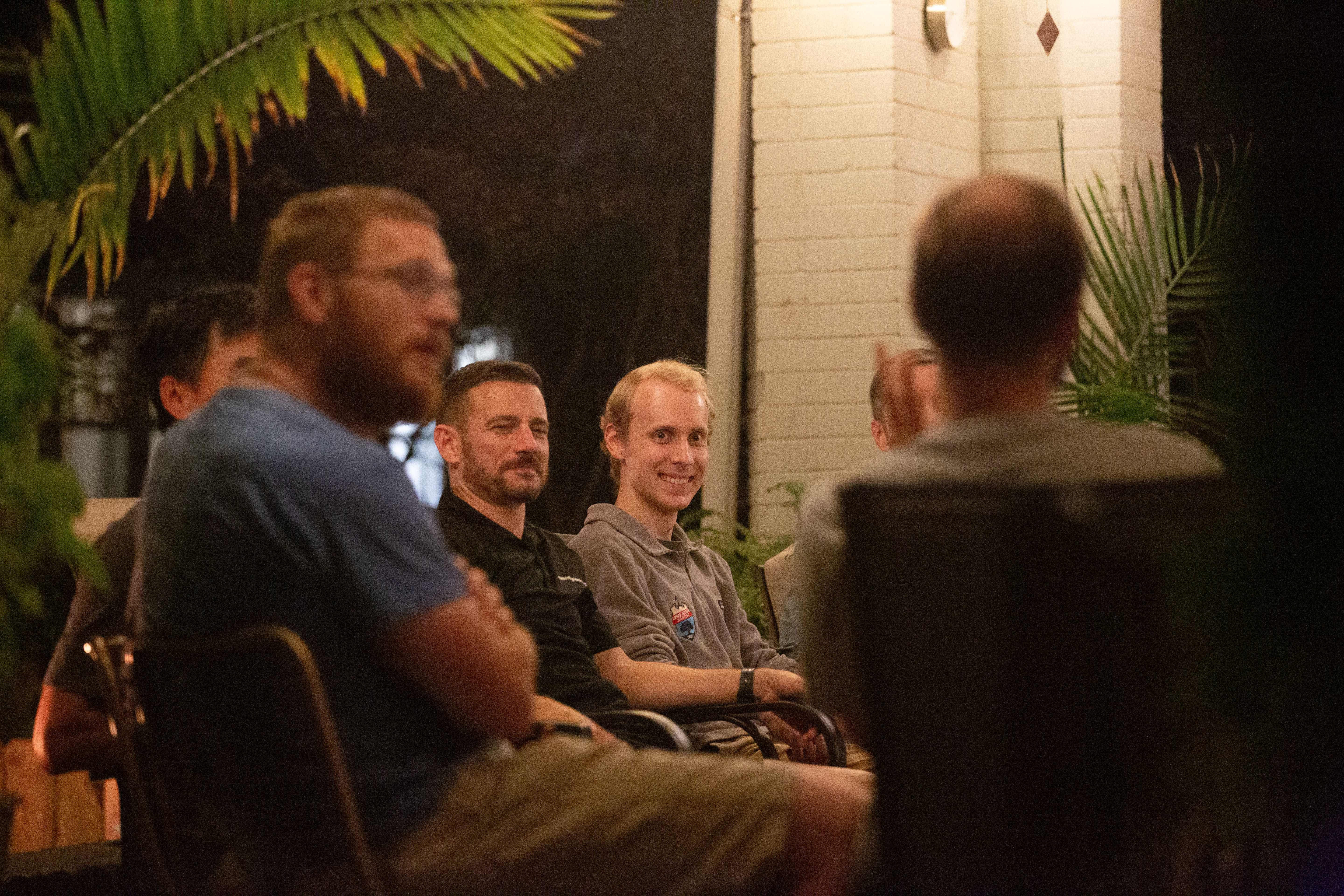
It’s clear there’s a real commitment among many Blessed Sacrament families here to make the Catholic faith something that is lived, rather than an add-on. Families gather regularly in each other’s backyards for prayer, dessert and cocktails — and in fact, a recent trend among Catholic families in the neighborhood has been to take down their fences, which is more conducive to a free flow of friends. Men get together weekly for discussion and debates on books and matters of faith. Around here, asking for and offering up prayer, far from a throwaway platitude, is serious business. Neighbors in need can expect a group of children, and often adults, to show up on their front porch praying the Rosary.
And it’s not just spiritual support. A family in a difficult situation might return home to find their neighbors have deep cleaned their house — or even done minor home improvements. When someone new moves into the neighborhood, an army of adults and kids invariably appears to cheerfully lug boxes.
Sometimes it feels like the neighborhood has “one pantry,” one mom laughs — such is the extent of the families’ sharing of resources.
Parents who attend Blessed Sacrament find themselves with numerous educational options; there are kids who go to Blessed Sacrament’s parochial school, home-schoolers, and families that send their kids to schools elsewhere. Oftentimes, families take advantage of a mix, depending on what suits their needs.
To describe College Hill as a Norman Rockwell painting come to life would be inaccurate. Several residents admitted that the neighborhood — which is far from homogenous, in terms of religion or otherwise — is filled with the same kinds of natural human tensions and disagreements that mark any community, Catholic or otherwise.
Moreover, a community like this, with its distinctive qualities and benefits for Catholic families, can feel fragile. In fact, a few residents shared their concerns about word getting out — what if a crush of families decide to move to College Hill, inadvertently jacking up prices, or permanently changing the neighborhood’s character?
One thing is clear: College Hill presents a compelling blueprint for other neighborhoods that want to replicate its success: prioritizing access to Christ through the sacraments, cultivating a welcoming and altruistic atmosphere, and building a safe environment where kids have the freedom to make the faith their own.
A Stewardship Diocese
This neighborhood and this parish are emblematic of the notable vitality of the Wichita Diocese as a whole.
By almost any metric, Wichita leads the country in priestly ordinations. With a population of just 116,000 Catholics, Wichita currently has 51 seminarians — a similar number to vastly larger dioceses like Los Angeles, Baltimore, Brooklyn and Phoenix. In each of the last 10 years, Wichita has ordained, on average, roughly twice the number of men necessary to sustain its current priestly population.
Other signs of life abound. A recent diocesan capital campaign blew past its goal of $50 million, bringing in 20% more than was asked for. A new Capuchin monastery dedicated to St. Carlo Acutis was just inaugurated in the diocese. Bishop Carl Kemme, a priest of the Diocese of Springfield in Illinois, was appointed by Pope Francis in 2014 and is still a decade from retirement.
Pinning this spiritual vitality to any one or two factors is difficult, but a defining one is the widespread practice of Eucharistic adoration.
Most parishes in the diocese maintain adoration chapels — many of them perpetual — providing constant opportunities for prayer in Christ’s Presence.
The abundance of priestly role models further strengthens that culture. With many ordinations each year, young men in Wichita witness priests who love their vocation, giving discerners a tangible example of what priesthood can look like. In this regard, the diocese’s modest size also plays a role. In smaller dioceses like Wichita, priests are generally not spread as thin as in larger ones, giving them more time to accompany young men who may be discerning a call.
Wichita’s priestly heritage is embodied most powerfully in Venerable Father Emil Kapaun, the beloved Army chaplain whose cause for sainthood is underway. Born in a small town near Wichita, Kapaun was ordained in 1940 and became known for his extraordinary courage and compassion during the Korean War, ministering to soldiers in the field and ultimately dying in a North Korean prison camp.
Another major factor shaping Wichita’s Catholic culture is its distinctive “stewardship” model of parish and school funding. Parishioners are explicitly asked to commit to giving 10% of their income for life — 8% to their parish and 2% to charity — which sustains the parish and allows Catholic education to be accessible to all families.
The revenue that the stewardship model brings in allows all of Wichita’s Catholic schools to be fully funded through parishioners’ tithing, rather than tuition. This model, which is yet to be replicated in any other U.S. diocese, was implemented at the diocesan level under the late Bishop Eugene Gerber — a former Blessed Sacrament pastor — in the mid-1980s. Blessed Sacrament parishioners said this model not only funds schools more effectively, but also deepens parishioners’ sense of shared mission.
Making Christ the Priority
Father Jason Borkenhagen, an affable Wisconsin native who arrived as pastor at Blessed Sacrament in 2023, is the first to tell you that in a diocese as healthy as Wichita, Blessed Sacrament isn’t as much of an anomaly as it might seem.
“This isn’t the only place that’s got a vibrant, active parish, adoration and vocations. You can go 2 miles to our east to St. Thomas, and a few more miles out to Church of the Magdalene, and up the road to Holy Savior, and across town to St. Catherine’s and St. Elizabeth’s and St. Anne’s down south. There are vibrant parishes across the diocese,” said Father Borkenhagen, who holds a doctorate in sacred theology and previously served as chaplain at a convent.
There are, however, several ways that Blessed Sacrament, in slightly less than a century of existence, has distinguished itself. For one thing, three of Blessed Sacrament’s former pastors have gone on to become bishops: Father Eugene Gerber, who was appointed bishop of Dodge City and later Wichita; Father James Conley, who went on to become bishop of Lincoln, Nebraska; and Father W. Shawn McKnight, who was recently installed as archbishop of Kansas City, Kansas.
“In Wichita, when you take over a parish, the old saying is that you’re standing on the shoulders of giants, and it really is true. We’ve had just wonderful priests throughout the diocese and specifically here at Blessed Sacrament,” Father Borkenhagen commented.
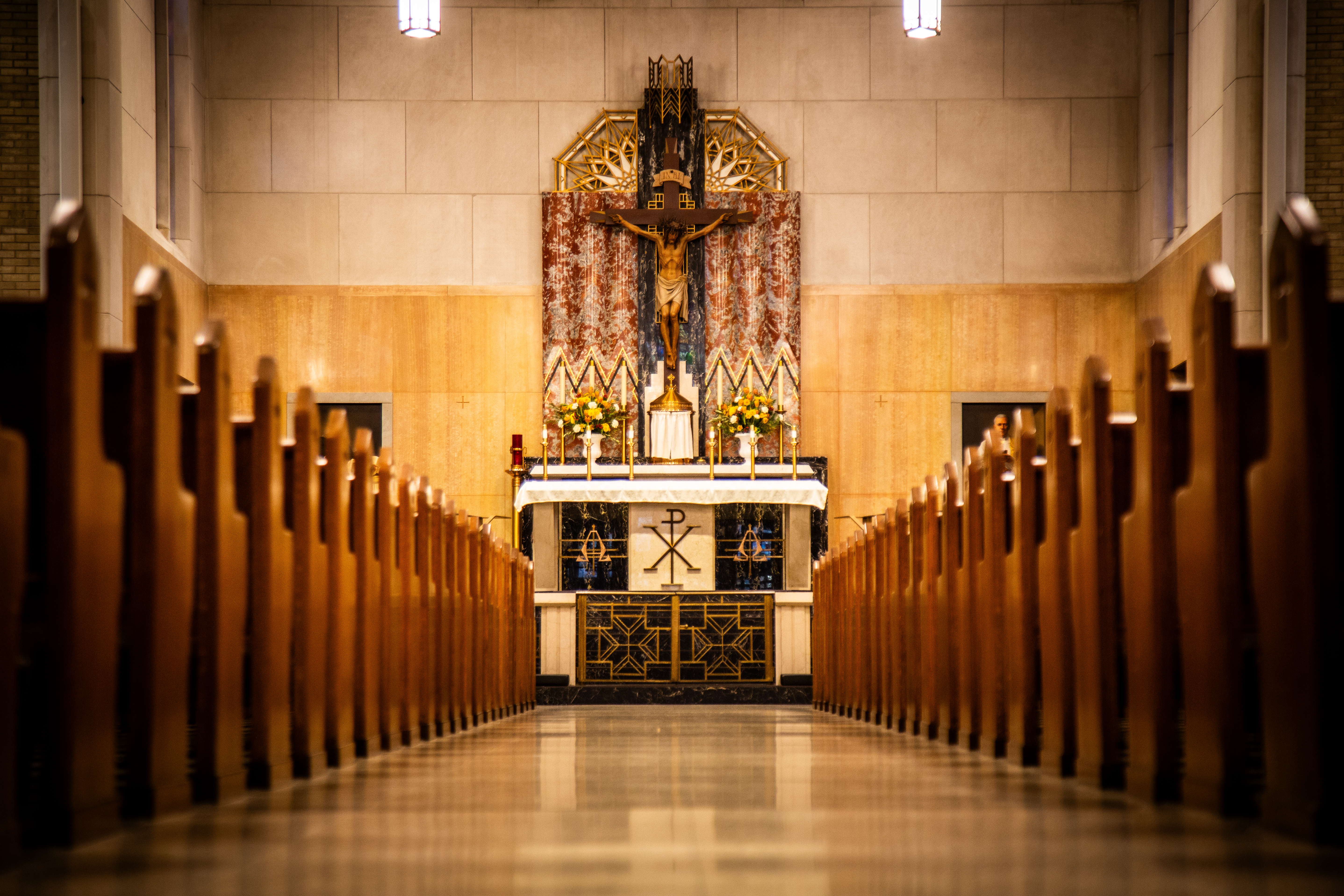
Also notable is Blessed Sacrament’s pioneering role in promoting perpetual adoration throughout the diocese. Far and away, the availability of Christ in the Eucharist was the factor most cited and celebrated among the residents as the catalyst and sustaining factor for the Catholic community. The parish has also, in recent years, championed a return to more traditional forms of worship, including Masses celebrated ad orientum (“to the east”) and reinstalling an altar rail — changes that took some longtime residents a few years to adjust to.
Even amid the happy and continuous babble of numerous children on a typical Sunday, Mass at Blessed Sacrament is “so beautiful and reverent,” and that reverence isn’t just because of how the priests celebrate the Mass — it’s a “two-way street” with the people, Father Borkenhagen told the Register.
The congregation’s participation and commitment to a reverent attitude contributes to a real “beauty of worship” that is deeply edifying, he said.
The culture of consistent, accountable and planned tithing in Wichita supports the whole Catholic ecosystem. It allows Blessed Sacrament, for example, to offer a sumptuous parish dinner one evening a week that in turn helps parents with children — who don’t have to worry about dinner time — be more able to volunteer their time or simply participate and enjoy the formation opportunities that the parish offers, such as OCIA class, youth group and Catechesis of the Good Shepherd.
“The whole setup of the parish is, in some way, doing something that helps you to be a better disciple and give you the tools to go out. That’s really all-encompassing,” said Father Borkenhagen.
“There’s this commitment to prayer. There’s a commitment to the Holy Mass, and all of that feeds into helping the people receive the formation they need to then be able to take that step of trepidation to share their faith with someone else. It’s hard, [but] we hope to give them the tools to do it.”
A Foundation, and Welcome
Though its location in the flourishing Wichita Diocese surely helps, it might still be easy to assume that College Hill is just a happy accident — a highly livable neighborhood in a relatively affordable city that happens to have a good Catholic parish nearby. But it’s clear that the foundations laid by previous generations, and their intentional choices — especially regarding the promotion of Eucharistic adoration — have been key to the emergence of the neighborhood as a Catholic hub today.
Longtime residents Dan and Jennifer Hickerson moved to the neighborhood in 1991 and quickly found it was the place where they wanted to plant deep roots. By that time, perpetual adoration had already been going strong at the parish for nearly a decade.
The neighborhood dynamic looked a little different back then, Dan and Jennifer said. Many of the residents were large Catholic families who attended Blessed Sacrament, but neighborhood gatherings for Liturgy of the Hours didn’t really happen. College Hill families in decades past lived out their faith, to be sure, but explicitly Catholic soirees are a relatively new phenomenon. This evolution has largely been led by members of the generation that includes the Hickersons’ children.
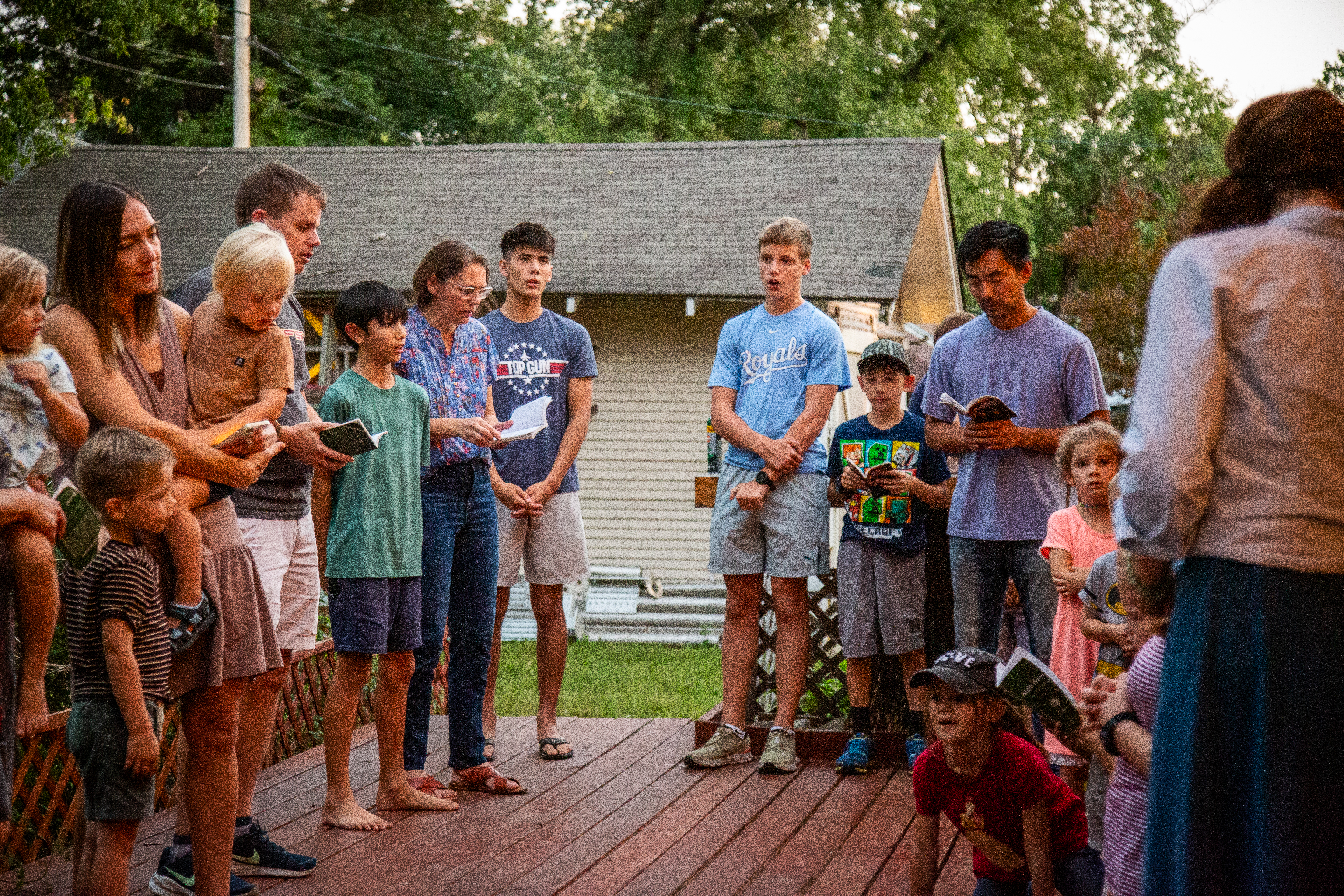
After growing up here, Christine Umbehr returned to Wichita in 2017 with her husband and children and now lives next door to her parents, the Hickersons. Today, six of the 17 Hickerson grandchildren live on the block. Some of their friends, Jennifer said, are neighbors with all their grandkids.
And the Hickerson family isn’t an outlier. After growing up here and moving away for a time for college and work, Mary Lesh ended up moving in just a few doors from her parents with her husband and children. That wasn’t their plan, Lesh added, but they figured … why not? A growing number of people in the neighborhood have “moved home” — and more are doing it all the time.
But that’s not to say that new families, without those deep roots, aren’t breaking in as well.
The Swaims, Megan and Josh and their four daughters, had no connection to Wichita before moving to the city from the East Coast in 2020 for Josh’s job. Originally from Indiana, the Swaims landed in a College Hill rental house hundreds of miles from any family members. They prayed fervently that they would find good friends and a supportive community, and they were so overwhelmed with the welcome they received that they bought a house in the neighborhood within a few months and never looked back.
“Here, there’s so many people who have the ‘hospitality muscle’ exercised. It’s just in everyone’s muscle memory. It’s not that hard to break in,” Megan said.
“We really just do life together. There’s no contract or agreement.”
The near-constant interaction with neighbors isn’t for everyone, Megan admits — in fact, several residents admitted it takes guts to make yourself this vulnerable and allow your fellow Christians into every aspect of your life — but the Swaims love it.
“We’re surrounded by so many good women. [Our daughters] are learning what it looks like to really care for others,” Megan said, relating how the community rallied around them in an exceptional way when they suffered a family tragedy. The love their new friends showed them was “really Jesus, loving us through our neighborhood,” she said.
The Kids Are All Right
The youngest generation growing up in this neighborhood is well aware that their childhood doesn’t fit the typical mold.
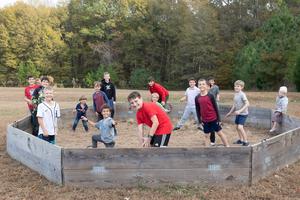
In an era of smartphones, sedentary living and a well-documented crisis of loneliness among children and young adults, kids growing up in the College Hill Catholic community live a largely screen-free existence that was several times described as akin to living right next door to extended family.
They aren’t pining for cellphones, because, for the most part, they don’t need them — they see their friends in person daily, and there’s almost always a trusted adult around to keep an eye on them.
“I would consider the priests my uncles,” Lucy Swaim, 12, piped up amid an animated contingent of nearly a dozen neighborhood kids seated on couches and around the floor of the Traffases’ living room. “There’s no judgment. Everyone is your cousin, your aunt, your uncle.”
It’s a family atmosphere where vocational discernment is a big deal and positive role models abound, which leads to real results: Blessed Sacrament currently has five young men studying for the priesthood, as well as one young woman, Sister Marie Bronislava Dillard, who recently made her first vows as a Norbertine canoness.
Sam Hong, 18, said the freedom to walk to the parish and school and take advantage of the sacraments any time they want has been an invaluable “practice living in a Christian community” — a concept that is far removed from most modern teenagers’ experience, or even their desire.
Hong said, “My siblings and I are so blessed to have a ‘center,’ and it’s this church.”
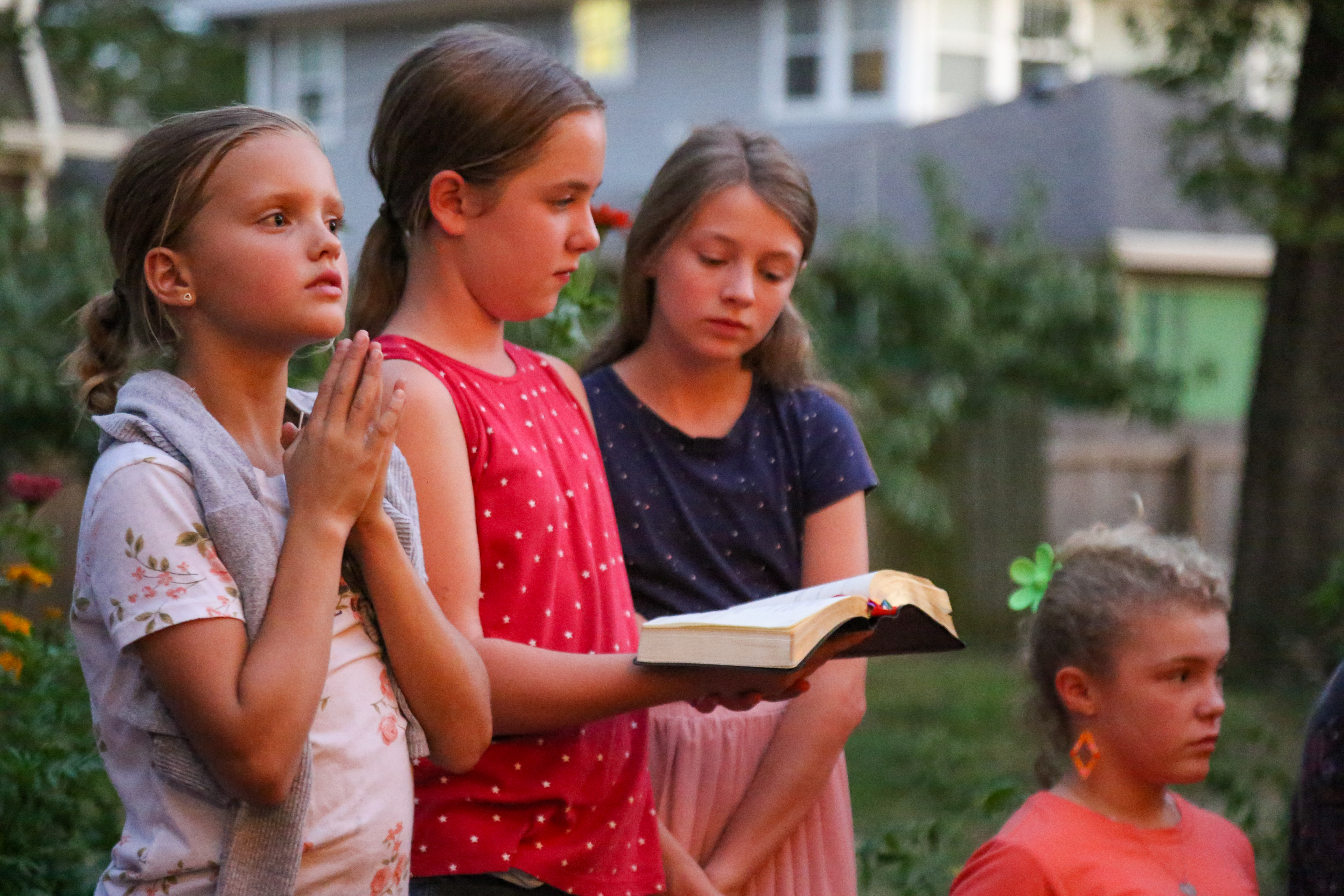
Would the children growing up in this neighborhood consider returning as adults, like many of their parents’ generation have? For several of them, the answer is a resounding “Yes.”
“I wouldn’t consider it an option not to live in a Catholic community,” Gloria Traffas, 14, said.
‘This Beautiful Gift’
For Father Borkenhagen, it’s exciting to see how his actively engaged parishioners are changing lives through the sacrifice of their time, funds and talents. Weekend Masses are full to bursting, and the parish has been an evangelistic presence in the neighborhood; they consistently have several neighborhood residents joining the Church each year.
“We were really fortunate last year. I baptized 18 people and confirmed 35 people at the Easter vigil. … It was over 50 people that came in to the Catholic faith. That was a big class. But that should be normal,” he added.
“When I hear about cities closing churches, I always think that’s so sad,” Father Borkenhagen said.
“It’s one thing when you live in the middle of nowhere and there’s just nobody that lives there anymore. But when you live in a city, there’s still people there. We have to reach out. We’ve got this beautiful gift of the Catholic faith, and we need to share it.”
Call to Action: You can watch scenes from College Hill and interviews with residents in the EWTN News In Depth segment below:
- Keywords:
- catholic hubs
- diocese of wichita