Edmund Fitzgerald at 50: ‘The Gales of November’ and the God Who Remembers
FEATURE: Fifty years after the freighter vanished in a November storm, the families left behind — ‘the wives and the sons and the daughters’ — say their faith in Christ has carried them through every wave of grief.
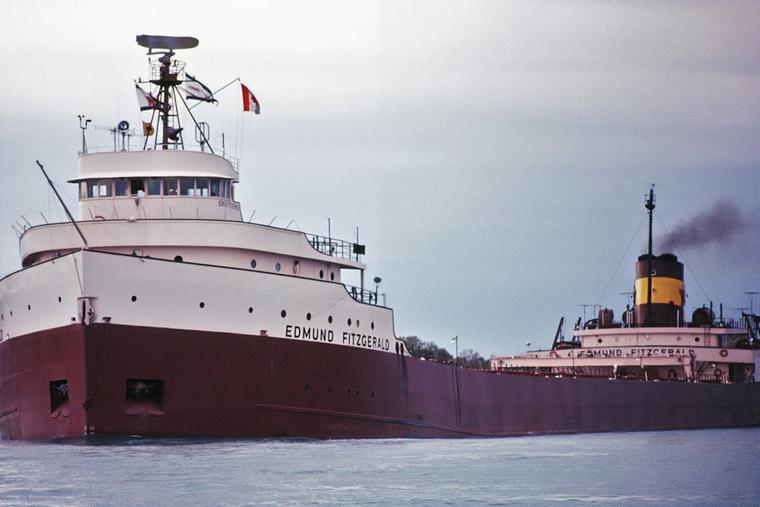
Why does God allow tragedy? Is he absent in our worst hour of suffering? Or, as musician Gordon Lightfoot sang, “Does anyone know where the love of God goes, when the waves turn the minutes to hours?”
Those lyrics from Lightfoot’s famous ballad, The Wreck of the Edmund Fitzgerald, capture desperate faith reflections in the immediate aftermath of one of the worst tragedies in Great Lakes history. This month marks 50 years since the loss of all 29 men aboard the SS Edmund Fitzgerald, when the cargo ship sank into the icy depths of Lake Superior. The 729-foot American freighter, en route from Superior, Wisconsin, to a steel mill near Detroit, disappeared from radar as it succumbed to a powerful storm with hurricane-force winds and mountainous waves the night of Nov. 10, 1975.
“I was very angry that God took away my father,” said Debbie Gomez-Felder as she thought back 50 years. Oliver “Buck” Champeau, her father, was a 41-year-old engineer aboard the Edmund Fitzgerald. Debbie was 17 years old at the time, a senior in high school at St. Pius XI in Milwaukee.
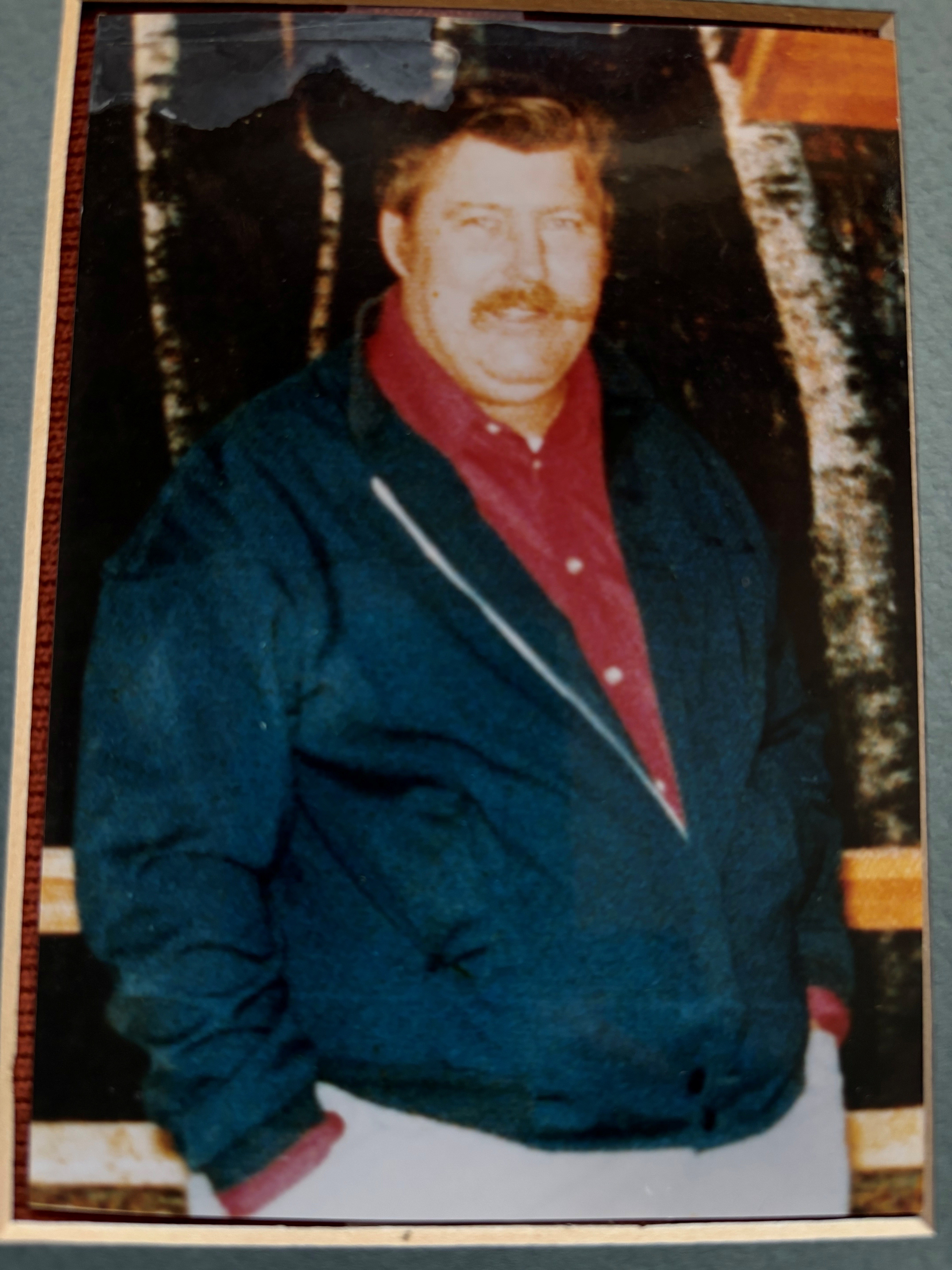
“I just couldn’t understand any of this,” she said. She recalls banging on the rectory door of a local parish, demanding answers from the priest. But no answers could limit the pain. “I stopped going to church. I said some very bad things to God.”
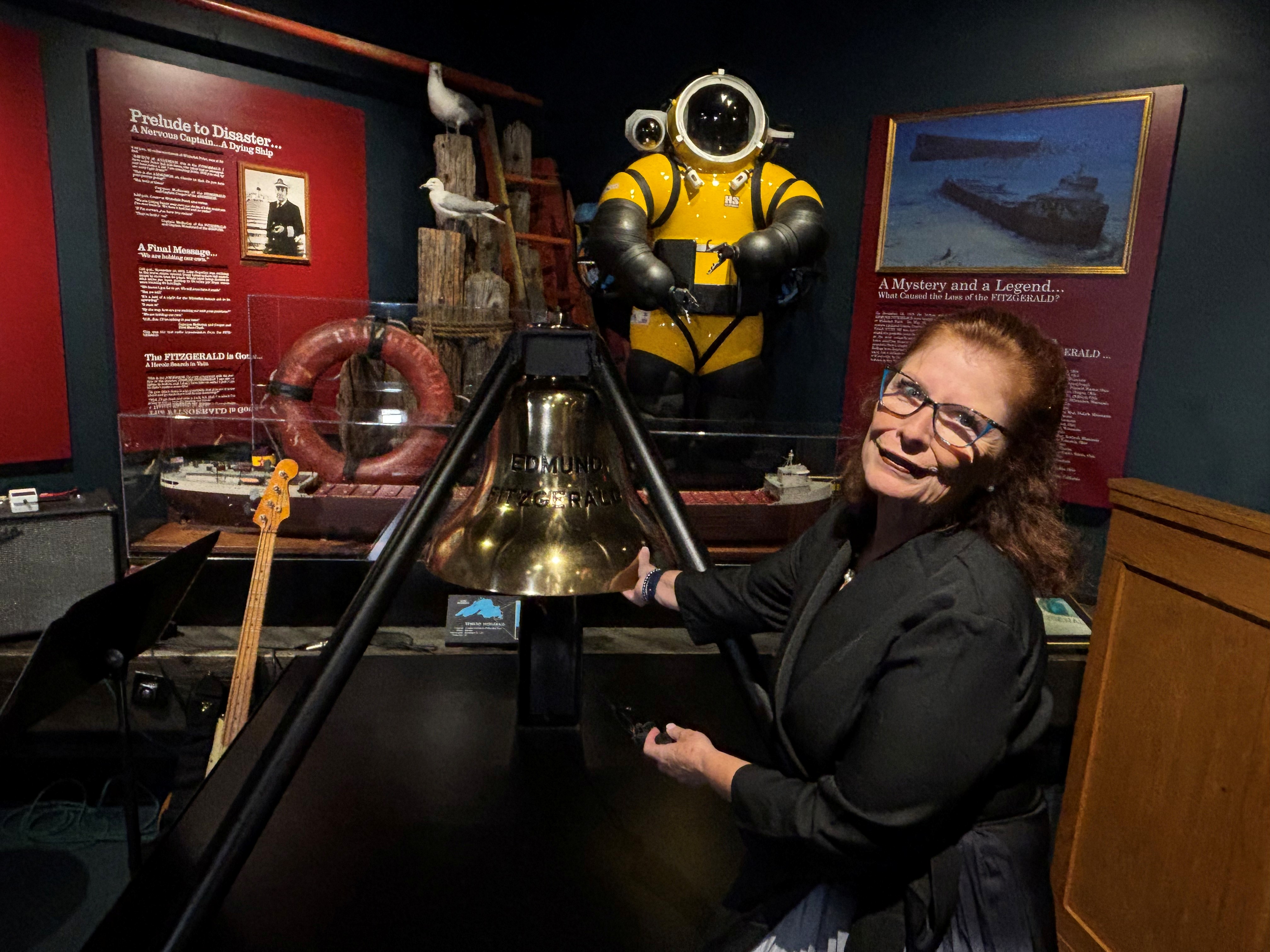
This month, Gomez-Felder joined other surviving relatives of the lost crew at the Great Lakes Shipwreck Museum in Whitefish Point, Michigan, for a memorial service marking the 50th anniversary on Nov. 10. As each crew member was named aloud, loved ones rang the ship’s bell, recovered from the wreck site in 1995. That site lies 17 miles northwest of Whitefish Point, more than 500 feet below the surface of Lake Superior in Canadian waters. It’s the final resting place for 29 sailors who had become friends.
‘More Than Coworkers’
As Lightfoot wrote, the Edmund Fitzgerald had “a crew and good captain well-seasoned.” The ship had been making cargo hauls across the Great Lakes since its launch in 1958. Gomez-Felder says the crew would have been more like family.
“Those men, those 29 men, were more than coworkers. They were out there for sometimes eight and nine months. They were away from their families, and there was a closeness there,” she said.
During the time she had with her father, Gomez-Felder recalls the “good in his heart.” He came to her confirmation and gave her a Bible signed by a bishop. He wanted her to attend Catholic school, and he helped reinforce the faith she developed during her teenage years. But when Buck Champeau died, his daughter’s faith in God was shaken.
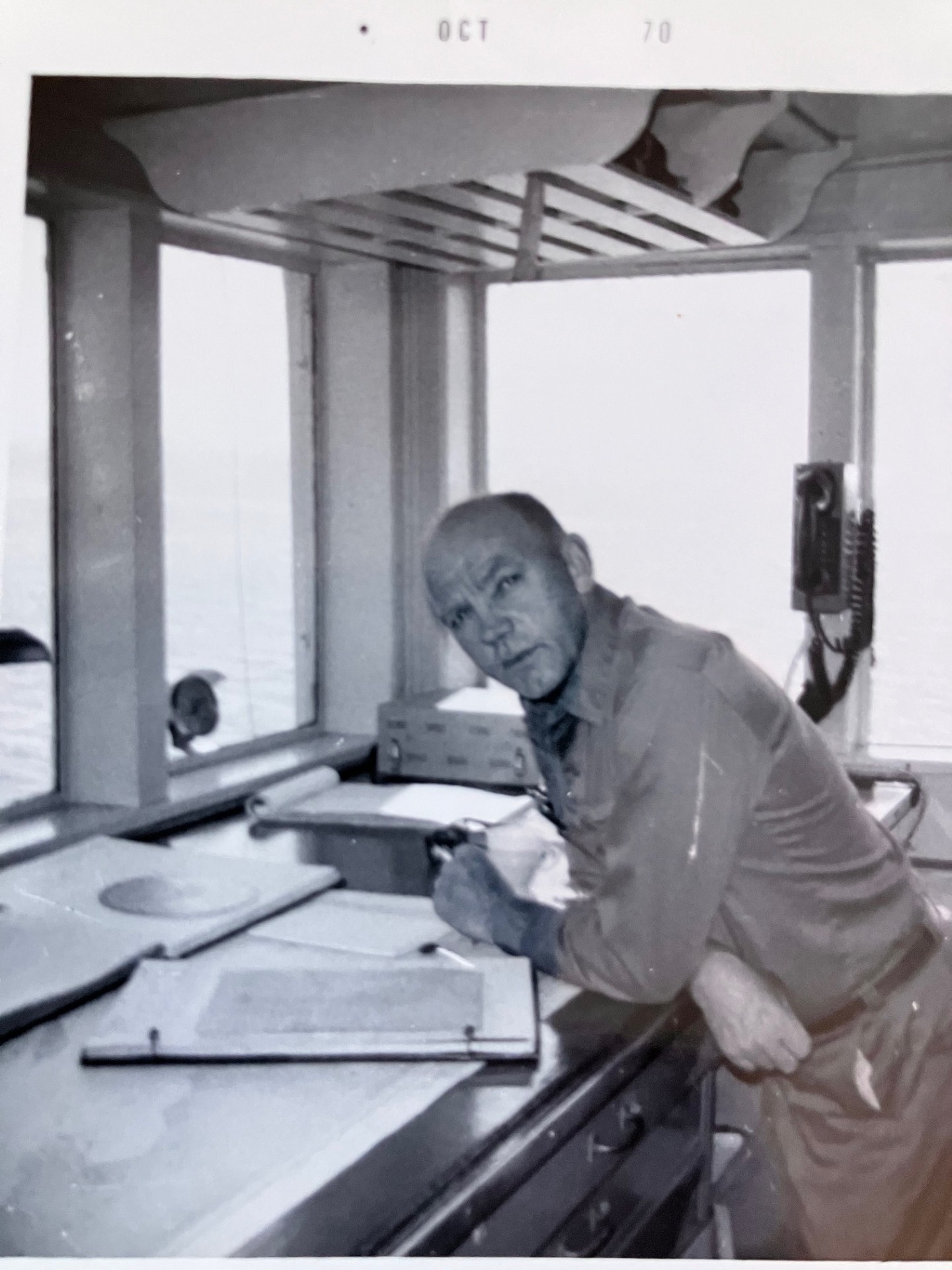
Only 5 years old at the time of the accident, Darren Muljo didn’t experience a crisis of faith, but he says his family has dealt with “a lifetime of healing” following the loss of his grandfather. Ransom Cundy was a 53-year-old watchman aboard the Edmund Fitzgerald that night. Muljo has a distinct, singular memory of him.
In August 1975, family members enjoyed lunch and spent time at a park in Superior, Wisconsin, with Cundy. After the visit, Muljo said his grandfather “climbed back aboard the Fitzgerald and waved down to us as we left and drove off. That’s my only memory.” Months later, on Nov. 9, the great freighter left for its fateful journey.
It never made it to Detroit. A church in the heart of the city hasn’t forgotten. Each year, Mariners’ Church of Detroit commemorates the Edmund Fitzgerald and the more than 6,000 ships and the estimated 30,000 lives lost in Great Lakes history.
Founded in 1842, this Anglican church has brought great comfort to surviving family members, including Muljo. He knows it as a “place to commemorate the souls and the memory of the men.” The church is also made famous in song.
Lightfoot called it the “maritime sailors’ cathedral” where “the church bell chimed ‘til it rang twenty-nine times for each man on the Edmund Fitzgerald.” Muljo returned for the 50th anniversary. “I’m going to Mariners’ Church, and I know I’m going to be welcomed,” he said.
‘Life is Fragile, But God Cares’
Past visitors to the church have included a Catholic priest from Michigan, Father Larry Van Damme.
“I just remember having a special appreciation for that building because of what they were able to do for those who perished and for their families and loved ones,” said Father Van Damme. He grew up on the shores of Lake Superior. His memory of the 1975 sinking is vivid.
“I remember being a sophomore in high school when it happened,” he said. His teacher told the class, “It’s hard to imagine anybody surviving that storm.”
A priest for 32 years, Father Van Damme has ministered to many who have suffered and battled life’s storms. He said Christ is present not only in our rejoicing, but in our “deepest losses and our tragedies.” He described the “reality of God accepting the cross” as a supreme act of love, and a reminder that Christ also suffered.
“Life is fragile. But God cares, and he sent his only Son so that we would know of such care and such amazing love,” said Father Van Damme. He added, “God may not take away our suffering, and he may not prevent the tragedies, the catastrophes, the accidents. But he is certainly with us in our grief. He’s with us in our hope. He’s with us as we mourn and as we carry on.”
Debbie Gomez-Felder understands that now. Her Catholic faith is stronger than ever.
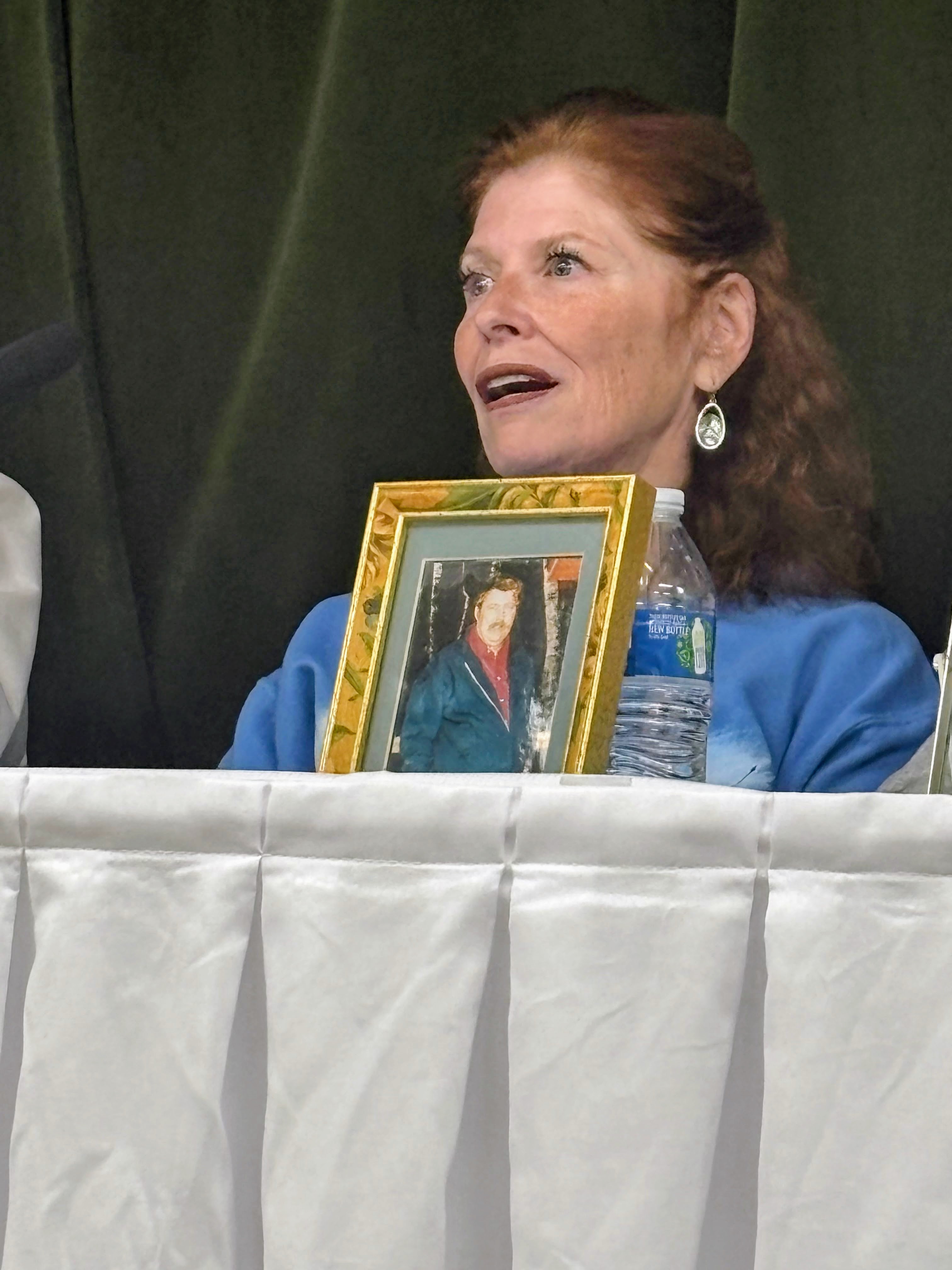
“It took me a while to get there, but I did get there, and now it’s unbreakable, it’s unshakable,” she said. Praying the Rosary and keeping close to the sacraments have given her strength.
“Receiving Communion really makes me at peace,” she said, adding that it’s also comforting to know people like Darren Muljo and the other surviving family members. “We’re connected like steel,” Gomez-Felder remarked. “We’re each other’s strength, and we help each other through it all.”
Special Moment
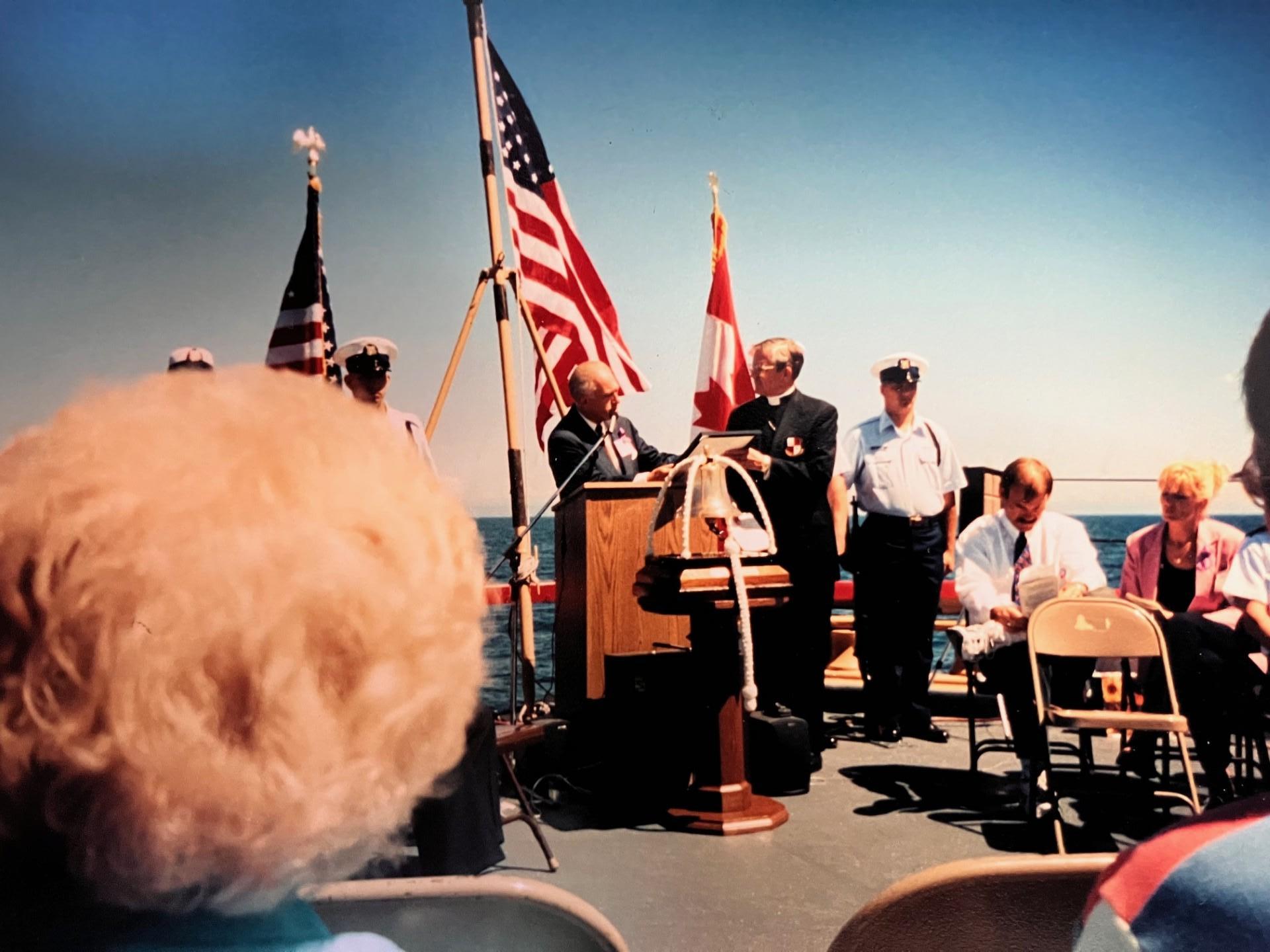
A special moment for the families came on July 17, 1999. Aboard a U.S. Coast Guard vessel northwest of Whitefish Point, they participated in a ceremony above the watery grave of the 29 men. The Anglican pastor of Mariners’ Church of Detroit, Reverend Richard Ingalls, offered a prayer at the site.
“Bless, we pray thee, this gravesite, and grant that they whose bodies are here entombed may dwell with Christ in paradise,” he prayed. Tears were shed on Lake Superior as a bagpiper played Amazing Grace. Muljo called the service healing. “But the hurt has returned with people speculating on future dives,” he said.
For years, surviving relatives fought hard to keep the underwater resting place of their loved ones undisturbed. Their advocacy paid off with the passage of a Canadian law protecting the wreck site from exploration. A dive hasn’t happened in 30 years. But there are concerns about the future.
Mystery still surrounds the sinking of the Edmund Fitzgerald and the exact cause of its demise. Speculation remains that future dives might find more answers.
“People still want to dive down there and disturb their final resting place. That makes me extremely angry,” said Gomez-Felder. Muljo called the site a “sacred place” and added, “I have a resolve to defend it as such.” He said the families plan to reach out to Canadian authorities and share their concerns.
Gales of November Remembered
Father Van Damme believes the 1975 tragedy “when the gales of November came early,” as Lightfoot wrote, can offer a reminder. The Catholic Church recognizes November as a special time to pray for those who have died.
Father Van Damme said it’s a time “when we pray for the souls of the faithful departed in a pronounced way, in a very faithful, hope-filled way.”
For Debbie Gomez-Felder, hope is what keeps her moving forward. Over the past 50 years, she has experienced grief, but she is confident in Christ. She said, “When the chips are down and you have nothing, you have your faith. That’ll move mountains.”
Mark Irons is a reporter with EWTN News.
- Keywords:
- Edmund Fitzgerald
- death
- shipwreck victims
- hope
- mourning