The Time Venerable Fulton Sheen Gave a Conference for 270,000 People in St. Louis
When Fulton Sheen is beatified this September in St. Louis, it will mark the second time that the singular Catholic personality has drawn crowds of thousands to the downtown of the ‘Rome of the West.’
When Venerable Fulton Sheen is beatified this September in St. Louis, it will mark the second time that the singular Catholic personality has drawn crowds of thousands to the downtown of the “Rome of the West.”
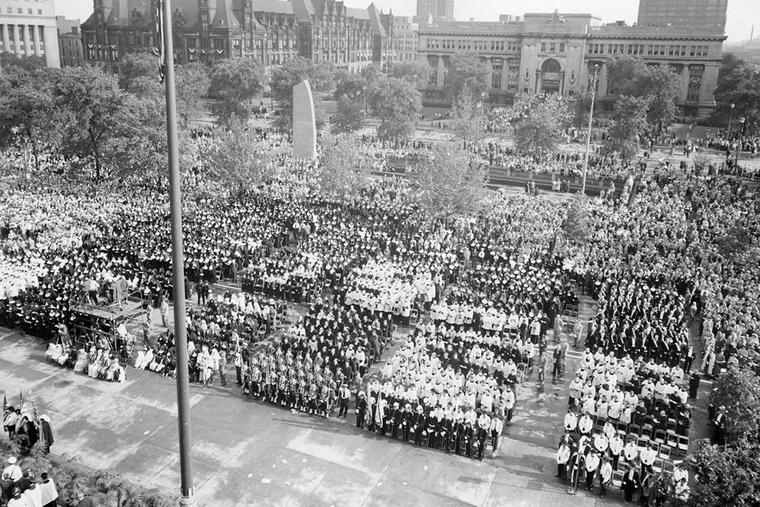
The last time was nearly 73 years ago, during May 1953, when Sheen was the headline speaker for the Archbishop Ritter Worldmission Exhibition, a conference showcasing American missionaries that attracted an estimated 270,000 participants over five days.
Sheen, then in his late 50s, grew up in central Illinois and almost certainly had visited St. Louis. He never had a formal assignment in the city, which is about two and a half hours from his hometown by car, but he encountered plenty of enthusiastic Catholics in St. Louis when he came for the 1953 exhibition. His May 21 address on the topic of “One Lord, One World” was attended in person by an estimated crowd of 11,500, according to a contemporary report by the St. Louis Register, the archdiocesan newspaper.
As the head of what was then known as the Society for the Propagation of the Faith — now known as The Pontifical Mission Societies — Sheen oversaw the exhibition, organized around the theme “God’s Front Line Against Communism,” which showcased “more than 100,000 Catholic missions-sending organizations.”
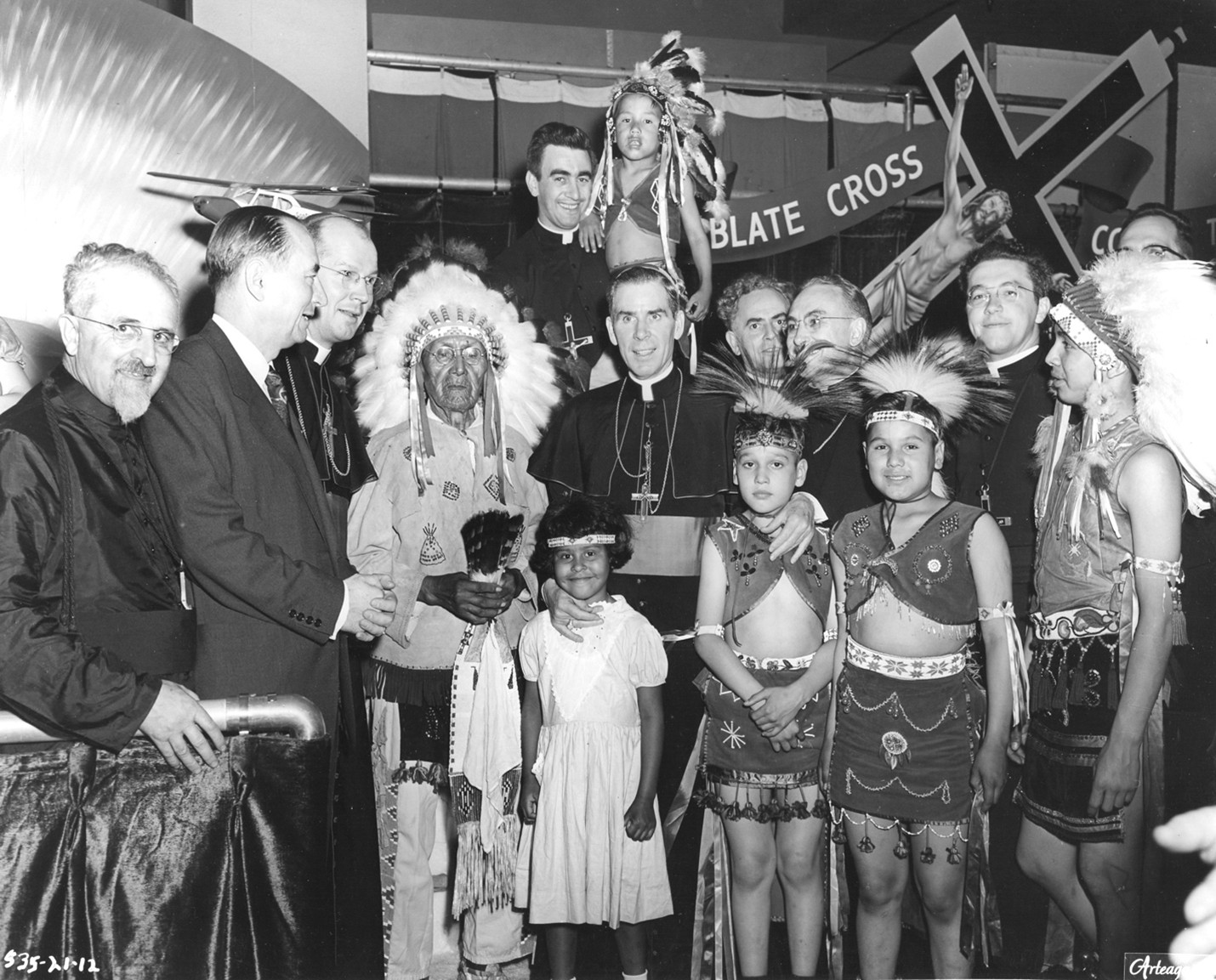
Tickets for the exhibition cost participants as much as $2.50 (about $30 in 2026). The goal of the gathering, the archdiocesan newspaper said, was to “acquaint Catholics and non-Catholics alike with the extent of the work being accomplished throughout the world by Catholic priests, brothers, sisters, and lay persons” — missionaries from the U.S. working in countries such as India and China and throughout Africa.
Mass, Adoration and Exhibits
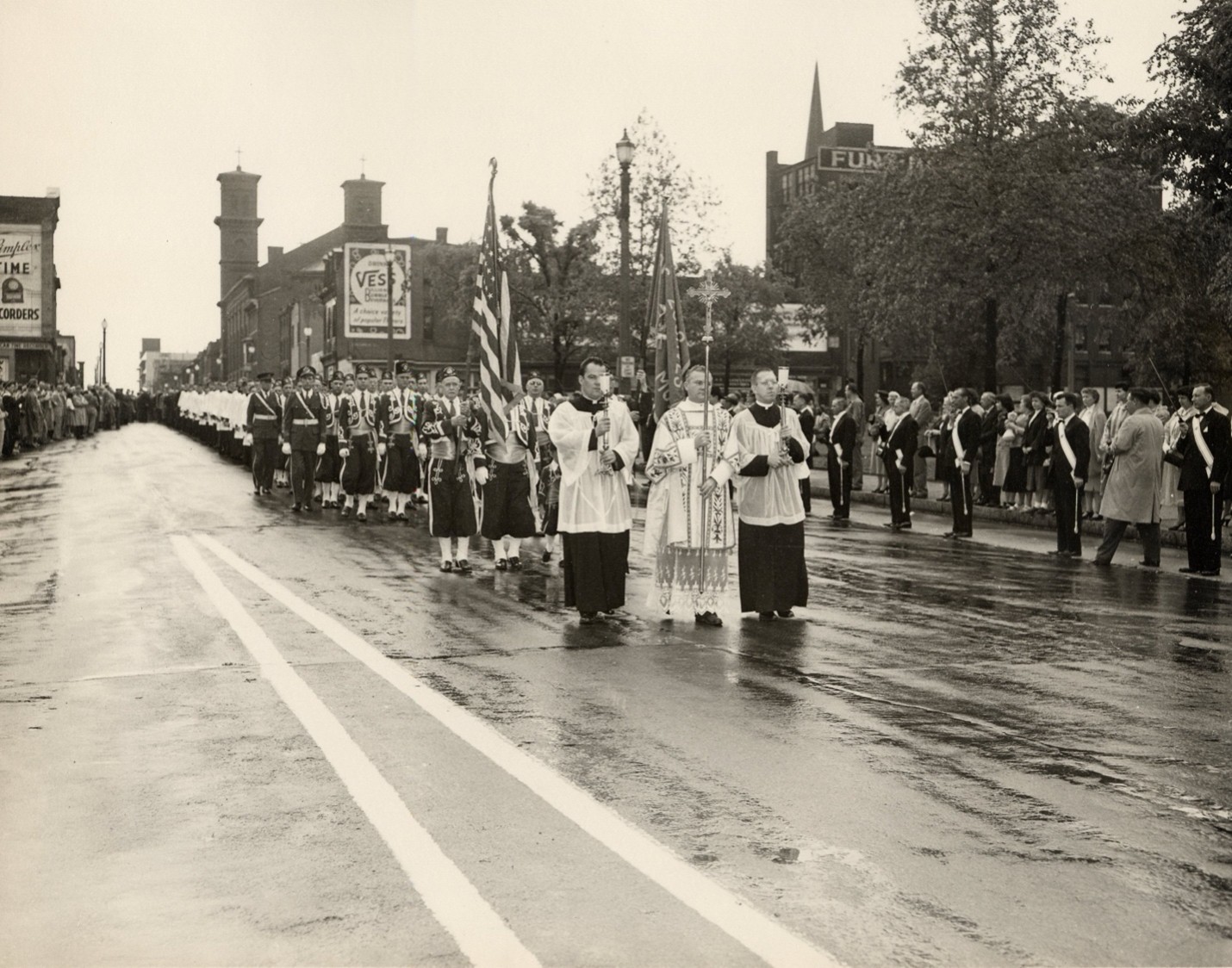
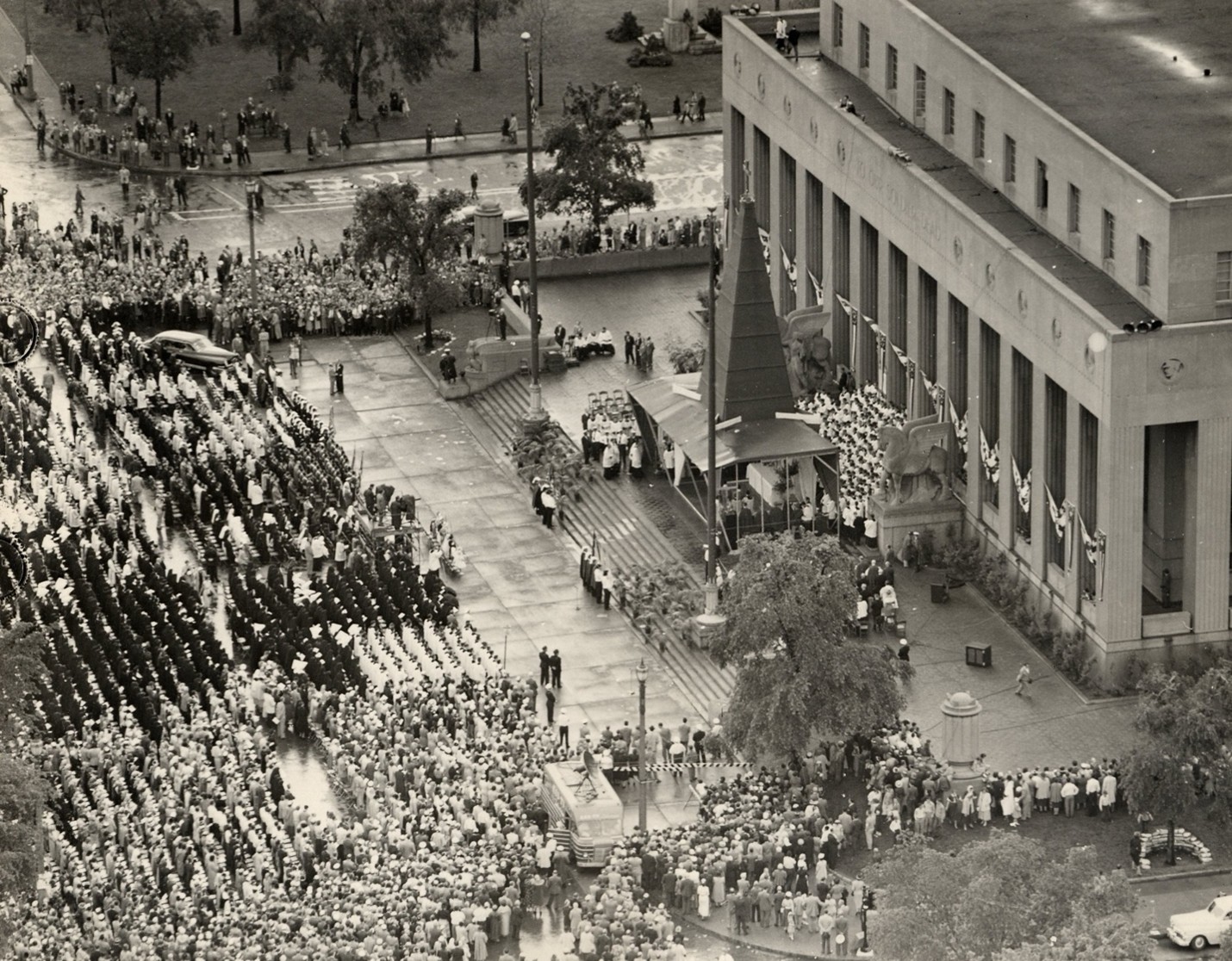
A crowd of approximately 60,000 people, including at least 300 foreign missionaries, were present for the outdoor May 17 opening Mass with then-Archbishop, later Cardinal, Joseph Ritter, a legendary St. Louis Catholic leader. (“It is thought there would have been 100,000 persons at the Mass had the day been fair,” the news report added.) Thousands had prior to the Mass joined in a Marian procession down Market Street, a major thoroughfare, ending at the south side of the Soldiers’ Memorial, where an altar had been erected for the Mass.
After standing for two to three hours waiting for and attending the Mass, many attendees walked for another two hours around the exhibits. The massive exhibition hall featured booths staffed by many missionaries who had come home to St. Louis for the conference, returning from work in “places all around the globe, including China, whence many of them had recently been expelled.” There was an adoration chapel “placed among the exhibits for convenience of the religious men and women on duty during the exhibition [and] open for the convenience and devotion of anyone wishing to make a visit.”
According to a May 30, 1953, article in The Catholic Bulletin, an estimated 250,000 total people visited the exhibits, “about a fifth of [the] crowd non-Catholics.” Some 75,000 Catholic-school students participated in an essay contest on the topic, “What Can I Learn From the Catholic Worldmission Exhibition,” with a prize presented by Sheen himself.
‘Russia Will Sit at the Feet of Christ’
The Dome at America’s Center, the indoor stadium set to host the Sept. 24 beatification, is just 16 blocks from the site of Kiel Auditorium, where Sheen delivered his 1953 address. (Kiel Auditorium has since been replaced by the Enterprise Center, a more modern arena.)
A complete transcript of Sheen’s speech does not, unfortunately, appear to have survived, but the St. Louis Register offered a lengthy recounting and analysis. Delivered at the height of the Cold War, the speech by the “world’s most renowned orator” served to “indict Communism and other evils, and to envisage their eventual downfall and the triumph of the Gospel,” the paper proclaimed.
God looked down upon Communist Russia at that time in the same way that Jesus looked at the Pharisees, Sheen asserted, but said he believes a day will come when “Russia will sit at the feet of Christ and learn His Gospel.”
Sheen, turning his attention to the many countries abroad where the assembled missionaries served, made a plea for racial tolerance, exhorting those present to “pay no attention to race or color, as there are no inferior people in the world when they are children of grace through the sacraments. The only inferior people in the world,” he declared, “are those not in a state of grace.”
Sheen touched on other topics of interest around the world, stating that Muslims are “touching the hem of the true faith” due to their belief in one God and reverence for Jesus and Mary. He also described China as ripe for a revival in the faith, despite the persecutions already happening there following the 1949 revolution.
Sheen’s most forceful words were reserved for those doing the “most comfortable and luxurious living of all” — those in the United States, whom Sheen asked to consider how to provide “generosity out of the abundance” to the foreign missions.
Such was the extent that the crowds of priests, nuns and other missionaries took over the city that one visitor quipped, “It looks like everybody in St. Louis must be a Catholic.”
It won’t be Sheen himself addressing the crowds in St. Louis this September, but the renowned Catholic preacher, soon to be beatified, is poised to galvanize the city again, nearly 50 years after his death.