The World Needs Fulton Sheen
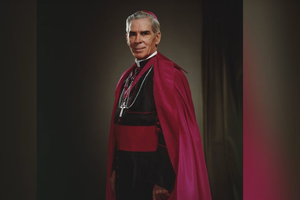
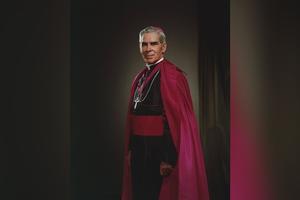
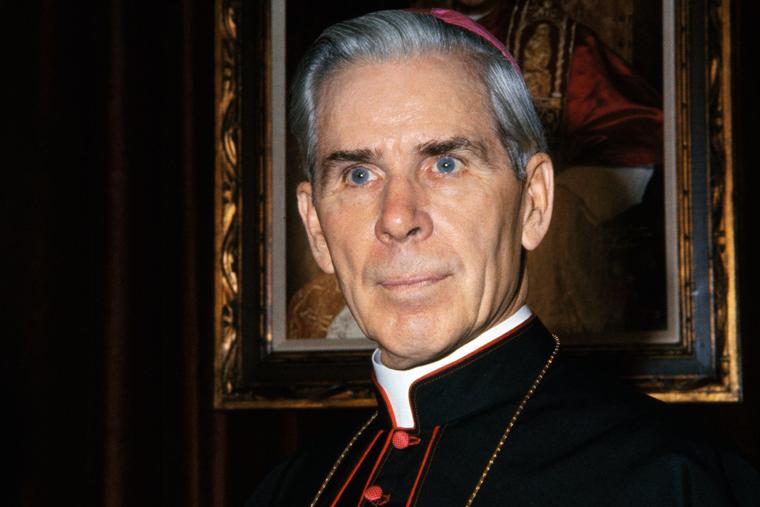
COMMENTARY: Archbishop Fulton Sheen, who was born on May 8, 1895, was a trusted voice of truth, hope and reason in a confusing, tumultuous era.
The trauma of World War II had engulfed the world. Millions of innocent people had died on battlefields and in death camps across Europe — the fruits of collectivist and relativist lies denying truth and human dignity.
Nations grappled in despair from tragedies that would scar them for generations.
Then a voice cried into the metaphorical wilderness.
Archbishop Fulton Sheen offered 4 million listeners around the world much-needed truth on the radio with The Catholic Hour. The now-Venerable Fulton Sheen is revered as one of the most effective evangelists for Jesus Christ.
Very soon, he could become the first American native-born bishop to be canonized a saint.
This canonization will draw millions of faithful Catholics and others to Fulton Sheen’s evergreen wisdom. As bishop of the Diocese of Peoria, where Fulton Sheen was born, ordained a priest, and first answered God’s call, I know how gravely the world needs Fulton Sheen’s legacy: clarity in confusion, hope in anxiety, truth spoken with love, and a reminder that life is worth living because it is rooted in Christ.
Long before social media, podcasts or livestreams, Fulton Sheen maximized the rapidly developing technological landscape to proclaim eternal truths. During World War II, he courageously denounced global attacks on human dignity and the evils of collectivism on The Catholic Hour. He gave listeners courage and hope.
From 1951 to 1957, his television program Life Is Worth Living reached an audience of 30 million people — Catholics, Protestants, Jews, believers, skeptics, and those simply searching for meaning. He even won an Emmy — and beat Milton Berle in his time slot.
Yet Fulton Sheen wasn’t in this business for celebrity. He cared about announcing the Gospel and the conversion of souls.
He was living in a rapidly changing world in which countless people were turning from God. He met them where they were: on radio and television programs in their living rooms. Using a wide range of topics, he addressed pervasive spiritual hunger and led many back to God.
He understood the necessity of being a convincing voice to which people would listen. Despite numbering among the most educated churchmen of his time, he never condescended to people. One day he was addressing world leaders; the next, he was greeting neighbors with warmth and humility.
Fulton Sheen also maintained his integrity in an age of aggressive aggrandizement. His message never changed to maximize his earnings or following. He refused to seek office, and he wasn’t afraid to disagree with powerful figures over moral or political matters.
He also wasn’t afraid to voice unpopular truths. Before and after World War II, he fearlessly denounced communism as an evil attempt to replace God. In the postwar consumerist era, he challenged capitalism’s temptation to value money above people.
He also showed the world how to practice what you preach. As National Director of the Society for the Propagation of the Faith from 1950 to 1966, Fulton Sheen saw the world as his parish. He raised tremendous support for the poor and donated his own television salary to missionary work. His television and radio shows offered the Church in the West the spiritual nourishment it needed; his mission work offered the Church in the East desperately needed material and financial resources.
He is personally responsible for countless conversions, though he famously said those converts belong to God, not him. Among those influenced by him were Clare Boothe Luce, Henry Ford II, and Bella Dodd.
What sustained all of this was prayer. Fulton Sheen made a Holy Hour before the Eucharist each day, a commitment he made at his ordination and remained faithful to throughout his life. He often said everything fruitful in his life flowed from that hour with Jesus.
Today, he shows us why saints matter.
When global instability, technological change and political upheaval were tearing the world apart, Fulton Sheen’s voice pierced the discord with courage and truth. He reminded his generation that seeking meaning outside of God will never fulfill the human heart, and that ideals without truth lead only to despair.
Thankfully, his message persists past the grave.
In just a few months, 70,000 Catholics will gather in Peoria and St. Louis to celebrate Venerable Fulton Sheen’s beatification. This marks the second stage in the canonization process, which requires two confirmed miracles to officially declare someone a saint. His first miracle occurred in 2010, when the parents of a stillborn baby named James Fulton in Illinois prayed for Fulton Sheen’s intercession. Sixty-one minutes later, James Fulton made a complete and medically inexplicable recovery.
This miracle marks but one of countless lives that Fulton Sheen transformed. His beatification as the first American native-born bishop — poignantly during the papacy of our first American pope — promises to reach millions more individuals.
Those of us who already love him are eager to see soon-to-be St. Fulton Sheen’s integrity, humility and courage set the world on fire.
Bishop Louis Tylka of the Diocese of Peoria will concelebrate the Mass of the Beatification of Archbishop Fulton Sheen on Sept. 24, 2026, in St. Louis. Cardinal Luis Tagle will be the official papal representative. More information can be found at celebratesheen.com.