Jane Austen’s Novels Offer Lessons of Hope
This year we celebrate Jane Austen’s 250th birthday, relishing as ever her witty way with the pen — and her novels are wonderful pairings for the Jubilee Year of Hope.
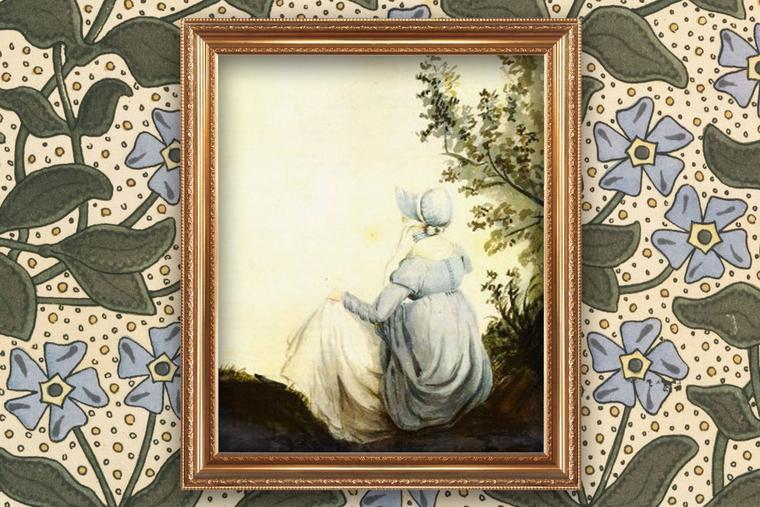
This year we celebrate Jane Austen’s 250th birthday, relishing as ever her witty way with the pen. She lived among the people she wrote about and skillfully rendered their manners, foibles and virtues in her novels.
It is often the case that great literature opens up for us the realities of our inner and outer lives. In entering a story about someone else’s life, we may find ourselves stumbling unexpectedly upon resonant truths, timely illustrations of goodness, and glimpses of extraordinary beauty that remain with us long after our reading. Certain books become traveling companions, perennial reads that speak to us anew at every rereading.
Jane Austen’s novels are wonderful pairings for the Jubilee Year of Hope. As Jessica Hooten Wilson, the Fletcher Jones Endowed Chair of Great Books at Pepperdine University, shared with the Register via email, Austen’s characters have much to say to readers about hope:
“Austen’s characters must all learn to be good in order to be happy. Her books are very Aristotelian in that way! As Elizabeth Bennet tells her sister Jane, ‘Till I have your disposition, your goodness, I never can have your happiness.’ But all of the characters assume the potential within them for goodness. In that lies their hope. Goodness is possible; happiness is possible. There is never cause for despair in an Austen novel because it seems that these characters create their fate by their virtues or vices.”
Each of Austen’s novels contains a pilgrimage toward hope as characters come into greater relationship with this virtue.
Pilgrimages Toward Hope in Austen
In Sense and Sensibility, Elinor and Marianne Dashwood must each come into balance regarding her relationship with hope.
For Marianne, the temptation is to hope too quickly, to depart from reality and land at presumption. As Elinor ponders, “She knew that what Marianne and her mother conjectured one moment, they believed the next — that with them, to wish was to hope, and to hope was to expect.” Marianne suffers great pains in the novel for her quick attachment to Willoughby and the dashed hopes that follow; but her ability to express hope also allows her to eventually bounce back and open her heart again.
Elinor in her turn must learn not to linger in shattered hopes. While Austen shows Elinor to be a model of fortitude throughout the novel, it is plain she suffers from the confidences she carries alone to keep Marianne and her mother from experiencing greater pain.
On a number of occasions, she forces herself not to hope too much. It takes the revelation that Edward Ferrars is free from a former engagement and can marry her to open the floodgates of her buried hopes: “she was every thing by turns but tranquil … when she found every doubt, every solicitude removed, compared her situation with what so lately it had been … she was oppressed, she was overcome by her own felicity; and happily disposed as is the human mind to be easily familiarized with any change for the better, it required several hours to give sedateness to her spirits, or any degree of tranquillity to her heart.”
Hope opens her to discover that the life she thought was impossible is now hers.
In Pride and Prejudice, Fitzwilliam Darcy expresses a similar discovery about hope near the novel’s end. His pride earned him an initial refusal from Elizabeth Bennet midway through the novel, but when he attempts a second proposal, he confesses that Lizzy’s interview with his aunt, which ended without Lizzy’s promise to reject Darcy, gave him hope:
“‘It taught me to hope,’ said he, ‘as I had scarcely ever allowed myself to hope before. I knew enough of your disposition to be certain, that had you been absolutely, irrevocably decided against me, you would have acknowledged it to Lady Catherine frankly and openly.’”
Lizzy, too, must relearn to see goodness in the people around her. She mistakenly trusts in “the appearance of goodness” in Wickham and believes it to be totally lacking in Darcy; as the novel progresses, she learns that her own prejudices have blinded her. Her hopes are restored in the realization of her error and the reception of Mr. Darcy’s goodness toward her family in the face of Lydia and Wickham’s scandalous elopement.
Anne Elliot, perhaps this writer’s favorite pilgrim of hope, begins Persuasion with little hope. It has been seven years since she was persuaded to parts ways with Capt. Frederick Wentworth, the man with whom she was in love. Altered by her disappointment, she suffered “an early loss of bloom and spirits.”
As the novel progresses, Anne slowly regains not only her color and spirits, but her hope. One of the primary ways she begins to hope again is in the context of community.
She meets those who have suffered similarly, like the broken-hearted Capt. James Benwick, who reads tragic poetry to deal with the death of the woman he was going to marry. She imparts care for him and wisdom from her own trials in “ventur[ing] to hope he did not always read only poetry.”
She also meets those who bolster her hope, like Mrs. Sophia Croft, Capt. Wentworth’s sister, who reminds readers that we cannot singlehandedly keep ourselves oriented toward hope. Her oft-quoted line about sailor’s wives — “We none of us expect to be in smooth waters all our days” — is not only a nod toward the wider horizons hope can open, but also a realistic look at life both on land and at sea.
There are storms and sometimes long seasons of difficulty. It is easy to lose our way without the compass of friends who remind us of hope when it seems lost.
As I noted in my previous piece on Persuasion, “In our days that can seem at times marked by an air of hopelessness, Jane Austen’s final novel is a call to a love that hopes beyond itself.”
Keeping the Light of Hope Burning
In Spes Non Confundit, the Bull of Indiction announcing the Jubilee Year 2025, Pope Francis reflected: “By his perennial presence in the life of the pilgrim Church, the Holy Spirit illumines all believers with the light of hope. He keeps that light burning, like an ever-burning lamp, to sustain and invigorate our lives. Christian hope does not deceive or disappoint because it is grounded in the certainty that nothing and no one may ever separate us from God’s love.”
While it is true that the Holy Spirit burns within us, sometimes in a blaze of brilliance and sometimes like the glow of a little altar lamp, it is also true that we can go through seasons of great darkness, where all hope seems lost, crushed under the weight of disappointment, grief or illness. We may feel separated from the love of God and the love of others.
Good literature has a way of reminding us of hope.
As Hooten Wilson observed to the Register, “A writer shares hope by creating the work of art, and the reader participates in this virtue by picking up the book and carrying the words forward within him or herself.” Wherever we find ourselves on the pilgrim road, we are not beyond hope.
Our faith tells us, “The virtue of hope responds to the aspiration to happiness which God has placed in the heart of every man … it keeps man from discouragement; it sustains him during times of abandonment; it opens up his heart in expectation of eternal beatitude” (Catechism of the Catholic Church, 1818).
To open our heart is to surrender it, to risk it being wounded. A theme present within each of Austen’s novels is that the fire of hope is enkindled through love. As Captain Wentworth says in his love letter to Anne, “You pierce my soul. I am half agony, half hope.” He also writes, “I have loved none but you.” What is Anne’s response? “It was overpowering happiness.”
In Pride and Prejudice, hope is also realized as Lizzy and Darcy look forward to marriage. Lizzy writes to her aunt: “I am the happiest creature in the world. Perhaps other people have said so before, but not one with such justice. I am happier even than Jane; she only smiles, I laugh.”
No matter our vocation, the reality of these endings rings true in us; we were made by Love for love. And this is supremely hopeful.
- Keywords:
- jane austen
- classic literature
- christian hope