Restoration at Rapid City Church Named for Mary Uncovers Hidden Stained-Glass Treasure
A long-forgotten stained-glass window, once thought lost to time, is now illuminating Immaculate Conception Church once again as part of a major restoration project.
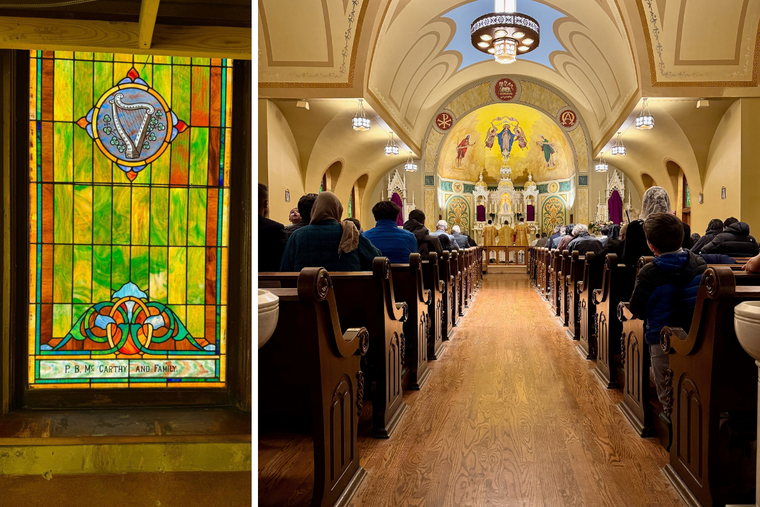
As part of its comprehensive restoration project, Immaculate Conception Church in Rapid City, South Dakota, embarked upon a significant endeavor: the construction of a new baptistery.
The chosen location for this sacred space was an overlooked back corner of the church — a space long relegated to serve as a storage area and a small office for counting the weekly collection.
But hidden behind the faded mint-green walls lay a treasure waiting to be rediscovered: a beautiful stained-glass window, visible only from the exterior of the church.
The church — which had been the first cathedral of Rapid City — was constructed entirely of hand-cut local sandstone by a parishioner stonemason. The parish was experiencing enormous growth, having quickly outgrown its original white wooden structure next door.
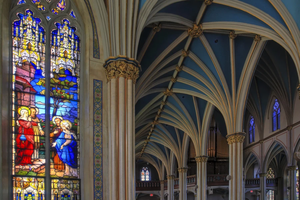
The stained-glass windows, which came from Germany, were among its most distinctive and impressive features. At the time of construction in 1910, these windows would have been extremely expensive, requiring the sacrifices of the parish community that worked together to build the church.
This stained-glass window, dedicated to the theme of music and bearing the symbol of a harp, had not illuminated the church interior for many decades. Its vibrant colors and the name of its benefactor were obscured, and the window seemed forgotten by time.
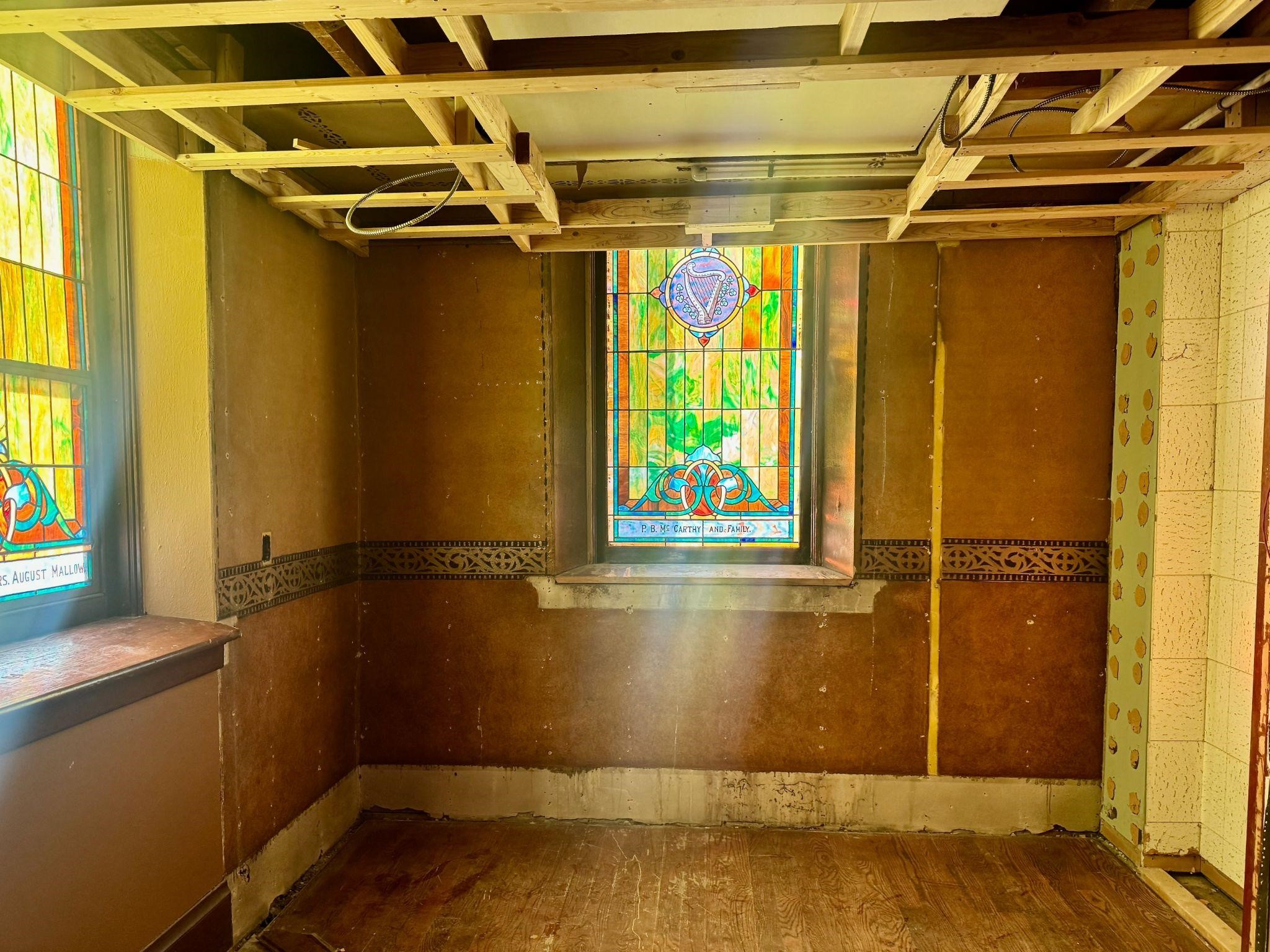
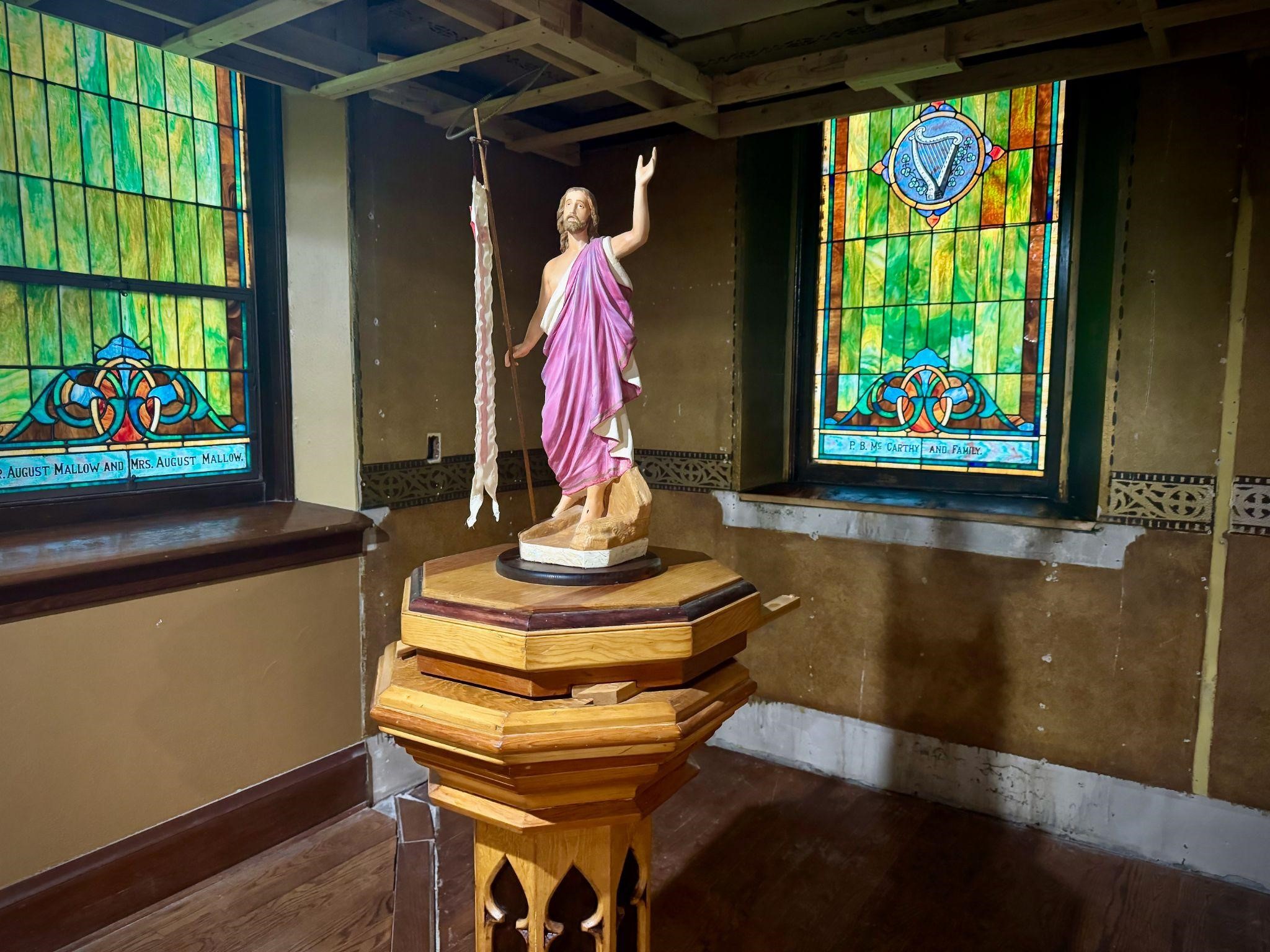
As plans for the baptistery unfolded, the decision was made to restore this hidden jewel and allow its light to grace the interior of the church once more. The full extent of what lay behind the wall was unknown. Initial exploratory openings revealed a surprising amount of space. Further investigation uncovered layers of soundproofing tiles, leading to the realization that this area had once served as a confessional.
When the soundproofing was removed, a remarkable chapter of the church’s history was unveiled. The stained-glass window was perfectly preserved — as were the original decorative paint and artistic details that once adorned the entire church. While small remnants of these original designs had been discovered during the preparations for the church’s restoration, this corner offered an untouched, complete and vivid glimpse into the artistry of Immaculate Conception’s early days. Given the decorative work on the octagonal ceiling, it is highly likely that this was the original location of the church’s baptistery.
The church was built as Catholicism grew steadily in the American West, and those who helped build it were the pioneers who shaped South Dakota — building a city, industry and culture from the ground up.
The window was found to have been donated in memory of P.B. McCarthy and his family. A quick search of public records revealed that McCarthy worked in Rapid City’s early hotel industry and also served as a city alderman. He was described as a “trailblazer” and original pioneer. His only son, a private in the U.S. Army, tragically died in France shortly after the First World War armistice was signed on Nov. 11, 1918.
When Grover Cleveland McCarthy was transported to Europe in September 1918, his father’s address was listed on South Street, across the street from the church — another poignant connection between the family and the church they helped build. Mr. McCarthy, his wife and his son are all buried in Calvary Cemetery. (His son’s body was initially buried in France but later brought home.) Small stones mark their graves.
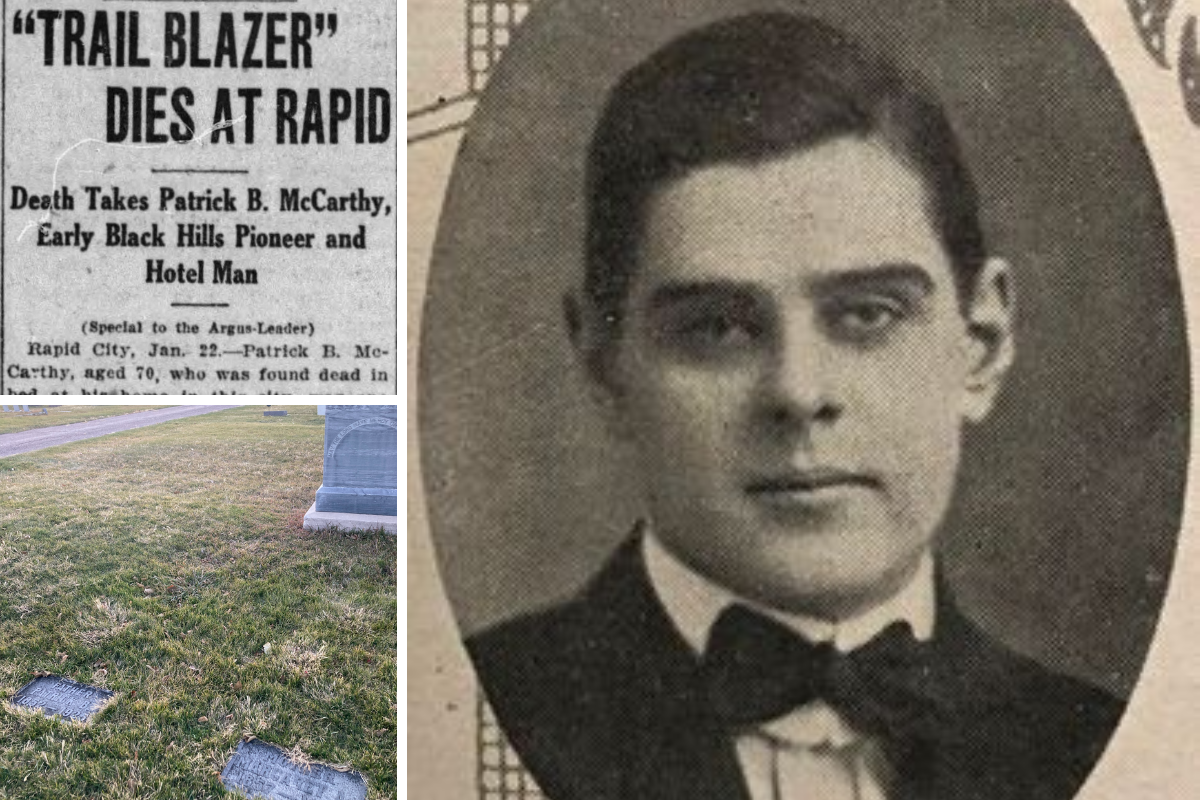
As sunlight now streams through the window once more, the faithful are reminded of the enduring legacy of those who sacrificed to build this church and all its beauty.
Tradition Renewed
Now, the parish advances to the second phase of the restoration, focusing on the decorative art along the perimeter of the nave, newly commissioned murals, the new baptistery, new confessionals, and a redesigned floor. Immaculate Conception Church remained largely untouched over the years, especially after it ceased to be the cathedral of Rapid City (as the city’s Catholic population grew, a much larger cathedral was built and dedicated in 1963).
The church was largely unused and did not serve as a parish for some time, until the Priestly Fraternity of St. Peter arrived and reestablished a parish there.
Restoring its original grandeur is not without challenges. Sourcing authentic materials, furnishings and skilled artisans has become a labor of love for the parish. This undertaking is not merely a restoration of a building, but a renewal of the very principles that inspire and sustain the Catholic faithful — work that is now immortalized in the church’s walls and windows, so that its beauty may glorify God for generations to come.
LEARN MORE
To learn more about the church’s history, architecture and restoration project, visit fssp-rapidcity.org/renewed.
F. Montalbano writes from the western Midwest.
- Keywords:
- stained glass windows
- church restoration