From Russia With Christ’s Love: An American Missionary Priest Reflects on 30 Years of Ministry in Vladivostok
To date, Fathers Effing and Maurer have established or reestablished a total of 13 parishes in the region.
When Father Myron Effing and Brother Daniel Maurer first landed in the Far East of Russia, the region was still reeling from the effects of the Soviet Union’s dissolution. It didn’t help, either, that Brother Maurer didn’t speak a word of Russian.
The two idealistic Americans had traveled halfway around the world with just $750 in their collective pockets in an attempt to help restore the Catholic Church in Russia, which had been systematically driven almost to extinction under decades of Communist rule.
“We didn't realize how destroyed the faith had been,” now-Father Maurer, of the Canons Regular of Jesus the Lord, told the Register. “Millions of people were murdered for their faith.”
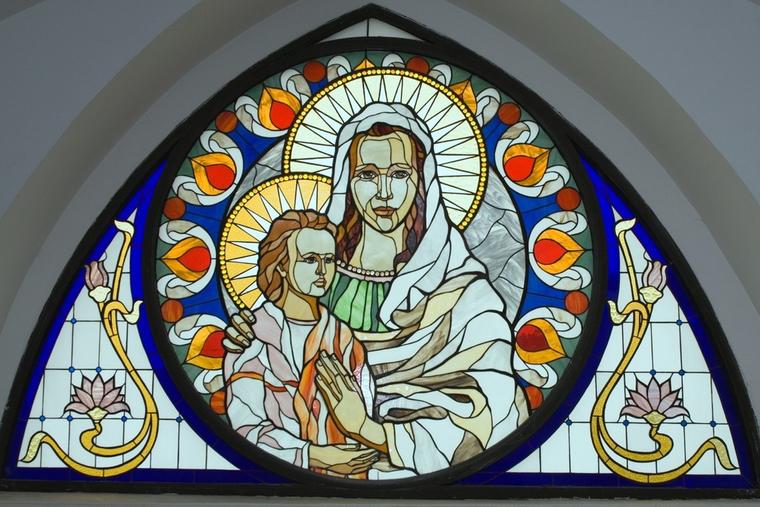
In 1992, Father Effing, also of the Canons Regular of Jesus the Lord, a former scientist from Evansville, Indiana, founded the Mary Mother of God Mission Society in Vladivostok, shortly after the collapse of the Soviet Union and the restoration of the Roman Catholic hierarchy in Russia under St. John Paul II. From its humble beginnings, the mission they founded has established a durable presence in Russia, supported by fundraising efforts in the United States and around the world.
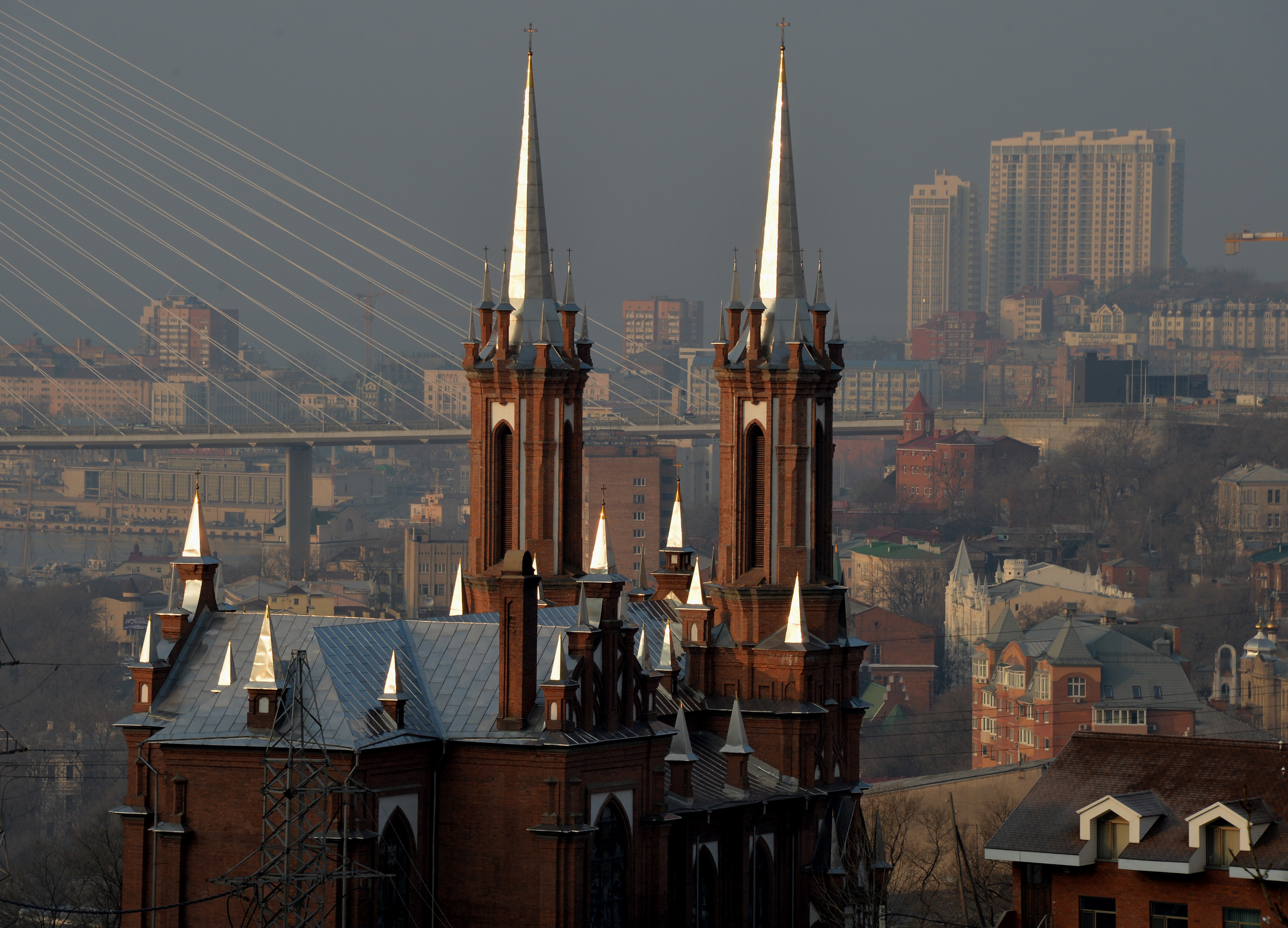
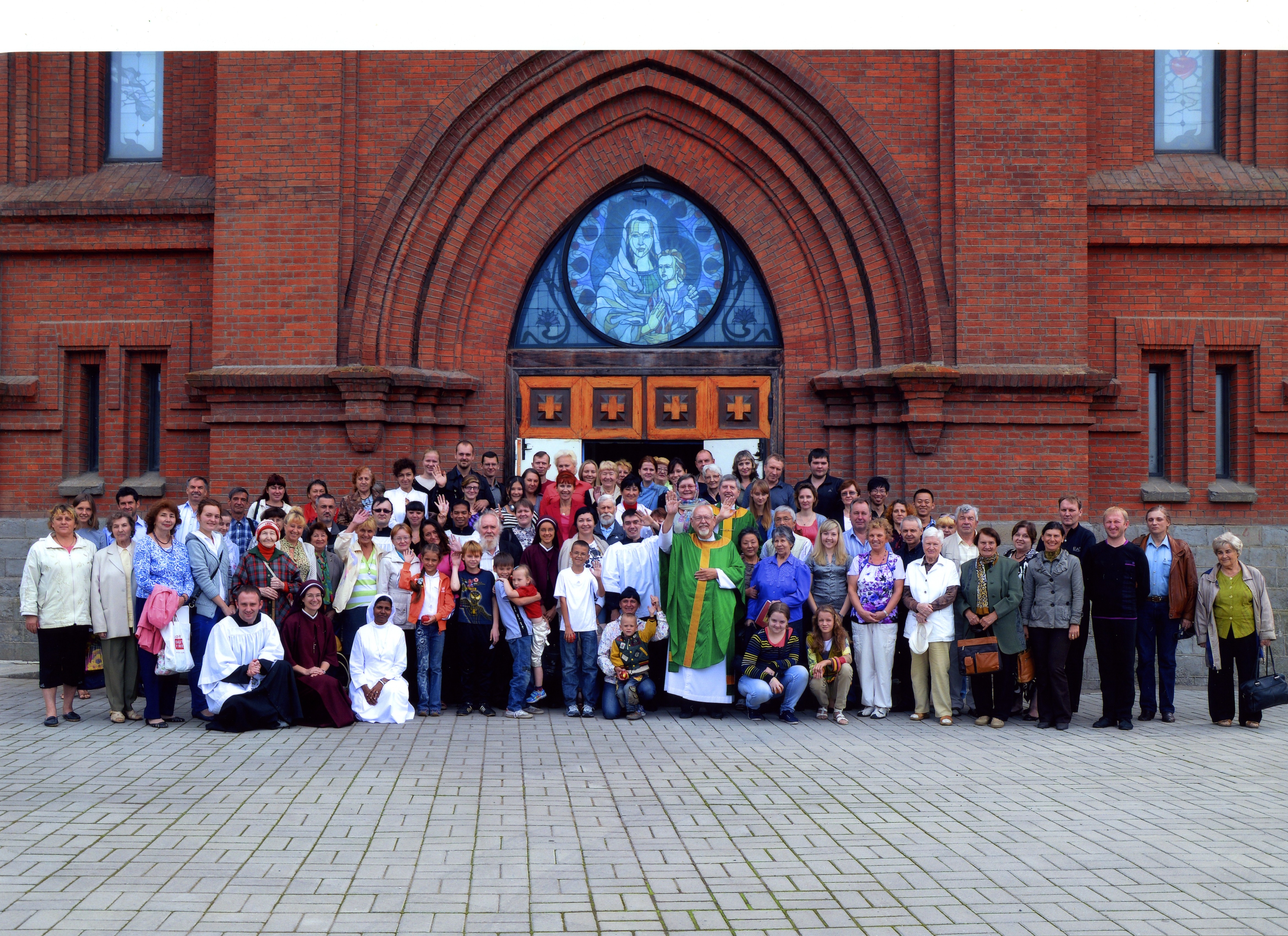
For Father Maurer, it’s been incredible to witness firsthand what God has done to bring renewal to the Catholic Church in Russia — and a major part of that renewal has been accomplished through the efforts of the Mary Mother of God Mission Society. Starting with a community of just 10 known surviving baptized Catholics, the parish the missionaries took over in Vladivostok has since grown to a community of more than 600 faithful. To date, Fathers Effing and Maurer have established or reestablished a total of 13 parishes in the region.
“No matter how much persecution the Church has gone through, [the Church in Russia] is on its feet again. It really is,” Father Maurer said.
‘How Does Vladivostok Strike You?’
A Michigan native, then-Brother Maurer was serving as part of a community called the Assumptionists when his friend Father Effing wrote to him proposing that they create a new community of canons regular — priests who follow a rule, such as the Rule of St. Augustine. Their initial attempts to create such a community in Guam, and later in Stockton, California, were unsuccessful.
Father Effing then came across an article in the Aid to the Church in Need newsletter, which said that “soon there will be a great need for priests in the Soviet Far East,” Father Maurer recalled.
Catholics have had a presence in Russia for centuries, but on the whole, the country is largely dominated by the Russian Orthodox Church. In the country’s Far East, the first official Catholic parish was established by missionaries in the Siberian city of Irkustsk in 1825.
During the entire 19th century, large numbers of Catholics — many of them Polish — had been banished to Siberia and the Russian Far East or had been brought there for prison labor. Later, the completion of the Trans-Siberian Railroad led to more Catholics willingly relocating to the area.
Around the same time that Vladivostok became its own diocese in 1923, the officially atheist Soviet regime began heavily persecuting all forms of religious belief — including the ubiquitous Russian Orthodox, closing some 99% of its churches — and especially the Catholic Church. Authorities confiscated or destroyed churches and places of worship and arrested and tortured priests and men and women religious and used the state-controlled schools to indoctrinate young people against faith. In Vladivostok, the Communists blew up the city’s two largest Orthodox cathedrals with dynamite on Easter Sunday 1937 as a show of force against religion.
More Christians were martyred in the Soviet Union between 1917 and 1991 “than in all other countries in the world in the 2,000-year history of Christianity put together,” Father Maurer said. By 1926, not a single Catholic bishop remained in active ministry in Russia; and by 1938, an estimated 200,000 Catholics had been murdered or exiled to prison camps by the Communists.
In the face of this devastation, St. John Paul II, elected in 1978, earnestly desired to revive the Church in the Soviet Union. In December 1989, John Paul was able to restore diplomatic relations with the Soviet Union after a meeting with Soviet leader Mikhail Gorbachev at the Vatican. Less than two years later, on April 13, 1991, the Pope established two new apostolic administrations in Russia, along with the Archdiocese of Minsk-Mohilev, Belarus.
It was within this context — a rebuilding of Church hierarchy and a largely destroyed faith landscape in general — that the two Americans priests sought to help the resilient Catholics of Russia rebuild. After they received the news that Pope John Paul II had appointed new bishops for the Soviet Union, they were subsequently informed that the new bishop for the Asian region of Russia, Bishop Joseph Werth, would likely welcome them.
“I turned to Father [Effing] and I said, ‘How does Vladivostok strike you?’ … he said, ‘Okay, let’s try it,’” Father Maurer recalled.
There was a problem, however: The Vatican could not provide an address or phone number for Bishop Werth. Father Effing had to travel to Russia to physically find him, which he providentially did. Bishop Werth agreed that the two Americans should become the first resident Catholic clergy in Vladivostok.
And so, after being ordained a deacon at his home parish in Michigan, Brother Maurer and Father Effing finally arrived in Vladivostok for good in February 1992. The nexus point and only large city in the Russian Far East, Vladivostok is located very close to the borders with China and North Korea. It is today a bustling coastal metropolis of about 600,000 people, the home of the Russian Pacific Fleet, and a tourist draw for neighboring countries, such as China and Japan.
But in the Soviet Era, beginning in 1952, Vladivostok was a closed military city, and the only people allowed in and out were those with special permission. After the city reopened on Jan. 1, 1992, Father Effing was able to celebrate Mass at the Vladivostok church for the first time in nearly 70 years — on the church’s front steps, in biting cold.
Later, Bishop Werth came to Vladivostok to ordain Father Maurer to the priesthood in a rented hall, making him only the second Catholic priest to be ordained in Russia since the return of religious freedom.
Then, quite simply, “we just decided that we had to get to work,” Father Maurer said.
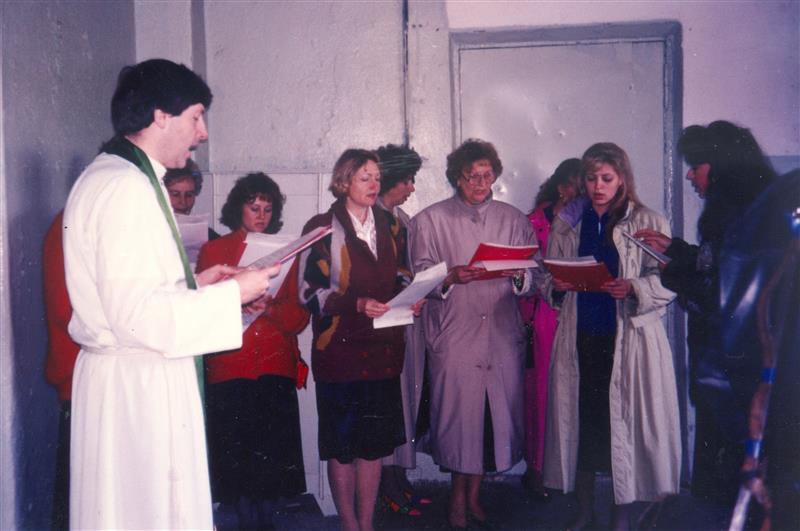
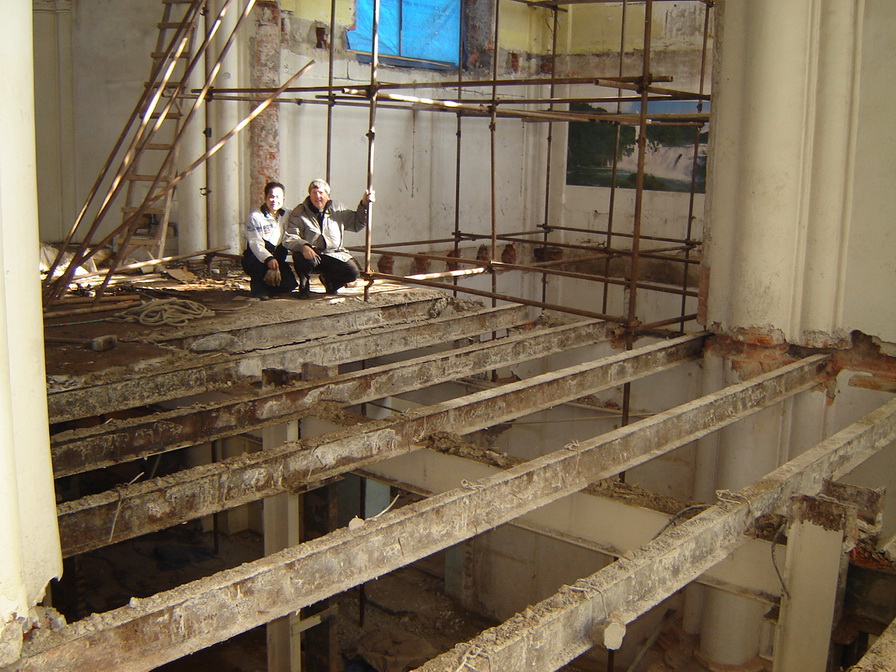
After meeting up with the surviving baptized Catholics in the city — who numbered less than a dozen — the priests set about reclaiming the historic Most Holy Mother of God parish church, which had been converted into a state archive during the Soviet era. The Communists had gutted the interior and built three additional floors inside.
After a couple of years of celebrating Masses wherever they could, the priests finally regained the keys to the church building on Jan. 1, 1994 — the Solemnity of Mary, Mother of God, the parish’s patroness. They started restoration work as soon as possible, but funds were tight. Initial support for the mission came from Archbishop Francis Hurley of Anchorage, Alaska, who offered the mission a U.S. mailing address and tax-exempt status.
Around the new millennium, the Mary Mother of God Mission Society was formally established as a nonprofit in the Archdiocese of St. Paul-Minneapolis as the mission’s official fundraising organization. Today, priests associated with the society celebrate Masses at parishes across the U.S. and appeal for donations.
Successes and Challenges
Geographically speaking, the diocese that includes Vladivostok, the Diocese of St. Joseph at Irkutsk, is the largest on the planet. It covers 3.8 million square miles, but includes, by estimates, just 53,000 Catholics.
The parish in Vladivostok, far from the hollowed-out shell that it was in 1994, is thriving today. The priests offer daily and Sunday Masses, Sunday school, sacramental preparation, Order of Christian Initiation for Adults (OCIA) classes, youth groups for both Russian and English speakers, outreach to college students, service to the poor, and even sacred music programs and youth conferences, occasionally with the assistance of FOCUS missionaries from the U.S.
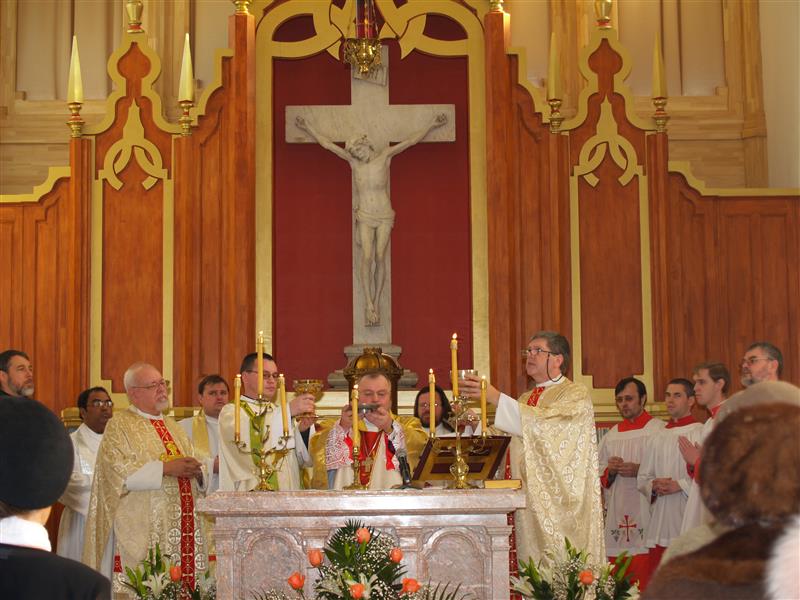
The order that the two priests founded, the Canons Regular of Jesus the Lord, has experienced significant growth, with much interest coming from Asia. The order currently has one Russian member, Father Nikita Kushnaryev, the son of a Communist professor of Marxist economics who grew up an atheist before converting. He is currently in Rome pursuing a licentiate degree in Islamic studies to better minister to Russia’s large Muslim population.
The mission operates in an increasingly difficult geopolitical environment, facing significant bureaucratic and political obstacles. For instance, Russia’s visa restrictions currently limit newly recruited foreign priests to short, three-to-six-month stays, dealing a blow to the priests’ ministerial continuity.
‘They Know How to Suffer’
Since the fall of the Soviet Union, numerous other Catholic religious orders have come to serve in the Russian Far East, including most recently in 2013, when the Sisters in Jesus the Lord, an order that originated in St. Paul, Minnesota, came to serve in Vladivostok and the surrounding area, working closely with Fathers Effing and Maurer.
Despite the persecutions of the 20th century that drove Catholicism almost to extinction, the Church in Russia is on its feet again, with a growing — if modest — presence of young and college-age Catholics who can carry the faith forward, Father Maurer said.
Father Maurer said he wants Americans to know that the Russians he has known have a deep, innate reverence for liturgy and sacred music; they also know how to endure hardship without bitterness.
He said: “The Russians know how to suffer. They’ve suffered for such a long time, and yet they don’t get angry and they don’t get mean. … It’s one of the things that has surprised me, and interests me, about the people of Russia.”
This story was updated after posting to clarify where the Sisters in Jesus the Lord originated.