The Holy Eucharist in Iowa: EWTN Chaplain Carries Christ Through the Farmlands That Formed Him
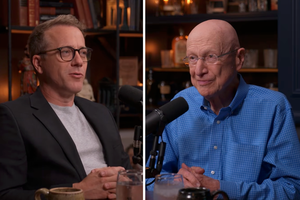
Father Joseph Mary Wolfe reflects on his journey through the towns that shaped his faith — and the faithful who are rediscovering Christ in the Eucharist — while traversing the National Eucharistic Pilgrimage.

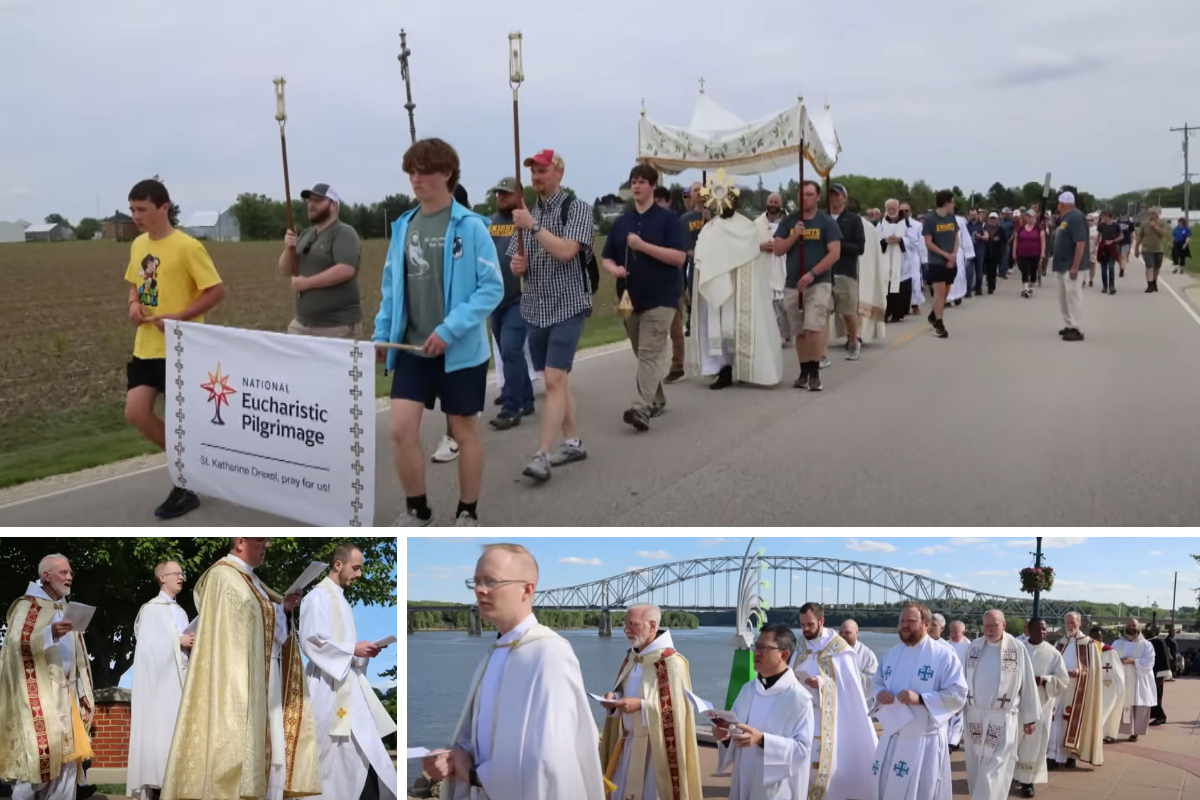
For Father Joseph Mary Wolfe of the Franciscan Missionaries of the Eternal Word, taking part in the May 23-27 leg of the Drexel Route of the National Eucharistic Pilgrimage (NEP) in the Archdiocese of Dubuque, Iowa, was more than a spiritual journey — it was a homecoming.
The route from Dubuque to Ames took Father Wolfe, the chaplain of EWTN, through many of the areas where he grew up and worked on his family’s farm. The stops along the way were quite familiar to him.
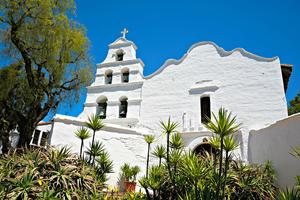
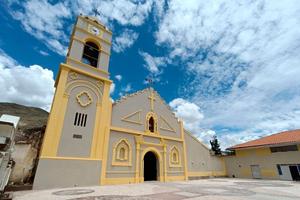
Church spires are often the tallest structures in Iowa’s small towns and act like faithful magnets, drawing the attention of residents and visitors alike.
“I knew those beautiful churches well and produced a series entitled Faith in the Heartland in 2003, highlighting the same churches where the National Eucharistic Pilgrimage stopped for Holy Hours,” he told the Register. One of them was Sts. Peter and Paul Catholic Church in Dyersville, where he interviewed a young pastor of a community of Catholic parishes, Father Joseph Sevcik, for videos he later produced for EWTN and the friars’ social media.
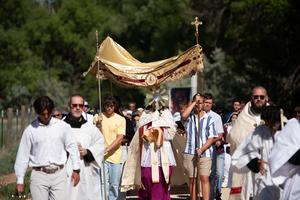
Processing through the farm fields and along country roads brought back many pleasant memories, especially about the Catholic roots in Eastern Iowa and why faith remains so strong there today. Father Wolfe shared that when he was on one of his past home visits to Iowa from Alabama, he visited those churches with his parents. “My mother suggested that I should do some programs on those beautiful churches, which I did,” he said.
That brought back another reminiscence.
“One of my favorite memories of growing up on a farm was when we baled hay. The whole family was involved in getting the hay from the field into the barn. We all worked hard and then sat around the kitchen table with hearty appetites for Mom’s delicious supper with lots of fresh food from the garden.”
Everybody knew everyone else in the parishes, and everybody cared for each other, he said.
Blessings of Faith
Naturally, traveling along the pilgrimage route through such familiar landscapes, farmlands and towns, Father Wolfe was able to compare today’s religious practice to what Eucharistic adoration and reverence was like when he was growing up in the Hawkeye State.
“I remember the 40 Hours devotions we had in our parish at St. Paul’s in Worthington,” he said. “Our pastor, Father Donald Peters, had a love for the Blessed Sacrament, and I remember him, before Mass started, kneeling down in the sanctuary as he looked toward the tabernacle and prayed.”
“The Worthington church had a number of symbols related to the Holy Eucharist,” he added. “In high school, my sister and I were part of the Eucharistic procession at St. Francis Xavier in Dyersville, which has always been a beautiful tradition there and where the National Eucharistic Pilgrimage made a Holy Hour.”
These long-standing practices have remained steady and now serve as a model to so many other parts of the country.
More confirmation came from stops along the way that proved both promising and inspiring, such as the interviews Father Wolfe had with pilgrims, including students at Iowa State University.
He said he was encouraged “to see so many young people discovering the consoling truth that Jesus remains with us all days, in a profound way in his Real Presence in the Holy Eucharist.”
“Many young people — and old, too — are growing in intimacy with him by spending time in adoration. One of the young ISU students, Emma, quoted Blessed Carlo Acutis, who said, ‘When you spend time in the sun, it makes you tan. When you spend time with the Son, present in the Eucharist, it makes you a saint.’”
Pebbles Along the Path
Along the way, the pilgrimage also encountered hecklers and protesters.
Father Wolfe recounted the incidents. “It was an unfortunate beginning to the arrival of the Blessed Sacrament in the Port of Dubuque,” he said, “when a small group with a very loud speaker hurled blasphemies and lies about the Holy Eucharist and the Catholic Church continually throughout the initial procession and time of outdoor adoration in a way that can only be described as harassment.”
The pilgrims did not directly confront the harassers but carried on with even more fervor, Father Wolfe explained. “We continued to pray and sing even more robustly.”
Commenting on the pilgrims’ reaction, he said, “I was edified by their not getting into confrontations with this small group, but it was obvious they were praying for them. I prayed, asking that St. Joseph would protect Jesus from being blasphemed the following day during our 5.7-mile procession through the fields. And I prayed that St. Francis, who had a profound love for our Eucharistic Lord, would help them to see what he saw. Fortunately, we had no further disturbance from that group the rest of the NEP through the Archdiocese of Dubuque.”
Father Wolfe shared something else about that incident. “My reflection on this came a few days later in the Gospel reading we had on Friday, June 6, when Jesus told Peter that when he was young, he went where he willed but that a day would come when he would be taken where he would not go — indicating the sort of death he would die. But then Jesus said, ‘Follow me.’”
“I had Mass for our [EWTN] News team that day,” he continued, “and told them that the Lord is pointing out that to follow him will not always be pleasant nor accepted — but that he, nonetheless, says to us, ‘Follow me.’ It is in these moments that we answer the question ‘Do you love me?’ saying, in effect, ‘Yes, Lord, you know I love you.’ We have a joy that cannot be taken from us. But following the Lord will not always be easy — it is then that we prove our love.”
In a certain sense, and long before this pilgrimage, Mother Angelica was one of the true champions of Eucharistic adoration and a spiritual forerunner to the National Eucharistic Revival. Does Father Wolfe see some connection? “I think that in many ways she started a Eucharistic Revival in the year 2000,” he said.
“She built a remarkably beautiful Shrine of the Most Blessed Sacrament, which continues to attract many pilgrims. Our Eucharistic Lord is the center of everything there. The Living Heart of EWTN continues to be the Holy Eucharist since we have adoration every day throughout the day.”
Now that the three-year Eucharistic Revival and National Eucharistic Pilgrimage concludes on June 22, the Solemnity of Corpus Christi, Father Wolfe sees fruits from it and anticipates what might be coming in the future. He explained, “We are in the Jubilee Year of Hope. What can give us greater security and hope than to know that Jesus is with us all days, until the end of the world, profoundly, in the Most Blessed Sacrament? I see hope arising in the hearts of many of the young and not-so-young as they spend time in adoration and frequent Mass even daily.”
Of course, participating in the National Eucharistic Pilgrimage in the Dubuque Archdiocese where he grew up had an extra-personal meaning for him. “It was a highlight of my priesthood,” he said with great joy. “I will never forget it and some of the young clergy and faithful I came to know. I hope my covering and promoting the event helped in some small way to help someone encounter the One, Jesus.”
WATCH ON EWTN
- Keywords:
- father joseph mary wolfe
- national eucharistic pilgrimage
- national eucharistic revival
- blessed sacrament