Eucharistically Pro-Life
Prolife Profile
Dr. Brian Thatcher gave up his medical practice to found the Eucharistic Apostles of the Divine Mercy in 1995. It wasn't long after that he realized the need to link Divine Mercy with pro-life work.
He says his own conversion started at the Our Lady of Guadalupe Shine in Mexico City.
“I was a wealthy medical physician who had it all materialistically, but I was not leading a holy life,” he says. “I looked outside and saw all the poor people smiling and singing and having a joy-filled day with Our Lady, and here I was, this rich American crying and searching for meaning in my life.”
The turnaround came after he learned and took to heart the message of Divine Mercy.
“In my younger days, I was not always pro-life and had even given advice to people with children telling them to go have an abortion,” he recalls. “It took my own personal experience to see the value of life.”
Thatcher tells a dramatic story. In 1995 he and his wife were blessed with the birth of a son, whom they named John Paul. “He was the fruit of a healed marriage,” Thatcher says. When John Paul was 15 months old, Thatcher traveled to Denver to speak at a Catholic conference, returning late that weekend. The following day they were to have a Mass said in their home. We'll let the good doctor pick up the story from there in his own words.
“My wife was busy and I was tired from the trip. I went out to the porch. My oldest boy said, ‘It's time to start the lawn-mower.’ My oldest daughter said, ‘It's time to go to swim practice.’ I took her to swim practice and 20 minutes later got a call from my 11-year-old old son, who said John Paul was dead. He was found blue in the pool. Someone had left the gate open.
“I told him to call 911 and tell my wife, a nurse, to start CPR. On the way home I prayed to all the saints and Our Lady. I was hit with these major pangs of guilt. I realized I had left the pool gate open.
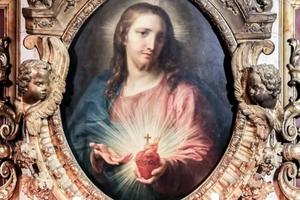
“I had been telling others to live the message of Divine Mercy. The hallmark of the message is, ‘Jesus I trust in you.’
“Waiting at a red light, I offered John Paul up to God and thanked him for the time he had given him to us. The Scripture of Abraham offering up Isaac came to mind. Like Abraham, I thought, I'm offering up Isaac, trusting God would provide the sacrifice.
“My wife had gotten a weak pulse. John Paul was comatose and distended.”
Later, when John Paul was in the hospital, Thatcher called his sister to ask for prayers from her prayer group. “Over the next day and a half,” Thatcher marvels, “John Paul got better and better. At the end of 36 hours, he went home totally normal.”
“That episode,” he says, “made me realize the gift — and the fragility — of human life.”
Pro-Life Pointers
Earlier episodes in his medical practice had shown Thatcher how the wounds of abortion always remain open and frequently fester. One day, a lady in her early 70s said, “Doctor, I want to share with you something I never shared with anybody. When I was 15, I got pregnant by my boyfriend and had an abortion. Do you think God could ever forgive me?”
“This lady was carrying that grief and shame for over 55 years,” Thatcher says.
Through such experiences, Thatcher saw that the pro-life component of the Eucharistic Apostles of the Divine Mercy, which became a lay outreach ministry of the Marians of the Immaculate Conception (well known in the United States for their National Shrine of the Divine Mercy in Stockbridge, Mass.), needed to become a primary focus.
“We were always under the patronage of Our Lady of Guadalupe,” Thatcher says. “As we began to speak across the country, we saw so many people in need of healing, especially from abortion. We began to hear the cries of women and men and affected family members. They all needed to hear about Divine Mercy, to understand God's mercy and grace is available for them as well.”
That's where the group's printed materials and Days of Reflection — a Divine Mercy pro-life crusade — come in. This year Thatcher coauthored Rachel Weep No More, a booklet for post-abortion healing, with Father Frank Pavone of Priests for Life. It shows the power of Divine Mercy, points people to healing and, Thatcher says, “helps them really understand that quote that brought such peace in my life — ‘The greater the sinner, the greater the right to my mercy.’”
“The beautiful thing is the devotion of Divine Mercy is inherently linked to healing after abortion,” Father Pavone says, stressing the strength of the bond between the Eucharist, the Divine Mercy and respect for life. “Our Lord told St. Faustina that abortion was the biggest sin people had to make reparation for.”
“In the case of Brian, the pro-life message is so intertwined with the message of Divine Mercy. I've seen many times how Brian attracts people at these Divine Mercy conferences around the country,” observes Father Pavone, himself a frequent speaker at the events. “One of the most import dimensions is this: People in the general public need to see pro-life Catholics reflecting the fact that we who reject abortion do not reject those who have had them and that to be pro-life is to be pro-woman.”
Trish Short, also a regular speaker and singer at Divine Mercy conferences, learned of the Divine Mercy while struggling with the effects of two abortions. It was the Divine Mercy, she says, that brought her back to the Catholic Church.
“The chaplet helped me when I was most lost,” Short says. “It has been such a major force in my healing journey.”
Thatcher and the Eucharistic Apostles of Divine Mercy proved the catalyst in bringing Short to the attention of the Marians, who were struck by a song she wrote. The Marian Fathers then asked her to “write a contemporary version of the sung chaplet,” she says. Today her version airs Saturdays on EWTN.
Thatcher and the Eucharistic Apostles asked Pope John Paul II for an apostolic blessing for praying the chaplet for pro-life causes. “He read it and wanted to sign it immediately,” Thatcher says. The Holy Father granted it on the feast of the Incarnation of Jesus in 2003.
It applies not only to Thatcher's group but also to all the faithful worldwide who join them in offering the Divine Mercy chap-let for pro-life intentions, Thatcher explains.
“And the beauty of the chap-let is we're imploring mercy on us and on the whole world,” he adds. “It's in essence a Eucharistic prayer. We offer up Jesus to the Father, and that's a gift he can't refuse.”
Joseph Pronechen writes from Trumbull, Connecticut.