Bishop Barron Gets Catholic Ed Right
Christ-centeredness becomes vivid and life-changing when the entire school community lives their faith in a way that brings them into direct contact with Jesus.
Those who lead and work at Catholic schools spend ample time reflecting on mission: Is the main mission of the school to proclaim Jesus Christ?
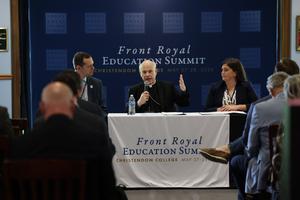
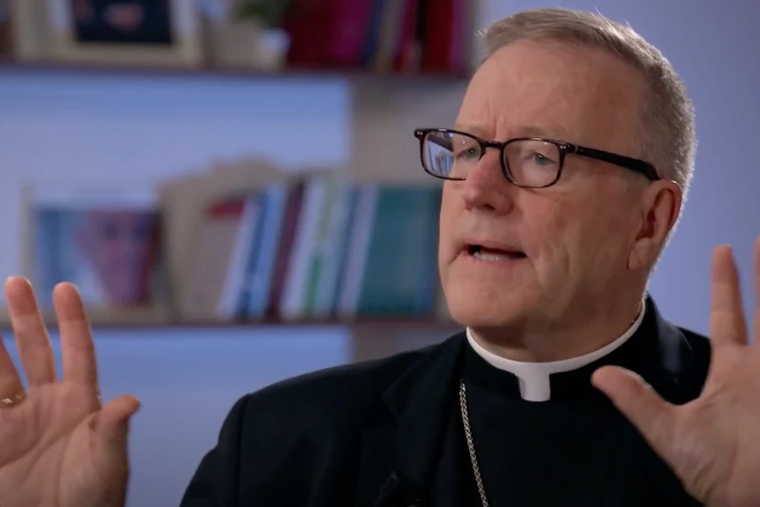
Such a question was at the heart of a recent interview that Bishop Robert Barron had on his platform, The Word on Fire Show.
The opening lines of this interview reveal the need for the conversation. Matthew Petrusek, the host of The Word on Fire Show, began, “How to strengthen Catholic identity in Catholic schools may seem a bit confusing. If Catholic schools are already Catholic, why would they need to become more so? The unfortunate reality, however, is that some Catholic educational institutions are not living up to their name.”
The interview continues, and a question-and-answer format allows Bishop Barron to give practical and powerful insights into what it means for a Catholic school to truly be Catholic.
The main takeaways from their important discussion revolve around Jesus being the center of the life of the school, the refusal to place religion class in its separate compartment, and consistently placing the entire school inside of the context of prayer.
First, Christ must be the central focus. Bishop Barron explained, “What makes a Catholic institution Catholic is its declaring the Lordship of Jesus and inviting people to share his life in the Church. So if our ... Catholic hospitals don’t do that, they should close. If our Catholic schools don’t do that, they should close.”
Catholic schools must seek to produce faithful fruit that is clearly attached to Jesus in name and in practice.
Second, religion class must never be compartmentalized.
A truly Catholic school will enable math, science and all of the humanities to move from the foundation of Christ as the Logos, Bishop Barron said.
Math makes known the invisible world of truth. Science does not disprove God but shows that the universe is rationally ordered.
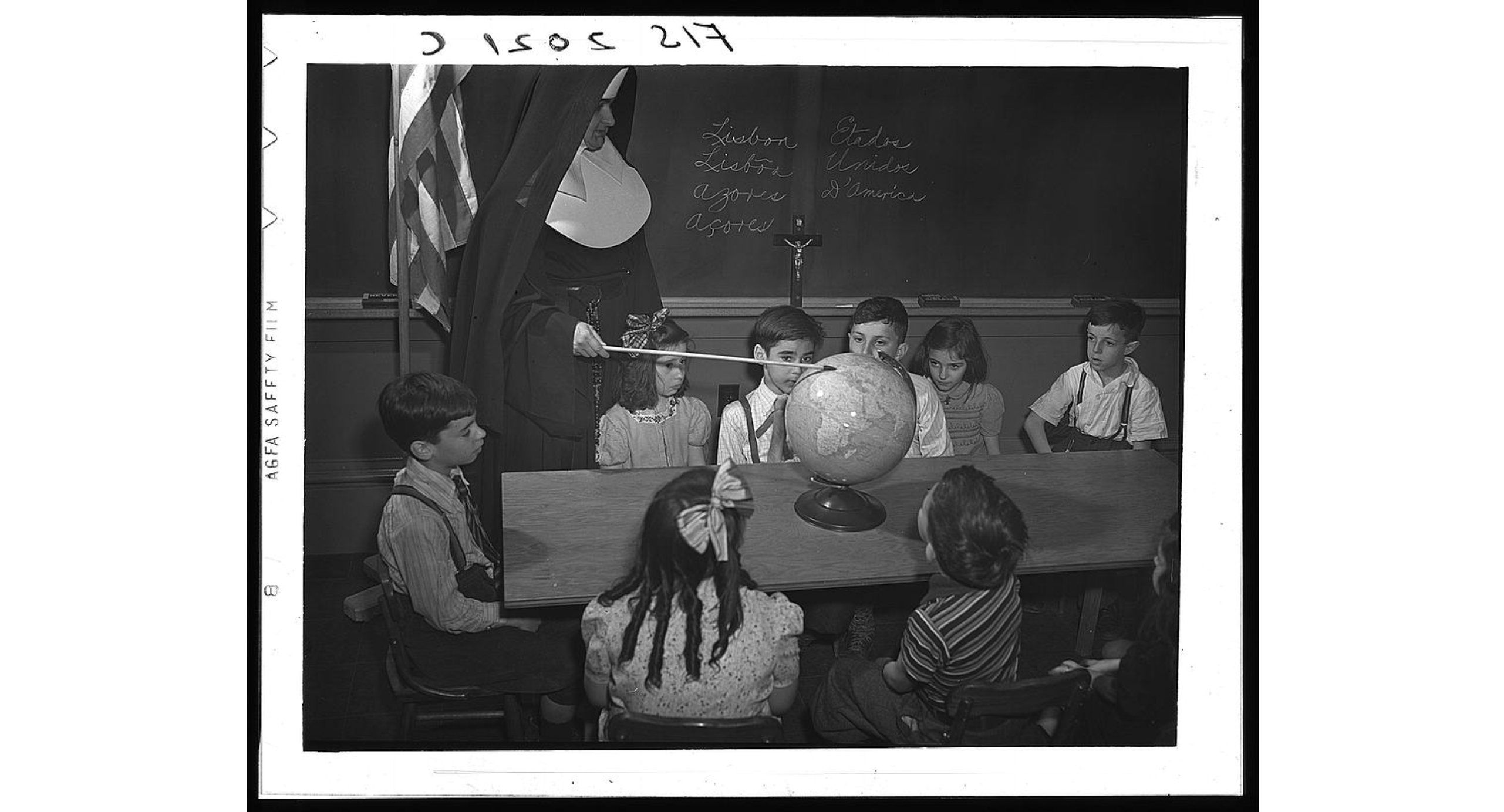
Literature allows the human mind to experience the many longings and downfalls of the human condition in a way that pushes scholars to consider what we are made for and what is most important in life.
All of these simple examples are not meant to make every class a religion class but place a firm foundation on all disciplines.
That grounding is made stronger when the teacher explicitly witnesses his or her faith to their students. Educators should bring their students closer to Christ in their witness to living the faith as well as their Christian care for others and the practice of their public prayer life with their students.
Finally, prioritize the school’s attendance at the Sacrifice of the Mass; once-a-week Mass is the practice of the schools in Bishop Barron’s diocese, ensuring that children regularly receive the Blessed Sacrament in a way that is formative.
This is the entire purpose of a Catholic school: to create disciples who know Jesus as a real living Person.
Petrusek and Bishop Barron also reference the practice of confession. Monthly reception of this sacrament of grace and mercy allows students (and teachers/administrators) to experience the love of God while coming to terms with one’s own brokenness.
Knowing these two truths will create a lasting impact on students for a lifetime.
That lasting impact is the reason why we have Catholic schools at all. Christ-centeredness becomes vivid and life-changing when the entire school community lives their faith in a way that brings them into direct contact with Jesus.
The more that schools do so, the more they will come alive — and the more our culture will benefit from the disciples they nurture.
- Keywords:
- catholic schools