Australian Catholics Have Kept Faith With the Church in East Timor
For the past 25 years, Catholic parishes, schools and communities around Australia have provided highly effective aid to partners in Timor-Leste (also known as East Timor), one of the poorest countries in the world.
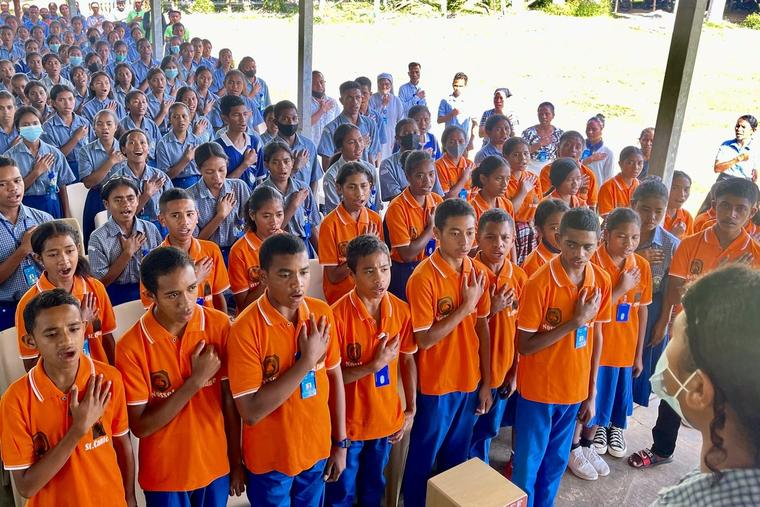
A parish priest in Sydney, Jesuit Father Richard Leonard, put a note in his weekly bulletin in July about a teacher training college in neighboring Timor-Leste that needed a bus to transport students over long distances to their classes.
The following week, Father Leonard told his parishioners how he’d received an overwhelming response of financial support to buy the $45,000 bus and that 10 people had volunteered to set up a group called the “Friends of the Timor-Leste Jesuits” to provide ongoing aid.
He also explained how one of his parish team, Jesuit Father Sacha Bermudez-Goldman, had relocated to Timor-Leste as part of a drive to forge greater collaboration between the Jesuit provinces in Australia and Timor-Leste following a directive from Rome. In late August, seven Timorese-based Jesuits visited Australia as part of this initiative.
In the quarter century since Timor became a new nation, Catholic parishes schools and communities around Australia have provided highly effective aid to partners in Timor-Leste (also known as East Timor), one of the poorest countries in the world.
There are a few factors underpinning this spontaneous and sustained generosity from the Church in Australia. Timor-Leste’s population of 1.4 million people is almost 98% Catholic, having more than doubled in the past half-century. This explains why Pope Francis visited the tiny country last September.
Many Australians still remember Indonesia’s orchestrated destruction and bloodshed that followed the vote for independence in 1999. And some older people know of the stoic support given to Australian commandos who fought the Japanese on Timor in 1942.
One of the very first initiatives after independence was led by Josephite nun Sister Helen Saunders, who was working at the time as a pastoral associate at a Sydney parish.
Sister Helen and other associates contacted numerous parishes around Sydney for a fundraiser to build a kindergarten in the small town of Maubara west of the capital, Dili. “We were overwhelmed by how well it went, the generosity of the people,” she explains.
The one-off fundraiser generated $25,000 for the kindergarten, and together with large contributions from a handful of private donors, there was sufficient money to complete the building in late 2002.
The private donors included the family of a World War II Timor veteran, the late Paddy Kenneally, an Irish-Australian who had advocated tirelessly for the cause of Timorese independence for more than 25 years. Kenneally was a longtime parishioner of Christ the King parish in western Sydney, which also contributed to the Maubara fundraiser
Paddy’s son Gerald went on to launch the Australia Timor-Leste Advancement Society (ATLAS), which draws inspiration from the leaflet dropped by the Australian Air Force in early 1943 after Allied forces had been evacuated. The leaflet said in Portuguese: “Your friends do not forget you.”
Since 2014, ATLAS has generated $800,000 to fund 22 projects in Timor-Leste, including the building of St. Theresa’s orphanage in Maubara.
ATLAS’ projects have mainly focused on Catholic education in some of the most remote parts of Timor, as well as supporting nutrition and practical skills like sewing. It has leveraged the parish network to fund its projects, and its annual event is strongly supported by the Josephite nuns (who also support teacher-training projects through its aid agency Mary Mackillop Today, named for the first Australian saint).
Chairman Gerald Kenneally said ATLAS’ work in Timor-Leste “demonstrates that Australians have not forgotten their friends who supported us during our darkest hour.” He added: “I believe our work with communities is based on a partnership and mutual respect — we support what the community leaders want to prioritise."
Low overheads are one of the impressive features of these parish-driven projects. While most mainstream aid agencies might spend 30% of their revenue on administration and fundraising, ATLAS has kept its overheads to 11%. Volunteers from ATLAS and parish projects pay their own travel and accommodation costs.
The small inner-city parish of St. Canice’s in Sydney’s east was another early responder to the critical needs of Timor-Leste. In the early 2000s, then-parish priest Jesuit Father Steve Sinn conceived of a partnership with the Jesuit-run mission in Railaco, about an hour’s drive into the mountains from Dili. This was a bold move for the parish with a few hundred members, as it was already very committed to providing meals to homeless people living in and around the nearby red-light district.
For the past 15 years, however, this work has been led by longtime St. Canice’s parishioner Michael Musgrave, who has drawn on his experience as an American Express executive to drive fundraisings and ensure that the money hits the ground.
St. Canice’s has delivered more than $850,000 in aid to the Railaco parish, including support for a mobile medical program led by a Jesuit doctor, Father Martin “Bong” Abad Santos, the expansion of Our Lady of Fatima secondary school and a nutrition program for about 350 children.
With St. Canice’s support, the school has been expanded from a tin shed with no walls to five purpose-built classrooms for about 340 students. The program also funds the salaries of 16 teachers at the secondary school.
Musgrave was so impressed by the community in Railaco, and especially the motivation of the students, that he committed much of his time in retirement to supporting these projects. His involvement has given him “a new sense of purpose.”
“Their families never went to school, but these kids grew up knowing they needed an education. The last two years we’ve had 100% in the leaving year pass their national exams,” he explained.
Musgrave’s dedication and passion was recognized in 2022 by the Jesuit order: He was awarded a Companions Medal.
Funding for medicine, vehicles and food has also been followed by a steady stream of volunteers over the years, including students from Jesuit schools in Australia. All donations to the Railaco project are fully tax deductible through Jesuit Mission.
The Lower North Shore Parishes (LNSP) in Sydney have been supporting the very remote parish of Our Lady of Mount Carmel, Letefoho, for about a decade, with a strong focus on education. Letefoho is about a two-hour drive from the capital, along an often-treacherous mountain road.
This support came about after an LNSP parishioner, Georgina Loughnan, taught English at Letefoho in 2010. During her stay, a young curate, Father Helio Fernandes, suggested the partnership to her. Loughnan then arranged for the parish priest, Father Rex Curry to visit, and then a second visit by 10 parishioners, which culminated in the formation of Letefoho East Timor Support (LETS) and a formal partnership with the parish in 2016.
LETS has funded the renovation of the high school, built a boarding house for girls, and sponsored more than 1,000 high school and university students (including nine seminarians).
Loughnan says the partnership has deepened her faith and that of many of the parishioners of LNSP. “I have never witnessed such faith and spirituality as I have in Letefoho,” she said.
Other parish-based partnerships with communities in Timor-Leste have been developed by St. Mary’s Carmelite parish in Wentworthville, Sydney, St. Mary’s of the Angels in Geelong, while three parishes in Adelaide provide support to seminarians.
Railaco parish priest Jesuit Father Roberto Madeira Encarnacão says his parishioners see the support from St. Canice’s as “a great blessing,” especially given that the partnership has been operating for more than 20 years.
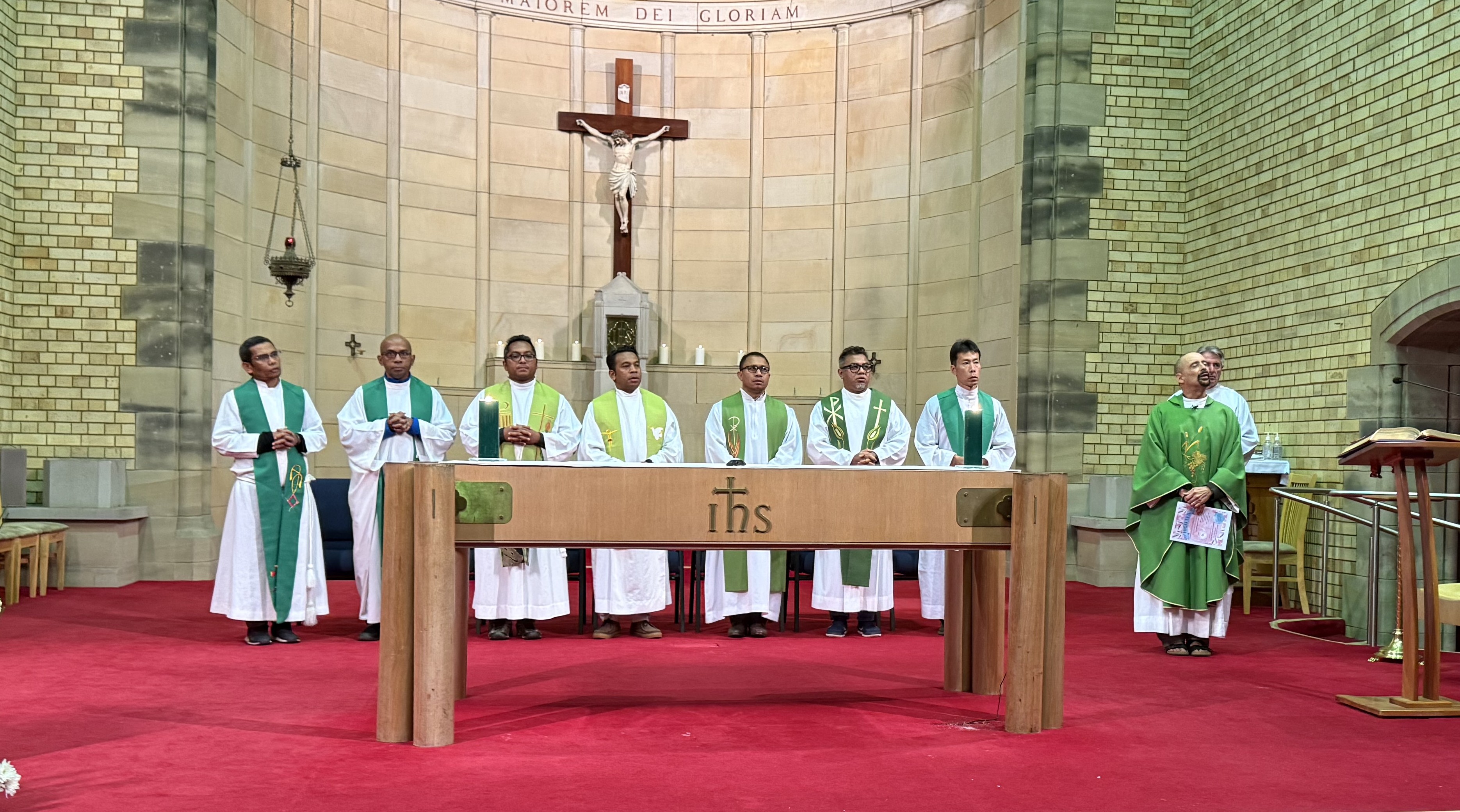
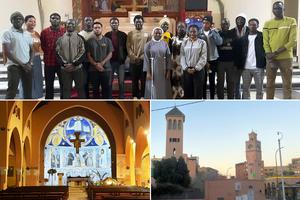
In late August, Father Encarnacão was one of seven Timorese-based Jesuits who visited Australia to work on greater collaboration. He says the Timorese “were the first ones to initiate this program,” as it followed a period of discernment within the 46-member province. The Timorese then put the proposal to the Jesuit superior general in Rome, Father Arturo Sosa Abascal, who supported it.
Father Encarnacão says that as vocations to the Jesuits are growing and the average age is fairly young (the opposite of the Australian province), they could learn a great deal from their older Australian brothers. He sees potential for promising Timorese students to attend prestigious Jesuit high schools in Australia, as many of them struggle to go from Timorese schools to foreign universities.
He thinks the initiative will lead to a formal agreement that will guide “the vision and mission and programs that we are going to implement throughout this partnership program.”
He added: “I truly appreciate this initiative, as we will be able to support each other. This partnership will be very good for both sides, the Australians and the Timorese.”
LEARN MORE
Find out more about these projects here: JesuitMission.org.au/program/railaco; AtlasEastTimor.com.au; Lets.net.au.
- Keywords:
- east timor
- australia
- jesuits