Animated ‘Light of the World’ Lights Up Screens and Fires Up Faith
FILM REVIEW:Though the film misses some sacramental depth, its rich storytelling and animation open the door for Catholic parents to unveil the fullness of the Gospels at home.
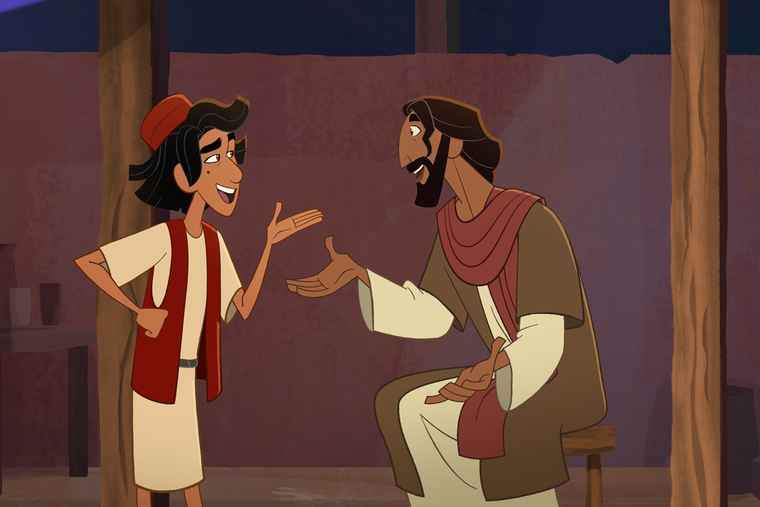
The new animated film Light of the World is a refreshing faith-filled movie that highlights the Gospels in a way that will excite youngsters about Jesus and enthrall adults, too.
One major key to its success is how the story is told through the eyes of the youngster John, who is befriended by Jesus before becoming his disciple.
Light of the World is also an exemplar of classic hand-drawn animation, the timeless medium of traditional — and superior — animated films that remain ever-fresh, no matter their age — in this case thanks to its director, Tom Bancroft, and his twin brother, Tony Bancroft, the story and animation director. Both are award-winning veterans of the animation industry, and besides their extensive individual credits they also worked together in major roles on Disney’s The Lion King (Tony was supervising animator), Beauty and the Beast, Mulan (co-directed by Tony), and Aladdin. Behind the film is the nonprofit creative studio Salvation Poem Project, which aims to craft “beautiful stories that share Jesus with the world.”
The promise of an abundance of colorful scenes throughout the film begins with the opening in the Garden of Eden then fast-forwards to Galilee, where Salomé, John’s mother, is teaching her children lessons about trusting God and watchfully waiting for the Messiah. On the other hand, their fisherman father Zebedee has no time or interest in watching except to work hard to catch enough fish to pay their taxes and avoid prison.
“We need help,” John says, holding a lamp giving light, but not the real Light of the world to come. Thus begins the action with John’s plea.
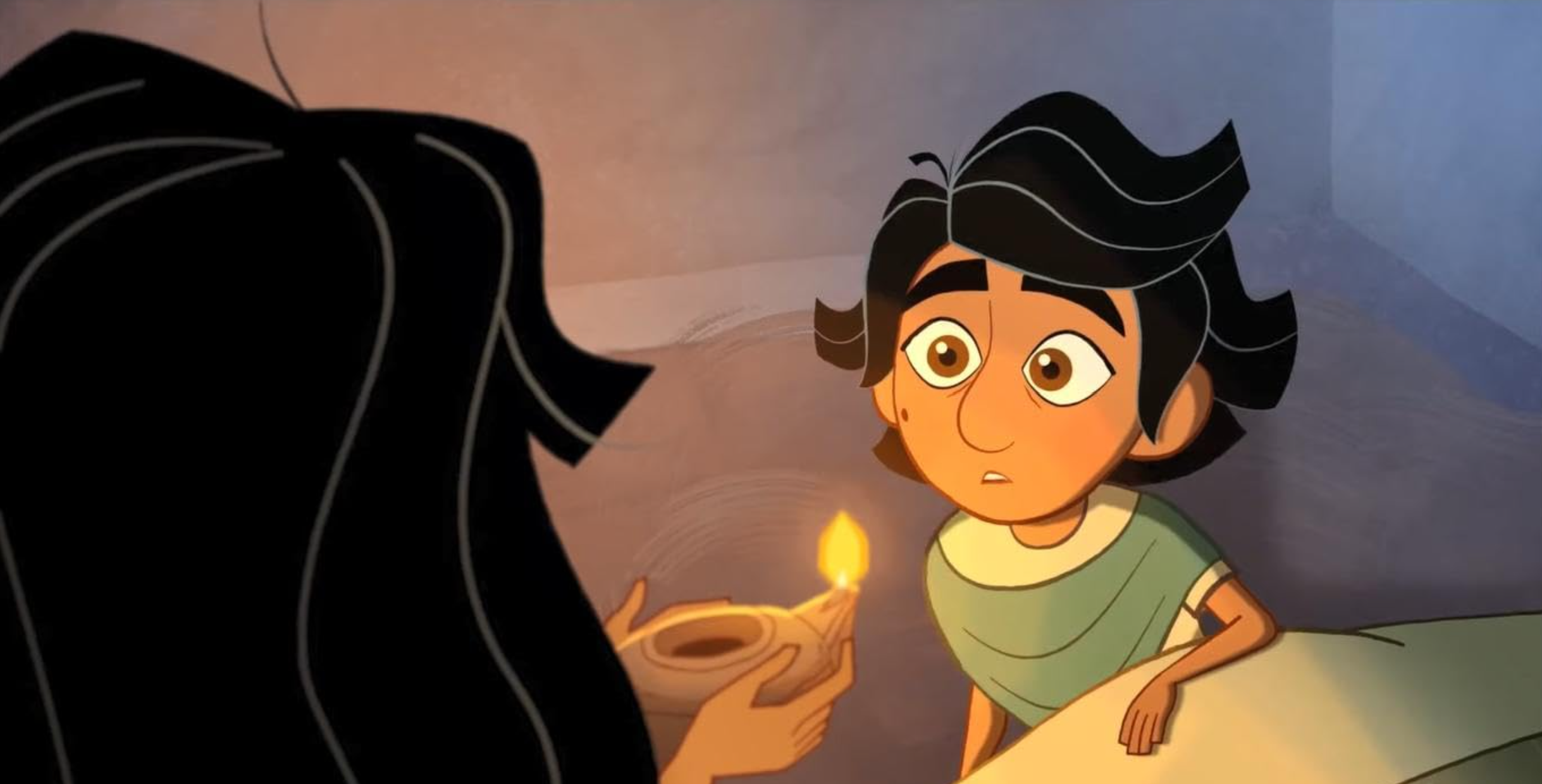
That plea begins another of the film’s strong points — the way it weaves together characters and Gospel incidents. For instance, before Jesus arrives, some future apostles have loose connections, not necessarily friendly ones. Matthew, the tax collector, comes to Zebedee to collect taxes. He doubles the amount due. Zebedee needs to catch more fish with son James. Eventually, Peter comes to their aid. John wants to help by trying to haul off the fish to market, but since he is the smallest and weakest, his attempt trying to prove himself turns into a highly charged comic semi-disaster and a breathtaking chase.
When John heads to the Jordan to see what the Baptizer is doing (not to confuse two named John), he finds the Baptizer collecting honey and asks what baptism is. Young John is always asking the questions, and that helps the story to unfold.
One exceptionally beautiful animation sequence takes place when John arrives with the Baptizer at the Jordan as viewers follow along with a dove flying and floating over the river.

Seamless Storytelling
Among the film’s standout strong points are the ways the scenes weave together various Gospel incidents, often in seamless ways. For instance, when John is walking with the Baptizer away from the Jordan River, they soon come upon a wedding feast — naturally, it is Cana. The youngster and apostle-to-be meets Mary, who tells John — who at this point has given up believing there will be a Messiah — all about the birth of Jesus.
Such transitions at this wedding really announce a change in not only John but in others, including guests who witness the miracle of Jesus turning water into wine. They begin to realize Jesus might be the long-awaited Messiah.
Again, using a bit of poetic license, the filmmakers make a Cana connection as the focus turns to John’s father Zebedee fishing, yet coming up with a nearly empty net with a few measly fish — not nearly enough to pay the taxes and avoid prison — while tax collector Matthew watches from shore.
But inspired by the water-wine miracle at Cana, and seeing and calling to Jesus on shore, John tells his dad to cast the nets overboard again. What happens next becomes an exciting sight as legions of doves and birds arrive, circling the boat and waters, and rounding up a school of fish into the nets, practically sinking the boat.
Once onshore, the amazed fishermen hear Jesus tell them he will make them fishers of men, which leads to a very moving scene with John and his parents.
The connections of Gospel stories using poetic license unfold in a way that seems natural. For instance, Mary Magdalene’s cure and conversion prompts many sick and poor to stream to Jesus and becomes the springboard to bring in the miracle of the paralyzed man lowered through the roof of the house where Jesus was preaching. But the person with this idea of lowering him down and the presence of the tough Roman centurion who always seems to intrude add excitement. Naturally, the scene prompts yet more teachings from Jesus. When people wonder why Jesus helps someone they consider an enemy, it becomes the basis for the Parable of the Good Samaritan.
The way the filmmakers blend these Gospel events and teachings is both clear and dramatic so that youngsters should easily understand the basics, be excited by them, want to learn more about Jesus, and provide incentive to parents to check the Gospel accounts with their children.
Portraying John as a youngster is especially helpful. Children watching this film should identify closely with him and his relation to Jesus.
No matter the age, everyone should appreciate the humor laced throughout the film. These comical and entertaining incidents not only keep the pace lively, but spark interest in what might happen next. For instance, at Cana, John is mistaken for a young waiter and hurried into service. Earlier, there was a hold-your-breath marvel of acrobatics as he tries to haul a sack full of fish to the fishmongers.
Naturally, the scenes are also dramatic and colorful. The flashback of the Baptist baptizing Jesus is full of color as the sky opens and the Holy Spirit comes upon the Lord. When the apostles and some extra followers in the boat with them are on the Sea of Galilee, the classic animation emphasizes all the drama, from the waves to the storm to Peter walking on the water at Jesus’ invitation.
Biblical and Sacramental Discrepancies
While missing is the Transfiguration that would again emphasize the dramatic supernatural moment and be very colorful as well, Jesus’ entry into Jerusalem on Palm Sunday happens with exuberant adulation, festivity, and splashes of color everywhere.
Following, though, the Last Supper scene is a disappointment in one respect — the institution of the Holy Eucharist, when Christ gives us his Body and Blood. Done much too quickly, this scene called for more attention, extra length and solemnity. Remembering the film’s Protestant perspective, viewers should see this scene can also become a later teaching moment at home for parents to discuss Catholic teaching on the Real Presence and the Mass with their children.
Ditto an incident on the Via Dolorosa as Nicodemus, with his stole, wipes Jesus’ face. As the movie misses the mark in these events, too, it does provide an excellent opportunity for parents to discuss the Sixth Station of the Cross and St. Veronica’s role. The same goes for the film’s depiction of who takes the body of Jesus down from the cross.
Among the Pharisees, Nicodemus is portrayed especially well, as is Joseph of Arimathea — but perhaps a little too comical — who gets a surprise from Jesus left for viewers to discover.
Overall, so much about Light of the World is beautifully done and uplifting, from the animation to the seamless ways each scene relates to the next, to the dialogue and the characters’ voices.
In a word, Light of the World will touch hearts as it brings a much-needed light to the world of film and the world of belief by highlighting the true Light of the world.
WATCH
Light of the World opens in theaters on Friday. International releases are planned in 25-plus countries. Check for showings in your area.
- Keywords:
- christian movies
- animation
- family movies