My Substack Went Viral Because of the Kitchen’s Place in the Domestic Church
COMMENTARY: When we feed our family’s bellies, we also nourish their souls —includingthat feeling of love that comes with a hot meal, prepared by loving hands, in the heart of the home.
Nearly a year ago, my kitchen flooded — and I had no idea what I would truly lose as a result.
The repairs took ages. Previous owners had connected a hot water line to the refrigerator’s ice maker, and it slowly melted the plastic parts until water ran through the walls, the back of the cabinets, pooled on the floor and gave us “waterfront property” (in the sense that our basement became a small lake). We needed abatement, restoration, remodeling — and a year later, we’re just putting on the finishing touches.
In that time, our family sometimes cooked meals in a Crock Pot and on a camp stove, which we ate around the television instead of the dinner table, but mostly we ordered out ready-made and restaurant dinners and fed ourselves whenever we had a moment.
Those months spent without a real stove or dining room table seemed, at first, inconvenient, but we didn’t just lose our kitchen; for a year, we lost the heart of our domestic church. It gave me a new perspective on why losing the art of cooking and the ritual of the family meal, even if the family is just one or two, has truly taken a toll on our lives.
I have a little newsletter that toiled in relative obscurity until a month or so ago, when I casually mentioned on X that, contra the opinion of many in Gen Z, people don’t actually hate to cook, they’ve just never been properly taught how to cook, stock a kitchen and select recipes.
The response was overwhelming. People were floored at the notion that the twin problems of time and cost had more to do with them than with cooking and came up with a bunch of excuses. Cooking is pricey, they said, because you must buy tons of ingredients. Cooking costs more than eating out because my time is money. Door Dash is cheaper than making chicken piccata at home because of the rising cost of food. Even meal planning, they pleaded, doesn’t help them avoid the pain.
The truth is, though, many people my age and younger have what is now known as a “skill gap.” We don’t know how to cook because our parents didn’t really cook or didn’t really teach us. Home economics has long been stripped out of schools to make more time for academics. We don’t know how to stock a pantry, choose cooking tools or shop for ingredients, and, perhaps worst of all, many of us find recipes on the internet that are written for photographs or accolades, not to feed a growing family.
It's not until we’re on our own, cooking for ourselves, our spouses and our children, that these skill gaps become evident, when it’s no longer fun (or financially smart) to eat out all the time.
On my Substack, I outlined several reasons people don’t really hate to cook, they just need direction (which I also, to some extent, provided). But what I didn’t quite address was that alongside our lack of kitchen knowledge is a spiritual dearth: When we feed our family’s bellies, we also nourish their souls.
When I was growing up, my mother didn’t always include us in cooking. Now that I have kids of my own, I understand the kitchen was her sanctum sanctorum, and the one place she could have peace and quiet, work with her hands, and tune out the constant needs (and whining) for even just a short time. I know this because now that her nest is empty, she still delights in cooking for herself and my father, and she spoils my children with their favorite foods and sweet treats whenever they cross her threshold.
I learned how to cook when I struck out on my own, and I mostly gravitated to those dishes I’d eaten all my life, in my case, Italian food. Even though I hadn’t learned much, I was surprised at what I could reverse engineer — with the help of cookbooks and the Food Network — and what I’d really picked up: the sights, smells and warmth of the kitchen. I had success in replicating my mom’s dishes, but I also had success in replicating that feeling of love that comes with a hot meal, prepared by loving hands, in the heart of the home.
That love is a spiritual experience. As St. Teresa of Ávila said, “Even when you are in the kitchen, God moves among the pots and pans.” He is everywhere in the preparation of food. In the movement of loving hands. In the baking of bread. In the care put into even the smallest bite. That’s because it’s often the little things — the daily tasks, the duties of family, the little sacrifices and creations — that are how families bind themselves together, in love as well as in Christ.
It's no secret that the concepts of food and of feeding are foundational to the Catholic faith. We partake in the Body of Christ; Christ’s parting gift to his beloved Church is and remains a shared meal. We come to Christ’s table weekly to find spiritual sustenance in a sacrament that unites the temporal and the spiritual worlds. He satisfies the thirsty and fills the hungry with good things.
Beyond that, some of our greatest saints have found solace — and miracles — in the kitchen. St. Martha, the patron saint of cooks and homemakers, served Our Lord, and she’s so central to cooking that she was once pictured on the cover of The Joy of Cooking, “slaying the dragon of kitchen drudgery.” St. Paschal Baylón was aided in serving his community of friars by a legion of angelic line cooks, allowing him to live a life of service and prayer.
But the notion of God “moving among the pots and pans” is more than an acknowledgement of Christ’s presence in our homes, it’s an acknowledgement of the call to service that is homemaking.
Our homes are the incubator of faith, and the place where children first learn faith, hope and charity, service and sacrifice. The daily, seemingly mundane tasks of serving a family are opportunities where we can encounter Christ, imitate his sacrifice and bring his love into the household.
And as a bonus, much of the work is invisible, a model of faith in God’s almost momentary and yet miraculous involvement in our lives. Not all impacts are monumental in scope, but they can all be monumental in significance.
As Servant of God Dorothy Day is believed to have once said, “Everyone wants a revolution, but no one wants to do the dishes,” even though both tasks carry with them the potential for global impact.
Acts of service in one’s life, no matter how mundane, nurture bodies and souls. Our homes are full of spiritual realities. They are a school of love and a mission field.
We as a global society scoff, in this modern world, at what we think are archaic notions — homemakers, home economics, stay-at-home mothers — but what many people don’t realize is that means as a culture we’re turning up our noses to some of the greatest teachers of what it means to be human and a Catholic.
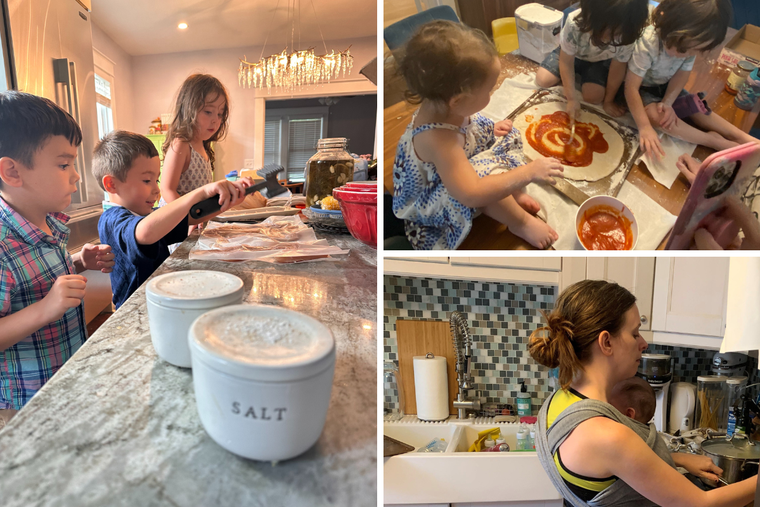
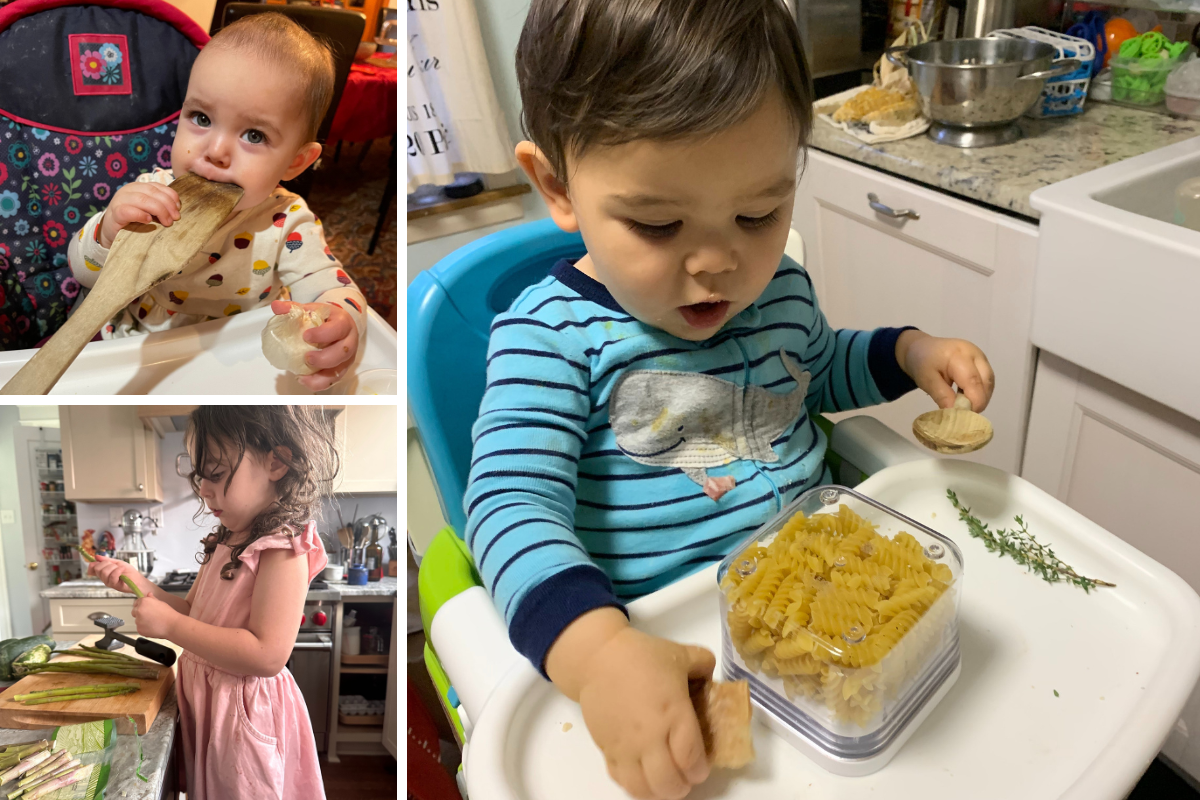
Although I understood why my mother never involved us in cooking, I didn’t take the same approach when I had kids of my own. My children were in the kitchen before they could ever walk or talk. They fell asleep in wraps attached to my chest as I cooked Thanksgiving dinner, they gnawed on parmesan rinds and shook spice jars in their highchair as I heated their little purees. And now, while they don’t always think it’s “cool” to help Mom make dinner, they do enjoy helping make their own chicken tenders and pizza and express wonder when I explain that browning chicken is a chemical reaction and that I’m really doing science when I’m making a pot roast.
Yes, the practice allows them to feed themselves — I truly hope one day I don’t catch them on social media complaining about how “expensive,” “hard” or “boring” cooking is — and gives them the tools to build a life without me. It is me planting a tree I’ll never climb.
But it’s also a mission lesson in my school of love. At the cooktop, they learn care, consideration, service and sacrifice and that a life lived, even in part, for others is a true life. I want them to experience the invisible warmth and the intangible love that exists around the hearth and the dinner table so that they can feel God’s invisible warmth and intangible love throughout their lives.
Yes, there are a lot of reasons why people can’t cook, but maybe we should also address why people don’t want to — and how a lot of that is because they just don’t know what they’re missing.
- Keywords:
- domestic church
- cooking
- kitchen
- catholic moms
- family meals