From Syria to Ukraine: The Shadow of 2013 on Papal Peace Initiatives
COMMENTARY: The unintended results of a 2013 appeal weigh heavily on today’s papal calls for prayer and fasting.
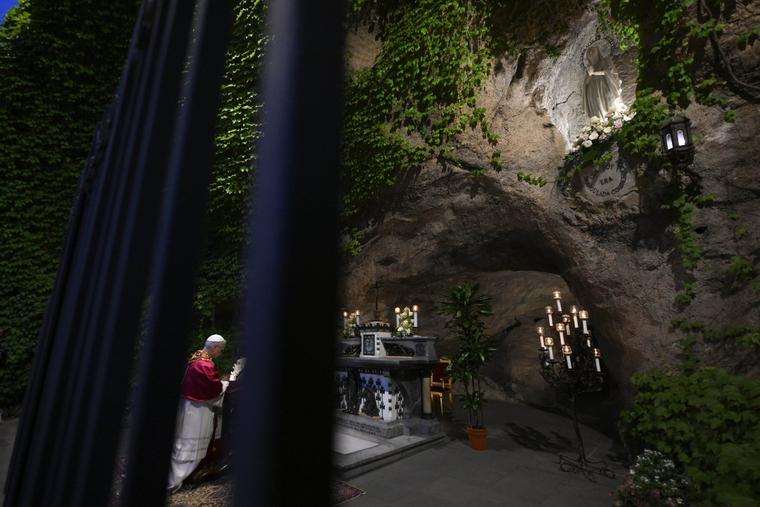
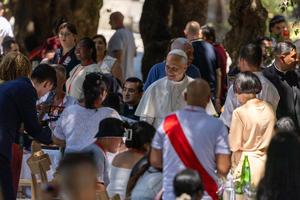
Aug. 22’s day of prayer and fasting for peace, at the invitation of Pope Leo XIV, was a customary Christian response to violent wars the world over.
Some observers have noted that Leo’s initiative echoes that of Pope Francis early in his own pontificate. The former is different from the latter, though, and likely took some lessons from the unintended consequences of 2013.
Leo’s call for prayer and fasting was modest. It was announced only at the end of that week’s general audience — less than 48 hours ahead of time and with no special activities planned for Friday, the feast of the Queenship of Mary. The Holy Father urged prayer for all those “wounded by wars in the Holy Land, in Ukraine, and in many other regions of the world.”
In 2013, Pope Francis himself led a prayer vigil in St. Peter’s Square and encouraged similar services throughout the Church. Both prayer days were linked to Marian feasts.
At that time, Pope Francis was focused on the situation in Syria:
“I have decided to proclaim for the whole Church on 7 September next, the vigil of the birth of Mary, Queen of Peace, a day of fasting and prayer for peace in Syria, the Middle East, and throughout the world, and I also invite each person, including our fellow Christians, followers of other religions and all men of good will, to participate, in whatever way they can, in this initiative.”
The 2013 papal push for peace in Syria remains a difficult moment in papal diplomacy, for the unintended consequences were to strengthen Vladimir Putin in Russia. Six months later, he launched his first invasion of Ukraine.
In August 2013, in the context of the Syrian civil war, Syrian President Bashar al-Assad had used chemical weapons, killing some 1,400 people near Damascus. President Barack Obama had previously declared that chemical weapons crossed a “red line” and that a military response could be expected. Accordingly, Obama sought congressional approval for airstrikes against the Syrian regime — but at the same time sought a way to back down from enforcing his “red line.”
Pope Francis took a strong stand against Western bombing. He announced his prayer vigil after Obama requested authorization for the airstrikes.
In August 2013, the Holy Father’s worldly popularity was at its zenith. The new Pope had declared, “Who am I to judge?” and told pro-life Catholics not to be “obsessed” with abortion. He received widespread secular laudations for both statements. Papal influence was high.
With both the Pope and the president seeking a way out of the airstrikes, Putin saw an opportunity and stepped in. Russia offered to dismantle Syria’s chemical-weapons stockpiles, thereby avoiding direct Western military action. The deal allowed Assad to remain in power and returned Russia to influence in the region after an absence of 40 years. By 2015, Russia was conducting military operations in Syria and had established dozens of local military sites.
The 2013 deal — unintentionally the partial result of the papal prayer diplomacy — established Russia as a regional power and extended the Assad regime for another decade.
September 2013 was a great diplomatic triumph for Putin, and he took the lesson that Western resolve — political, military, diplomatic and moral — was weak. He decided then that conditions were suitable to invade Ukraine, long his dominant foreign-policy goal.
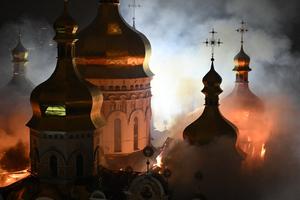
It would take some time to marshal his forces, and Russia was hosting the Olympics in February 2014. An invasion before then would threaten the Olympics. Putin waited for the torch to be extinguished. He lit up Ukraine the following week.
It was not the intention of either Obama or Francis to strengthen Putin’s hand, but he has been on the offensive ever since, having learned in September 2013 that neither the world’s military nor moral powers would seriously oppose him. The results were soon evident in Ukraine.
The chemical weapons crisis was “solved” by, in effect, ceding the advantage to Putin. Lessons from 2013 now inform papal diplomacy in the early months of Pope Leo XIV. Hence, his calls for fasting and prayer for peace were not as specific and did not take a position against a particular military option, as Pope Francis did in 2013.
It will be seen more fully in the months ahead how the Holy Father understands moral witness in the context of war and peace. After all, the great Catholic teacher of that tradition is Leo’s own patron, St. Augustine.
- Keywords:
- prayers for peace
- russia-ukraine
- syria