Supreme Court Scrutinizes New Jersey AG’s Bid to Unmask Pro-Life Donors
COMMENTARY: An unusually wide coalition — from the ACLU to 19 states — backs the pro-life ministry, warning that New Jersey’s sweeping subpoena threatens donor privacy and First Amendment freedoms.

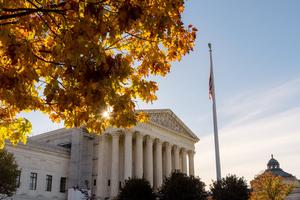
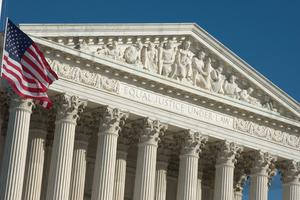
The United States Supreme Court heard oral argument Tuesday morning in First Choice Women’s Resource Centers, Inc. v. Platkin, a case that has drawn an unusually broad coalition in defense of donor privacy and access to federal courts.
At the center of the dispute is a November 2023 subpoena from New Jersey Attorney General Matthew Platkin requiring First Choice Women’s Resource Centers — a Christian, pro-life nonprofit — to turn over 10 years’ worth of records. The demand was sweeping: the names and addresses of nearly 5,000 donors, every advertisement and solicitation, personnel information and other documents related to the organization.
Platkin maintains that the subpoena is a routine and lawful investigative tool. First Choice, however, argues that the attorney general — who has a well-documented record of pro-abortion advocacy and public collaboration with Planned Parenthood — is weaponizing his authority to target the organization’s religious mission and pro-life viewpoint. In its view, the broad, intrusive subpoena reflects viewpoint-based harassment rather than legitimate regulation.
When First Choice sought relief in federal court, both the district court and the Third Circuit dismissed the case as not “ripe,” reasoning that New Jersey had not yet asked a state court to enforce the subpoena. That posture leaves First Choice in legal limbo: Either comply with what it believes to be an unconstitutional demand or wait for state-court enforcement before seeking federal protection of its First Amendment rights.
The legal question before the Supreme Court is narrow but important: When a state investigative demand chills First Amendment rights, does a federal court lack jurisdiction simply because the state has not yet initiated enforcement?
As commentator Carrie Severino notes, if New Jersey prevails, the attorney general could obtain donor identities in state court before federal courts ever review the constitutional claim — “and once that information is out, the damage … cannot be undone.”
During oral argument, the justices showed genuine concern about the threat posed by New Jersey’s subpoena and whether that threat — to donor privacy and associational rights — is sufficient to justify federal review.
Much of the argument focused on the character of the subpoena itself. Erin Hawley of Alliance Defending Freedom, representing First Choice, emphasized that “subpoena” literally means “under penalty,” and explained why this particular subpoena is effectively self-executing: Penalties accrue automatically for noncompliance. She also highlighted forms of harm the subpoena creates: the burden of litigation, the risk of disclosing donors’ identities, the imminence of penalties for noncompliance, and the chilling effect on associational rights.
New Jersey’s attorney, Sundeep Iyer, downplayed those concerns, arguing there was no objective chilling of associational rights and that allowing federal review would improperly transform routine administrative subpoenas into federal cases.
When Justice Clarence Thomas repeatedly pressed Iyer to explain how this subpoena differs from a mere request for information, his responses appeared evasive. Justice Neil Gorsuch was blunt: “Just looking at the statute, it says the AG’s subpoenas have the force of law, and if a person fails to obey the subpoena, the AG may apply to the Superior Court and obtain an order adjudging such person in contempt of court. Now I don’t know how to read that other than it’s pretty self-executing to me, counsel.”
Iyer further asserted that donor-identity disclosure was sought only to determine whether donors had been harmed. Thomas challenged that claim, noting that no complaint had been filed against First Choice at all.
Justice Amy Coney Barrett questioned the state’s warning that allowing federal review would “open a Pandora’s box” of challenges to administrative subpoenas. She also flagged that New Jersey has specifically targeted pregnancy centers — a pattern reminiscent of California’s now-defunct FACT Act, which required such centers to promote state-funded abortion services. That law was struck down in NIFLA v. Becerra.
This case also sits in the shadow of Americans for Prosperity Foundation v. Bonta, where the Supreme Court invalidated California’s donor-disclosure rule as a violation of associational freedom. There, Chief Justice John Roberts wrote that California cast “a dragnet for sensitive donor information” without demonstrating narrow tailoring. First Choice argues that Platkin’s subpoena repeats such constitutional errors, while adding viewpoint discrimination into the mix.
One of the most remarkable aspects of the case is the breadth of its support. The American Civil Liberties Union, the ACLU of New Jersey and the Foundation for Individual Rights and Expression all filed briefs supporting First Choice — an extraordinary alignment given the ACLU’s longstanding support for “all things abortion.” They are joined by the U.S. Chamber of Commerce, 19 states and organizations across the ideological spectrum. Their shared concern is clear: If states can weaponize investigatory tools to target disfavored viewpoints, no advocacy group is safe.
For Catholic and other faith-based ministries, the stakes are especially acute.
As I have written previously, many depend on anonymous donors who give out of religious conviction and conscience while assured of their personal security. The case will help determine whether religious organizations engaging in public moral witness can do so free from government efforts to expose or burden their supporters.
The Supreme Court’s decision — expected by June 2026 — will determine not only whether First Choice may seek relief in federal court, but also how far state officials may go in using investigative powers against organizations whose missions they oppose. At a moment of deep political polarization in our country, the court’s ruling can define the boundaries between state authority and the flourishing of a free society.