Remembering a Cardinal Whose Quiet Witness Reminded Romania’s Faithful: ‘Christ Loves Us’
Cardinal Lucian Mureșan was an inspiration with his stalwart presence.
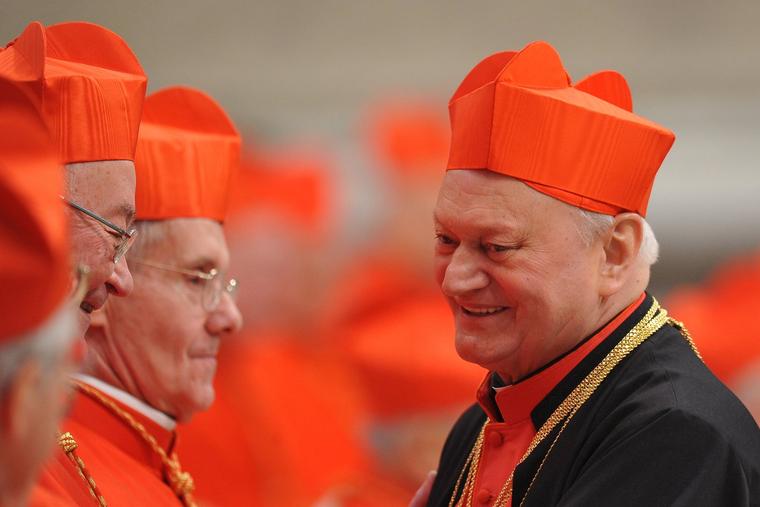
As I slowly walked through the streets of the Vatican the week Cardinal Lucian Mureșan died, my heart and mind overflowed with memories. Gratitude rose first — gratitude for belonging to a Church that has witnessed the quiet greatness of such a man. But alongside it came a tender ache of remorse — remorse for not being there among the faithful who accompanied him on his final journey home.
The Eternal City was alive around me. Pilgrims hurried through St. Peter’s Square, nuns whispered prayers in many languages, and bells echoed against the marble walls that have seen centuries of saints and sinners pass.
It was the end of September, in this Jubilee Year of 2025 — days filled with light and grace — yet my thoughts drifted far away, to our little Church in Romania that has lost her third cardinal, the man who quietly carried her wounds, her hopes and her unhealed memories of the long years of silence and persecution.
I say quietly because he was a man of few words. He spoke slowly — painfully slow, some of us young ones thought — in a voice so soft that we had to lean in to hear. But every time, his words reached the heart. He knew what to say and how to say it. He was not a man to fill the air with long speeches; he filled it with meaning.
Much has already been written in the national and international press about his life and legacy — about his courage, his intelligence and his long service to the Church. But what lingers most vividly in my mind is not the official biography, but the image of a man rooted deeply in faith and simplicity.
Born on May 23, 1931, in Firiza — now part of Baia Mare, nestled in the green hills of Maramureș — Lucian Mureșan was the 10th of 12 children in a Greek-Catholic family where prayer was as natural as breathing. That mountainous land shaped him — his quiet endurance, his dignity, and his steadfast loyalty to faith even under the pressure of communist Romania. In his family, surrounded by both hardship and hope, he learned early the virtues of humility, perseverance and service — qualities that would guide every step of his long journey.
After completing his primary and secondary studies, he attended the Air Force Officers’ School, becoming a co-pilot on the MiG-21 aircraft. His promising military career was abruptly interrupted by the communist regime, which discovered his deep ties to the Greek-Catholic Church. He was sent to forced labor, constructing the Bicaz Hydropower Plant, and later continued his theological studies in secret, under the guidance of bishops and priests who had survived years in prison and managed to get out. In 1964, he was ordained a priest in secret by Bishop Ioan Dragomir and served quietly in secret for many years, constantly watched and harassed by the communist secret police.
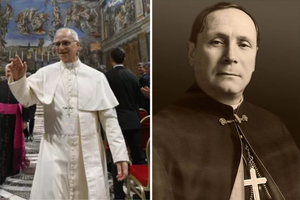
After the fall of communism, Lucian Mureșan was appointed bishop of Maramureș (1990), then archbishop of Alba Iulia and Făgăraș and metropolitan of the Romanian Church united with Rome (1994). In 2005, Pope Benedict XVI elevated him to the rank of major archbishop, and in 2012 he was created cardinal by the same pope. Through his life, Cardinal Mureșan embodies the fidelity, courage and hope of the Romanian Greek-Catholic Church — a life that, beyond persecution and suffering, stands as a living testimony of faith and spiritual renewal for an entire church.
And as I made my way through the Vatican’s cobbled streets and saw the amazing buildings around me, I realized that what the cardinal gave us most was not grandeur, but gentleness.
Not noise, but presence — a silent strength that carried an entire Church from shadow to light.
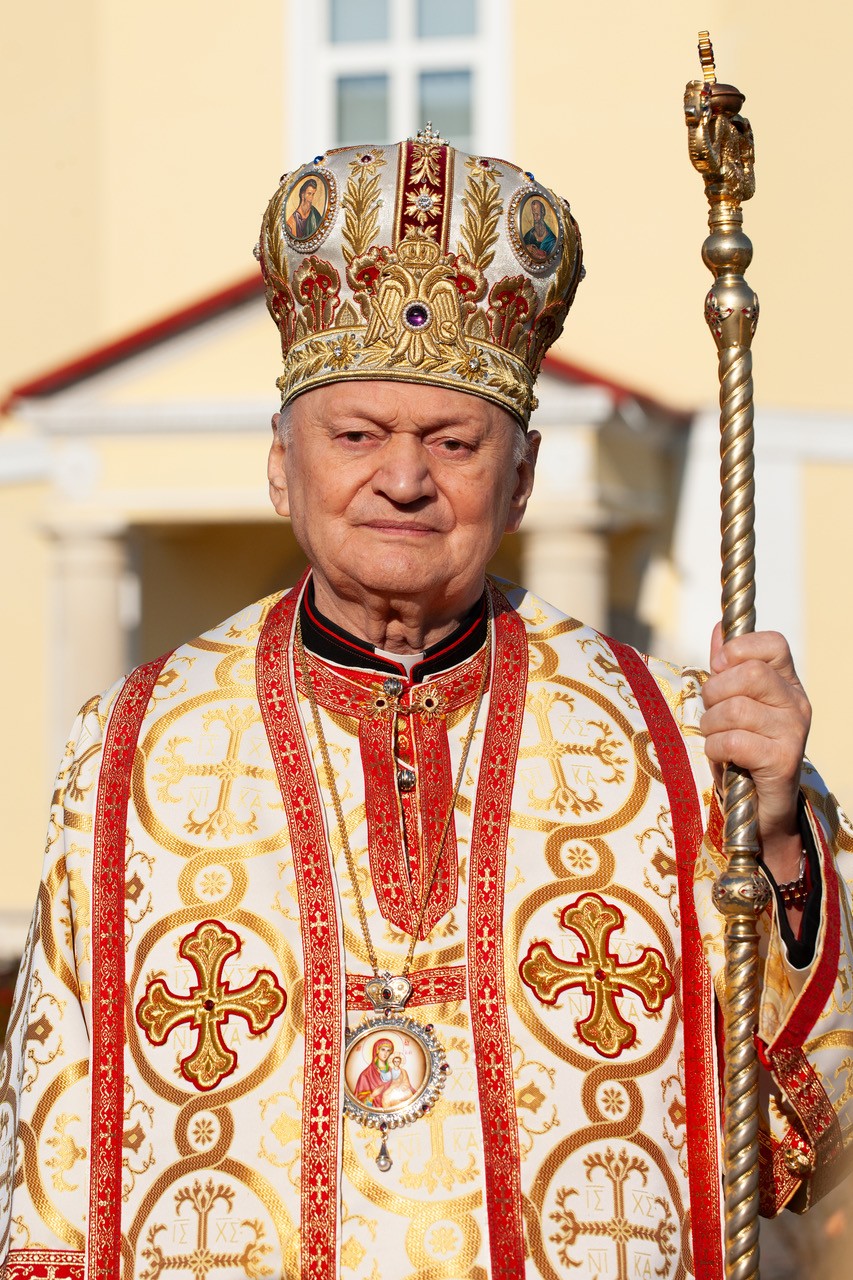
The Cardinal of a Church That Chose the Cross
This is not a biography. It is a testimony from a new generation of Greek-Catholics rising — quietly, firmly — from the long shadow of the cardinal’s generation, a generation that had her Church made illegal in 1948, when, on the night of Oct. 29, all six of her bishops were arrested by the Communist Party. From that night on, faith for us meant secrecy, endurance and courage whispered in the dark. The Church survived in the homes and hearts of the faithful — in mothers who prayed behind closed curtains, in priests who celebrated the liturgy in barns or basements, and in families who passed on prayers like contraband. And it was through that same silent strength that the cardinal generation learned to lead, serve and protect what could have easily been lost forever.
I was once young and only in church at my parents’ request, or moved by a faint, fading conscience — not by a wholehearted longing for Christ in the Eucharist. Today, my vocation is to bring the young back, not with slogans or pressure, but with a rediscovery of faith lived and passed on by those who endured. I want my generation to see faith as a living thing, not as a family heirloom left on a shelf.
Faith is not inherited. It is not written in our DNA or printed on our calendars. Our history is not imprinted in our blood; it must be relived through the eyes of those who lived it before us. That is why the story of Cardinal Mureșan’s generation matters to me — not as a chronicle of honors and dates, but as a blueprint of lived devotion that my peers and I urgently need.
I remember, as a little girl just after the fall of communism, how fragile freedom felt. Our family had lived in the “catacombs”: liturgies celebrated at night in people’s homes with curtains drawn; prayers whispered under threat.
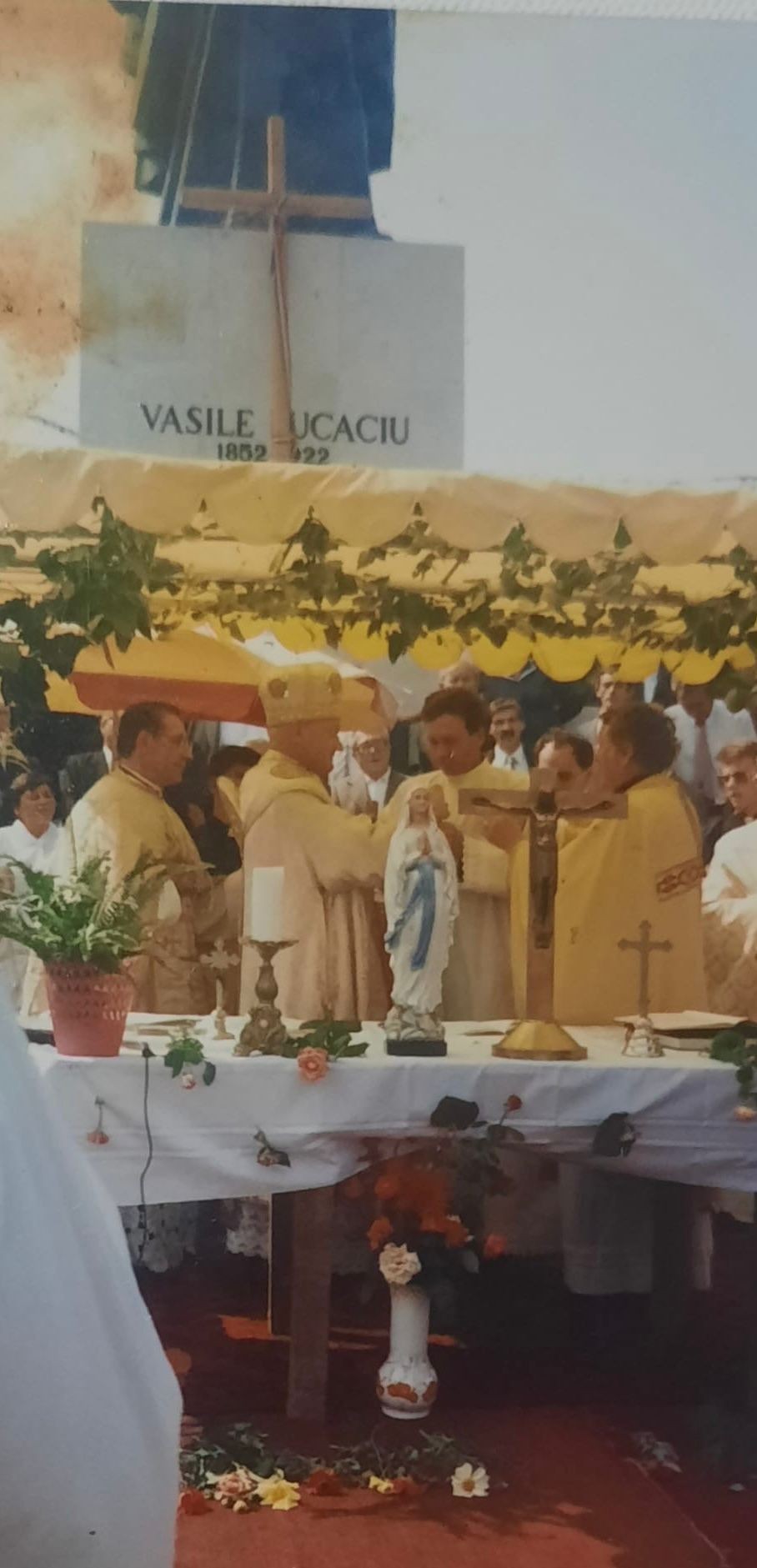
When we could finally pray more openly, after the anti-communist revolution in 1989, our churches had not all been returned. We gathered in public squares, with priests wrapped in old, threadbare vestments, and Bishop Mureșan — with that soft, almost angelic voice — would repeat, quietly, “Christ loves us.” It meant little to my young self then. I could not yet grasp how a love like that could warm people praying in freezing weather, while police watched and neighbors mocked.
Decades later, I see how easily our little Church could have disappeared. Against the odds, it did not. We are more alive than many expected, and more young people are coming back. Yet while we remain small, in many ways we remain in a Church that makes others uncomfortable. Still, there is a richness that cannot be counted: depth of prayer, clarity of conviction, and a stubborn fidelity born from suffering.
I would love this to be a call to my generation — to open our hearts to a living blueprint: the humble habits, the quiet sacrifices, the steady presence that once kept a whole people faithful in the dark. If we let their witness take root in us, if we allow grace to shape our voices as it shaped theirs, then perhaps we can become the generation that does not only remember faith, but lives it — not out of duty, but out of love for Christ. It is faith rooted in the strength of those who suffered deeply and still exhibited peace.
Humility That Leads to True Faith
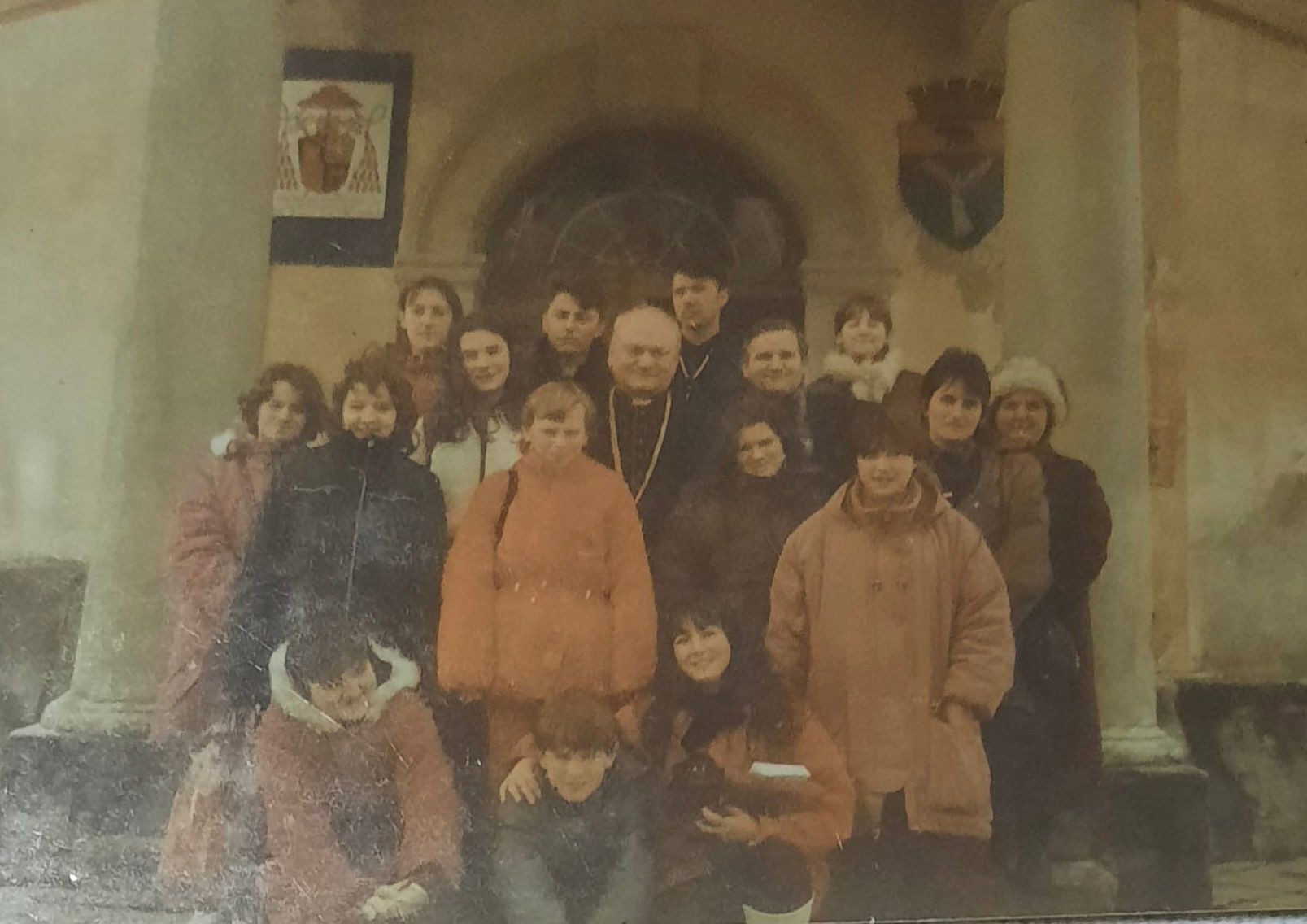
As I grew older and stepped into the familiar rebellion of teenage years, I often crossed paths with Bishop Mureșan, and every encounter left a quiet mark on my heart. His humility wasn’t the kind that made you feel pity or distance; it was the kind that drew you in, that made you question your own pride. I remember one national youth meeting — we were a small, noisy group of teenagers, thrilled to be noticed — when he approached us with that same soft, almost unchanging voice and said, “Turn to Christ, follow him. Not me, the bishop; I am a sinner like all of you.”
We were honored just to have him among us, to take a picture, to talk about it later — celebrity-smitten, even in our faith. Never had it occurred to us to see him as a sinner. From afar, you could see his gentleness, his kindness and his peace. And yet, as young people do, we judged him. We wondered why he wasn’t louder, why he didn’t fight harder when our Church was ignored or mistreated, why he didn’t “do more.” But his way was different — not political like diplomacy, not strategy, but Christlike humility. He met those who wronged him with compassion, not calculation.
I’ve often thought of the stories whispered by the elders — how, during the years of persecution, priests would travel by night, hidden under hay in horse-drawn carts, to celebrate the Divine Liturgy in secret. They risked everything to bring Christ to the faithful. And never once did they complain. Never once did I hear the good bishop speak with bitterness about those who caused him suffering. He would simply say, “All of this is in Christ and for Christ. You, the young, are the future.”
Now, I often ask myself: How do we pass on the same burning love for Christ to our children? How do we teach them to see beyond comfort into sacrifice, beyond convenience into faith?
Perhaps the answer lies where it always has — in the quiet, steadfast witness of those who never shouted their faith but lived it, day after day, in humility that led not to weakness, but to holiness.
- Keywords:
- catholic church in romania