Pope Leo Honors Secret Cardinal Who Risked All to Save Jews During the Holocaust
COMMENTARY: Blessed Iuliu Hossu was characterized by Pope Leo XIV as a 'a man of faith who knows that the gates of evil will not prevail against God’s work...'
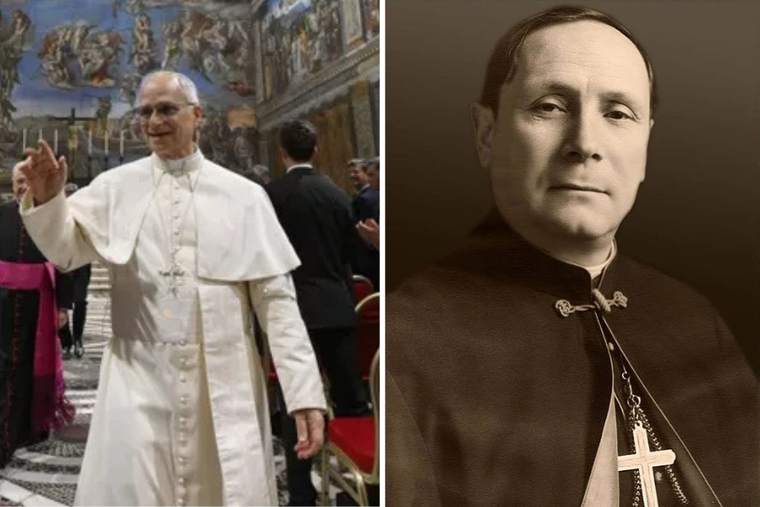
Blessed Iuliu Hossu, persecuted by the communist regime in Romania, was created a cardinal secretly — in pectore — by Pope St. Paul VI in 1969. He died in 1970, and his cardinalatial status was made public in 1973.
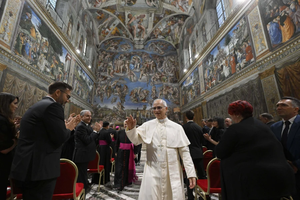
This week, Pope Leo XIV honored Hossu at a ceremony in the Sistine Chapel, with a delegation from the Romanian Greek Catholic Church present, as well as representatives from the Romanian Jewish community. His name, like his creation as a cardinal, has been largely unknown, even though he belongs to the honor roll of the heroic cardinals from behind the Iron Curtain. Last week’s ceremony introduced him to many.
Blessed Iuliu’s heroic life is a reminder of antisemitism, religious persecution and authoritarian state influence upon the Orthodox Church, all of which are relevant today.
Protecting Jews
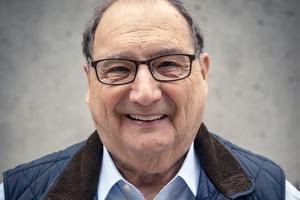
“During the Holocaust, the darkness of history, Cardinal Iuliu Hossu placed himself, his community and his Church in peril, without regard to the possibility of being destroyed, in order to try and save people that were unknown to him,” said Silviu Vexler, president of the Federation of Jewish Communities in Romania, in his address to the Holy Father. “Not only by asking all faithful to protect the Jews that were to be sent for torture and death to Auschwitz and other death camps, but also by hiding those that were to be deported in the Greek Catholic Cathedral in Cluj or attempting to stop the liquidation of regional ghettos.”
“It is with the utmost reverence that we look today at the chance before us to restore his memory to its rightful place, in honor of all the lives he saved. More than ever, the entire world needs such an example,” Vexler continued, referring to the disturbing increase in antisemitic violence worldwide.
“The Federation of Jewish Communities in Romania is deeply grateful to the Holy See, the Catholic Church and Cardinal Hossu for the exceptional dedication and everything done to protect the Jews in Romania during the Holocaust. While this aid may sometimes seem forgotten in history, please know that we have not and will never forget it.”
Honor Roll of the East
In his address, Pope Leo XIV noted that the Sistine Chapel has traditionally been associated with cardinals; consistories for their creation were often held there, and, as recently happened, conclaves meet there.
“Today, in a certain sense … Blessed Iuliu Hossu, the Greek-Catholic Bishop of Cluj-Gherla and a martyr for the faith during the Communist persecution in Romania enters this Chapel,” Leo said. “[He was] created a Cardinal in pectore by Saint Paul VI on April 28, 1969, while imprisoned for his fidelity to the Church of Rome.”
Occasionally, cardinals are created secretly; the pope announces that there is a new cardinal but keeps the name secret, in pectore, “in his heart,” usually for fear of adverse consequences in the man’s homeland. Later, the pope can choose to reveal the name; if he does not, it remains secret forever.
St. John Paul II, for example, named four cardinals in pectore, three of which he revealed later, including Cardinal Ignatius Kung Pin-Mei of Shanghai, imprisoned for decades by the Chinese Communists. A fourth in pectore cardinal was not revealed before the death of John Paul, and so remains unknown to humanity.
Blessed Iuliu resisted communist persecution of the Catholic Church in Romania, and suffered terribly for it, including harsh imprisonment. In 1969, Paul VI named two cardinals in pectore from behind the Iron Curtain, the Romanian Iuliu Hossu and the Czech Štěpán Trochta, a sign of solidarity with the persecuted Church. Both names were revealed in 1973, but Cardinal Hossu had already died in 1970. Cardinal Trochta died in 1974.
When Cardinal Hossu died in Bucharest, at his side was Alexandru Todea, who had secretly been ordained a bishop some 20 years earlier. Bishop Todea would also suffer severely for the faith. John Paul would create him a cardinal in 1991, after the Cold War; and during the papal visit to Romania in 1999, the elderly Cardinal Todea was brought by ambulance to see the Holy Father. Their embrace, John Paul an old man, Cardinal Todea in a wheelchair, brought all of Romania to tears.
Blessed Iuliu Hossu died on May 28, 1970. After his beatification in 2019, that is now his feast day. On the same date 11 years later, Cardinal Stefan Wyszyński, the heroic primate of Poland, would die in Warsaw, having witnessed the Polish Pope’s return to Poland. He was beatified in 2021, and his feast day is also May 28.
Blesseds Iuliu and Stefan belong to that honor roll of heroic cardinals who resisted communist persecution. Those names adorn Catholic history and ought not be forgotten. Included there are Cardinal Adam Sapieha of Krakow, Cardinal Josef Beran of Prague, Cardinal Aloysius Stepinac of Zagreb (also beatified), Cardinal Kazimierz Świątek of Minsk, Cardinal Josyf Slipyj of Lviv, Cardinal Józef Mindszenty, the primate of Hungary, and the Slovak Cardinal Jozef Tomko, whose long service in the Curia under John Paul made the persecuted Church present in Rome.
There were few times in Church history when so many prominent prelates were so courageous.
State Influence on Orthodox Church
In Romania, the communist authorities attempted to coerce Eastern Catholics (“Greek Catholics”) to become Orthodox, as the Orthodox Church was nationally organized and therefore easier to control. Blessed Iuliu was offered to become head of the Romanian Orthodox Church if he separated from Rome, but he refused.
It indicated that during the communist period, Soviet authorities assumed that they had the bishoprics of the Orthodox Church in their power to give. The same offer was made to the Ukrainian Greek Catholic Church under communism.
That lesson is relevant today, as in those areas of Ukraine occupied by Russia, the Ukrainian Greek Catholic Church is being suppressed. Blessed Iuliu’s life is a reminder of a great Christian tragedy that is ongoing, namely state subjugation of the Orthodox Church, especially in Russia, which includes the vast majority of the global Orthodox population.
Hidden in Providence
Blessed Iuliu Hossu was characterized by Pope Leo XIV as a “a man of faith who knows that the gates of evil will not prevail against God’s work.”
The gates of evil remain open, though, and the evils against which Blessed Iuliu Hossu contended are abroad still. His “entrance” to the Sistine Chapel, more than 50 years after being created a cardinal, is thus a timely inspiration.
In 1969, at the consistory at which Hossu was secretly included, American Catholics rejoiced that four Americans received the red hat; Terence Cooke (New York), John Dearden (Detroit), John Carberry (St. Louis) and John Wright (Pittsburgh). That was the visible drama of the day. The hidden drama, secretly in the heart of Paul VI, was the more enduring story.