Religious Freedom’s Next Crisis: Why Defending Conscience Requires Boldness, Not Retreat
COMMENTARY: ‘Faith is not something we fit into life. It is life…’
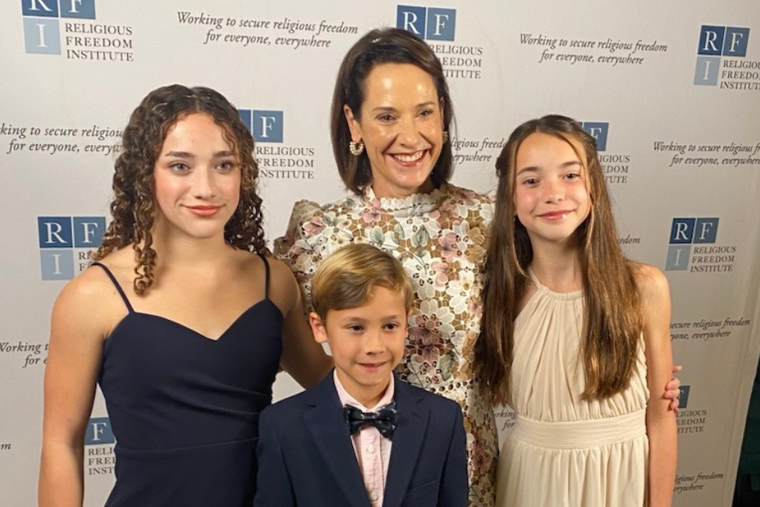
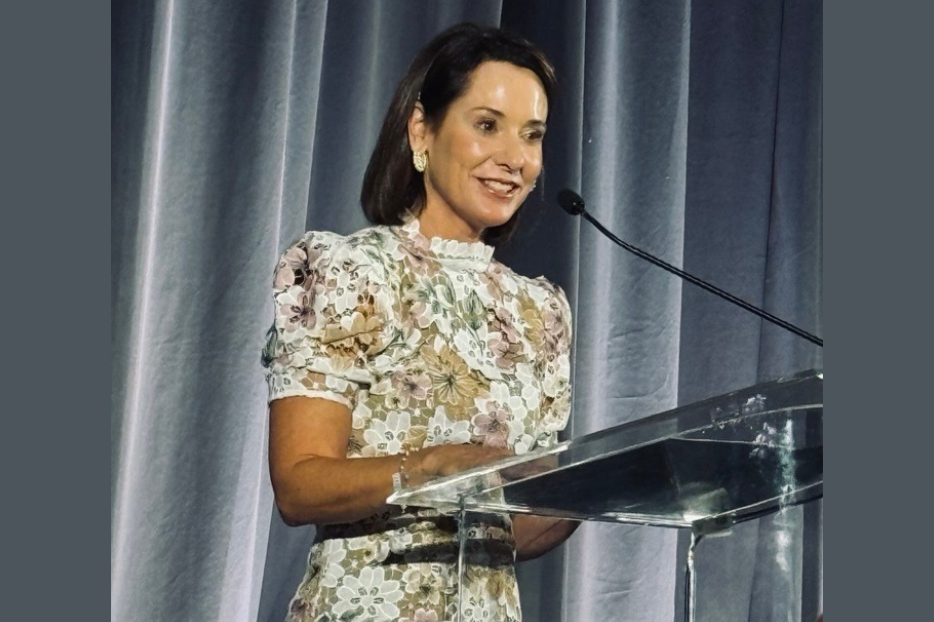
Editor’s Note: The following remarks were presented by the author upon receiving the 2025 Religious Freedom Impact Award at the Religious Freedom Institute’s annual gala Nov. 6 in Washington.
My deepest thanks to the RFI Board for this honor and to Maureen Ferguson for her gracious introduction — a treasured friend and a longtime champion of religious freedom whose role on the United States Commission on International Religious Freedom is so incredibly significant — and to the friends and family who are here tonight to celebrate the vital work of the Religious Freedom Institute.
I accept this honor with profound humility. A long list of others could stand in my stead — advocates who've spent decades in the trenches, litigators who've argued freedom's case in court, public officials who've advanced crucial legislation, religious leaders who have stood up for their faithful. And above all, those who've been persecuted, imprisoned, even killed for their unwavering faith.
This award belongs to them. I accept it in recognition of their courage, their sacrifice, and their impact — here at home and around the world.
Nine years ago, I returned to the United States after more than a decade in South America. I had worked on religion cases as a young appellate lawyer at the Department of Justice, but it was Colombia that truly opened my eyes.
There, life turned on the ringing of church bells in the town square. Faith was woven into the fabric of daily life — in magnificent churches that towered over dusty streets, in people who stopped mid-step to cross themselves, in the quiet way they carried their deepest petitions to God.
I was raised Catholic. But there, my faith was transformed.
I learned that faith is not something we fit into life. It is life.
St. Augustine captured this truth when he wrote: " God who created you without you will not save you without you.” (Sermon 169). And St Josemaria observed that only we human beings, not angels -- can unite ourselves to the Creator through the exercise of our freedom. We alone are in a position to give Him, or deny Him, the glory due as the Author of all that exists.” (Freedom, a Gift from God in Christ is Passing By).
When a government or a community tries to strip that freedom away, it is as if the heart itself is being torn from the body.
Since returning home, that truth has never left me. I feel more acutely the pain of those persecuted for their beliefs. Whether we share the same religious tradition or not, the hunger for transcendence -- as Tom Farr reminds us -- is written into our very DNA.
We see this in the most troubling corners of our world. In Nigeria, where Christians face relentless violence. In Nicaragua, where the government has turned against the Catholic Church. In China, where believers of all traditions worship under the shadow of surveillance and control.
We must consider the persecuted and those who stand up for religious liberty as role models -- showing us what it means to live out the faith with unshakeable conviction. They remind us that we don't practice our faith for the approval of others, but in profound gratitude to a God who loves us without bounds.
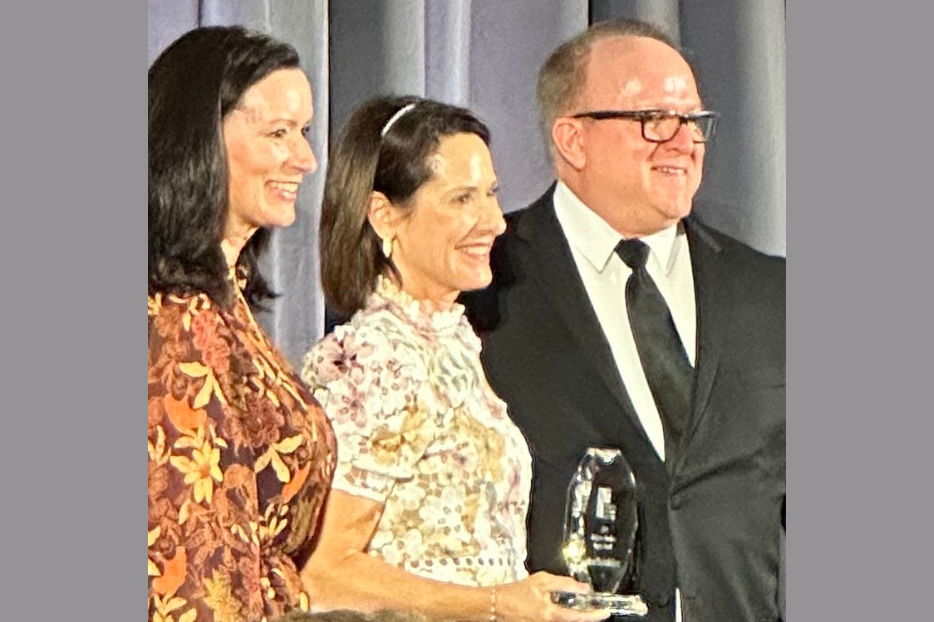
That is why recognition from the Religious Freedom Institute means so much. I hold you, and your mission, in the highest regard.
Ken Starr, tonight's recipient of the Defender of Religious Freedom Award, once wrote that "the next crisis to religious freedom is coming."
He was right. In recent years, we have watched some federal, state, and local governments treat sincere religious belief as a form of discrimination. We see a growing secularist culture that views faith not as humanity's highest calling, but as a private eccentricity to be tolerated at best, suppressed at worst.
Living authentically as believers in public life is not the same as forcing religion on others. Authentic witness honors conscience and enriches society. By contrast, coercion destroys the pluralism that makes religious freedom possible and gravely undermines the very faith it claims to promote.
The best response, then, is not to retreat -- nor to dominate. It is to live our faith well -- boldly, joyfully. And when we face misunderstanding, marginalization, or worse, we can look to those who've gone before us, who've paid far greater prices, and draw strength from their example.
In the Gospel of Matthew, Jesus asks: "What profit would there be for one to gain the whole world and forfeit his life?"
There are courageous people willing to forfeit the whole world for the sake of their faith. They understand that in losing everything, they gain what cannot be taken away.
That is true impact.
That is what we must defend — not just in courtrooms and legislatures, but also in our communities and in our own hearts.
I am deeply grateful for the chance to continue this work alongside all of you.