Pivotal Point for International Religious Freedom
COMMENTARY: While challenges in the United States pale in comparison to the violence faced by our Christian brothers and sisters abroad, they remind us that religious freedom requires constant vigilance.
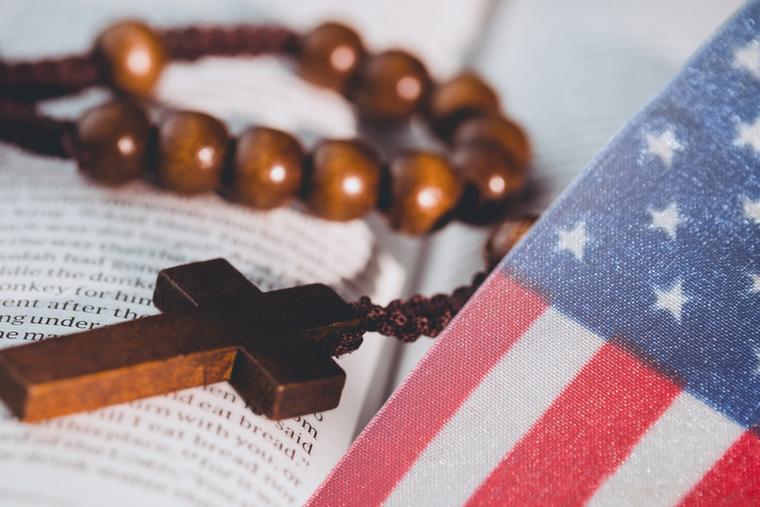
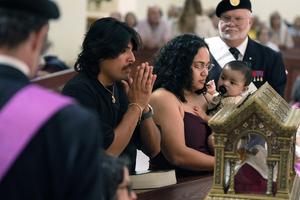
International Religious Freedom Day commemorates the anniversary of the passage of the International Religious Freedom Act of 1998. As American Catholics gathered together this past Sunday to celebrate the Holy Mass — freely, openly, without fear — we must pause to remember the countless believers worldwide who cannot do the same.
The Oct. 27 observance comes at a pivotal moment.
Just last week, Aid to the Church in Need — a pontifical foundation whose mission is to support the persecuted — launched its Religious Freedom Report, warning that nearly two-thirds of the world’s population live in countries where serious religious freedom violations take place. Consistent with these grave findings, Pope Leo XIV posted on X a clear statement of Catholic Church teaching:
Religious Freedom allows individuals and communities to seek the truth, live it freely, and bear witness to it openly. It is therefore a cornerstone of any just society, for it safeguards the moral space in which conscience may be formed and exercised.
Here at home, former North Carolina congressman Mark Walker’s pending confirmation as ambassador-at-large for International Religious Freedom represents an opportunity to reinvigorate America’s commitment to this fundamental human right. This position, created by the IRFA, serves as the tip of the spear in our nation’s efforts to combat religious persecution globally. Walker will inherit both powerful tools and urgent crises demanding immediate attention.
The IRFA, strengthened by the 2016 Frank R. Wolf International Religious Freedom Act, provides our government with concrete mechanisms to identify, condemn and sanction the worst perpetrators of religious persecution. These aren’t merely symbolic gestures — they’re legal obligations. The law requires annual reporting on religious freedom conditions worldwide, the designation of “Countries of Particular Concern” that engage in systematic violations, and the imposition of meaningful consequences. Yet the gap between statutory mandate and executive action remains troublingly wide.
Consider the ongoing tragedy in Nigeria, where Christians face what can only be described as a coordinated campaign of genocidal violence. Thousands of Nigerian Christians have been killed in recent years, yet the international response remains inadequate. The IRFA provides tools to address this crisis — sanctions, diplomatic pressure, support for civil society — but tools unused gather dust while the persecution continues.
In China, the persecution is no less insidious. The Chinese Communist Party’s systematic campaign against faith communities — from the mass internment of Uyghur Muslims to the demolition of churches, the imprisonment of priests, and the Vatican’s troubling accommodation of Beijing’s authority over bishop appointments — represents one of the gravest threats to religious freedom in our time.
Catholics in China face a stark choice: Submit to state control of their faith or worship in underground churches at great personal risk. This is the reality of “Sinicization” of religion — the Party’s name for subjugation. And in Hong Kong, Catholic businessman and pro-democracy advocate Jimmy Lai remains imprisoned, his faith and his commitment to freedom making him a target of Beijing’s authoritarian reach.
The assault on religious freedom extends beyond these well-documented crises. Last week, Archbishop Bagrat Galstanyan was arrested in Armenia, a troubling development in a nation with deep Christian roots.
In Nicaragua, Daniel Ortega’s regime has expelled Catholic priests and bishops and shuttered Catholic institutions, treating the Church as an enemy of the state. These aren’t isolated incidents. They’re part of a global pattern of governments viewing religious faith — particularly Christianity — as a threat to state power and social control. When faith communities assert transcendent values and ultimate loyalties beyond the state, authoritarian regimes respond with persecution.
Here in the United States, we enjoy what much of the world can only dream of: robust legal protections for religious exercise enshrined in our Constitution, coupled with a culture that has historically celebrated religious pluralism. We can worship freely, raise our children in our faith and live according to our convictions. This represents an extraordinary blessing and an extraordinary responsibility.
Yet even in America, these freedoms face new challenges. When religious beliefs — particularly on the dignity of human life, the nature of marriage, and the reality of biological sex — conflict with progressive ideologies, we see increasing pressure to confine faith to private spaces or, worse yet, to silence it entirely.
Religious institutions face litigation, professionals face licensure battles, and individuals face employment consequences for maintaining beliefs held by billions throughout human history. While these domestic challenges pale in comparison to the violence faced by our Christian brothers and sisters abroad, they remind us that religious freedom requires constant vigilance even in the most favorable circumstances.
The IRFA and the Wolf Amendment represent America at its best — using our influence and resources to defend the defenseless, to speak for those who cannot speak for themselves, and to insist that religious freedom is a universal human right. These laws reflect the understanding that religious freedom is a stabilizing force in international relations. Societies that protect religious pluralism tend toward greater stability, prosperity and peace. Persecution, by contrast, breeds resentment, radicalization and instability.
As we observe International Religious Freedom Day, we must move beyond commemoration to action. The incoming ambassador-at-large must be empowered and supported. The designations and sanctions mandated by law must be imposed consistently. Our diplomacy must prioritize religious freedom, not treat it as a secondary concern to be sacrificed for other interests.
The persecuted Christians of Nigeria, China, Nicaragua and beyond aren’t asking for our pity. They’re asking for our solidarity, our voice, and our action. The IRFA gives us the tools. International Religious Freedom Day reminds us why we must use them. The only question is whether we possess the courage to do so.
- Keywords:
- international religious freedom