Beware the Temptation to Improvise Your Faith
COMMENTARY: Skipping duties in the name of spontaneity leads to spiritual collapse, not freedom.
The student had not finished his assignment, and in his school that meant being examined on the subject by several teachers in front of the other students, apparently grilled in a way likely to embarrass the student being examined.
He did well and when he finished, his teacher said, “Strictly speaking, you should get a 10, but we will give you a nine. This is not to punish you, but it’s so you always remember that what matters is fulfilling your duty every day: performing systematic work without letting it become routine; building things up brick by brick rather than in a fit of improvisation that seduces you so.”
The Seduction
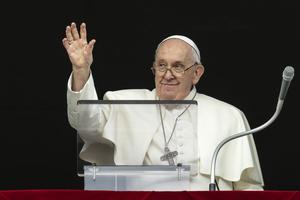
The teacher was Father Jorge Bergoglio, then in his late 20s. He was teaching literature and psychology at the Colegio de la Inmaculada Concepcion in Sante Fe, Argentina, a Jesuit school. The story appears as the introduction to one of the chapters in Pope Francis: His Life in His Own Words, a book-length interview first published in Argentina in 2010 when he was archbishop of Buenos Aires.
The student, Jorge Milia, now a journalist, told the story in his memoir From the Happy Days. “I never forgot that lesson,” he wrote, “which I keep in mind even today, and I didn’t think they could’ve treated me more fairly.”
The story appealed to me, because as a writer and editor I know well the seduction of improvisation Father Bergoglio warned against. A clever writer can go far improvising, especially if he’s also naturally good with words. He can write something that sounds very good, even convincing and perhaps profound, on the quick single reading most people will give it.
Some years ago I taught the nearby Episcopal seminary’s students who were preparing to write a master’s thesis. I always had to warn some of them that cleverness and verbal facility was a danger and a trap. It had often worked for them in college, where they could bang out papers the professors liked because they wrote well compared with the other students.
They didn’t learn just from being told, of course, because so few of us do, so I tried to take apart their exercises in a way that showed them the problems. They usually didn’t get the point, because they had plausible reasons for their mistakes.
One they often gave was that they would do better had they more time. But they wouldn’t do better, because they had trained themselves to jump to their conclusion and improvise on that. With more time, they would have just improvised more.
The world rewards improvisation of the sort Father Bergoglio warned his student about. The clever writer can go far in improvising, especially if he has a good sense of what his readers want to hear. He may someday make a big mistake, but that may well not hurt him with his readers. Eventually, knowledgeable readers will see that he doesn’t really know his subjects, but he’ll keep the rest of his readers who believe he does.
We Don’t Get It
Father Bergoglio’s lesson applies to the spiritual life. Of course we value the duties, the systematic work, like the Mass and the daily prayer and confession, the regular examination of conscience and the serious reading of Scripture, the conscious practice of the spiritual and corporal works of mercy. But the temptation to improvise is great.
We don’t have much time and we have other things we want or need to do. The duties restrict us. We can sometimes rearrange them, like going to a different Mass to make sure we get to the special dinner at a friend’s home or we get home for the game of the week. But sometimes we can’t, and then we can feel tempted to improvise — to decide, for example, that a spiritual communion or a little extra time in prayer will make up, just this once, for missing Mass.
I write from Pittsburgh, where many people love the Steelers with an almost religious passion and commitment, and where watching the game comes with all sorts of social rituals shared with family and friends. It’s a genuinely social, community-binding activity. Watching the game together is a Sunday obligation nearly as strong as the obligation to go to Mass.
No one has ever told me he skipped Mass to watch the Steelers, but some people have told me, confidently, that it’s all right to skip Mass once in a while to watch the Steelers. One particularly scrupulous person, if I remember the details right, said that a Catholic had to go to Mass but could leave after the consecration.
Many of you will have rolled your eyes at such commitment to a sports team. But almost all of us have strong loves of some sort that could, in the right circumstances, tempt us to skip our duty and take a break from our systematic work. We hold firm in going to Mass, but we might improvise in a spiritually dangerous way.
Formed by Our Culture
The temptation to do what Father Bergoglio’s student did comes in the choices we have to make between our duties and our desires. But we’re also mentally and imaginatively prepared for it by a culture that assumes that the real life, the authentic life, requires freedom from duties and being able to express our inner selves, which means we must improvise as we go along.
The idea motivates the typical movie’s idea of authentic romance, where the lovers spontaneously leap into bed, authentically living out their feelings for each other, even if they’re already committed to someone else. They must. It’s who they are. Instead of accepting the duty of being faithful to their word, doing the systematic work of building a life with the other person, they improvise their morality, employing that beautifully flexible idea of authenticity.
All of us find ourselves feeling a conflict between what we should do and what we want to do. Like when the duty to do unto others means not doing for ourselves. It’s easy to improvise reasons to avoid helping another person, like saving time or energy for other duties, or serving your true calling, or maintaining boundaries, or taking needed “me time” or “down time,” or even feeling “I’m not feeling it.” They may be (speaking for myself) good reasons, but they’re often not, or not good enough to justify not doing unto the other.
As Father Bergoglio understood, the duties the Church imposes, and the systematic work by which we learn them, build us up, brick by brick. But only if we pursue them consistently and refuse to be seduced by the spirit of improvisation that tears us down, brick by brick.
- Keywords:
- spiritual life
- pastoral theology
- duty