Meet the New Campus Radicals
COMMENTARY: Rooted in first principles, these students are reshaping campus debates through moral courage rather than outrage.
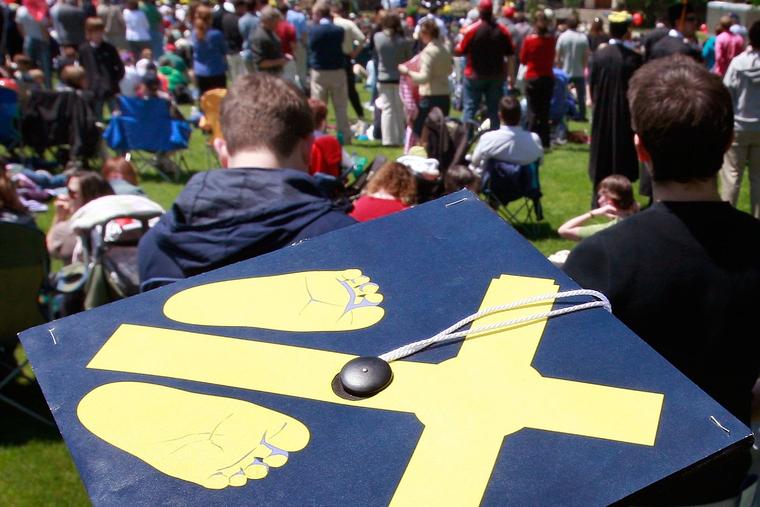
There is a new kind of radical on college campuses today, and they look nothing like what we have come to expect.
They are not barricading buildings or shouting down speakers. They are not demanding the overthrow of institutions or vilifying those who disagree with them. Instead, they are challenging institutional decisions and the dominant culture of their peers while living according to their deepest Christian beliefs.
Here are some of their stories.
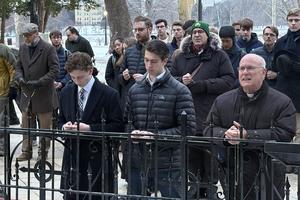
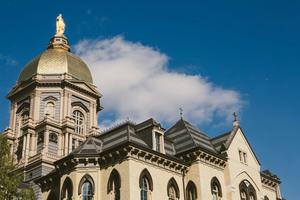
Lucy Spence, a junior at the University of Notre Dame, along with classmates Gabe Ortner and Luke Woodyard, has been vocal in opposing the university’s appointment of a professor who advocates for abortion to direct one of its academic institutes. The appointment was “astonishing coming from a university dedicated to the mother of an unplanned pregnancy," she wrote in the main campus newspaper. “Until it begins to defend the sanctity of all life — mother and baby alike — in all of its actions, Notre Dame can never hope to fulfill the singular duty it bears to its female students as Our Lady's University.”
Spence and many of her classmates were part of a movement urging the university to reconsider its ill-advised offer, which fell apart today amid the public outcry.
The same spirit animates students at institutions far from the spotlight. At Vanguard University, a Christian school in Southern California, sophomore Linda-Isabella Rendon sought to start a pro-life student club in November 2025. Her initial request to form a Students for Life chapter was denied, with administrators citing the school’s policy against “political or ideological affiliations.” Undeterred, Rendon repeatedly met with officials to clarify the club’s mission of service, student support and education. “We were told that Vanguard is pro-life, and they want to support a pro-life club,” she told reporters. After various rejections, Vanguard Lions Love Life was formed and now hosts diaper drives and outreach events. “God is so good in the way that he moves,” Rendon said, “and I know that this story will have an impact.”
At the University of Mary Washington in Virginia, the Students for Life chapter faced a different kind of hostility in November 2025 — online threats, repeated removal of their flyers, and vandalism of their message on Spirit Rock — a campus landmark boulder used for public announcements — promoting an event featuring a pro-life speaker. The students repainted the message and continued their outreach rather than abandoning their plans. Chapter member Spencer Lombardo wrote, “Regardless of the hostility we experienced, UMW Students for Life will continue taking the high road until we reach our destination: A Fredericksburg where every person’s right to life is protected, born or unborn.”
Huskies for Life, a pro-life club at the University of Southern Maine, faced similar harassment when it was established in November 2025 — online threats and attempts to intimidate the club’s faculty adviser. Despite ongoing hostility, the students have pressed on. Club member Abby Patenaude captured their resolve simply: “We’re encouraging respectful dialogue, and we’re here to save babies; we’re here to support moms, and we’re here to create a culture of life on and off the campus.” That is not the language of an ideological campaign. It is the language of people who believe every life matters and are willing to pay a price for that belief.
When a student organization installed a Plan B vending machine on the campus of her elite secular university, Francesca Bayer, my daughter, co-authored an opinion piece in the campus newspaper asking whether anonymously-administered emergency contraception is the full measure of support for young women facing unplanned pregnancies. They highlighted a nearby pro-life pregnancy resource center and pointed to better models for supporting pregnant and parenting students — comprehensive care that recognizes the complexity of these situations and honors the dignity of both mother and child. Since publication, Francesca has continued to invite her peers to consider a vision of support that does not end with a nervous young woman standing in front of a vending machine. She is now working to reinvigorate a pro-life presence on campus.
The conviction that every human life has dignity is not confined to opinion pages or campus debates — it shapes how these new campus radicals act when it matters most.
Consider Luke Schwarz, a freshman at Brown University, who demonstrated his commitment to the sanctity of human life in the most dramatic way possible during the recent mass shooting on his campus. While chaos erupted around him, he did not run away. He ran into danger, rendering aid to a wounded classmate and likely saving a life. His actions in that moment of crisis flowed from the same conviction that guides his daily choices: that every human life has inherent worth and dignity, and that this belief demands action, not just words.
What unites all of these students is that they are men and women of faith who are willing to stand up to institutional failure and peer pressure. They are challenging universities to live up to their stated missions. They are asking their fellow students to think more deeply about what true support and care look like.
This is radicalism in its truest sense: going to the root of things, insisting on first principles, refusing to accept what is fashionable, and putting oneself at risk. Their radicalism lies not in tearing things down or in self-preservation, but in the insistence that universities and their students form a community that should be directed to the good, true and beautiful.
There are more of these students than we are led to believe. Mainstream media often overlooks them. Social media rarely amplifies them — at least not in a positive light. They work thoughtfully, often at real personal cost. But they exist on campuses across this country, and they represent a kind of moral seriousness we should be celebrating.
These students challenge their institutions not because they hate them, but because they believe in their potential. They engage their peers not to win arguments, but to invite deeper thinking. They act with courage not for recognition, but because their convictions demand it. In a polarized age that often rewards outrage, they are demonstrating what authentic moral courage and conviction actually looks like.
They are the true campus radicals, and they deserve our support.