This Lifelong Friendship Proved Stronger Than Death
COMMENTARY: He was the kind of friend who showed up when I needed him most — and stayed with me, even after he was gone.
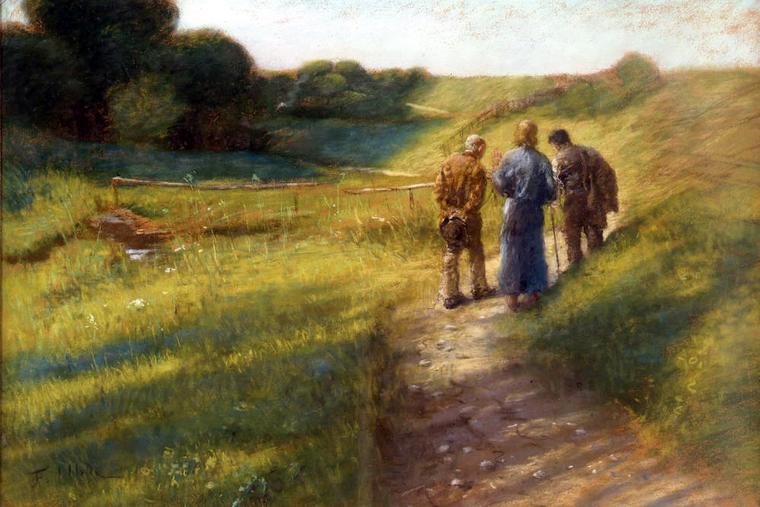
I’ve always believed there’s something spiritual about an enduring friendship. We all forge friendships in life, but few last a lifetime. Those of us who have had these firm bonds with others have been blessed.
Little did I realize that when I met Gordon in the doctoral history program at Florida State University in the early 1960s, we were taking the first step in developing a firm, caring friendship that would last more than 50 years.
Our backgrounds were different. I was a Polish American Catholic from Florida by way of Massachusetts. He came from Ohio and was Protestant. He was older than I was and had served in the armed forces. He had an intelligent, lovely wife, Joyce, who was pregnant with their first child. I was a scrawny kid in my early 20s who existed on coffee and cigarettes — a habit I kicked when I married my wife, Marita, and she became pregnant with our first child.
It became immediately apparent that Gordon and I shared a passion for history — and a desire to impart that passion someday to college students. We took many of the same courses and often held study sessions where we shared ideas, insights and information. My sense of humor often brought Gordon to hearty laughter, which relieved the stress and tension of intense study in which we were engaged for several years. Sometimes, I’d deliberately say something funny just to hear his unique infectious laughter.
Inevitably, some of our study sessions digressed into analyses of the various professors who taught us. Most of our opinions aligned; occasionally, they didn’t. In lighter moments, I employed my gift of mimicry, imitating one of our professors, a brilliant Slovak historian with a Ph.D. from the Sorbonne. He was greatly admired by all of his students, including Gordon and me.
As our lives unfolded, little did I realize that this professor would become a loyal supporter of my research and writing on Poland during World War II.
It didn’t take long for me to realize that Gordon and I were similar in so many ways. We shared the same values: treating others with kindness and respect, seeing the goodness in people, and, like all idealists, wanting to change the world for the better. By the end of our graduate studies, we had become close friends who shared each other’s joys and pains. I had discovered the truth of what Mark Twain once said: “One learns about people through the heart, not the eyes or intellect.”
I earned my doctorate in 1963 and took my first position at a university in Tennessee. Gordon, after earning his doctorate a few years later, became a professor at Berry College, an excellent liberal arts school on a sprawling, beautiful campus in northwest Georgia. It wasn’t long before Gordon established himself as the most popular professor at Berry. Later, he became chairman of the history department. His unstinting commitment to his students became legendary.
Although I saw teaching as an important mission of a college professor, I had always been especially interested in historical research and writing. Over the years, I published many books, two of which won national awards. Unlike Gordon, whose primary fields were in American history, my focus was European history, with emphasis on Poland and Russia.
Little did I expect that two of my books on wartime Poland, published in the ’80s and ’90s, would stir up a hornet’s nest — and even lead to personal and professional attacks from anti-Polish writers intent on characterizing Catholic Poles primarily as victimizers of Jews, rather than as victims of the Germans. Little wonder that this distortion of history continues today in our post-fact world.
These disturbing attacks, many of which were personal and vicious, depressed me so much that I turned to my best friend, Gordon, who patiently listened as I unburdened myself to him many times over the telephone. I will never forget the morning after one of these conversations, when Gordon asked me whether he needed to drive up to see and comfort me in person. I told him that I appreciated his concern, but it was much too far for him to make the long journey from Georgia to where I lived with my family in Tennessee.
Later that day, I was in my study and heard a car rumbling up our driveway. I went outside — and there stood Gordon, sporting his trademark wide smile and bellowing in a loud voice, “Dick, this will pass. You’re a strong guy!”
My eyes immediately teared up. He reached out and gave me a bear hug. I never forgot that day — nor did I ever forget the fact that Gordon had placed my concerns and well-being over his own. He had exhibited the selflessness and commitment that Christ often told his disciples to practice.
Remembering what Gordon had done to help ease my emotional pain, I realized that there was a deep spiritual aspect to the friendship I was blessed to have with this extraordinary person.
Gordon, Joyce, Marita and I visited each other as often as geography and circumstances allowed. These were always special events because we were in the company of our closest friends. As Helen Keller said, “True friends are never apart, maybe in distance but never in heart.”
I left Tennessee in 1989 and taught for three years in Ohio before retiring. In retirement, I was persuaded to become an adjunct professor at a university in Florida. Throughout those years, I continued to write and publish. Gordon, who taught almost to the end of his life, generously invited me several times as a guest speaker at Berry College.
I was deeply saddened when Gordon developed emphysema, a condition that worsened over the years. Through all the discomfort and pain that he suffered, I never once heard him complain. He stoically accepted his illness and focused on what he loved most — teaching history to his beloved college students, from whom he drew strength.
Although Gordon was Protestant, he admired Pope St. John XXIII and shared my sorrow when the Pope died on June 3, 1963. I vividly remember his telephone call to me on that day, during which he expressed his sympathy. As I recall, he said, “Dick, I wanted you to know that here is one non-Catholic who loved your pope.”
When I received the sad news of Gordon’s passing, I wept. And I prayed for him. I still do.
One of the most difficult things I’ve ever done was to deliver one of the eulogies at Gordon’s memorial service. I choked back the tears with every sentence I spoke and repeatedly asked St. Jude, my favorite saint, to come to my aid in finishing the tribute to my best friend.
Gordon passed away 14 years ago, but I think of him often, remembering the amazing friendship we shared for more than 50 years. I take comfort in what Pope Francis once said about friendship: “A true friend never abandons you, even when you make mistakes. They correct you, perhaps scold you, but they forgive you and do not leave you.”
In the Gospel of St. John (15:13-15), Jesus tells us this is what we are to him: friends.
Pope Leo XIV echoed this sentiment toward his Augustinian brothers, having lunch with them daily at the General Curia of the Order of St. Augustine near the Vatican when he was a cardinal. As Pope, he recently made a surprise visit to his Augustinian brothers, reminding them of an important admonition from their founder, the great doctor of the Church, St. Augustine of Hippo. Pope Leo said, “He told us we must always stay close to one another and live in communion.”
Death ends a life — but not a true friendship.
- Keywords:
- friendship
- charity