The Priest Who Counsels the Count of Monte Cristo
What Abbé Faria reveals about formation, suffering and the moral risk of shaping another soul is worth reflecting upon.
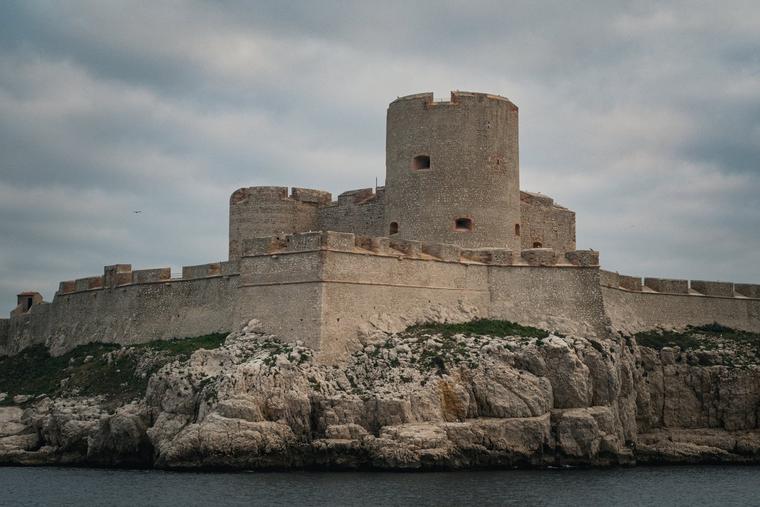
There is a moment in The Count of Monte Cristo — Alexandre Dumas’ classic tale of betrayal, imprisonment and revenge — that is easy to overlook.
It arrives quietly, without spectacle: a scraping sound in the dark, a stone dislodged, a breach in the wall of a prison cell long since sealed off from hope. And then, unexpectedly, a man appears — not a jailer, not a fellow victim of despair, but a priest.
His name is Abbé Faria.
Most readers remember the broad outlines of Dumas’ tale: the unjust imprisonment of Edmond Dantès, his daring escape, and his transformation into the mysterious and calculating Count of Monte Cristo. It is a story of betrayal and vengeance, of hidden identity and poetic justice, and it has been adapted time and again, each version drawn to the drama of revenge fulfilled.
Yet beneath that familiar narrative lies another story — quieter, more interior, and, in many ways, more decisive. It is the story of the man who forms Dantès.
When the young sailor first encounters Faria in the depths of the Château d’If, he is little more than a frightened and unformed man. Stripped of his future and cut off from the world, he languishes in ignorance and isolation. His suffering is real, but it remains raw and unshaped, without direction or purpose.
Faria changes that.
The priest, himself a prisoner, has endured years of confinement. Yet rather than succumbing to despair, he has built something within the walls of his captivity. From scraps and memory, he fashions a kind of intellectual and spiritual life. He writes, studies, invents, reasons — and prays. In a place designed to erase the human person, he has instead cultivated one, and, more importantly, he gives that life away.
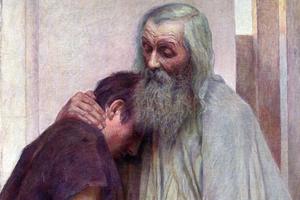
What follows is one of the great acts of hidden formation in literature. Faria becomes teacher, mentor and, in a deeper sense, father to Dantès. He educates him in languages, history, science and philosophy. He disciplines his mind and tempers his passions, transforming him from an impulsive youth into a man capable of reflection, strategy and restraint. In short, he prepares him.
It is no exaggeration to say that without Faria, there is no Count of Monte Cristo. More concretely still, there is no escape, no completed tunnel, no revelation of the treasure, and no transformation from a forgotten prisoner into a man of means and power. Faria does not merely refine Dantès; he places him, quite literally, on the path of his destiny.
And here the story becomes more complicated, for we must ask what that destiny entails.
Dantès does not emerge from the Château d’If as a saint, but as an avenger. The knowledge, discipline and resources he acquires are directed toward a single end: to repay, with precision, those who wronged him. We may rightly ask what role Faria plays in this outcome. Does the priest foresee what Dantès will become? Does he intend it, or does he simply form the man, leaving the use of that formation to Dantès himself?
Dumas does not give a simple answer. Faria is portrayed as a man of immense intellect and insight, but also as one who has suffered deeply and has not entirely escaped the pull of worldly concerns. His conversations with Dantès include not only instruction, but a careful reconstruction of the injustice done to him. In revealing the truth, Faria also reveals the objects of Dantès’ future vengeance.
There is a subtle but real moral tension here. The Catholic tradition holds that formation is never neutral. To educate, to guide, to shape another person is to participate, in some measure, in the direction of his life. The priest, in particular, is entrusted not only with the cultivation of intellect, but with the ordering of the soul toward truth, charity and ultimately God.
Faria undoubtedly gives Dantès extraordinary gifts: knowledge, discipline and clarity. Yet he does not, at least explicitly, redirect him away from vengeance and toward forgiveness. Whether this represents a failure or simply the limit of what even a gifted mentor can accomplish within the constraints of suffering and confinement remains an open question.
Faria belongs, in a suggestive way, to a recognizable lineage. One thinks of St. Maximilian Kolbe, who in the darkness of Auschwitz sustained a spiritual life for others; of St. John of the Cross, who in confinement transformed suffering into a place of interior illumination; and even of Prospero, Shakespeare’s learned exile whose knowledge shapes the destiny of another while standing at the threshold between justice and mercy. Sacred Scripture offers its own image of liberation in chains: In the Acts of the Apostles, St. Peter is led out of prison not by his own ingenuity, but by an angel sent from God.
Faria remains distinct. His tunnel is dug by human effort, his wisdom forged through intellect and endurance, and he forms a man capable of freedom while leaving unresolved the deeper question of what that freedom will serve.
There is something unmistakably priestly in Faria’s self-gift. He forms another man without hope of recognition, laboring so that another may live more fully. He gives what he has, knowing he will not see the fruit of it, and in this reflects the quiet, sacrificial dimension of the priesthood.
Yet his formation remains incomplete. Formation is not only about equipping a man to act, but about ordering his action toward the good. It shapes not only the mind, but the heart. Dantès leaves the prison prepared for greatness, but not yet purified of the desire for retribution, and the result is a life that is at once brilliant and morally perilous.
Faria’s cell thus becomes a place not only of transformation, but of ambiguity — a workshop of the soul in which the final direction of that soul remains unresolved. This, too, is deeply human. No teacher, father or priest forms another person perfectly. The freedom of the one being formed remains, and grace builds upon nature without erasing it. What is planted in one season may bear fruit in another — and not always in the way the sower intended.
Without Faria, Dantès would have remained what he was: a forgotten man wasting away in darkness. With Faria, he becomes something else entirely — a man capable of action, influence and consequence. That this power is initially directed toward vengeance does not negate the gift, but it does invite reflection on the responsibility that accompanies it.
We live in an age that prizes influence but rarely considers its moral weight. To shape another life — whether as a parent, teacher or priest — is to take part in a mystery that is both creative and dangerous. One may give the tools for greatness, but one cannot fully determine how those tools will be used.
Abbé Faria stands at that threshold. He is, in many ways, the hidden architect of one of literature’s most famous transformations, providing the knowledge, means and opportunity that make Dantès’ rise possible. There is no escape without him, no treasure, no Count.
In the darkness of the Château d’If, a priest taught, disciplined and gave what he had, setting a man on his path not by force, but by gift. What that man would ultimately do with that gift lay beyond his reach. Yet in that hidden labor something essential had already taken place: a life had been formed, and with it the possibility — still open, still unfolding — of redemption.
- Keywords:
- literature
- alexandre dumas
- accused priests