American Catholics, Heed the Pope’s Call to Champion Religious Freedom in Nigeria and Elsewhere
COMMENTARY: A dire humanitarian crisis demands an American response grounded in both principle and prudence.
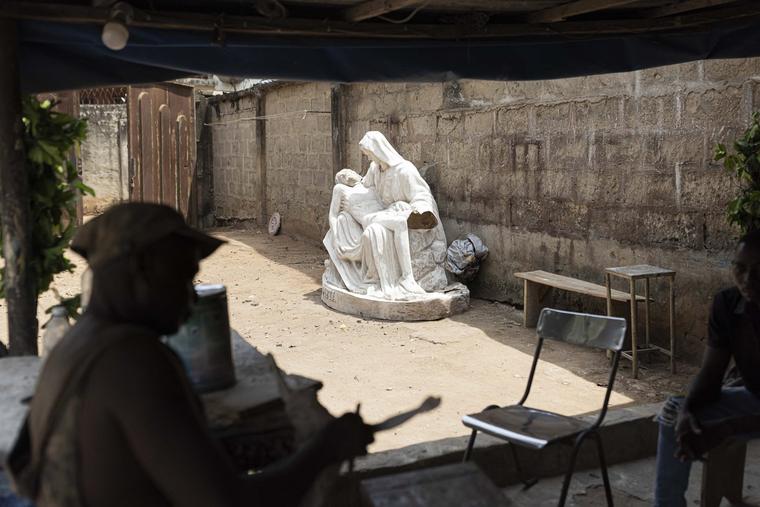
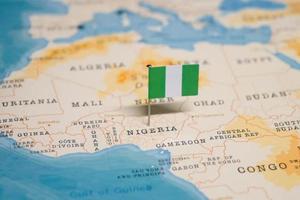
In Nigeria, thousands of Christians have been killed, churches destroyed, and priests and seminarians kidnapped by Islamist militants. Entire villages have been driven from their homes. Victims are hacked to death with machetes, their bodies burned. Women and children are not spared.
This is not a distant tragedy — it is a humanitarian crisis that demands an American response grounded in both principle and prudence.
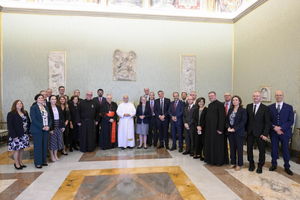
Last Friday, Pope Leo XIV reminded the world of what is at stake.
Speaking to representatives of Aid to the Church in Need, the Holy Father declared that religious freedom “is not merely a legal right or a privilege granted to us by governments; it is a foundational condition that makes authentic reconciliation possible.” He continued, “It is therefore a cornerstone of any just society, for it safeguards the moral space in which conscience may be formed and exercised.”
When religious freedom is denied, the Holy Father warned, “trust gives way to fear, suspicion replaces dialogue, and oppression breeds violence.”
Catholics in the United States should take the Holy Father's counsel to heart — as well as know that defending the persecuted is entirely consistent with President Donald Trump's “America First” approach to foreign policy. It means wielding diplomacy, moral clarity and targeted policy tools to protect the innocent and defend the right to religious expression and worship. It means recognizing that nations respecting religious freedom are more stable, more prosperous, and less prone to the violence that threatens American interests.
U.S. Rep. Chris Smith, R-N.J., has documented and condemned the systematic targeting of Christians in Nigeria, pressing both political parties to act. Sen. Ted Cruz, R-Texas, has introduced legislation urging the State Department to designate Nigeria a “Country of Particular Concern,” reserved for the worst violators of religious freedom.
Even outside Washington, the suffering has pierced public awareness. Comedian Bill Maher recently called out the failure to face the scale of the crisis. Their voices underscore one truth: This persecution is not marginal or accidental. It is an open assault on conscience, justice and faith itself.
Trump’s “America First Policy Directive” to Secretary of State Marco Rubio, issued this January, reaffirms that our foreign policy must “champion core American interests and always put America and American citizens first.” That includes advancing religious freedom abroad — a hallmark of U.S. leadership and a reflection of who we are as a people.
Yet under the Biden administration, Nigeria’s “Country of Particular Concern” designation was removed in 2021, while officials downplayed religious motives, blaming “climate change” and “resource competition.” That narrative denies the plain truth: Churches are torched; pastors murdered; children abducted — all because of a difference in religion.
As Pope Leo warned, when religious freedom is denied, “the human person is deprived of the capacity to respond freely to the call of truth. What follows is a slow disintegration of the ethical and spiritual bonds that sustain communities.”
The options before us are not extremes between turning a blind eye to persecution or deploying troops. The International Religious Freedom Act and Frank Wolf Amendments already authorize targeted sanctions, aid restrictions, visa bans and diplomatic pressure against those who persecute believers.
These tools work. Experience shows that nations that protect religious freedom are more stable, more prosperous and less prone to the violence that breeds terrorism and instability. Defending this freedom is not naive idealism — it is patriotism guided by principle.
The same crisis of conscience appears elsewhere. In Nicaragua, priests are expelled and churches closed. In Armenia, Christians face renewed uncertainty. In China, the Communist Party represses Uyghur Muslims, Tibetan Buddhists, underground Christians and other minorities. Across the Middle East, ancient Christian communities are disappearing. Pope Leo XIV's words apply to all these situations: “The suffering of any member of Christ's Body is shared by the whole Church.”
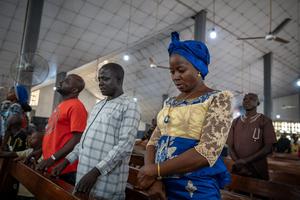
And yet, there is light amid the darkness. A recent essay by National Review’s Kathryn Jean Lopez portrays Nigerian Christians as “models of hope” — believers who continue to pray, serve and forgive even as their families are targeted. Their faithfulness is a rebuke to our complacency and a call to action.
The Holy Father praised such witnesses this past Friday, noting that when Aid to the Church in Need supports persecuted communities, it helps Christians become “peacemakers” in their homelands, showing “that a different world is possible.”
American Catholics can heed the Pope’s call while supporting sound foreign policy. The bipartisan U.S. Commission on International Religious Freedom continues to issue urgent recommendations. The Senate should swiftly confirm Mark Walker, Trump’s nominee for ambassador-at-large for international religious freedom, to give U.S. diplomacy real weight. The administration and Congress must follow the guidance of USCIRF, Cruz and Smith: Declare Nigeria a Country of Particular Concern, invoke every tool under IRFA and the Wolf Amendments, and call this persecution what it is — religious hatred, not climate conflict.
Even the United Nations recognizes what is at stake. Article 18 of the Universal Declaration of Human Rights affirms that “everyone has the right to freedom of thought, conscience, and religion.”
Pope Leo XIV emphasized that this right is “rooted in the dignity of the human person, created in God's image and endowed with reason and free will.” When America defends that right, we are not acting as a global policeman. We are living out our founding ideals and answering the Holy Father’s call to stand with our suffering brothers and sisters.
As Catholics, we cannot separate our faith from our concern for the persecuted. Pope Leo reminds us that “if one member suffers, all suffer together” — and that truth should shape how we engage in public life. When we press our government to defend religious freedom abroad, we are not imposing our values on others. We are protecting the most fundamental human right, one that allows all people to seek truth and live according to conscience.
By leading with this principle, America can prevent genocide, reduce extremism and protect the innocent. That is America at its best.
- Keywords:
- nigeria
- persecuted christians
- trump administration