Faith, Family and Foster Care: A Victory for Conscience in Oregon
COMMENTARY: The U.S. Court of Appeals for the Ninth Circuit ruled the Oregon Department of Human Services violated Jessica Bates’ constitutional rights when they denied her application to become an adoptive parent.
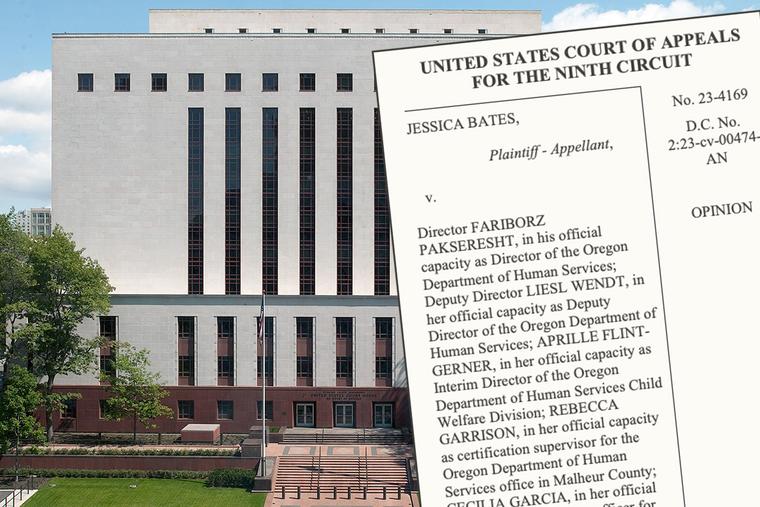
Jessica Bates, an Oregon widow and mother of five, received long-awaited good news last week. The U.S. Court of Appeals for the Ninth Circuit ruled that officials at Oregon’s Department of Human Services violated her constitutional rights when they denied her application to become an adoptive parent.
Bates v. Pakseresht is a sharp warning to government officials whose devotion to gender ideology tramples religious liberty, freedom of speech, and the best interests of children.
At the heart of Bates’ case lies a tragic irony. Oregon — like many states — faces a severe shortage of foster and adoptive homes. Tens of thousands of children across the country are waiting for stable, loving families.
Yet when a willing and qualified parent — already raising five children on her own — stepped forward, she was turned away. Not because she lacked warmth, experience, or a safe environment, but because she holds traditional Christian views on the nature of the human person as made by God: male and female. Oregon treated Bates’ steadfast religious beliefs as disqualifying bigotry.
The Ninth Circuit saw it differently. That infamously progressive court ruled that Oregon had imposed unconstitutional conditions on Bates’ participation in a state program, compelling her to affirm beliefs she does not hold in order to serve children in need. “The state cannot force individuals to surrender their religious beliefs as a price of participating in public life,” the panel explained.
Oregon’s policy requires prospective adoptive parents to agree to “respect, accept, and support” a child’s sexual orientation, gender identity and gender expression. While there is no formal checklist of required actions, training materials outline the state’s expectations: Parents must agree to use a child’s “preferred pronouns,” bring the child to events such as pride parades, and take the child to medical appointments for gender transitions if desired. Even if no child in their care identifies as LGBTQ, parents are urged to consider displaying “‘hate-free zone’ signs or other symbols indicating an LGBTQ-affirming environment (e.g., pink triangle, rainbow, or ally flag).”
The state’s training materials also specifically and pejoratively refer to religion.
“Prejudice and rejection,” they assert, can occur in certain settings — including “faith-based communities.” Behaviors to be “avoided” by foster and adoptive parents include participating in religious activities that “are openly hostile or unsupportive of people with diverse [sexual orientation, gender identity, or gender expression].”
Astonishingly, the materials add, “You do not have to choose between your faith and supporting their LGBTQ+ identity. Many religious groups embrace LGBTQ+ youth, adults, and their families. There are more and more affirming churches and religious groups that are providing affirming spaces to LGBTQ+ youth and their families.” (Bold in original.)
Bates applied in May 2022 for certification as an adoptive parent, hoping to adopt a pair of siblings under the age of 9. After undergoing “training,” she wrote to a caseworker, explaining that she could not comply with many of the mandates because they conflict with her sincerely held religious beliefs on marriage and the nature of the human person. After a follow-up phone call, Bates received a letter from the state denying her application.
Bates sued, claiming that Oregon’s policy violated her rights to free speech and the free exercise of religion under the First Amendment. The panel agreed, ruling that strict judicial scrutiny applied to both of Bates’ claims. While recognizing the state’s “valid objective in promoting the health and safety of LGBTQ children in foster care,” the court found the policy “is not narrowly tailored to impose on Bates an extreme and blanket rule that she may adopt no child at all based on her religious faith, for fear of hypothetical harm to a hypothetical child.” Indeed, Oregon retains “ample authority … to monitor the parent-child relationship and to intervene when appropriate.”
Too often, debates about gender identity are framed as clashes between “tolerance” and “discrimination.” But that’s a false choice. What Jessica Bates sought was not to impose her faith on others, but to care for children without compromising her beliefs. The real intolerance came from the state’s demand that she betray those beliefs as a condition of helping others.
Bates’ victory offers hope — but also a warning. Other states have adopted similar exclusionary policies targeting Christians who aspire to foster or adopt. Such blatant bigotry is unacceptable — especially when the greatest victims are children in need.
Catholics and other Christians must not retreat from responding to the needs of the vulnerable. We are called to witness with both clarity and charity. That means defending the rights of parents like Jessica Bates to serve according to conscience. It also means boldly proclaiming that the Church’s teaching on the nature of the human person — male and female, made in the image of God — is not hateful.
Oregon failed Jessica Bates. Thankfully, the court of appeals did not. Let us pray that Oregon refrains from seeking further judicial review and instead revises its policy to comply with the Constitution — allowing loving parents like Jessica Bates to welcome children in need into their families.