The 1966 Romantic Comedy That Accidentally Became a Pro-Life Classic
A film billed as a comedy becomes far more sobering when its carefree hero confronts the consequences of his actions.
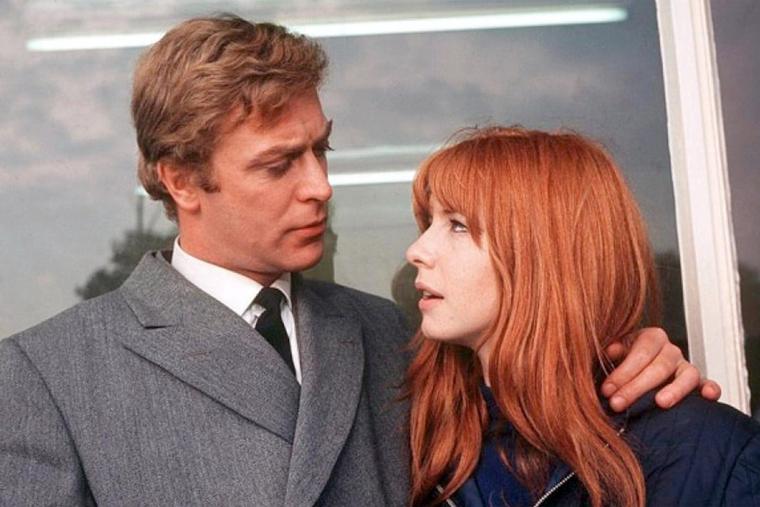
Inadvertently, is Alfie (1966) the most pro-life film ever made?
Abortion is a key plot device — but it is also far more than that in what unfolds on screen.
On release, Alfie — famously marketed with the line, “What’s it all about, Alfie?” — was billed as a romantic comedy. Watched 60 years on, however, there is only tragedy.
From the start, Alfie (Michael Caine) recounts his own sexual legend. Monologuing directly to the audience, he catalogues his many conquests. The women are “types” — married, single and so on — each analyzed for her susceptibility to his charm. And he is charming, as only Caine can be, even when what he describes is immoral and deeply misogynistic. The audience, like his paramours, is drawn in — captivated, even as it senses the darkness at the core.
And so, it continues — until the abortion scene.
Alfie has made a friend’s wife pregnant. She already has a family; her husband is in a sanatorium, where they both met Alfie. Abortion is thus presented as a remedy: for marital strain, social embarrassment, unforeseen consequences.
At the time, abortion was illegal in England. Alfie hires an abortionist to come to his shabby flat to carry out the procedure on the anxious, fearful woman (Vivien Merchant).
Yet even the abortionist (Denholm Elliott) speaks of what he is about to do as the taking of an innocent life. His work feels no longer medical but mercenary. Behind a curtain in that cramped room, a life will be ended. Alfie leaves; when he returns, the woman lies on a couch, in pain and grief. He shows little empathy — only relief that it is over.
But it is not over.
The curtain still hangs.
Told not to look, Alfie looks.
The camera shows only his face. The audience sees nothing — and yet what follows is all the more harrowing. The façade collapses. Reality intrudes. Actions have consequences, however much one pretends otherwise.
The horror of what has occurred in that dingy London flat is unmistakable. The woman, too, is changed; one senses that nothing will ever be the same. In more ways than one, a part of her has died on that makeshift table.
And Alfie? What follows is more remarkable still. Speaking later to a friend, he admits that what happened is beyond words. His shock stems from what he saw. He had not expected “it” to be so “fully formed.” His only response, he says, was prayer: “God help me.”
From here, the plot moves on. The abortion becomes one scene among others.
But everything has changed.
Alfie’s wit and philandering persist, yet now ring hollow. The film begins with a jaunty address to camera, explaining his philosophy of life and love. It ends with a reprise, as he walks across Waterloo Bridge at dusk. But now the soliloquy is uncertain, wistful. He no longer understands himself — or the world he inhabits.
Nor is Alfie alone in changing. The audience has changed with him.
Today, abortion may be legal and softened by euphemism in our public discourse, and a 2004 remake of the film omits the scene entirely. Yet the original Alfie retains an essential honesty: a life is ended; a woman’s life — her marriage, her sense of self — is shattered; and a once carefree man can no longer pretend that his actions are without consequence.
On its release, the film was a major success on both sides of the Atlantic, praised by critics and audiences alike, and seen as part of a new cinematic frankness about sex. Alfie helped define that shift, portraying a self-absorbed womanizer forced to confront the emptiness of his life.
Today, it feels almost like cinematic archaeology — recording the moment such attitudes became both acceptable and propagated as the norm.
But that abortion scene remains.
Off camera, perhaps — yet inescapably haunting everything that follows.
So, is this the most pro-life film ever made?
Perhaps.
The United Kingdom premiere took place in London on the evening of March 24, 1966. And as it did so, First Vespers were being sung for the feast of the Annunciation.
And that, Alfie, is what it’s really all about.