A Catholic Perspective on Trump’s ‘Donroe Doctrine’
EDITORIAL: We hope the administration heeds Pope Leo XIV’s reminder that the long-standing priorities of promoting democracy and upholding human rights around the world shouldn’t be discarded at the expense of hemispherical hegemony.
Two views of international relations are on prominent display at this political moment.
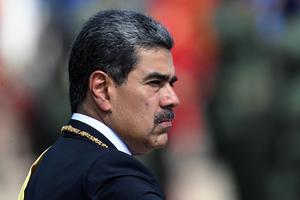
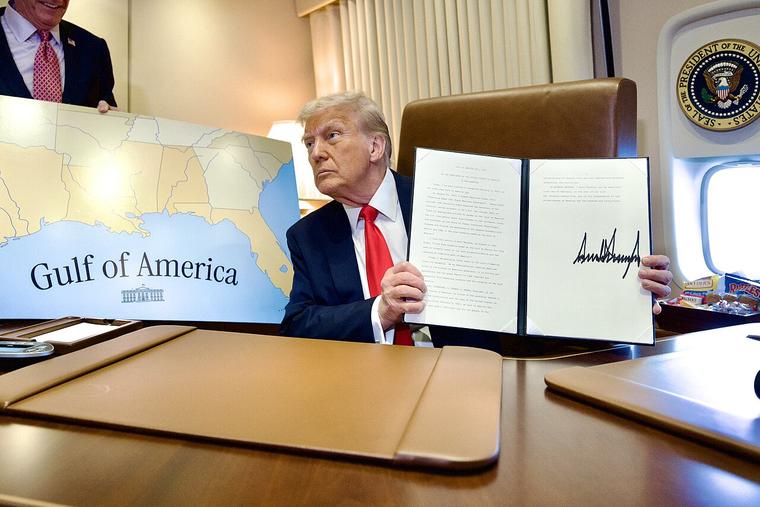
The first view is President Donald Trump’s freshly minted “Donroe Doctrine,” which prioritizes U.S. economic and military dominance over the Western Hemisphere. This proclamation of U.S. power — manifested in the dramatic Jan. 3 military capture of Venezuelan dictator Nicolás Maduro and the U.S. president’s warnings immediately afterward of other potential hemispheric interventions in Colombia, Cuba, Mexico and Greenland — places the U.S. national interest ahead of all other foreign-policy considerations.
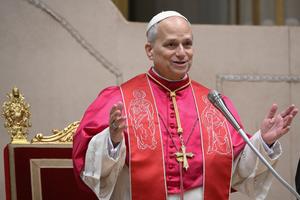
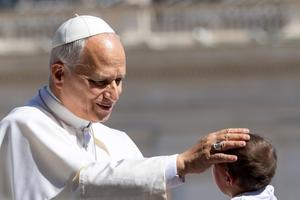
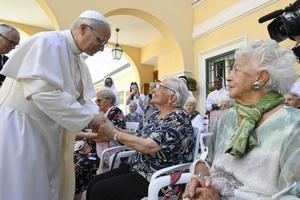
The second view is Pope Leo XIV’s Catholic perspective on international relations, communicated via the Holy Father’s Jan. 9 “State of the World” address to foreign ambassadors accredited to the Holy See. This Catholic assessment — drawing upon the spiritual insights that St. Augustine communicated 1,600 years ago in his famous Christian treatise City of God — insists other, higher values can never be discarded in the international arena.
The Venezuelan intervention was not surprising in light of the Trump administration’s new “National Security Strategy,” released in November. This strategy document comprehensively repudiates the more cooperative U.S. international approach in place since the Second World War and largely discards the priority of promoting democracy and human rights that previously has been an American foreign-policy cornerstone.
It advocates instead for a power-based “America First” approach, within which hemispheric dominance is identified as America’s leading international priority.
The document describes this shift as “the Trump corollary to the Monroe Doctrine,” in reference to President James Monroe’s 1823 assertion to European colonial powers of U.S. primacy over the entire Western Hemisphere.
“The United States is using its military to secure our interests unapologetically in our hemisphere,” Stephen Miller, the White House deputy chief of staff for policy, told CNN’s Jake Tapper following Maduro’s capture. Miller explained further that “we live in a world ... that is governed by strength, that is governed by force, that is governed by power. These are the iron laws of the world that have existed since the beginning of time.”
In his remarks to Vatican diplomats, Pope Leo was not dismissive of the realities of contemporary power politics. But he highlighted that what Miller describes as the “iron laws of the world” must be tempered by less self-interested objectives, including the advancement of democracy, human rights and religious freedom.
The Holy Father’s remarks were not offered as a corrective to Trump’s overall foreign-policy shift. Most of the international issues he referenced were not directly related to that topic, and on some issues, such as upholding the conscience rights of medical professionals who refuse to participate in abortion and euthanasia, he aligned concretely with Trump administration perspectives.
But Leo also pointedly drew attention to the decline of international multilateralism, lamenting that the framework “established after the Second World War, which prohibited nations from using force to violate the borders of others, has been completely undermined.” As to the specific context of the U.S. intervention in Venezuela, he renewed his earlier appeal “to respect the will of the Venezuelan people and to safeguard the human and civil rights of all, ensuring a future of stability and concord.”
It’s certainly not the case that President Trump and other leading members of his administration are opposed in principle to the restoration of the democratic freedoms and human rights that were comprehensively eradicated by Maduro’s hard-left regime. But in the wake of his ouster, they have focused far more on gaining U.S. control over Venezuela’s vast oil resources and choking off the remaining northward flow of illegal drugs.
So it can be hoped that the Holy Father’s words will provide a timely papal reminder that the long-standing American priorities of promoting democracy and upholding human rights around the world shouldn’t be discarded — even if strong arguments do exist in support of a U.S. foreign-policy recalibration that pays enhanced attention to the advancement of U.S. interests.
Another aspect to bear in mind is that facilitating the establishment of democratic regimes in Latin America that respect the human rights of their own citizens aligns directly with the central America First objective of halting illegal immigration. That’s because securing the border and encouraging illegal immigrants to return to their countries of origin becomes exponentially easier when their native lands have been made stable, safe and prosperous.
- Keywords:
- u.s. foreign policy
- catholic teaching