Catholic Charities Fort Worth Expands Research-Backed Anti-Poverty Program to Illinois
Catholic Charities Fort Worth developed the Padua program, which is an anti-poverty program that 'meets clients where they are.'

In the heart of one of Chicago’s most challenged neighborhoods, a proven, dignity-centered approach to breaking the cycle of poverty is about to take root.
Goodwill Greater Milwaukee & Chicago recently announced a major partnership with Catholic Charities Fort Worth (CCFW) to bring the innovative Padua program to the greater Englewood community in south Chicago.
Named after St. Anthony of Padua, patron saint of the poor, the program pairs participants with a team of two dedicated caseworkers for long-term, client-led support, with no arbitrary time limits. The only eligibility requirements for the program are that the client be 18 years old and willing to work.
The collaboration marks a significant expansion of the model, which was developed in 2015 by CCFW and validated through a randomized controlled trial by the University of Notre Dame’s Lab for Economic Opportunities (LEO).
Participants in the study were 25% more likely to achieve full-time employment, earned 46% higher incomes, and were 64% more likely to secure stable housing.
Brendan Perry, director of Padua National at Catholic Charities Fort Worth, told EWTN News that the program was in response to the nonprofit “seeing a lot of repeat customers,” which, “in the nonprofit world is not a good thing.”
“We weren’t truly creating economic mobility,” Perry recalled of the organization’s earlier efforts. “Padua was our answer to that challenge.”
Perry said the program was born from a simple but powerful question: What if?
“What if the way we’ve always addressed poverty isn’t the way it has to be?” he explained. “What if we created a program where clients set their own goals, timelines were built around people instead of funders, and we holistically addressed a client’s root issues instead of just the symptoms of their poverty? And what if we could prove it through research and create a model that was replicable?”
Unlike many short-term workforce programs, Padua’s two-person case management teams (a case manager and caseworker) provide holistic support in employment, housing, education, and emotional resilience. Clients define their own goals and remain in the program for as long as needed.
Perry said that people begin their journey with Padua from many different places and often come from a place of crisis. While Padua “is not a crisis program,” Perry said the program helps clients get to a place of stability.
“Once theyʼre there, weʼre gonna be sticking with you for the long haul to get to a point of strength and of prosperity.”
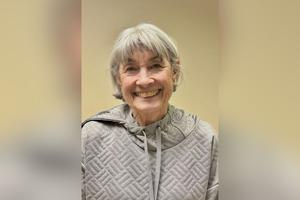
One client who has benefited from the Padua program is Lisa, a divorced mother of three who faced single parenthood, housing instability, unemployment, and mental health issues among her children.
“When I was in my marriage, there was a lot of breaking up and getting back together,” Lisa said. “There was a lot of moving around, and I believe thatʼs how my son developed separation anxiety, which led to depression, and [he] became highly suicidal.”
Lisa’s caseworker helped her find counseling for her son as well as for Lisa, who learned coping skills that helped her better care for her son.
“I pour into his life daily by reminding him that you are handsome, you are smart, you are capable, you have a mum and a family that loves you. You are loved, you deserve to be alive. This world needs you,” she said.
The Padua program helped her attend culinary school and taught her financial skills like budgeting and saving.
Lisa is now employed, has a stable home for her children, and has attended a culinary arts program with dreams of becoming a catering and private chef.
She gives credit to her caseworker, Taelor: “I call her my guardian angel because … sheʼs just been so loving and supportive.”
Perry added that the partnership with Goodwill reflects a shared commitment to human dignity.
“We’re not just expanding the program — we’re ensuring more families have access to the tools they need to build bigger, brighter futures.”
Clayton Pryor, chief mission officer for Goodwill Greater Milwaukee & Chicago, emphasized how naturally the program aligns with their existing work.
“At Goodwill, we believe lasting change starts with meeting people where they are,” Pryor told EWTN News. “Padua allows us to go deeper with individuals who need more intensive, long-term support. It’s client-led, research-backed, and focused on real stability — not just a job, but a foundation for life.”
The Illinois program is scheduled to launch in October out of Goodwill’s new Neighborhood Opportunity Center in Englewood. Pryor said the organization aims to serve 50 clients in the first year, scaling to more than 200 over five years.
- Keywords:
- catholic charities