Politics, Religion and Nonsense
This article in Britain’s Independent newspaper highlights one of the chief reasons the secular media is so frequently clueless about Church news.
The flaw: An insistence on reporting about Catholic issues through a cartoonish, left-vs.-right political prism.
The Independent article concerns Pope Benedict XVI’s pending appointment of a new primate of England and Wales to replace retiring Cardinal Cormac Murphy-O’Connor as Archbishop of Westminster.
The article handicaps the bishops the Independent views as the leading contenders, and provides a capsule description that explains where each man allegedly sits on the liberal-to-conservative political spectrum and discusses why this helps or hinders his chances of being appointed.
The fact is, the Pope will be appointing a shepherd of the Church to provide spiritual leadership to the Catholic flock of the Archdiocese of Westminster and to England and Wales as a whole, not a political leader who can be reduced to a “liberal” or “conservative” ideological caricature.
And Benedict himself, who most definitely can’t be understood when the secular media miscasts him as an allegedly “conservative” Pope as so often happens, won’t be making his decision about the appointment primarily on the basis of political criteria.
Another foolish aspect of the characterization of Church leaders and Church actions as being “liberal” or “conservative” is the sloppy way the label often is applied by the media. These days it often refers merely to whether people concur with basic Church teachings on life issues and on sexual conduct.
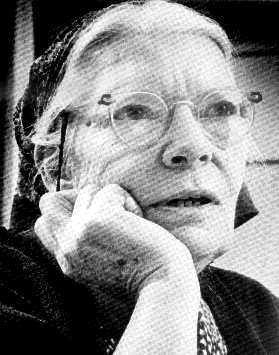
If they conform with Church teachings, they’re “conservative”; if they don’t, they’re “liberal” — no matter what their respective positions might be on a host of other political, economic or social questions. If that criterion is the standard, even a Catholic social justice icon like Dorothy Day would have to be characterized as “conservative” because of her vehement opposition to abortion.
Aside from being silly and bad journalism, there is a deeper flaw at play in all the media coverage of Church matters as being fundamentally political in nature: The religious dimension, not the political one, is the most fundamental aspect of human affairs.
So while politics certainly is at play in the life of the Church, as in other areas of life, an exclusively political analysis can never encompass the full truth of the faith.
And if reporters could only bear that in mind, they’d find it a whole lot easier to report intelligibly on Church affairs.