St. Lawrence of Brindisi: The Warrior Friar Who Led an Army With a Cross
In a moment of civil and spiritual crisis, the brilliant Capuchin rallied Christian forces — not with a sword, but with Scripture, a crucifix and unwavering faith.
In September 1601, nearly a century after the Protestant Reformation fractured Europe, an existential crisis engulfed a beleaguered Christendom: the looming threat of the Islamic Ottoman Empire.
Sixty years earlier, the Ottomans captured the Hungarian city of Székesfehérvár, a pivotal strategic stronghold from which they launched invasions throughout the European continent. Christians had withstood multiple attacks, but they were also ravaged by “volatile” Catholic-Protestant religious wars, such as the French Wars of Religion (1562-1598), the Schmalkaldic War (1546-1547), and the Eighty Years’ War (1566/68-1648).
Torn by external and internal strife, Christendom stood on the brink of conquest and extinction.
To resist the Ottoman threat, Rudolph II, emperor of the Holy Roman Empire, amassed an army to reclaim the city. Amid this campaign, an unlikely hero emerged: St. Lawrence of Brindisi, a 42-year-old Capuchin friar whose courage and faith would shape the siege’s outcome.
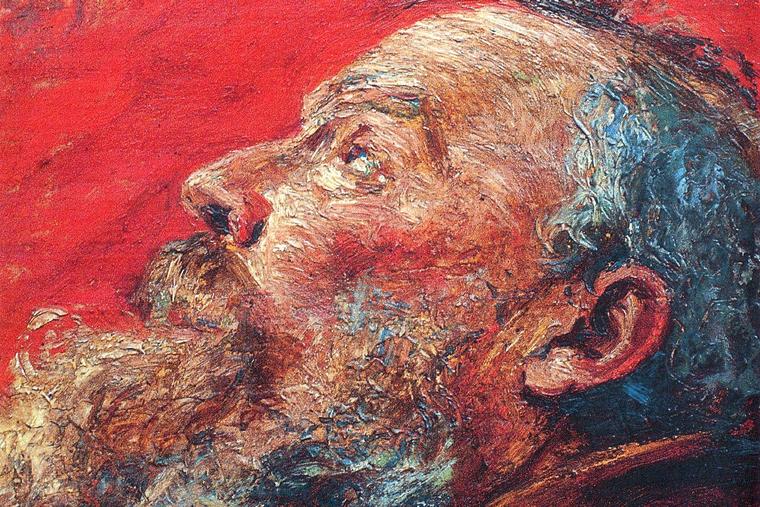
Born in 1559 in Brindisi, Italy, St. Lawrence displayed early piety and intellectual brilliance. Joining the Capuchin order at age 16, he mastered Greek, Latin, Hebrew and Aramaic, earning renown as a theologian, apologist and Mariologist (the study of the Virgin Mary). He rose in the order, serving as definitor general five times, establishing friaries in Prague, Vienna and Gorizia, and ministering to Jewish communities with compassion.
His eloquence in defending Catholicism against Protestant heresies, including treatises refuting Martin Luther, caught the attention of the Vatican and European courts, who enlisted him to defend the faith in debates and as a diplomat to ease tensions among Christian nations.
To St. Lawrence, the study of Scripture enlivened the soul — for the “word of the Lord is a light for the mind and a fire for the will,” and served as “a sword against the flesh, the world and the devil, to destroy every sin.” Yet he was also devoted to prayer, understanding that “true wisdom was found not in books alone but in the depths of a soul that had given itself entirely to God,” as noted by Father Augustine James in Life of St. Lawrence of Brindisi: The Scholar-Saint Who Used the Bible to Crush Heresy and Inspire Faith.’
However, in 1601, St. Lawrence’s efforts to defend Christianity took a dramatic turn. According to Dictionary of Saints by John J. Delaney, the emperor requested him to “raise an army among the German rulers.” The Capuchin, recognizing the Turkish threat, obliged — and he remained with the imperial army as a chaplain, ministering to the troops, often leading them in prayer.
Yet his leadership also extended to the siege’s military tactics, which “turned the tide of war,” according to James.
Draped in a brown habit and wielding a wooden crucifix instead of being clad in armor and brandishing a sword, St. Lawrence thrust himself into the fray, becoming the army’s standard bearer. Confidently and courageously, he led a charge against the Ottoman-occupied fortress, reportedly exclaiming, “Christus vincit! Christus regnat! Christus imperat!” which translates to “Christ conquers! Christ reigns! Christ commands!”
For his bravery, many “attributed the ensuing victory to him,” according to Delaney, since he galvanized the army’s resolve through his faithful witness. Indeed, the victory struck a blow to the Ottomans’ expansion into Europe. (Though, in the mid- to late-17th century, the Ottomans would wage wars in eastern Europe, but eventually lost territory in Hungary after the Great Turkish War [1683-1699].)
After the siege, St. Lawrence continued his influential diplomatic role. In 1602, he was elected vicar general of the Capuchins and tasked with missions to Spain and as a papal nuncio to the court of Maximillian of Bavaria. Even when he retired in 1618, European nobles still enlisted his services to avert a conflict between Spain and Naples.
Although his mission was successful, the trip compromised his health. On July 22, 1619, St. Lawrence died in Lisbon, Portugal. Soon after, pilgrims to his tomb reported miraculous healings. In 1881, the Capuchin polymath — theologian, priest, diplomat and warrior — was canonized, and named a Doctor of the Church in 1959. His feast day is July 21.
St. Lawrence’s courage at Székesfehérvár remains a powerful testament to faith in action, rooted in a lifetime of prayer, scholarship and devotion to Christ and the Virgin Mary. Yet his defense of Christendom resonates today, as Christianity faces new external and internal challenges in Europe. As Eric Zemmour, a former presidential candidate for the French Republic, argues in First Things, Christianity is “becoming a minority religion,” increasingly “Islamized” by an influx of Muslim immigrants whom European governments have failed to effectively integrate. This, among other factors, has led to social and cultural friction, especially in France and the United Kingdom.
In truth, Islam is the world’s fastest-growing religion, and Europe, after years of apostasy and religious disaffiliation, is no longer “home to the largest number of Christians in the world,” according to The Washington Post. (Though, there is a promising resurgence of Catholics among Generation Z.)
To confront these challenges, in the spiritual warfare against apostasy, Catholics should heed St. Lawrence’s example: seek wisdom in Scripture, ask for the Blessed Mother’s intercession, and boldly proclaim the Gospel and act in defense of the faith. As Bishop Robert Barron of Word on Fire says, “There are two armies assembled. One belongs to the devil. One belongs to Christ. The two standards are raised. Which army are you in? What is going to be your fight?” St. Lawrence’s life — as a scholar, theologian, diplomat and warrior — urges believers to choose courageously.
May his intercession inspire us. St. Lawrence, pray for us!