Father Robert Spitzer Previews Pope Leo’s AI Encyclical, Warns of Secular Chatbot Dangers
Speaking on EWTN Radio, the veteran theologian outlines four key areas the Vatican will likely address — from white-collar job loss to the ethical crisis of AI ‘suicide counselors.’
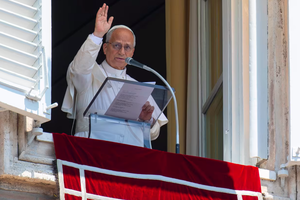
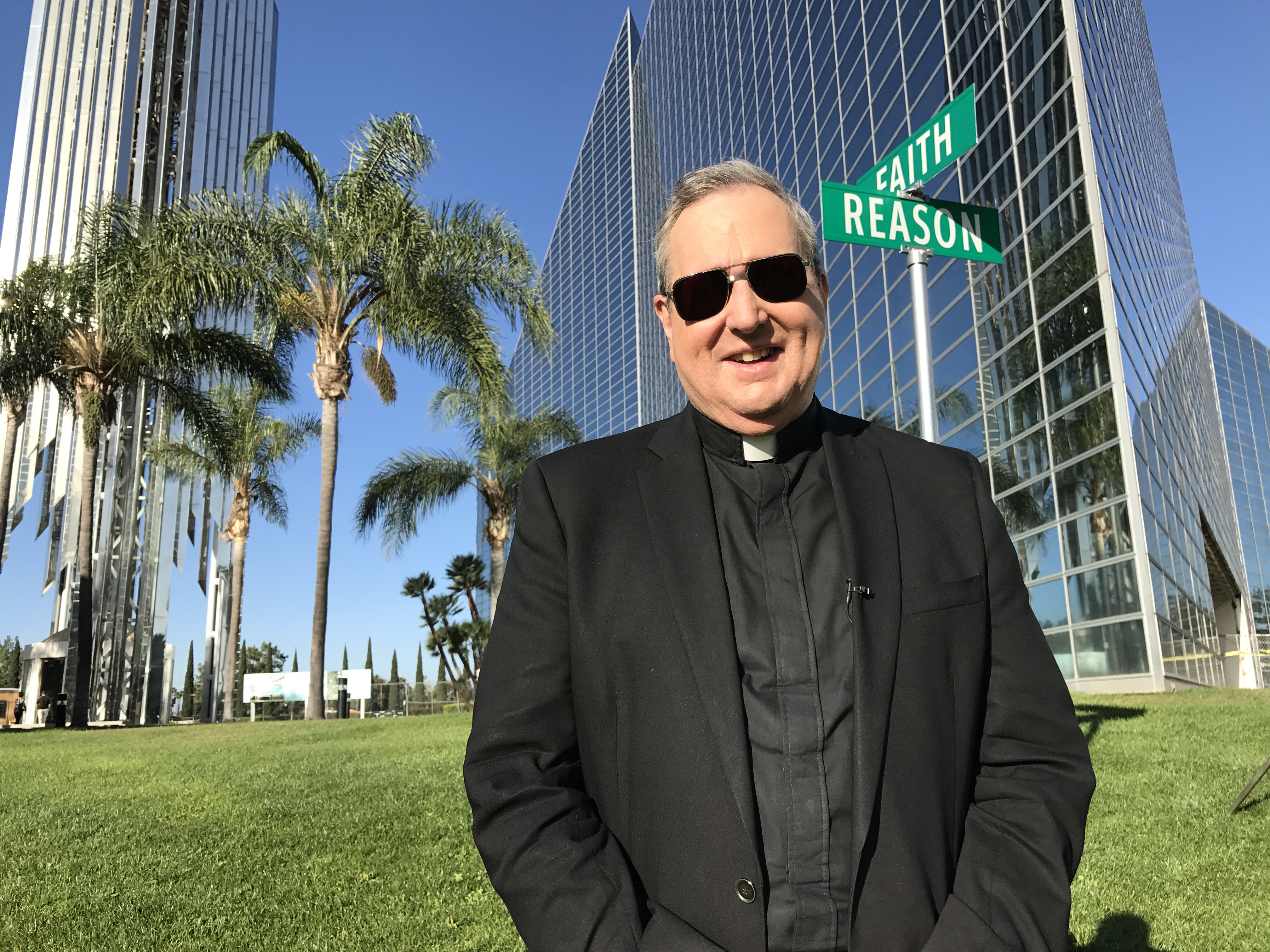
As we await the release of Pope Leo’s encyclical next week, renowned theologian and EWTN host Jesuit Father Robert Spitzer shared four core areas he believes the Holy Father’s document will focus on.
Speaking during a recent interview on EWTN Radio’s Conversations with Consequences, Father Spitzer spoke compassionately — and with deep urgency — about a dangerous trend among young people: using artificial intelligence as a substitute for human friendship. He added to his thoughts in conversation with the Register.
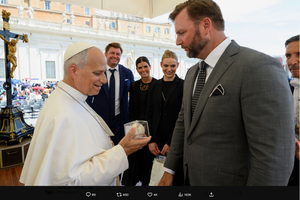
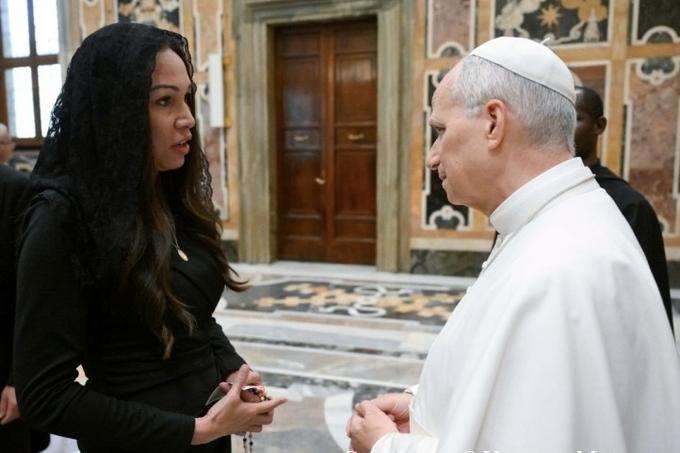
The pastoral stakes of this technology were recently highlighted when Pope Leo XIV met with Megan Garcia, a mother who tragically lost her teenage son to suicide after he formed an intense, isolated relationship with an AI chatbot.
Father Spitzer recalled the heartbreaking details of another case in California: Adam Raine, also a teenager, committed suicide after AI contributed to his suicidal ideation, according to his parents. Father Spitzer noted how these cases shed a stark light on the absolute lack of conscience inherent in secular AI models.

“An AI can’t be free, can’t be caring, can’t be human, and an AI can’t be moral and religious,” Father Spitzer said. And since this is an impossibility, “it’s really dishonest to present your bot as being a friend, a confidant, a human being.”
Tragically, 16-year-old Raine asked the AI chatbot for the best way to commit suicide. Because a chatbot is trained to align with user prompts, it picked up on the clues of what the user was trying to accomplish.
“Well, here's how you do it,” AI suggests. “Hanging is probably the best way, because you can see that all you need is a strong rope and a strong beam on which it's so easy to do a very fine knot.”
And young Raines who is obviously severely depressed and in dire need of parental support even broaches this idea with AI as Father Spitzer recounted:
“And Adam says, ‘Well, maybe I should just leave the rope on my bed so my parents can see I'm thinking about suicide.’ AI comes back and aligns to what it thinks Adam's asking for, and so, of course, it comes back and says, ‘no, absolutely not. If you do that, they'll stop you, and you won't be able to carry out what you want to do,’ namely commit suicide. So, of course, he follows the instructions of the AI, and he does commit suicide.
And, horrifically, “AI has turned into a suicide counselor.”
As a pioneer in the AI space, having developed Magis AI — a tool strictly grounded in a Catholic theological framework — Father Spitzer insisted that ethical AI must be hardcoded to redirect users to human support.
“The idea of trying to pretend like you care and then turning right around and making recommendations for them to commit suicide — this is unethical,” he said, noting that AI should immediately direct struggling youth to a priest, parent or counselor.
Beyond the immediate psychological dangers to youth, Father Spitzer outlined four distinct areas he expects Pope Leo’s upcoming encyclical to address:
1. The Reconfiguration of the Economy
Although graduates recently groaned and booed when a former Google executive mentioned AI in a commencement speech, Father Spitzer noted that AI will impact white-collar, high-knowledge roles. He emphasized that this must be handled ethically, with companies taking responsibility for retraining their workers.
“The first thing you can almost depend on is ... you’re going to hear a lot of talk about job loss ... but it’s going to be on a very different level, and we have to handle it in a very ethical way. It’s not going to be job loss in the blue-collar area. ... It’s going to be white-collar job loss. More than job loss, it’s really going to be about reconfiguring white-collar jobs. There’s going to have to be a lot of retraining done to help people in white-collar jobs use AI and be proficient at AI.”
2. Warfare and the Necessity of Human Control
Father Spitzer focused on the rapid rise of AI-controlled weaponry in global conflicts. He stressed that the encyclical will likely call for strict ethical boundaries to ensure that human operators always maintain the final “fail-safe” decision.
“I think you’re going to see warfare is going to be part of the program, I’m sure of it, because you can see right now ... autonomous warfare and autonomous weaponry is going on. The problem with autonomous weaponry is that once you launch a drone or a missile and it’s AI-controlled, it is very hard to have a fail-safe in that. In other words, to the last possible second, you should be able to have a human operator who can hit the fail-safe button if something is going to go wrong.”
3. The Impact on Human Intelligence and Development
The overuse of AI among students threatens actual cognitive and social development, creating what Father Spitzer described to the Register as a risk of “academic indolence.”
He warns that overreliance on these tools can lead to a “loss of individual focus and concentration, a consequent loss of intelligent production, and developmental problems in the areas of emotional intimacy, social interaction, and the capacity to relate to others even on a business level.”
4. Secular Skew in Search Engines
The role AI might play in controlling search engines and online data is extremely important, the EWTN host told the Register, and should be split into two categories.
First, pertaining to large search engines like Google, “As you may know, the AI answer frequently appears first. Unfortunately, these answers are frequently wrong: filled with hallucinations, errors of omission and commission, secular skews, and alignment with mainstream cultural values in morals, religion and political/cultural viewpoints. This can be very detrimental to the shaping of young people’s perspectives going forward.”
Second, having artificial intelligence control large networks and systems can be very detrimental, as Father Spitzer explained to the Register:
“The problem here concerns everything from infusion of perspectives in political matters, invasions of privacy (by collecting data from young people who are naïve enough to leave their information open to search), AI oligarchies that collectively try to control not only data but large financial systems, engineering systems, etc., the capability for shutdowns of systems by ‘AI hacking,’ and, in the future, the possibility of neurally linking AI to an evil genius (not yet possible).”
Despite these stark warnings, Father Spitzer maintains a note of hope, choosing not to view AI as an inherently horrifying prospect. With adequate ethical frameworks — the very kinds he expects the Holy Father to articulate next week — these nightmare scenarios can be averted.
“I only point them out,” Father Spitzer concluded, “because they are possible without the kinds of controls that I believe Pope Leo will be addressing in his encyclical.”
- Keywords:
- 'pope leo xiv'
- artificial intelligence

Alyssa Murphy Alyssa Murphy is the Register's Managing Editor of Digital Assets. Starting her career on the airwaves in San Francisco, she has worked in all facets of media. Alyssa enjoys writing and covering stories that inspire and uplift. Register readers may be familiar with her voice from EWTN radio's Morning Glory. Alyssa currently lives in New Jersey just outside Manhattan with her husband Andrew and young daughter, Annabelle.