UK Parliament Faces Pivotal Vote on Assisted Suicide
Lawmakers in the House of Commons will cast decisive votes Friday as debate over end-of-life legislation intensifies.

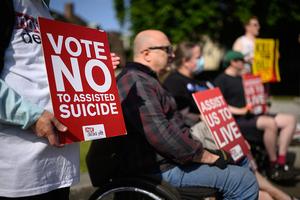
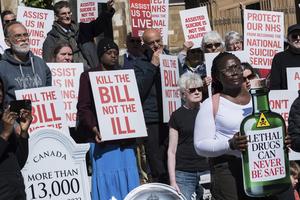
LONDON — Efforts to legalize assisted suicide in England and Wales will reach a crucial legislative stage on Friday when the House of Commons holds a final vote on the bill — though pro-life advocates say its passage is far from certain.
Introduced last year by Labour MP Kim Leadbeater with the support of British Prime Minister Keir Starmer, the Terminally Ill Adults (End of Life) Bill passed a key second reading last November, with 330 lawmakers voting in favor and 275 against.
If the bill passes the third reading on Friday, it will then proceed to the House of Lords, where it will be further scrutinized, amended and voted on.
But since November, the proposed legislation has undergone significant changes and amendments, with dozens of MPs switching sides and making the result less predictable.
According to ITV News, 148 MPs plan to vote for the bill, 139 plan to vote against it, 22 remain undecided and 21 are due to abstain.
Further data from ITV News shows that more than 40 MPs have changed their minds since November's vote, and a number of those who voted in favor at that time said they did so because they wanted more time to consider their position on the issue. They might not necessarily vote in favor this time.
Pro-life groups have warned that, if passed, the legislation would lead to the deaths of many vulnerable people, normalize suicide and further significantly undermine the moral fabric of British society.
It would inflict a “colossal potential social change,” they say, comparable to the legalization of abortion in 1967 and the introduction of same-sex “marriage” in 2014.
Cardinal Vincent Nichols of Westminster has warned against the bill, saying it would lead to a “slippery slope” to include increasingly more people — as has happened in the United States, Canada, Belgium and the Netherlands — and instill “great fear and trepidation” among the frail and vulnerable, especially those with disabilities.
On Wednesday, the cardinal expressed his concern that “many care homes and hospices will be put in grave doubt” if the bill becomes law.
Meanwhile, the director of the Anscombe Bioethics Centre, professor David Albert Jones, has published a paper saying the bill “falls dangerously short of providing necessary safeguards for protecting vulnerable patients.”
A series of other papers and statements, including from organizations such as the Royal Colleges of Psychiatrists and Pathologists, more than a thousand doctors, the British Geriatric Society, and a coalition of eating disorder charities, have all raised serious concerns that the bill is “severely unsafe.”
The Anscombe Bioethics Centre has also criticized the bill’s “flawed process” that included an unbalanced membership of MPs who scrutinized the bill, a weakening of a key legal safeguard that was “already problematic,” and “disturbing government impact assessments” that included savings to be made by legalizing assisted suicide.
Jones stressed in a June 18 statement that the bill had not undergone “rigorous scrutiny” and that the process had been “rushed.”
“The fundamental flaws in the bill have not been addressed, and the bill as amended is even more dangerous than the bill as introduced,” he said. “The Second Reading vote was ‘a vote to continue the debate.’ The Third Reading vote must be a vote to prevent a dangerous bill from becoming law.”
Catholics in England and Wales have been asked to write to their MPs and urge them to vote against the bill. They have also been invited to pray the Rosary, and in April, the lay Catholic organization Voice of the Family organized a Rosary Crusade outside the Houses of Parliament to help defeat the bill.
Should the legislation pass on Friday, it will move through the House of Lords — which is known for detailed scrutiny, especially on complex ethical issues such as assisted suicide — and peers are likely to propose further amendments.
If the House of Lords amends the bill, it must return to the Commons for MPs to approve or reject those changes, initiating a back-and-forth process that can delay or even derail legislation, especially if time is tight in the parliamentary calendar.

Edward Pentin Edward Pentin is the Register’s Senior Contributor and EWTN News Vatican Analyst. He began reporting on the Pope and the Vatican with Vatican Radio before moving on to become the Rome correspondent for EWTN's National Catholic Register. He has also reported on the Holy See and the Catholic Church for a number of other publications including Newsweek, Newsmax, Zenit, The Catholic Herald, and The Holy Land Review, a Franciscan publication specializing in the Church and the Middle East. Edward is the author of The Next Pope: The Leading Cardinal Candidates (Sophia Institute Press, 2020) and The Rigging of a Vatican Synod? An Investigation into Alleged Manipulation at the Extraordinary Synod on the Family (Ignatius Press, 2015). Follow him on Twitter at @edwardpentin.