St. James Vicariate Offers Spiritual Home to Hebrew-Speaking Catholics
The community numbers about 1,200 people spread across seven congregations all over Israel.
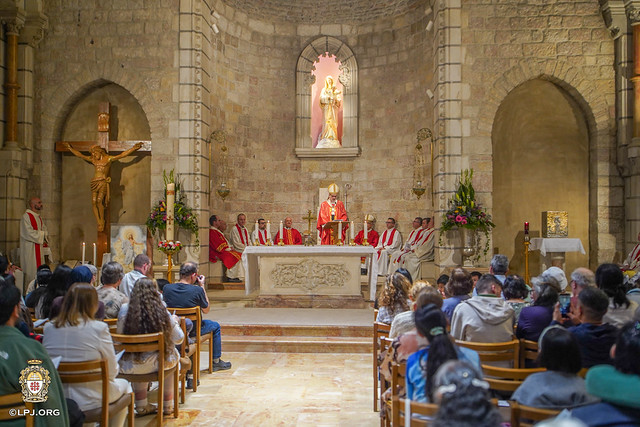
JERUSALEM — On May 2, the St. James Vicariate in Jerusalem celebrated its 70th anniversary, marking the first Hebrew-language Catholic Mass ever celebrated in the State of Israel.
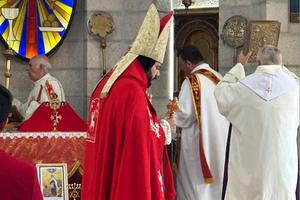
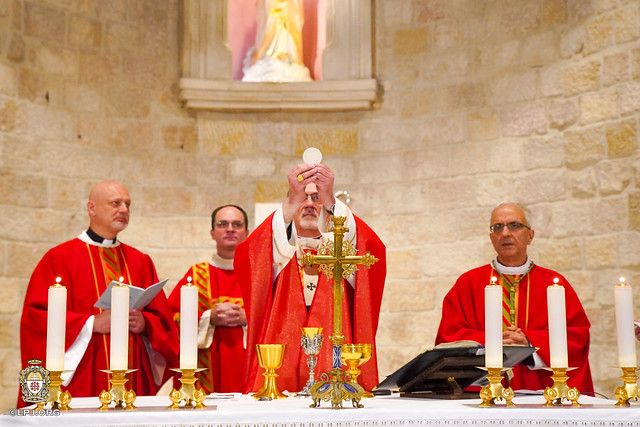
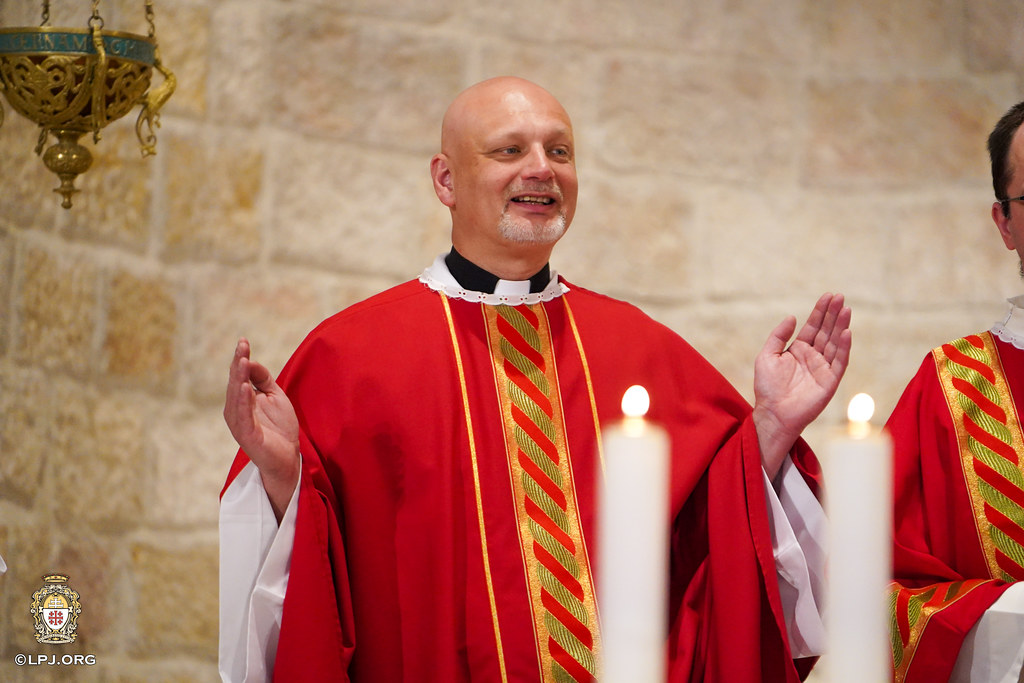
Cardinal Pierbattista Pizzaballa, Latin patriarch of Jerusalem, presided over the Divine Liturgy alongside Father Piotr Zelazko, a Polish priest who serves as the patriarchal vicar for the vicariate.
In a region where the vast majority of Catholics speak Arabic as their first language, the St. James Vicariate offers Hebrew-speaking Latin Rite Catholics something unique in the Middle East: a spiritual home grounded in Israeli culture that acknowledges the Jewish roots of Christianity.
The community numbers about 1,200 people spread across seven congregations all over Israel. Members include Jewish converts to Catholicism, descendants of Jewish-born Catholics, mixed Jewish-Christian families, migrants and even a small number of Arab Catholic families whose children attend Hebrew-speaking schools. Most of the young people are the Israeli-born children of foreign workers, usually Filipinos.
“The children are culturally Israeli,” Father Zelazko told the Register. “Our vicariate has a very beautiful mixture of various people.”
In the mid-1950s, a few years after Israel was established, Catholics sought permission from the Vatican to pray in Hebrew. At the time, the Catholic liturgy worldwide was still celebrated primarily in Latin.
Some of the vicariate’s liturgical practices are influenced by being in Israel, where about three-quarters of the population is Jewish. Mass is conducted in modern Hebrew, and Advent begins after the Jewish holiday of Simchat Torah, which typically falls in late September or October and marks the conclusion of the yearlong cycle of public Torah readings. Advent can last between seven and 13 weeks, depending on the Hebrew calendar.
Some of the vicariates’ communities use matzah instead of standard Eucharistic hosts to underscore the Jewish roots of Christianity.
“But, in general, of course, we are an integral part of the Latin Patriarchate, but with a certain autonomy,” Father Zelazko said.
Immersed as they are in Israeli society, some members of the vicariate serve in the Israel Defense Forces, a reality that distinguishes them from many, but not all, other Catholic communities in Israel. (A small but growing number of Arabic-speaking Catholics from northern Israel are also choosing to perform military service or civilian national service.)
“We have kids in the army. We bless these kids when they go to the army,” Father Zelazko told the Register. “We have a very beautiful prayer that says, ‘May you always keep the values that you learned in the Church and in your family,’ which are Christian values.”
The vicariate also advocates for Christians of all denominations when they are drafted or volunteer for military service.
“Actually, I’m officially the contact man of the Israeli army with the Christian world,” Father Zelazko explained. In this capacity, he promotes the welfare of Christian soldiers and ensures that they have time to pray every day and to celebrate Sunday Mass and feast days — combat conditions permitting. A group of Christian IDF soldiers recently met with Israeli Prime Minister Benjamin Netanyahu to share their experiences in service.
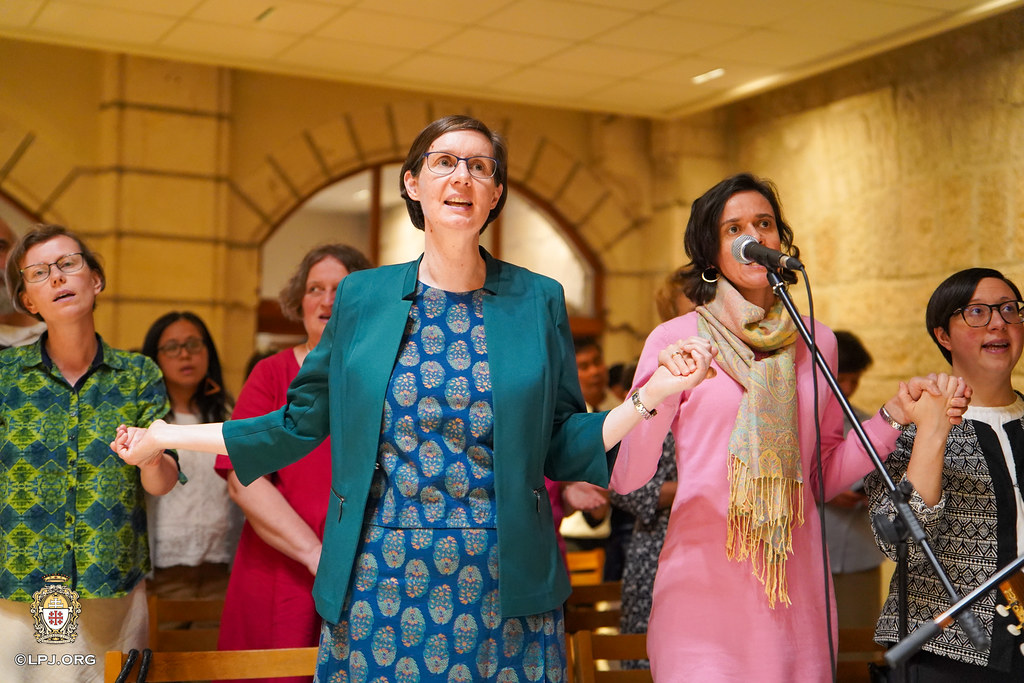
Hebrew-speaking Catholics also see themselves as bridge-builders, not only between Jews and Christians but also between Hebrew-speaking and Arabic-speaking Catholics. Toward that end, the vicariate organizes youth festivals that bring together Hebrew-speaking Catholics and Arabic-speaking youth from Latin parishes across Israel.
“We pray together just to show we are one Church, and despite the differences that we might have … we are one family,” Father Zelazko said.
Unfortunately, Israeli checkpoints have made it impossible for the vicariate’s youth members to meet with peers from the West Bank, he said. “They cannot come to Israel, and we cannot go to the West Bank.”
Though Hebrew Catholics in Israel have freedoms that West Bank Catholics don’t have, being one of the smallest faith communities in Israel does present some challenges.
In Israel, “Christians are a minority, and Catholics are a minority within the Christian minority,” Father Zelazko said, noting that most of the Holy Land’s 185,000 Christians are Orthodox Christians. “And then as Hebrew-speaking Catholics, we are a minority within a minority, even among Latin Catholics.”
Still, he insists there are pluses to being an intimate community.
“I think that we build kind of very family-like communities, where everybody knows each other. It creates this atmosphere of real brotherhood. Our priests notice immediately when someone is absent from Mass. You can immediately call and say, ‘I didn’t see you at Sunday Mass, do you need something? Should I bring you hot soup?’”
But being small in numbers means that the vicariate has limited resources. Father Zelazko told the Register he yearns for the day the vicariate can establish its own permanent pastoral center. Without one, it scrambles to find places to hold youth retreats, children’s camps and other large gatherings.
“We would like to have a place for our pastoral activities with the children, with the youth, with the families, so that it would be our place,” the priest said.
The vicariate recently launched “Friends of St. James,” a support network that encourages people to learn about the community and, when possible, to make small monthly donations. These donations help support the congregations and provide educational stipends for their children.
“People from abroad understand the importance of the fact that there is a Catholic church that speaks Hebrew, and that is connected to the Israeli culture and society,” Father Zelazko said.
Bishop Rafic Nahra, patriarchal vicar for Israel and a former head of the St. James Vicariate, told the Register that the vicariate openly welcomes people of all denominations and faiths, even if they have no interest in becoming Catholic.
“It is a place of encounter, where Israeli Jews and others come as individuals or groups to discover, not to change, their faith,” he said. “We read the same [Hebrew] Bible. It is a good place to meet.”
For Tomer Itzkovich, a young Jewish-born Israeli who converted to Catholicism, the vicariate has become a lifeline.
“Here in Israel, finding Jesus is really difficult,” Itzkovich said. “In my experience, I had only met Arabic-speaking Christians like Melkites and Maronites, and I don’t speak Arabic. Until receiving Jesus in my life, I didn’t know that there was a Hebrew Catholic Church, but by the grace of God, I found it.”
Becoming a member of the congregation in the northern city of Haifa has only deepened his faith.
“Being able to pray in Hebrew, to hear Jesus in Hebrew, is a Godsend,” said Itzkovich. “It is easier for me to express my faith in my own language.”
Testimonies like this hearten Father Zelazko.
“It’s not about the number of people in our vicariate,” he said. “It’s about relationships, and it’s about this feeling of being a community.”
- Keywords:
- hebrew catholics
- jerusalem
- latin patriarchate