As Numbers Collapse, English Freemasons Seek New Recruits Through Facebook
Freemasons in the county of Buckinghamshire now run adverts proclaiming: 'The door is open … Don’t wait to be asked.'
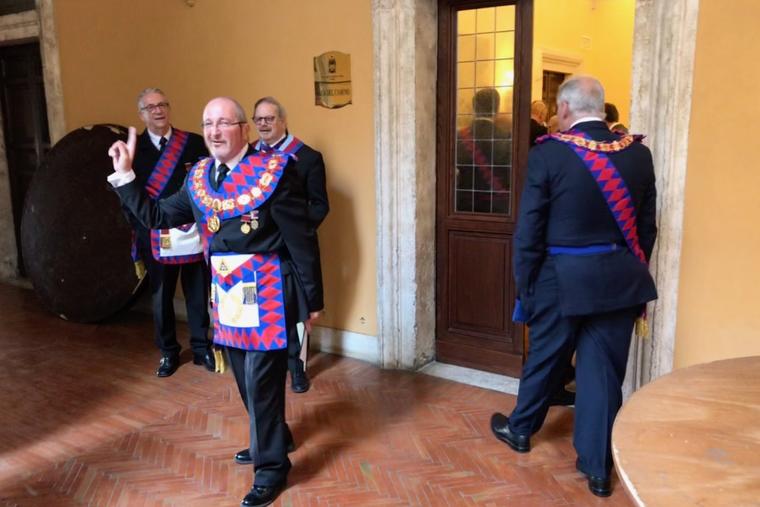
Freemasonry in England is embarking on an unusual public recruitment drive, turning to Facebook and social media to counter dwindling membership.
The secretive fraternity, which the Church has consistently condemned since its inception in London in 1717, is now openly inviting men to apply, signaling a deliberate shift from its tradition that one must wait to be quietly approached or recommended by existing members.
Until now, Freemasonry, believed to be the world’s largest secret society, did not actively recruit, but instead relied on personal recommendation and informal circulation of candidates for membership. To qualify to be a member of English lodges, one typically needed to profess belief in a “Supreme Being,” be willing to swear an oath of loyalty to the brotherhood and its principles, and have his suitability vouched for by existing masons.
But according to The Daily Telegraph, faced with modern demographic pressures and changing social habits, several English lodges have begun paying for targeted advertising on Facebook, abandoning the old expectation that men must “knock at the door” unprompted.
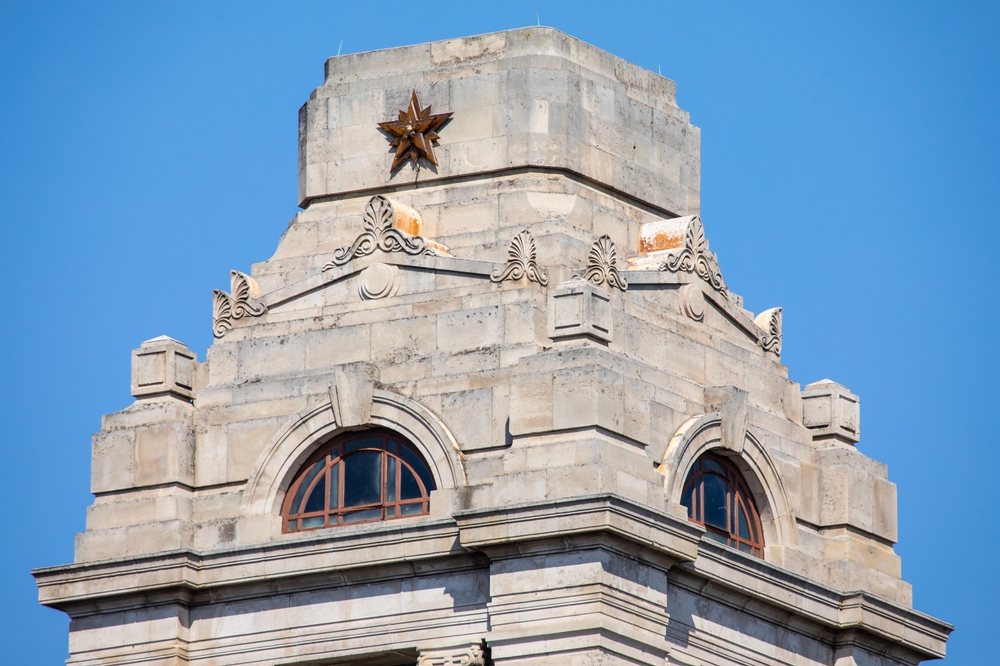
Freemasons in the county of Buckinghamshire, it reports, now run adverts proclaiming: “The door is open … Don’t wait to be asked.” They are one of eight English lodges that have taken out such adverts since early December, using the language and tools of contemporary marketing to present Freemasonry as accessible and welcoming. The lodges also appear to be capitalizing on increasing levels of loneliness among the young, a yearning for “brotherhood”, and a desire for belonging in today’s atomized societies.
Masonic membership has long been declining in both the US and England, according to their own figures. The United Grand Lodge of England’s most recent figures show about 170,000 members, down from “several hundred thousand” in the 1950s. In the US, the Masonic Service Association’s latest consolidated table puts total national membership in 2023 at 869,429, down from just over 4.1 million in 1959.
Conflict With the Church
The Church has never changed its view on the secretive association. In recent years some Italian Church leaders have controversially sought, and actively engaged in, dialogue with Masonry, but official and episcopal documents have repeatedly condemned it, beginning with Pope Clement XII’s censure in 1738. Critical of its secretive nature, the Church has principally condemned Masonry for its religious indifferentism, its deist or naturalist concept of God, and its autonomous moral vision as being in conflict with Catholic teaching on revelation, the Church, and the sacraments.
In his 1884 encyclical Humanum Genus, Pope Leo XIII wrote that the “sect of Freemasons” had, by means of “fraud or of audacity,” managed to infiltrate “every rank of the state as to seem to be almost its ruling power.” Such a “swift and formidable advance,” he added, had brought long foreseen “grievous harm upon the Church, upon the power of princes, upon the public well-being.”

In 2023, the Dicastery for the Doctrine of the Faith explicitly reaffirmed that Catholics are forbidden from joining Masonic lodges, highlighting the “irreconcilability” of Masonry with Catholic doctrine, and stressing that the Church’s long-standing negative judgment on Freemasonry remained in force. The ruling, signed by Pope Francis and DDF prefect Cardinal Victor Fernández, was in response to a Filippino bishop concerned about growing Masonic membership in his country.
In his 2023 book, Credo – Compendium of the Catholic Faith, Bishop Athanasius Schneider wrote that the essence of the Masonic religion is a “subversion of the divine order of creation and of the transgression of the laws given by God.” The auxiliary bishop of Astana, Kazakhstan added that Freemasonry is a “complete Anti-Church, where all the theological and moral foundations of the Catholic Church are turned into their opposite.” By rejecting divine revelation, Masonry also “rejects the natural law — the exact point which leads to all political and ideological totalitarian systems.”
In Jan. 17 comments to the Register, Bishop Schneider said despite the reported fall in members in England, he believes the influence of Masonic ideology, a pillar of which is “religious syncretism and relativism,” can be clearly seen in the mainstream media and especially within the politics of the European Union. Its influence, he said, has led to “de-Christianization” and large support for Islamic immigration. “We must never forget that one of the essential ideological and strategical pillars of Freemasonry is to lie — lying and deceiving the public, because all who are not Freemasons are considered by Freemasonry ‘profane and being in darkness,’” he said.
But he also stressed the importance of having “true compassion” for individual Freemasons whose eternal salvation “is most endangered,” and he called for the creation of a movement inside the Church to pray the Rosary “to save the souls of Masons, who are our fellow human beings.”
Royal Family Freemasonry
In general, European lodges, such as those in France, Belgium and Italy, are more politically involved than those in England and the United States, and have historically functioned almost as a para-political network, helping to shape secular political policy. In these and other countries, they can act as self‑conscious ideological actors in public debates and legislative battles whereas English and US Masonry — at least officially — treat such activism as outside the proper scope of “the Craft,” a synonym for Freemasonry. Membership numbers in these European countries also reportedly continue to grow, albeit modestly, in contrast to their Anglo-Saxon counterparts.
In Britain, Freemasonry has historically attracted a mix of aristocracy, upper-middle class professionals and businessmen. The Royal Family has long had a close institutional connection with the Craft; Masons have been especially prevalent within the British police and the judiciary.
Last month, a body representing England’s Freemasons threatened to sue the Metropolitan Police, London’s police force, after it ruled its officers must tell their bosses if they are members. The ruling came amid fears membership could be linked to corruption. More than 300 Metropolitan police officers and staff obeyed the order and revealed their membership, The Guardian reported last week.
- Keywords:
- freemasonry
- social media

Edward Pentin Edward Pentin is the Register’s Senior Contributor and EWTN News Vatican Analyst. He began reporting on the Pope and the Vatican with Vatican Radio before moving on to become the Rome correspondent for EWTN's National Catholic Register. He has also reported on the Holy See and the Catholic Church for a number of other publications including Newsweek, Newsmax, Zenit, The Catholic Herald, and The Holy Land Review, a Franciscan publication specializing in the Church and the Middle East. Edward is the author of The Next Pope: The Leading Cardinal Candidates (Sophia Institute Press, 2020) and The Rigging of a Vatican Synod? An Investigation into Alleged Manipulation at the Extraordinary Synod on the Family (Ignatius Press, 2015). Follow him on Twitter at @edwardpentin.