‘Infertile but Fruitful’: Leigh Snead Offers Hope to Women Facing Infertility
'I hope they see that, as devastating as it feels, there is a way through. And the way through is to pick up your cross and carry it.'
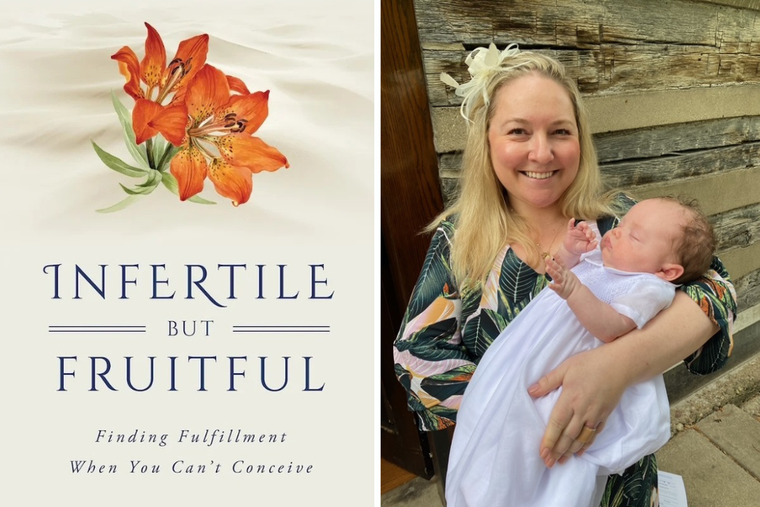
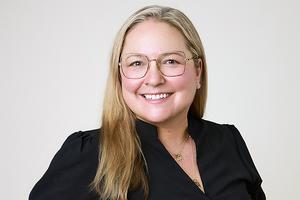
It was just a few years ago that Leigh Snead of The Catholic Association took to the pages of the Register to write her own story about her struggle with infertility and becoming an adoptive mother. That subtle nudge to write was the seed of a new book coming this winter by Sophia Institute Press.
“I had written some personal essays for the Register that seemed to really resonate with a lot of people who were or had been once living in a season of infertility,” Snead told the Register. “With the encouragement of a mentor and the support of my family, I decided I was ready to dig deep and mine the treasure to be found in our 20 years of hoping and failing to become pregnant.”
Her original piece was written in November 2022, the first Thanksgiving after the Dobbs decision came down that toppled Roe v. Wade from the law of the land. And as so many states grappled with protecting life or moving to the extreme on abortion, Snead, as an adoptive mother, wanted to let women know that they were not alone, while reflecting on the brave love it takes for a woman to place her baby up for adoption — and to receive that gift. She wrote: “Being asked to be the mother of another woman’s child is the greatest gift I have ever received.”
Snead's piece went viral, and she was moved by the messages she received from other women experiencing the cross of infertility.
“I was surprised at the number of folks who reached out to me after reading my essay, especially those I knew but didn’t know they were struggling with infertility. And they all felt we weren’t talking about it enough,” the EWTN Radio host said.
But Snead, given her expertise, said the tide is turning.
“I think that’s changing. There are a number of very good ministries and podcasters and writers lending their talents, and often their personal experience, to building a robust interdisciplinary discussion that isn’t limited to Restorative Reproductive Medicine or adoption. I hope with my book I am adding something good to that discussion.”
The topic that was once taboo is now discussed openly, and in her new book, Infertile but Fruitful: Finding Fulfillment When You Can’t Conceive, she wants to reach other women who are spending sleepless nights searching and praying for for answers.
She knows firsthand how difficult it is when, culturally, the concept of family is always put within the context of children. Her book dispels this mistaken notion.
“I feel like we all need to be reminded that we become a family on our wedding day, whether or not children become a part of it. It’s so easy to feel ‘less than’ in every way when practically everyone you know gets pregnant without any trouble and, somehow, no matter what you do, you can’t seem to manage it.”
Although she herself chose to adopt, Snead stresses that it’s okay not to adopt. And she wants more women to know that.
“And while it’s simply not true that infertility makes you any less of a woman, we can forget that the absence of children doesn’t demote the status of our marriage either,” she explained. “In the same vein that infertility does not oblige you to adopt children, which is a very specific calling, you are called as a family to be fruitful, and there are so many ways to do that.”
Sharing her own experience, Snead hopes other women might learn from the lessons she has learned and continues to learn, as infertility is a long affliction for many.
“I hope they see that, as devastating as it feels, there is a way through. And the way through is to pick up your cross and carry it, to let your own suffering draw you closer to Christ and to open your heart to the fruits he’s preparing you to bear. That’s the big lesson, and I’m still learning it myself.”
The book offers short lessons at the end of each chapter, “much more manageable lessons that I hope will help readers along the way,” Snead explained, adding, “things like seeking good medical care to finding your tribe of friends who can support and pray for you.”
As marriage takes two, Snead’s book also covers how infertility affects men and offers insights into dealing with grief. Two women share their own stories, offering advice about this very real issue. As Snead told the Register: “We so often talk about infertility as a woman’s issue. While it’s true that for most couples experiencing infertility, it is the woman who has most of the doctors’ appointments, medications, etc., and it is she who is not pregnant, as Catholics especially, we know that something as intimate as infertility affects both spouses.”
The pain experienced by husbands is raw and real, and wives should be mindful of that heartache, too.
“A mistake women, myself included, [make] is to forget to check in with our husbands, or possibly even fail to recognize how much they are hurting, too. By the grace of God, the women in my book were able to open their hearts and clear the paths of communication, ultimately making their marriages stronger. Yes, your husband was never going to be pregnant in any case — he’s not ‘missing out’ the way you are — but the things they do grieve will break your heart, too.”
And from her own experience, she knows the weight men carry.
“For example, my own husband felt disappointment that he would miss the chance to pamper and care for me while I was pregnant with our baby,” she observed. “This was a part of marriage he had been looking forward to. And just like my dreams of cradling a baby bump weren’t coming true, neither were his of leveling up his role as husband, protector and father.”
With so many families struggling with infertility, the insights of St. John Paul II from 30 years ago come to mind: A woman is called to be a mother — sometimes in body, always in soul.
WATCH: The author also appeared on EWTN Pro-Life Weekly. Watch the segment below:

Alyssa Murphy Alyssa Murphy is the Register's Managing Editor of Digital Assets. Starting her career on the airwaves in San Francisco, she has worked in all facets of media. Alyssa enjoys writing and covering stories that inspire and uplift. Register readers may be familiar with her voice from EWTN radio's Morning Glory. Alyssa currently lives in New Jersey just outside Manhattan with her husband Andrew and young daughter, Annabelle.