US Bishops’ New Immigration Chairman Responds to Critiques From Catholics
Bishop Brendan Cahill engaged with criticisms and says he hopes Catholics will ‘move beyond talking past one another’ on the contentious issue.
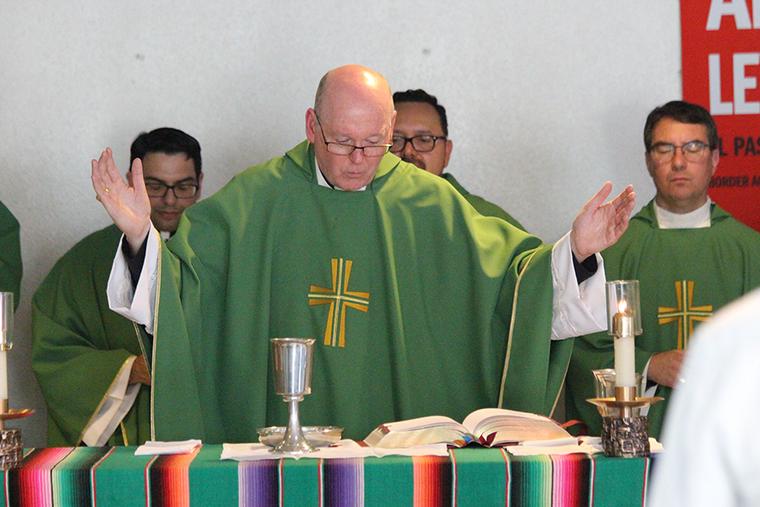
Immigration is a divisive issue, including within the Catholic Church.
Despite the U.S. bishops’ concerted opposition to elements of President Donald Trump’s immigration-enforcement campaign, especially mass deportation, the president’s approach has the support of a majority of American Catholics — including the most sacramentally active.
According to a just-released EWTN News/RealClear Opinion Research poll, 54% of Catholic voters say they support “the detention and deportation of unauthorized immigrants on a broad scale.” The level of support is even higher — 58% — among Catholics who attend Mass at least weekly.
The Trump administration has deported around 605,000 people since January. The White House has said the focused campaign is a necessary response to more than 10 million undocumented immigrants entering the country during the Biden presidency, but the administration has also deported individuals who have been in the country for more than a decade.
Some bishops contend that political ideology is responsible for the disconnect they’re experiencing with some of their flock on the issue. But other Catholics say that a failure of Church leaders to openly engage the faithful on the issue is part of the problem.
Into the mix steps Bishop Brendan Cahill, the bishop of the Diocese of Victoria in southeast Texas and the new chairman of the U.S. Conference of Catholic Bishops’ (USCCB) immigration committee. Elected to the USCCB role in November 2024, Bishop Cahill began his three-year term last month, succeeding El Paso’s Bishop Mark Seitz.
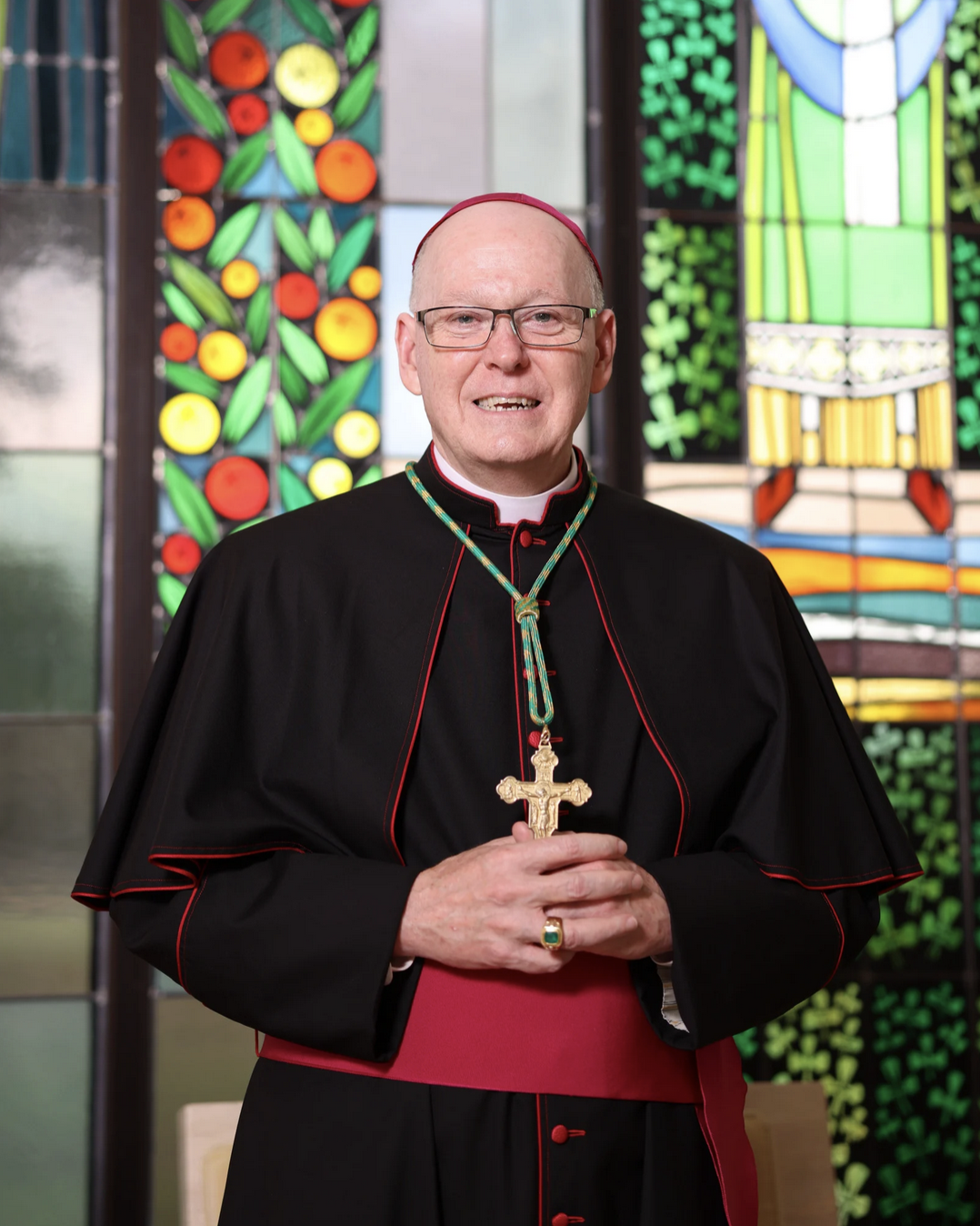
And he told the Register that improving intra-Catholic conversation on the immigration issue is one of his top goals.
“Among Catholics, I hope we will have moved beyond talking past one another and toward a deeper unity rooted in the Gospel: unity that allows for reasonable disagreement about policy without losing sight of the dignity of immigrants, the wholistic needs of communities, and the common good,” said Bishop Cahill when describing what he hopes to accomplish in the next three years.
In an effort to help bridge the gap between the bishops and the faithful, the Register shared with Bishop Cahill some of the more common critiques of the bishops’ messaging on immigration, including on topics like the morality of deportation and the relevance of the country’s common good in determining immigration policies.
Bishop Cahill, a native of Houston, also reflected upon his experience as a priest and bishop near the southern border and shared his hopes for engaging the Trump administration on immigration enforcement.
Bishop Cahill responded to the Register’s questions via email. His responses are republished in their entirety below, with slight edits for clarity and style.
You are a bishop near the border. How does your own experience as the shepherd of a place like the Diocese of Victoria, Texas, inform your approach to immigration on a national level?
I grew up in Houston, Texas, and was a priest in the Archdiocese of Galveston-Houston for 25 years before coming to Victoria as the bishop of the diocese 10 years ago. From my very first week as a priest, I’ve celebrated Mass in Spanish and English, and I’ve served with many different cultures: African American, Vietnamese, Korean. Texas has people from all over the world and many priests and religious from many countries. It’s very clear to me that we are one Body in Christ throughout the world, and I see my brothers and sisters in the Catholic faith as united to me in the Holy Spirit. The question of immigration follows the reality of the dignity of the human person, who receives value from God Who created us. Whatever our thoughts and beliefs about the issue of immigration, we are speaking about children of God, and I hope my language would reflect respect for human life and trying to build a culture of life.
At the November meeting, Bishop Mark Seitz shared with us that there is no ongoing dialogue with the Trump administration over immigration enforcement issues — this despite several high-ranking Catholics in the administration. Is this kind of dialogue important to the bishops, and, if so, how do you think it can be established?
Dialogue with any administration, regardless of party, is always important to the bishops. The Church does not align herself with political ideologies; rather, she seeks to bring the light of the Gospel and the moral teachings of our faith into every public conversation that touches on human life and dignity. Immigration is one of those areas where the stakes are profoundly human.
When we hear that there is no ongoing dialogue at the federal level, that is naturally a concern, because durable solutions to our broken immigration system will only come through sustained, respectful engagement. The bishops are not policymakers, but we are moral teachers and pastors, and the Church calls all of us to be engaged citizens.
Fortunately, we have begun undertaking dialogue in various forms with this administration, though it might not always be readily apparent to onlookers in the media or the general public. There are challenges and points of disagreement, as is inevitable with any government comprised of different perspectives and the Church, but persistence and goodwill on all sides help us to work through those differences. And of course, there are also many shared concerns, including the potential for vulnerable people to be exploited along migratory routes. Even where the proposed response to certain issues may differ, there is always common ground to be found.
Ultimately, we seek to foster a shared recognition that immigration is not merely a political problem to be managed, but a human reality calling for just and morally responsive solutions worthy of our great nation. We will remain committed to seeking that dialogue in a respectful way, while staying faithful to the Gospel of Our Lord.
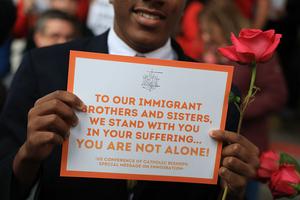
At last month’s meeting in Baltimore, the bishops issued a rare, nearly unanimous “special message” addressing immigration. The message made an impact in the national news cycle and received praise from Pope Leo XIV.
However, the message has been less well-received by some U.S. Catholics, pointing to a broader disconnect between the bishops and some of their flock on this issue. What do you make of this disconnect? How important is it to address it, and how can that be done successfully?
I guess I would need to speak personally to the person who feels disconnected from the statement. There could be a million different reasons that a million different people would feel we don’t connect with them, and I believe we can continue to take time to listen to people. The only way that I feel that I can address this is with the people in my community, and I have had conversations with people who don’t agree with my belief on this issue. Nevertheless, my hope is that we left those meetings with greater respect and a better understanding of each other. At the least, I hope we can stay away from making broad generalizations about groups of people and acknowledge that every child has God-given rights and dignity from conception to natural death.
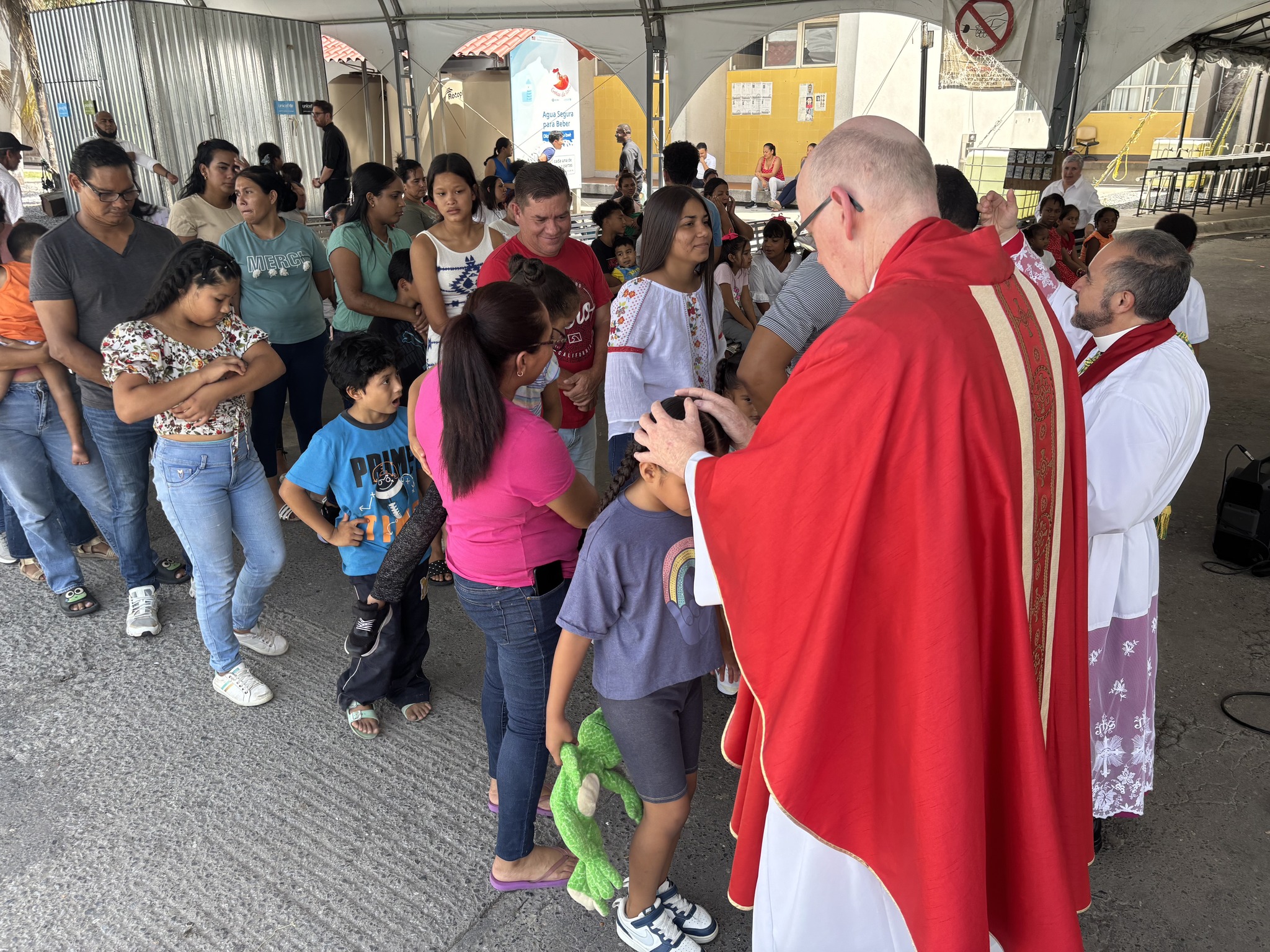
Some bishops told the Register that resistance to their overall message on immigration comes from placing ideology over the Gospel. But some Catholics have pushed back, arguing that Church leaders not addressing good-faith questions and concerns from the faithful is also part of the problem. In an effort to bridge the gap, I’m hoping you can respond to some of the more frequent criticisms we see.
One is that the bishops give the impression that deportation is never a morally legitimate immigration-enforcement option. So can you clarify: Is it ever legitimate? Can it ever be done in a way that respects human dignity? If no, why not? And if so, what are the principles for prudently and justly determining when deportation is legitimate and when it’s not?
The Church does not teach that deportation is never morally legitimate. The Catechism affirms that nations have the right and duty to regulate immigration in the service of the common good. At the same time, that right is not absolute; it must always be exercised in a way that respects the inherent dignity of every human person, the sanctity of life, and the well-being of families (including mixed-status families with a combination of citizens and noncitizens).
So yes, deportation can be morally legitimate, especially when individuals pose a threat to public safety or when they’ve exhausted all legal options after appropriate due process. However, for deportation to be morally just, several principles must guide it:
- Respect for human dignity at every stage, including humane treatment in custody and during removal,
- Due process and proportionality, ensuring that enforcement is not arbitrary or excessive,
- Consideration of family unity, particularly when U.S.-citizen children or spouses are involved, [and]
- Special protection for the vulnerable, including asylum-seekers, victims of trafficking, and those fleeing violence.
What the bishops have consistently opposed is immigration enforcement that is sweeping, unnecessarily harsh, or disconnected from these moral principles. A system that relies primarily on mass or sweeping deportation as its solution fails to reflect the balance of justice and mercy that our faith demands and our nation’s history warrants.
Another criticism is that the bishops do not acknowledge the impact that historically unprecedented levels of undocumented immigration are having on members of American society, including the less privileged. As one commenter on a recent article said, “Where is the equal compassion and consideration for all the millions of legal citizens whose health care, social security benefits, schools, housing, personal safety, etc. have been vitally impacted by the sudden influx?” What is your response to this kind of critique? Should these kinds of considerations be factored into immigration policy?
Unregulated immigration can be a serious and understandable concern; its impact deserves to be understood better and addressed in good faith. The bishops do recognize that communities — especially poorer communities — can feel real strain on schools, housing, health care, and social services. These pressures are not imaginary, and people who feel them should not be dismissed or shamed for raising them.
At the same time, Catholic social teaching insists that we must never pit the poor against the poor. Immigrants are generally not the root cause of social and economic struggles in our country, and in many ways the labors of immigrants over the generations have helped this country to amass tremendous wealth. They are our brothers and sisters; that reality does not change based on someone’s immigration status or where they were born.
Domestic considerations and the needs of current residents should absolutely be factored into immigration policy. That is precisely why the bishops advocate for meaningful immigration reform — reform that promotes safe and orderly borders, creates reliable legal pathways for workers and family members, and provides an earned path to legal status for longtime residents who contribute in many ways to our country’s prosperity. Such reform benefits both immigrants and citizens. Compassion for immigrants and concern for struggling American families are not competing values; morally speaking, they are intrinsically linked.
Finally, some Catholics question why the bishops are responding so forcefully now, when they did not speak out during the Biden administration’s non-enforcement of immigration laws, which contributed to millions of people entering the country illegally. Others ask why the bishops are communicating more strongly on immigration — issuing a special message, recording video versions of the bishops delivering it — than they have on other issues in recent years, such as abortion, IVF and transgender ideology. How do you respond to those critiques?
The bishops have spoken consistently on immigration across multiple administrations, Republican and Democratic alike. We raised serious concerns during the Biden administration about border management, the asylum system, and the humanitarian consequences of certain policies, including when it came to, for example, the safety of unaccompanied noncitizen children. It may be that some of those statements received less media attention, but our advocacy has never wavered simply because a president of one party or another is in the White House.
As for why the bishops are speaking with particular urgency now: The circumstances on the ground, especially regarding enforcement practices and their human consequences, have shifted in significant ways. When policies change rapidly and have immediate human impact, we have a pastoral obligation to respond clearly and promptly to what our people are sharing with us.
This does not mean the Church has been silent on other issues, whether they are points of alignment or disagreement. Different issues, however, call for different forms of engagement at different moments. Immigration is uniquely visible right now because of policy changes and enforcement actions that directly affect families in real time, and these impacts are certainly not isolated to immigrants who entered the United States unlawfully or don’t have a lawful immigration status. Even longtime U.S. citizens have expressed concerns to us, their pastors, and reported negative experiences. No matter what, though, speaking strongly about one issue does not diminish the Church’s commitment to the others. The Church’s concerns span the spectrum of experiences and hardships lived out by the human persons she accompanies, just as Our Lord embodied in his own ministry.
Your term as chairman of the migration committee ends in three years. Where would you like to see the conversation around immigration — both among Catholics and in U.S. politics — be at when you finish your term?
By the end of my term, my hope is that the conversation among Catholics and all people of goodwill be marked by less polarization and more openness to listening to one another in a spirit of charity. As Pope Francis so often reminded us, and as our Holy Father, Pope Leo XIV, has reiterated, learning to listen to one another is essential.
Among Catholics, I hope we will have moved beyond talking past one another and toward a deeper unity rooted in the Gospel: unity that allows for reasonable disagreement about policy without losing sight of the dignity of immigrants, the wholistic needs of communities, and the common good.
In the political arena, my hope is for tangible progress toward meaningful, humane and bipartisan immigration reform, not just executive actions that change from one administration to the next, but stable legislative changes that gives clarity to families, employers, law enforcement and local communities.
Above all, I hope the national conversation will become more humanized. Behind every statistic is a person: a mother, a father, a child, a brother or sister. If, in three years, we are speaking about immigration with greater seriousness, greater charity and greater respect for one another’s dignity, I would consider that real progress.
- Keywords:
- immigration crisis
- usccb