Meet the Pathologist Performing Autopsies on the Great Saints
French physician Philippe Charlier, the ‘Hercule Poirot of forensic science,’ was able to reconstruct the face of Mary Magdalene and is currently researching the mysterious ‘odor of sanctity.’
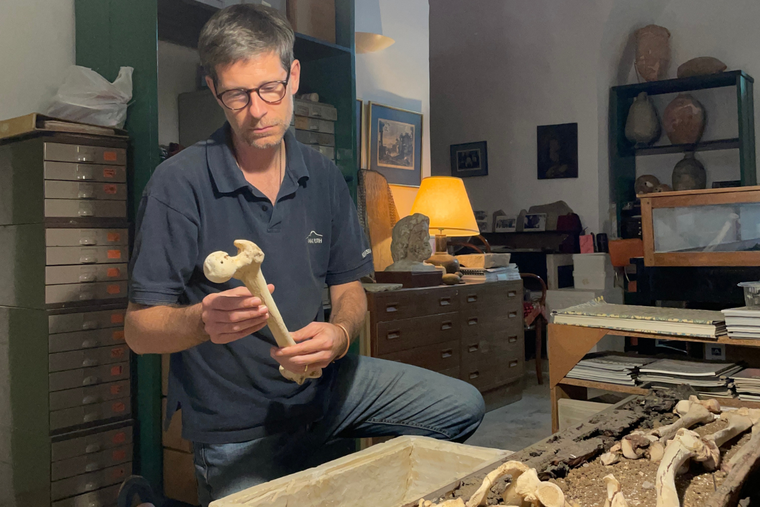
As he moves through museums, churches, shrines and display cases, forensic pathologist and archaeologist Philippe Charlier cannot help cataloguing the great figures of history before him: “He is my patient … she is too; he is too.” The image is striking and captures a career that is among the most unconventional in the West today.
Over the past two decades, Dr. Charlier has built a reputation internationally for applying the tools of modern forensic medicine to some of the most symbolically charged remains in Christian and European history — from King St. Louis and Mary Magdalene to Thérèse of Lisieux, Francis of Assisi, Joan of Arc, Richard the Lionheart, René Descartes, and even Adolf Hitler. He also served for five years as scientific director of the Quai Branly Museum in Paris.
His latest book, L’Histoire au scalpel: Autopsie des morts célèbres (“History Under the Scalpel: Autopsies of Famous People”), reads like a guided tour through a laboratory and a crypt, with the pace and tone of an investigation. A practicing Catholic, he works from within the tradition he studies, while maintaining a strictly forensic approach.
Forensics Applied to Saints, Kings and Legends
One of the most significant aspects of Charlier’s work is that it offers a concrete understanding of how some of the most revered figures in Christian history lived and died. In doing so, it often challenges long-held myths.
He showed, for instance, that St. Louis did not die of the plague during the Crusades, as has been repeated for centuries, but from a severe infection linked to advanced scurvy.
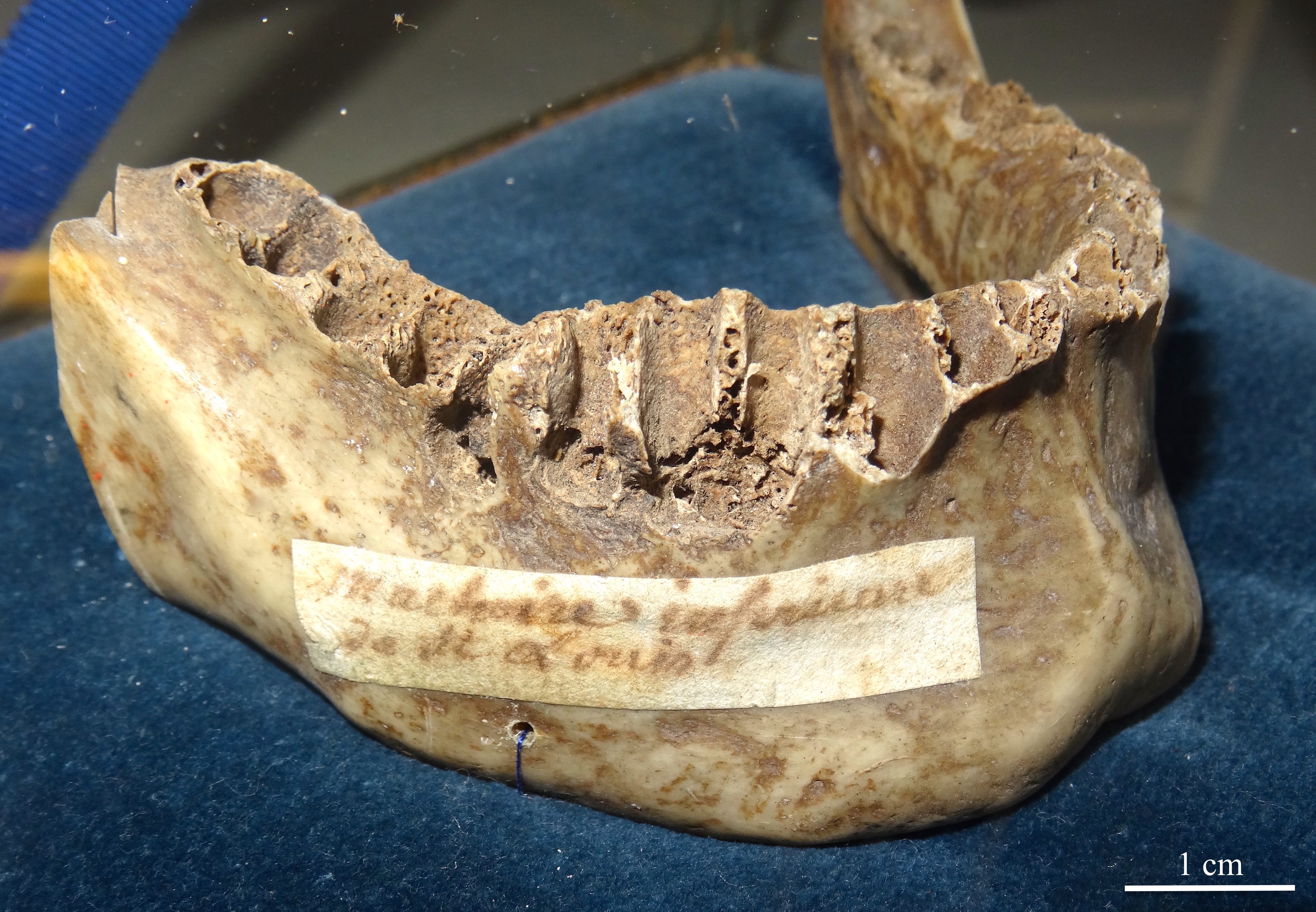
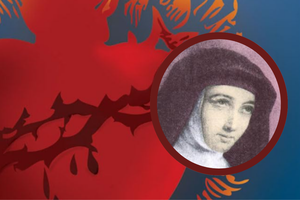
Similarly, his recent analysis of St. Thérèse of Lisieux’s hair suggested that she did not die solely from tuberculosis. Mercury, then used as a treatment, also played a significant role.
“The remains of a medieval king or a cloistered nun are approached with the same discipline as a modern forensic case,” he told the Register. “Except that what we’re asked to do isn’t by the justice system, but by historians.” Once the work is complete — seated around a table with the whole team — feels “a bit like Agatha Christie,” when the truth emerges at the end of the investigation: “That’s when you realize it was quite something to work on that person.”
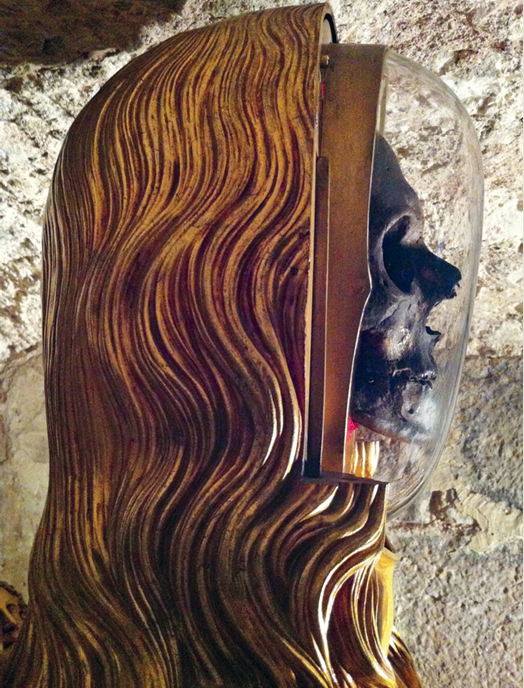
This “Hercule Poirot of forensic science” was also able to reconstruct the face of Mary Magdalene from the remains preserved in Provence, working from the skull, fragments of skin and a lock of hair, and to show that the elements form a coherent set, consistent with a single individual, a Mediterranean woman about 50 years old. The reconstruction does not in itself prove the tradition but significantly supports it.
At times, the results of investigations can be more unsettling, when long-accepted objects of devotion turn out to be based on historical deceptions. This is the case, for example, with the relics of Joan of Arc venerated in a museum in Chinon, which turned out to be fragments of Egyptian mummies.
Charlier also shed light on what may have made Descartes one of the greatest minds of all time: an asymmetry in his skull, in a region linked to abstraction and language, that he read as the plasticity of genius. The examination also put an end to a persistent rumor: Descartes was not poisoned in Stockholm — as was long suspected in connection with his proximity to the Protestant Queen Christina and the idea that he was trying to bring her to Catholicism — but died of pneumonia after a severe cold.
The Relics’ Comeback
Among the primary requesters of these investigations, the Church itself figures prominently. As Charlier noted, Church authorities are increasingly seeking scientific examinations: not to confirm a narrative, but to rigorously verify the authenticity of the objects they present for veneration.
“Contrary to what Calvin wrote,” Charlier stated, “there aren’t actually that many fake relics … at least as far as human remains are concerned.” Most of the time, the problem is less one of forgery than the test of time, relics being displaced, fragmented and reattributed over centuries.
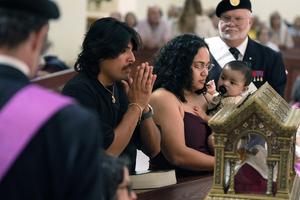
These requests come amid a resurgence of interest in relics throughout the Western world over the past 15 years, accelerated since COVID. For Charlier, this is an anthropological phenomenon, a reaction to the gradual loss of the sacred in de-Christianized societies.
“Human beings really struggle to have faith without something tangible,” he said, adding that even traditions like Protestantism, which have sought to distance themselves from any material intermediary, in practice create their own points of reference. “They still need, for example, Luther’s death mask to make faith concrete.”
Relics are therefore a response to the timeless need to see, approach, and touch. The role of science, in this context, is not to replace devotion, but rather to legitimize it.
Where the Sacred and the Scientific Meet
This duality runs through Charlier’s life and work. When he got married in the Church of Saint-Ours in Loches, in the Loire region, he did so before the tomb of Agnès Sorel, his first “patient” and the first royal “favorite” in French history, who is also remembered for her strong piety, and even listed her, half-jokingly, as a witness in the parish register.
This reflects his conviction that his work can bring the dead, especially historical figures, closer to the living — not as distant icons, but as human beings whose lives can be better understood.
Nowhere did that become clearer than in Assisi, Italy, last February. Working at night in the crypt beneath Giotto’s frescoes on the remains of St. Francis, he found himself before a figure who had long mattered to him personally. He recalls kneeling before the skeleton of the saint “who speaks to [him] deeply.” It was, for him, “almost like a pilgrimage … an epiphany,” he recalled of the moment he had dreamed of his whole life.
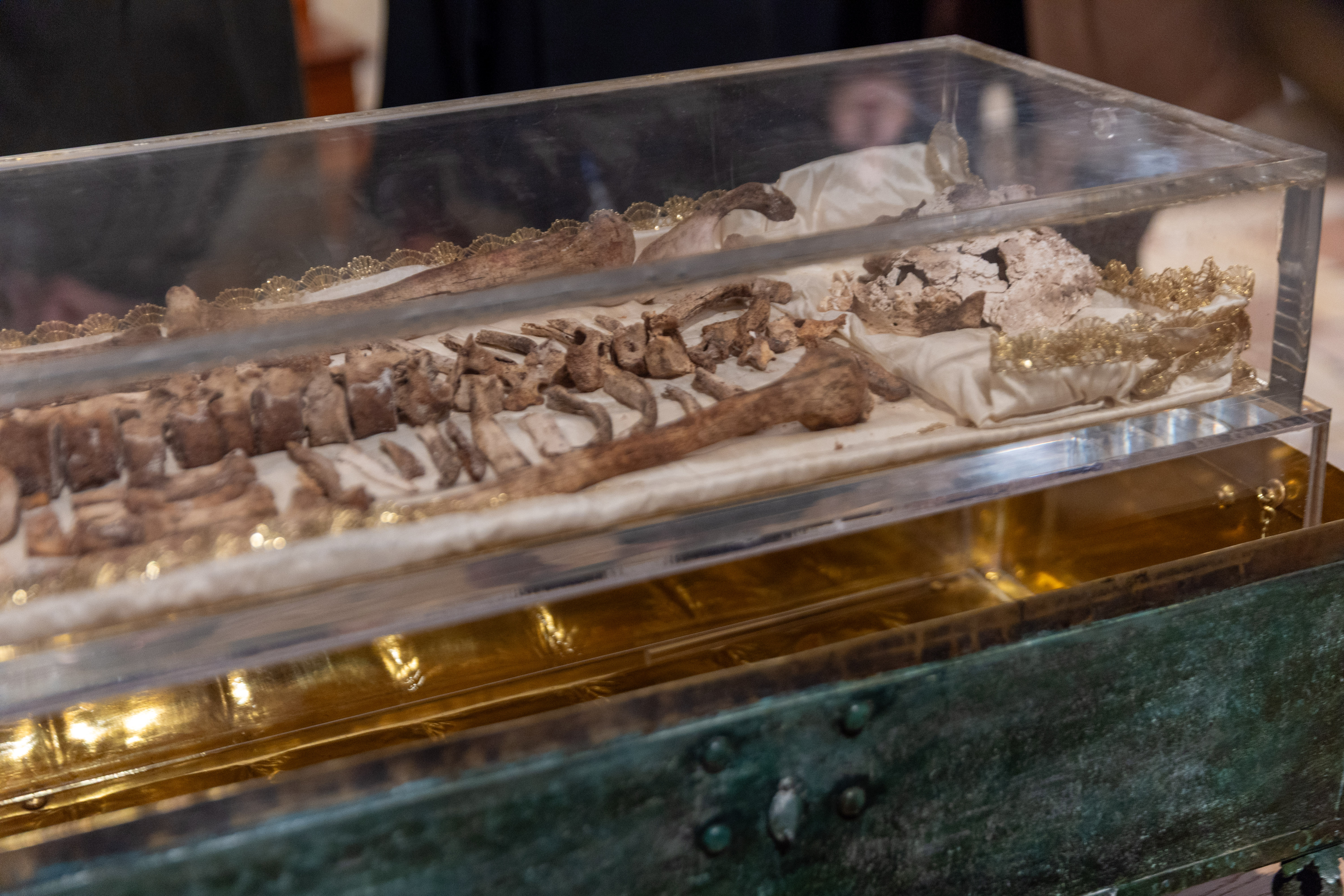
“I have two hemispheres,” he commented. “One that belongs to the believer, the Roman Catholic; and one that belongs to the scientist, the one that would never miss even the smallest lesion on the little metacarpal bone or the tiniest cavity on an isolated canine.”
This is also what leads him to push further into subjects that lie on the frontier between devotion and forensic science. One of them is the so-called odor of sanctity.
He had already addressed the subject in his study on Richard the Lionheart in 2013. In that specific case, the scents detected around the English king’s heart could be attributed to embalming substances deliberately used to create a pleasant, albeit artificial, odor.
Charlier is currently preparing a study aimed at determining what might compose this mysterious “scent of sanctity,” which has been found among the mortal remains of saints such as Teresa of Ávila, in collaboration with perfumers, oenologists (winemaking experts) and even chocolatiers.
This same desire to bring history to life also underpins his ambitious museum project in Saint-Cloud on the site of the last French royal palace still awaiting restoration. Set to open in late 2028, the 10,000-square-meter site, just outside Paris, overlooks the entire city from the west and is already seeking international partnerships to bring the project to fruition.
“It is the continuation of my childhood dream,” Charlier said. “I have always seen myself as a time traveler — and that is exactly what is happening. My goal now is to make that journey accessible to others.”