4 Ways to Combat the ‘Attention Apocalypse’ and Bring Our Kids Back to Reality
It’s much more than getting rid of screens, seasoned educator Alvaro de Vicente of The Heights School says.

An alarming new study released last month in Financial Times shows a rapid decline when it comes to "conscientiousness" among teens and young adults.
Jonathan Haidt, author of The Anxious Generation, made note of it on social media, saying it came as no surprise, given what we know of the detrimental impact of screens and technology on the minds of our youth.
The study reveals a complacency amongst teens and young adults when it comes to caring about community. John Burn-Murdoch, chief data reporter of Financial Times, wrote the piece that shows a steep decline in conscientiousness and other personality changes in young people. Conscientiousness — “being responsible, organized, hard-working and goal-oriented” — is in a downward spiral.
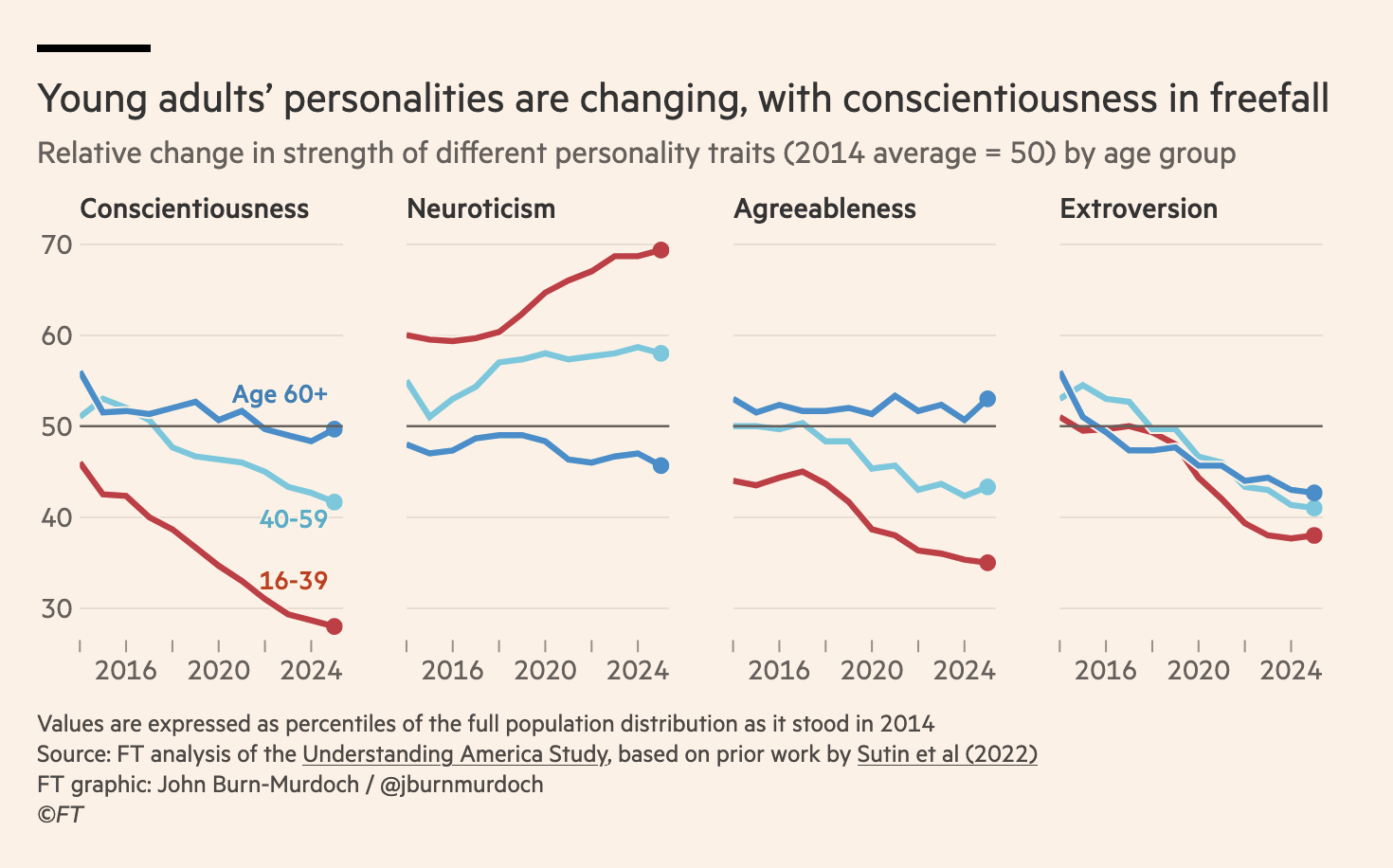
Young adults are feeling less talkative and more withdrawn. Making plans and executing them is difficult from this group. Lacking motivation and living in a state of constant distraction is also cited. The study also shows how, in turn, many youths have no desire to help and have trust issues, causing them to be more combative or argumentative.
Anyone familiar with Haidt’s takedown of screens will find his words of wisdom on this subject most timely. The author reacted on social media to the study, calling it “the attention apocalypse” — pointing out that these are “young people’s self-assessments, not anyone speaking on their behalf.”
Although the situation looks grim, Alvaro de Vicente, headmaster of The Heights School in Maryland, an all-boys prep school in the suburbs of D.C, has witnessed this decline and has been combating it with insights from his own seasoned education background.
Referencing the research, de Vicente told the Register, “Studies like this give universal credibility to what educators have long known through both common sense and experience: Screens, especially social media, act like brain-altering injections for children. We’ve seen the results for years — anxiety, isolation, depression and low self-esteem.”
“They’re getting anxious because their eyes are glued to the screens, and they are not living in reality,” de Vicente observed, “and therefore they are getting chemically affected in the brain.”
But that is only part of the problem. On the other hand is overprotection.
“The other one is overprotection on the part of the parents, that by overprotecting a boy, the boy is not allowed to deal with reality, and it could be physical overprotection: Don’t go alone. Don’t walk down to the park. No, don’t take the metro by yourself, right? It could be academic protection: No, you can’t get a C, right? You hear horror stories of parents who will complain as soon as their son gets a bad grade. Because how could he, right? As opposed to allowing the kid to deal with the fact he got a bad grade, and now he has to do something about it.”
It’s also emotional overprotection, de Vicente pointed out in a recent interview on EWTN Radio. “Overprotection emotionally, you know, boys are going to have to be allowed to really get in a scuffle once in a while and to deal with it and not have everything solved for them; and to learn how to make peace and to learn how to not escalate conflict. Also, to know how to deal with rejection. The boy who gets cut from a team, to deal with that and not fight it.”
So how does de Vicente wade against these two challenging ways that young people are not living in reality? The headmaster offers four ways to combat this digital world, and at his school, he is optimistic.
“I see today more boys who are more virtuous and really committed to living a virtuous life, and I’ve been in education for about 40 years. And together with that, I see more parents who are very committed to also having a very good environment for their children in which they can grow to be those virtuous people.”
The first lesson a young man needs to learn is self-mastery or self-discipline, said de Vicente, pointing to this Greek analogy:
“A rider on a horse: And the rider is the will, the horse is the passions. What happens to most boys is that the passions are strong: hunger, anger, desire for play, right? Passions are strong. The will, the rider, is weak because of youth. The mistake that we make is to try to fix it, to try to impose self-mastery by beating down the horse, right? What we do is we go and we try to cripple the horse and beat it down because it’s too powerful, and it’s taking the rider all over the place. The result of that is that you’re going to have a man who is going to have a weak will, is going to be a bad rider, and he’s going to have a pathetic horse. That man is not going to be able to go anywhere, right? It’s going to slump along in life.”
But de Vicente added: “The horse is good; the passions are good. The horse needs to be strong and fast and powerful. What we need to do is build up that rider, right? We have to build up the will. Ideally, you have a boy with very strong passions, but an even stronger will. That’s the hope, right?”
What are some examples of ways to build self-mastery?
“I talked to the students about the five steps towards a good day, right? No snooze; jump out of bed; make your bed. Do a five-to-10-minute workout. Do some push-ups, some sit-ups. Just get some blood flow, and let your muscles wake up to the day. Take a cold shower and then get breakfast, because you’re burning a lot of calories, and you need to fuel, to feed the tank. So morning routine, afternoon routine, when you get back. Back home from school, get changed, take a break, go to the backyard, run around a little bit, get down to study at a particular time, right? Take a break after 45 minutes; study again. You know, get ready for dinner. Night. Routine, right? Shut down the screens; 45 minutes, an hour before going to bed. You know, wind down. Do some reading. Talk to the family. You know, all these things, posture, you know, sit up, you know, and not just because good manners, but because, you know, you gotta build that discipline.
The second step in building a generous nature is learning empathy.
“Self-mastery means that you have the discipline,” de Vicente explained to the Register, “but the discipline is so that you can give what you have, and that’s the empathy: feeling the pain of another and wanting to do something about it.”
“When we think about empathy for a boy, I see it as an intellectual problem. So intellectuals see the need, but they have to feel the need, and that’s the heart, and then they have to act to help it, and that’s the will.”
What is the best way to help young men see the needs around them?
“Exposing them to great needs, right? Going to a soup kitchen, going to a retirement community, going to homeless areas, bring food — so exposed to great need, but also to point out needs, to point out normal needs. ‘Hey, your mom needs help. Why don’t you help her bring stuff from the car.’ ‘Hey, your little brother needs help.’ ... Frankly, I think that’s on us to demonstrate it. I think we have to demonstrate how we feel other people’s pains. ‘Hey, someone is sick; let’s bake some cookies and bring them over.’ Also asking the boys to pray: ‘Why don’t you pray for them?’”
The third step is prudence regarding how to help, de Vicente explained.
“And that’s seeking the true good of another. And this is an interesting one for boys because I think it’s to help them see, okay, when you think about someone else, think about that person’s physical well-being, intellectual well-being, moral well-being and spiritual well-being. And you want to help each one of those four aspects. But if the physical is the lesser and the spiritual is the greater, do not sacrifice a greater for a lesser. That is, it’s good that you help that person work out every day so you get stronger. But don’t take away study time because he needs to develop his brain. It’s good that you’re helping your friend get a good grade, but don’t help him cheat, because his becoming dishonest is greater [to prevent]. Help your friend be very self-disciplined, but make sure he’s not doing it just for himself so that he’s so cool and strong and so forth, right?
And the last part of the equation deals with self-confidence, and that comes from putting these three steps into practice, the veteran educator explained.
Many families in the D.C. area speak so proudly about their own child’s experience as a student at The Heights, and it really does speak to the wholistic approach to education that Catholics offer, as de Vicente told the Register:
“One way to view education is as a journey from point A to point B — point A being where the person is when entering the school, and point B being where the education he receives aims to lead him. Catholic education provides the clearest path because it’s built on two indispensable truths that provide an unclouded vision of both the starting point and the destination of education: a right understanding of the human person (anthropology) and a clear vision of man’s ultimate purpose (theology). That clarity lets us teach not only the ‘how’ of life, but also the ‘who’ and the ‘why.’”
- Keywords:
- cellphones
- smartphones

Alyssa Murphy Alyssa Murphy is the Register's Managing Editor of Digital Assets. Starting her career on the airwaves in San Francisco, she has worked in all facets of media. Alyssa enjoys writing and covering stories that inspire and uplift. Register readers may be familiar with her voice from EWTN radio's Morning Glory. Alyssa currently lives in New Jersey just outside Manhattan with her husband Andrew and young daughter, Annabelle.