Why I Love the Rosary: Reflections for Mary’s Month of May
‘The Rosary of the Virgin Mary ... remains … a prayer of great significance, destined to bring forth a harvest of holiness,’ wrote Pope St. John Paul II in ‘Rosarium Virginis Mariae.’
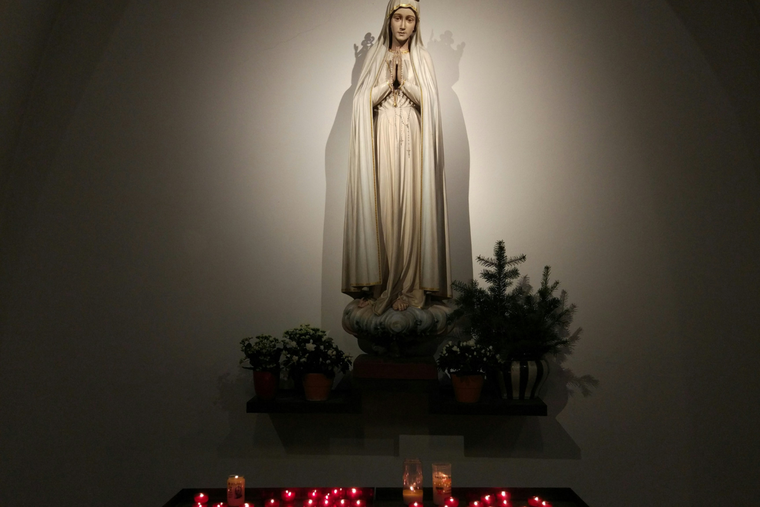
Regular Register contributors offer their feminine meditations on particular mysteries and decades.
Meditate on the Hearts of Jesus and Mary
Sister Mary Madeline Todd, OP
Each mystery of the Rosary is a priceless treasure, but I especially love to meditate on the first Joyful and Sorrowful Mysteries, whose interrelated calls to total surrender to God’s loving will illustrate the inseparable unity of the Hearts of Jesus and Mary.
At the Annunciation, when Mary accepted God’s call to be the Mother of our Savior, she laid aside fear and trusted radically in God’s fidelity. When Gabriel revealed God’s plan, Mary could never have foreseen the joys and sorrows that were to come, but she trusted in the goodness of her loving Father. Mary, Mother of God and our Mother, shows us how to do whatever God tells us (see John 2:5) with a peace that only the Holy Spirit can give. She shows us the beauty of a life surrendered to God in every detail: “May it be done to me according to your word” (Luke 1:38).
Likewise, Jesus showed us in his Agony in the Garden perfect acceptance of the Father’s will, even amidst the most profound suffering. He endured the weight of every human rejection of God. Even though he begged to be spared the pain to come, he nevertheless chose the Father’s will in full freedom and perfect love for the Father and for us. His prayer — “My Father, if it is possible, let this cup pass from me; yet, not as I will, but as you will” (Matthew 26:39) —teaches us the transforming power of filial obedience.
Whether God’s will comes to us as a gentle call, an awe-inspiring grace, or a painful invitation to death to self, we can look to Jesus and Mary as models of every virtue. In union with them, we desire the divine grace to say “Yes” with the freedom that comes from knowing that God will never abandon his beloved children.
Annunciation’s Lessons for Daily Living
Susanna Spencer
When my children climbed into the car after school this past Solemnity of the Annunciation, they were not surprised to hear the Basque Christmas carol Gabriel’s Message playing on repeat. The melody that makes the heart ache and the line, “’To me be as it pleaseth God,’ she said,” strikes me to the core every single time. I pull up this song every Marian feast day and any day when I need to surrender to God’s will — for my life, my day, the moment before me. This mystery of the Rosary is the one I go to most often, as it is Mary’s “Yes” to every single other mystery, the Joyful, Luminous, Sorrowful and Glorious. At every moment from when she became the Mother of God, her heart has repeated her first fiat, the one that accepted everything that would come after. Caryll Houselander in The Reed of God, writes that at the Annunciation “Our Lady said yes for the human race” and “each one of us must echo that yes for our own lives.” When I meditate on the Annunciation while praying the Rosary, I try to surrender myself to God’s will. I ask for the grace to live in the moment, to “choose all” with joy, like St. Thérèse of Lisieux, the joyful and the sorrowful. And when I pray the Rosary for others, I pray for them to have the grace to accept God’s will, to accept Christ into their very being. Houselander writes, “The surrender that is asked of us includes complete and absolute trust; it must be like Our Lady’s surrender, without condition and without reservation.” Learning to surrender in each moment and to trust God when plans inevitably change is my daily challenge — and one that Our Lady helps me with every day.
The Light of the Institution of the Eucharist
Kathy Schiffer
I remember when Pope John Paul II introduced the Luminous Mysteries of the Rosary. It was October 2002, and I was working at a Catholic nonprofit in Ann Arbor, Michigan. When I walked in and told my co-workers that I’d just learned that there were five new mysteries, everyone laughed! The Rosary had always, after all, included 15 mysteries, and that could never change — right?
But the change was real. Pope John Paul II, at the start of the Year of the Rosary, wanted to encourage Catholics to meditate on the public ministry of Jesus. The Rosary, while a Christological prayer, focused in its traditional 15 mysteries on Jesus’ Mother Mary. The five new mysteries of light, Pope John Paul explained in his apostolic letter Rosarium Virginis Mariae, helped the Rosary to “become more fully a compendium of the Gospel,” to “give it fresh life … as a true doorway into the depths of the Heart of Christ, ocean of joy and of light, of suffering and of glory.”
Indeed, the Luminous Mysteries, which are prayed on Thursdays, help me to meditate on the major events of Christ’s life here on earth. The Fifth Luminous Mystery, the Institution of the Eucharist, is a particular favorite because it describes in detail Christ’s gift of himself at the Last Supper. “Yes, yes!” I say in my heart as we meditate on Jesus’ baptism in the Jordan, his first public miracle at the wedding feast of Cana, his transfiguration ... but then, at the Last Supper, he offers the greatest of all gifts to us: the gift of himself, freely given in the sacrament of the Holy Eucharist.
Throughout his life, most notably with his miracles, Jesus helped me to understand who he is, truly God and truly man. But in the Eucharist, given at the Last Supper, he promised to stay here with us, close to us, so that we can remain close to him, secure in his loving arms.
Thank you, dearest Mary, for helping me to know your holy Son. And thank you, Jesus, for coming into my life, helping me to understand who you are and how I can better love you, my Lord and my God.
A Call to Love Amid Sorrow
Patti Armstrong
The Sorrow Mysteries are my favorite because they reveal the extent of God’s loves for us, which stirs my own heart to love God with my whole heart, my whole soul, and my whole mind. They also lead me to love the Blessed Mother more deeply as I consider that this fulfills the prophecy of Simeon at the Presentation: that her heart would be pierced by a sword.
In the first mystery, the Agony in the Garden, Jesus experiences immense spiritual agony knowing what he is about to suffer. He prayed to the Father to let the “cup” of suffering pass, yet ultimately said, “Not my will, but yours be done.” This agony is believed to have included the emotional and spiritual impact of seeing all the sins of mankind, past, present and future, which includes my own sins.
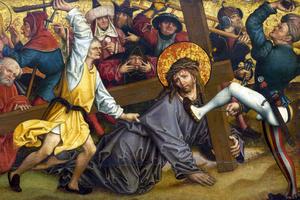
And then Jesus bears the physical suffering of the scourging and crowning, tearing his flesh apart and forcing sharp thorns into his head. During the carrying of the cross after all this and then hanging on it for three hours, I also meditate on the encounter with his Sorrowful Mother —such unspeakable pain and such unimaginable love between them.
I love the other mysteries too — so full of light and joy and glorious news. The Sorrowful Mysteries, however, confront me with the price Jesus paid for our sins and the suffering of our Blessed Mother who witnessed it, thus helping me to love them more.
- Keywords:
- rosary & art


Patti Maguire Armstrong Patti (Maguire) Armstrong is an award-winning journalist and was managing editor and co-author of the bestselling Amazing Grace Series. Her latest books are the humorous and inspirational second-edition Dear God, I Don't Get It, Dear God, You Can't Be Serious!, What Would Monica Do?, Holy Hacks and Michelle Duppong: Hope in the Depths of Suffering. Patti worked in social work and public administration before staying home as a freelance writer while she and Mark raised their 10 children in North Dakota. Follow her on Twitter at @PattiArmstrong and read her blog at PattiMaguireArmstrong.com.