The Heart of Pilgrimage: A Prayerful Journey
Making pilgrimages following the basic conditions and guidelines will make them spiritually successful.
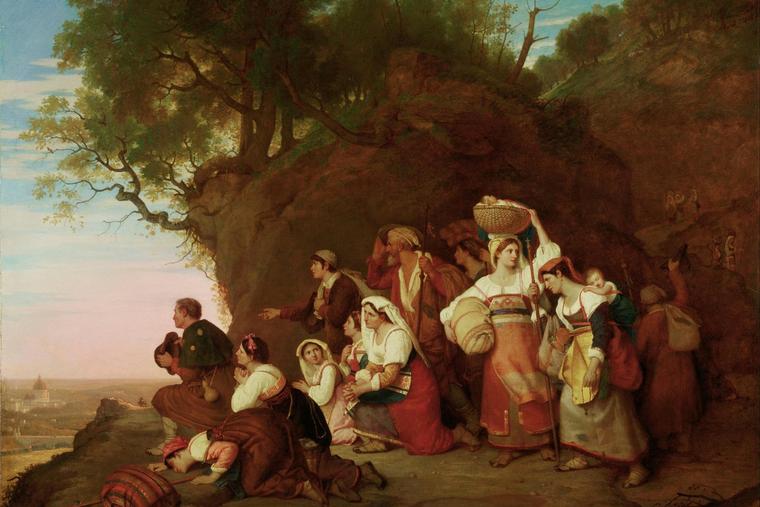
Pilgrimages have been a spiritual mainstay of the Church since the earliest centuries. St. Helena made what is considered the first major pilgrimage in 326 — to the Holy Land. St. Jerome described pilgrims going there in the late fourth century.
All pilgrimages, from short and simple, to local and domestic, share basic hallmarks. Making these pilgrimages — whether alone or with family, friends or a small group, whether for an hour, a day or overnight — following a pilgrimage’s basic conditions and guidelines will make them spiritually successful.
Since pilgrimages must have a purpose, what characterizes a pilgrimage?
Prayer is the first hallmark. A “pilgrimage is a journey of prayer,” explains the Holy See’s Directory on Popular Piety and the Liturgy.
Michael O’Neill, known as the “Miracle Hunter” (and host of the popular namesake series on EWTN) and producer of EWTN’s Hidden Gems: Catholic Shrines Across America, shares a basic definition. “A simple pilgrimage is a short, personal journey to a local or nearby shrine or sacred place made with the intention of prayer and drawing closer to God.”
A pilgrimage must have a purpose. Msgr. Charles Pope, a dean and pastor in the Archdiocese of Washington, D.C., and Register contributor, explains the foundation.
“A pilgrimage of any size should be distinguishable from simply visiting a place as a tourist.” The destination, he adds, “holds religious significance, which is the focus of the trip. Furthermore, it involves prayers, not just sightseeing.”
“A pilgrimage is different than a field trip or a vacation destination,” agrees Julia Attaway, executive director of the Mother Cabrini National Shrine in New York City.
“It is a journey undertaken with the intention of growing closer to God. One key question to ask is: Why am I making this pilgrimage?” For example, “It can be to grow in faith, to ask for a specific grace or intention, to seek clarity from the Lord on the direction of our lives.”
Attaway points out, “Distance is perhaps not as important as intention. It is simple enough to incorporate a pilgrimage into any trip you make, whether on business or vacation. Simply set aside an afternoon or a day to visit a nearby shrine. If you can, walk part of your journey, perhaps praying a Rosary as you go.”
Joan Watson, author of Making a Pilgrimage: A Companion for Catholics (Emmaus Road Publishing), explains that a “pilgrimage is less about the destination and more about the disposition,” too, telling the Register: “When we think of pilgrimages, we tend to think of long, dramatic, international trips to places like the Holy Land. But a pilgrimage does not have to be international, it simply must be intentional. There are national and local shrines all over the United States. Even your local parish can be a place of pilgrimage, when you set aside time and make the intention to seek the Lord.”
“A pilgrimage is simply a journey to seek the face of God,” she emphasized. “They are a tangible, outward sign of an inward desire of conversion and growth in holiness.”
It is not a pilgrimage when a journey lacks a spiritual purpose: prayer, reflection or intention to grow closer to God, points out O’Neill. Visiting a sacred place isn’t a true pilgrimage without a meaningful act of faith.
“A simple one- to two-day pilgrimage begins with a clear spiritual purpose (such as thanksgiving, repentance, seeking a miraculous healing or guidance), followed by the journey itself offered as a small sacrifice,” he says.
A pilgrimage has to include worship. “A simple pilgrimage is, at its heart, a journey made with intention toward God,” according to Father of Mercy Anthony Stephens, rector of the National Shrine of Our Lady of Champion, defining a simple pilgrimage. “It is about the movement of the heart. When someone sets out, even for a short distance, with prayer, sacrifice, and a desire to grow closer to the Lord, that can be a true pilgrimage.”
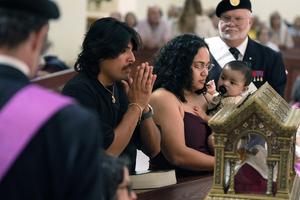
The ‘movement of the heart’ can be shared. “Particularly special is seeing families visit the shrine on pilgrimage together,” emphasizes Father Stephens. As an example, he sees a pilgrimage to the Champion shrine “gives parents a chance to live out Our Lady’s message to Adele: Teach the children what they need to know for salvation. Seeing parents teach their children to make the Sign of the Cross after dipping their fingers in the holy-water font or how to genuflect before the Blessed Sacrament is a heartwarming sight.”
“When families make a pilgrimage such as this, parents are taking up that God-given right and responsibility as the chief educators of their children,” he added.
Families have the opportunity for praying together, with “teaching moments, helping family members, especially children, grow in faith together,” O’Neill says.
Top everything off with giving thanks to God for the gift of the pilgrimage and asking the Lord for his help in living out the Christian vocation more generously in daily life and in their homes.
A pilgrimage is ultimately about grace. “A pilgrimage does not need to be complicated,” says Father Stephens. “Even a single day set aside with intention, prayer, and a desire for encountering the Lord can become a true pilgrimage. When we open ourselves up to God’s grace on a pilgrimage, He may surprise us in ways with graces (and challenges) that we did not expect.”
- Keywords:
- pilgrimages
- catholic pilgrims
- catholic living