The Cross Shows the Depth of Christ’s Love
Love conquers hate, and light dispels darkness.
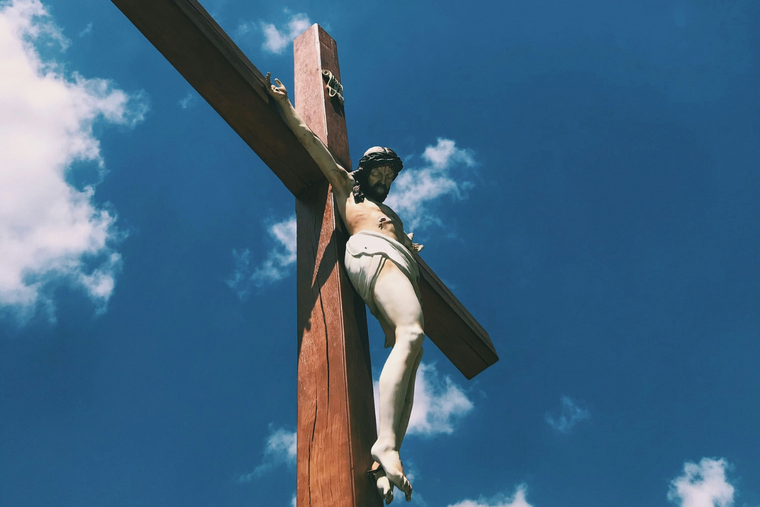
Sunday, Sept. 14, is the Feast of the Exaltation of the Holy Cross. Mass readings: Numbers 21:4b-9; Psalm 78:1bc-2, 34-35, 36-37, 38; Philippians 2:6-11; John 3:13-17.
Reflect on the rich teaching on the cross.
In the first reading, the people grumbled against God and Moses for the “wretched” manna they had to consume (Numbers 21:5). God grew angry and sent venomous snakes among them, which caused many to die (21:6). The people then repented and, in order to bring healing to them, God commanded a strange and remarkable thing: “Make a snake and put it up on a pole; anyone who is bitten can look at it and live” (21:8). Why does God do this?
It is as if God were saying to Moses, “Let them look into the depth of their sin and face their choice and the fears it has set loose. Let them look upon a serpent. Having looked, let them repent and be healed; let the fear of what the serpent can do depart.”
Scripture says: “And when Moses made it of bronze and showed it to the people, those who looked at it became well” (21:9).
Jesus takes up the theme in the Gospel and fulfills it when he says, “And just as Moses lifted up the serpent in the desert, so must the Son of Man be lifted up, so that everyone who believes in him may have eternal life” (John 3:14). It is almost as if to say, “Let the people see the outstretched arms of God’s mercy and find peace.” Those who believe in Jesus and look to him are saved from their sins and snatched from the hands of the devil.
At the heart of the second reading is the declaration that Christ humbled himself and became obedient unto death — death on the cross. But far from ending his work, it exalted him and brought him victory. Jesus accepted a death reserved for the worst of criminals and sinners though he himself was sinless and divine. It is the great paradox of the cross that humility conquers pride, that God’s “weakness” conquers human power and aggression, that love conquers hate, and that light dispels the darkness.
Why this undeserved gift? In a word, love. Nothing is more provocative; nothing is more paradoxical; nothing is greater proof of God’s love for us and of his desire to do whatever it takes to procure our “Yes” to his truth, his way and his love.