The Drama of Marriage: St. John Paul II’s Famous Play Takes Center Stage in Rome
To mark the 106th anniversary of Karol Wojtyła’s birth, students at the Angelicum staged ‘The Jeweler’s Shop,’ celebrating his vision of human love.
At a time of mounting challenges to the Catholic understanding of human love and sexuality, Pope St. John Paul II’s play The Jeweler’s Shop offers a dramatic and literary defense of the sacrament of marriage.
Written in 1960 by then-Karol Wojtyła, the play explores the drama of love, from the joyful hopes of its beginning and the painful reality of human weakness to its ultimate redemption through sacramental grace.
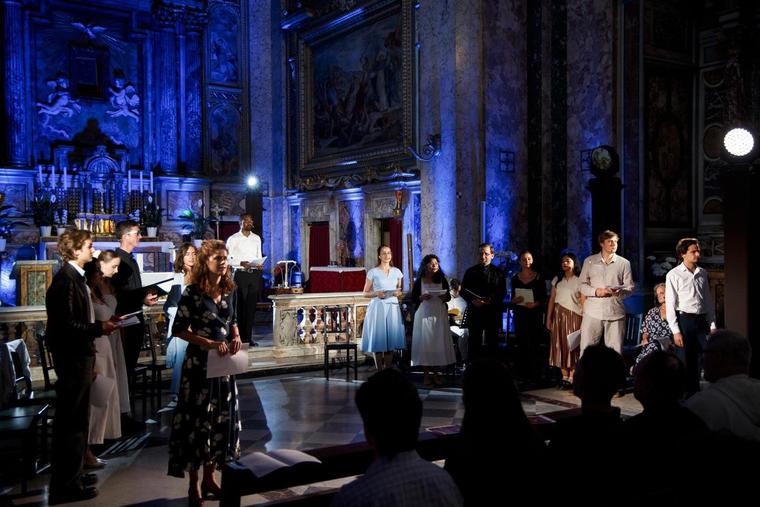
To honor this legacy, the Pontifical University of St. Thomas Aquinas in Rome (known as the Angelicum) staged a performance of the play on May 18 to mark the 106th anniversary of John Paul II’s birth.
Directed by Jarosław Kilian and starring the students of the St. John Paul II Institute of Culture, the performance concluded a three-week workshop that brought to life the Rhapsodic Theater tradition John Paul himself founded at the Angelicum, the university where he studied from 1946 to 1948.
“I think the understanding of marriage is undergoing a crisis,” said Dominican Father Cezary Binkiewicz in an interview with the Register. “Today, for young people, it is very hard to distinguish between emotions and love.”
Father Binkiewicz, director of the St. John Paul II Institute of Culture, reflected on the importance of the performance and play for young people, citing a cultural crisis in the understanding of marriage. He stressed the need to return to the teachings of the Polish pontiff, who was a staunch defender of Church teaching on matrimony.
“We have to try to find what is important in our time from the teachings of John Paul II through contemporary adaptations [that address] problems in societies, the economy and social teaching in dogmatic teaching because these are the most important questions in the Church today among young people and all people,” he said.
In The Jeweler’s Shop, three couples reflect on relationship struggles, including death, indifference and past mistakes.
Father Binkiewicz observed that these issues mirror those young couples face today and recounted his experience working with the Polish community in Dublin, offering pastoral support and marriage preparation.
“The most important question of young people — between 25 and 30 — asked us was this: Is it possible for people to survive all these troubles and problems in one human life?” said Father Binkiewicz. “It is not easy. But how do we overcome these problems? Real love is the only solution to such problems. But how does one recognize this kind of love? It is not easy in contemporary times.”
John Paul’s Rhapsodic Theatre
The play itself was an exhibition of rhapsodic theatre, a minimalist performance style founded by Wojtyła during the Nazi occupation of Poland. Initially established as an expression of resistance against a totalitarian regime, it became an emblem of Wojtyła’s philosophical approach to the mysteries of faith.
Kilian, who directed the performance, described the process of enacting this style with his students as a lesson in the importance of the spoken word rather than focusing on externals such as props and lighting.
“I found it fascinating that a philosopher and theologian uses the language of poetry and theater to approach the mystery,” Kilian told the Register. “I do think that we managed, during our work, to approach something very specific and peculiar about this text which should be shared with the audience.”
“We tried to, I would say, reenact Rhapsodic Theatre and to find back the power of the word, which is at the beginning of everything and at the beginning of the future, he added. “I am very grateful to my students for being so enthusiastic and so deeply involved in the research we did together.”
In the play, each of the three couples encounters a Jeweler, an allegorical figure representing God and the indissolubility of marriage. In one scene, when Anna, Stefan’s wife, tries to sell her wedding ring to the Jeweler, he refuses to buy it because the ring is weightless, symbolizing the permanence of the marriage vow. Kilian reflected on such scenes as indicative of Wojtyła’s genius and of the transcendental nature of love he sought to communicate through this character.
“I had the chance to work with very young people. Two or three of them are getting married this year — or have already — and they were so interested in everything [Wojtyła] mentioned,” Kilian said.
“He is so empathetic,” Kilian added. “He wants to be honest that love is not an easy game. It is not something that passes by, but something really deep and sometimes difficult, and you have to fight for it. And there is always something more between two people.”
“There is always a Jeweler. There is always Him who waits for us to find [love], and this is the crucial issue and message hidden in this text,” Kilian said.
Wojtyła’s Vision of Love
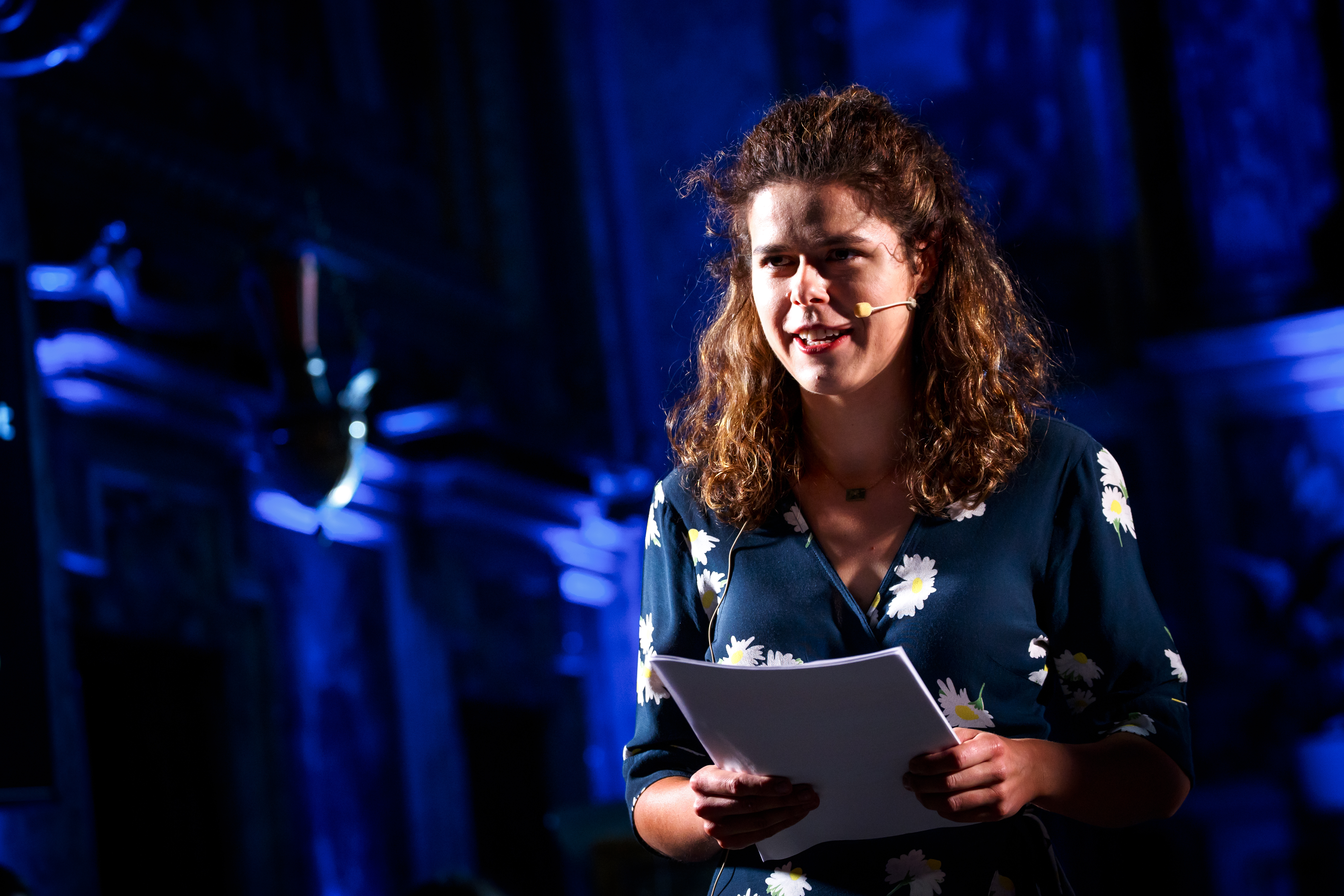
Antonina Kot, a Polish student of the Angelicum’s St. John Paul II Institute of Culture, acted in the play along with 15 other students.
She described her experience as a way to identify more closely with Wojtyła’s vision than before. Initially finding the play unrelatable, she later found Wojtyła’s play important for understanding love as neither idealistic nor romanticized.
“At first, I did not find it universal,” Kot told the Register. “But then ... people who were talking to me during these three intensive weeks were describing stories about their friends or themselves, and it is exactly what John Paul II was talking about. I found it to be really universal, without sweet endings or solutions.”
Kot also emphasized the importance of rooting one’s faith in God for marriage to work.
“[In marriage], there are no easy solutions or stories, and life does not look like a romantic comedy in most cases. First of all, we need to create our relationship with God, because it is impossible to do so without him. This story is based on the idea that we cannot build a life without God,” Kot said.
Bishop Jacek Grzybowski, auxiliary bishop of Warsaw-Praga, added that Wojtyła’s play is a challenge to young people to approach the sacrament of marriage as a profound moral responsibility.
“Karol Wojtyła’s text is very hard, but I think it is important for young people now,” Bishop Grzybowski told the Register. “The moral thinking of John Paul II is very important ... because he always shows the consequences of moral decisions, especially sexual, marital and relationship decisions. It involves serious responsibility. But in our time, we are not talking about this seriously.”
Despite the play’s challenging nature, Bishop Grzybowski praised the project as a first step toward reclaiming John Paul II’s heritage in a time of uncertainty and fear.
“I think it is very important for small communities, like universities, friendships and cultural groups. I wish we were reading Karol Wojtyła’s texts ... and discussing them in our own context,” Bishop Grzybowski said. “This text contains a lot of wisdom, but we need to adapt it to our generation. It is not easy language or easy symbols ... but I think this is a very important thing for young people now.”